Alex Vatanka on Who Runs Iran and What U.S. Strategy Requires
The Iran analyst examines Mojtaba Khamenei’s absence, competing Revolutionary Guard networks, nuclear bargaining, and why military pressure needs a defined political objective.
Alex Vatanka / / 36 minutes
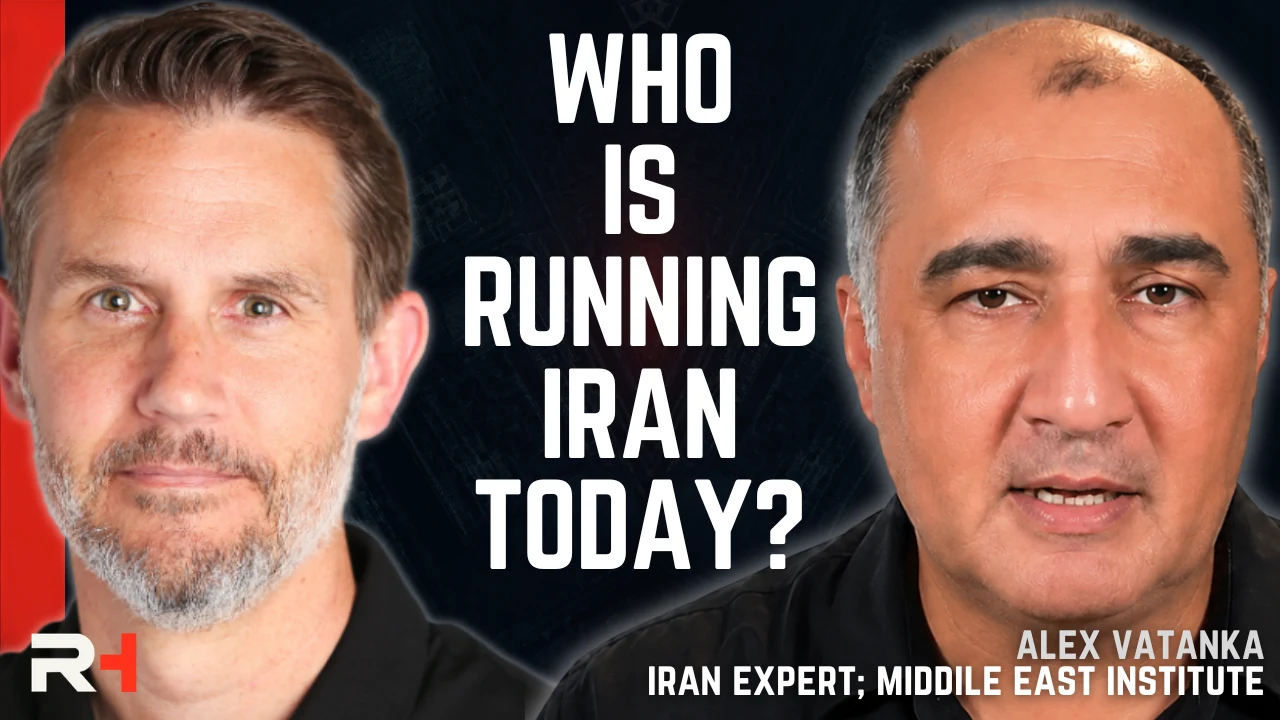
Start here
Three key takeaways
-
An absent leader does not mean an inactive system
Vatanka says he cannot establish whether Mojtaba Khamenei is alive. He argues that longstanding political and security networks can continue making decisions even when the supreme leader’s public role is uncertain.
-
Iran’s factions have different ideas about survival
The discussion distinguishes networks that favor reaching an agreement with Washington from those prepared for prolonged confrontation. Vatanka recommends following their policy preferences and institutional relationships, not just prominent names.
-
Military pressure needs a political destination
Vatanka argues that sanctions and strikes alone do not explain how the United States reaches its desired outcome. He calls for a clear choice of objectives, coordination with partners, and attention to Iranian civil society.
Episode Field Guide
Explore this conversation.
The people, institutions, and equipment connected to this episode. In the conversation marks a direct mention; Related background adds context.
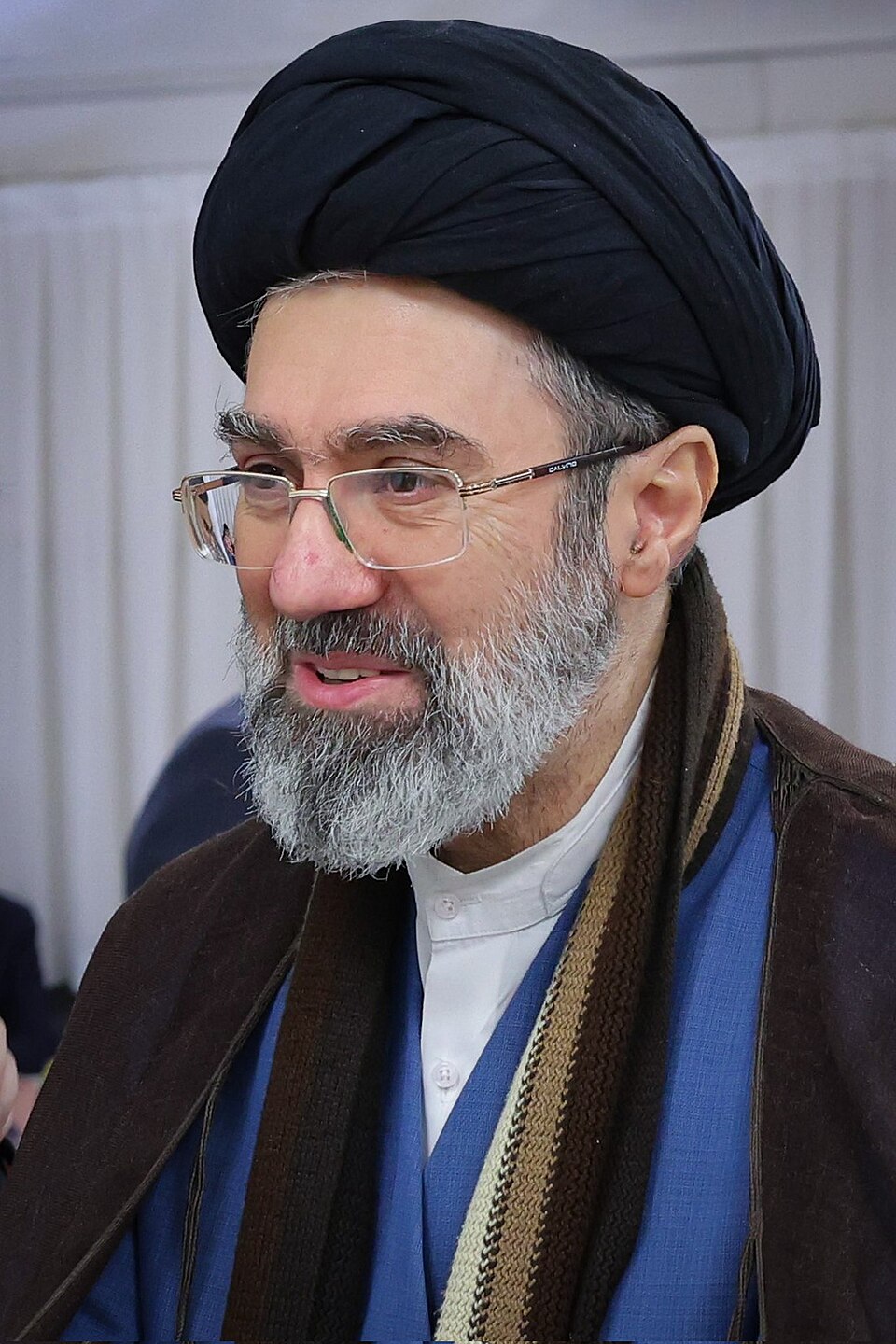
Mojtaba Khamenei
Vatanka begins with uncertainty about Mojtaba’s status and public absence. The dossier provides a separately sourced record, not confirmation that the interview resolves those questions.
Image credit
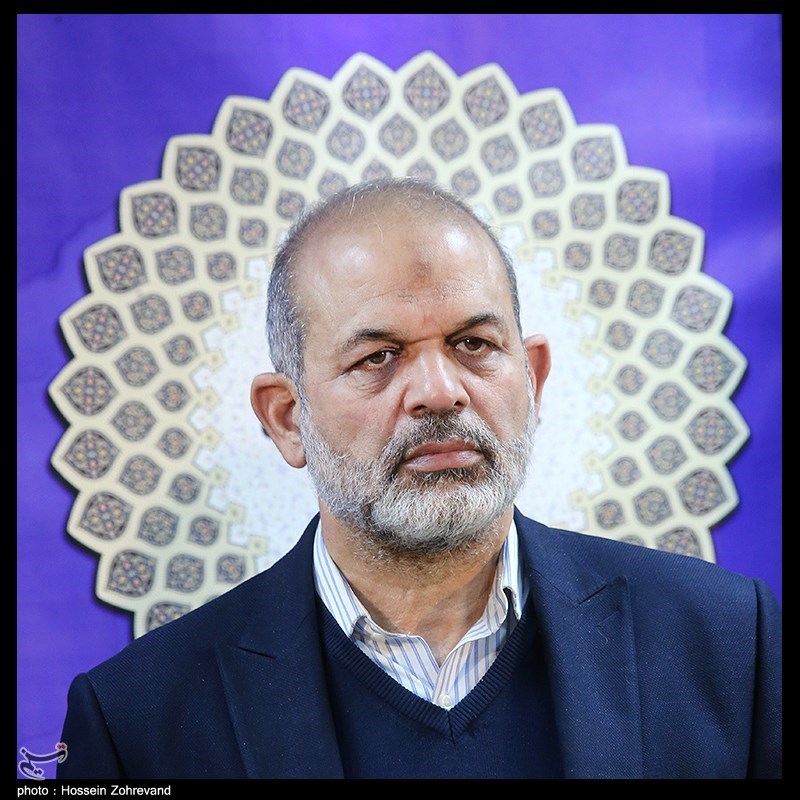
Ahmad Vahidi
Vatanka names Vahidi while discussing veteran Revolutionary Guard networks and decision-making. The linked dossier distinguishes the formal command role from the interview’s broader assessment of influence.
Image credit
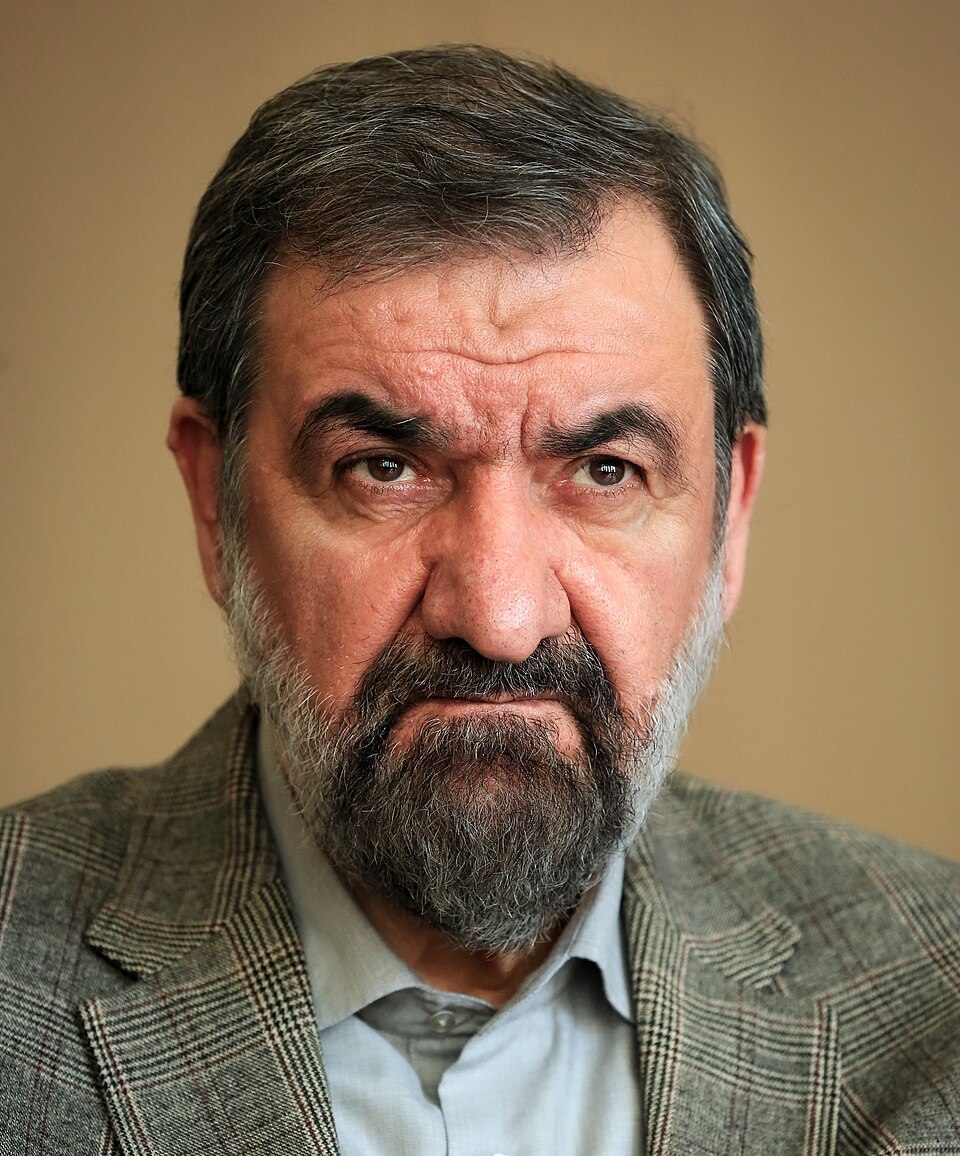
Mohsen Rezaei
Vatanka discusses Rezaei in the senior security network. The dossier identifies his formal council position separately from the influence and policy direction assessed in the conversation.
Image credit
These links are an RH reading guide, not guest endorsements or independent confirmation of every statement in the interview. Episode views reflect its publication date; linked records have their own source dates.
The written account
Who makes decisions when the supreme leader is absent?
Ryan Fugit opens the interview by asking what can be concluded from Mojtaba Khamenei’s absence from verifiable public appearances. Alex Vatanka begins with a limit: he cannot say whether Mojtaba is alive. His analysis then turns to how a political system can continue operating despite uncertainty around its most visible office. He points to veteran security figures and relationships built over decades, rather than assuming that every decision depends on a single person.
Vatanka discusses Ahmad Vahidi and Mohsen Rezaei as examples of the longstanding revolutionary networks he believes are shaping decisions. His explanation of Mojtaba’s selection is an interpretation, not evidence of a documented succession bargain. He suggests that a politically weak supreme leader could suit influential Guard networks, while warning that an absent leader may struggle to arbitrate factional disputes if external pressure eases.
Follow competing networks and their policy choices
Vatanka rejects a picture of Iran’s leadership as permanently unified. He describes disagreements over whether accommodation with the United States is possible, how long confrontation can be sustained, and what the costs mean for Iran as a country. The interview discusses figures including President Masoud Pezeshkian and parliamentary speaker Mohammad Bagher Ghalibaf in that context. Shared interests in regime survival do not necessarily erase differences over how to achieve it.
For listeners trying to follow events, his practical recommendation is to track networks through the positions they articulate. Which actors favor a negotiated arrangement? Which put greater weight on missiles, deterrence, and continued confrontation? He presents individual leaders as entry points into those relationships. The accompanying Field Guide links named figures to RH’s separately sourced dossiers; it does not treat the interview as independent verification of every claim in those records.
Sanctions, civil society, and the limits of coercion
Much of the conversation examines the gap between imposing costs and producing political change. Vatanka argues that economic sanctions can inflict serious harm without automatically removing an entrenched regime. He also questions the assumption that public anger will become an uprising when people face the risk of violent repression. These are his analytical judgments about the problem, rather than predictions of a specific outcome.
His proposed alternative requires more attention to Iranian civil society and the consequences of American policy for ordinary Iranians. He discusses access to information, internet connectivity, and the tension between encouraging political change and restricting contact with the people expected to bring it about. He also warns that outside involvement can carry a heavy historical burden. The emphasis is on helping Iranians shape their own future, while recognizing that neither military action nor rhetorical encouragement supplies a complete strategy.
Nuclear capabilities, Hormuz, and a defined end state
The nuclear discussion separates damage to facilities from the survival of technical knowledge and industrial capacity. Vatanka argues that destroying infrastructure cannot by itself settle questions of future intent. Ryan raises uncertainty about enriched uranium, while Vatanka places the immediate confrontation in the context of economic pressure and the Strait of Hormuz. The recap preserves those uncertainties rather than asserting that material has been located or that the program’s future is settled.
Vatanka’s closing recommendation is for Washington to define what it is trying to achieve and align resources, diplomacy, and partnerships with that objective. He distinguishes seeking a negotiated outcome from seeking the regime’s removal, and stresses the costs and commitments associated with either approach. The final prediction-market discussion is a snapshot of opinions and figures mentioned during the recording. It is not a current forecast or a recommendation to place a bet.
Based on the Restricted Handling conversation published September 7, 2026. Views and forecasts reflect the discussion at that time. Original episode and show notes ↗
Full episodeRead the transcript
This transcript comes from the published episode captions, with spacing adjusted for reading. Names, punctuation, and terminology may contain transcription errors. Refer to the recording for exact wording.
Today on restricted handling. you cannot win the Iran war on the cheap. This is Yeah. not gonna be Venezuela. This is not gonna be even Gaddafi's Libya's fault. This is a entrenched system. This is a system that is prepared for about five decades for this war and has everything on the line. Including their lives. So they will fight and they will burn everything they can burn before they go on if that's what it takes. Hello everyone and welcome to another episode of the Restricted Handling Podcast. Today we sit down with Iran expert and author Alex Vatanka a senior fellow at the Middle East Institute, and he's a leading analyst of Iran's internal politics, security establishment, and regional strategy.
to examine who's really running Iran, whether Mojtaba is still alive, Iran's nuclear program, the battle over the Strait of Hormuz, and what a realistic American end state looks like. And of course, we sprinkle in a couple polymarket predictions as well. Alex, thanks so much for taking the time to join us today. Ryan, it's a pleasure. I very much look forward to our conversation. And as I mentioned just before we hit record, I know Glenn is very disappointed to not be here. As folks know, he's over in Ukraine. He's studying up on the language and he's doing some advising while he's over there.
you've written a book, a few books, but one was The Battle of the Ayatollahs in Iran. I thought I'd start off with the most recent Ayatollah, if we're talking about Mojtaba. Somewhat spicy first question, but I would love to get your take. We haven't seen Mojtaba in a verifiable public appearance or even an audio message really since this war started back in February. Do we still believe he's alive? And if people can't hear from him, who do you think is actually driving decisions here? Yeah, so yeah, it's it's impossible for me to say if Mojtaba Khamenei is alive.
~ he has good reasons, or at least had initially when he went into hiding to sort of keep himself away from the the radars, because you know, Israel and the United States were essentially looking to kill him, or anybody else they could get their hands on among the senior leadership. That was at the beginning of this war, which we know began on the twenty-eighth of February with the US Israel. Killing of his father, Ali Khamenei. So Mojtaba been in hiding when he took over from his dad as the supreme leader, to the surprise of many, a week after his father's killing, he's sort of been in hiding and It hasn't stopped the regime from operating.
Takes me to your second part of your question about who's running Iran today. It's it's a group of people, most of whom ~ have known one another for decades. Certainly, if you look at the top end of the power pyramid today. People like Ahmad Vahidi, the head of the Revolutionary Guards, and Mohsen Rezaei, who is now the Supreme National Security Council boss, and presumably is going to have ~ quite a bit to say about where Iran is going in terms of its key strategic decisions, most importantly, what to do with the United States. These are individuals who've known each other more or less going back to 1979, in some cases, even earlier. It's what I call the first-generation revolutionaries, and they are running Iran today.
And what Mojtaba is there on TV or not really doesn't matter. It hasn't mattered so so far. What will ~ make a difference, Ryan, and I think that's an important point for us to keep in mind, Islamic Republic of Iran, which is about a half a century old political experiment, and it is an experiment because it constantly has to improvise and reinvent itself to navigate its path forward. Because it it it constantly has been creating trouble for itself because of its decisions, frankly, both at home and in the region and beyond. and survival for them has always meant, you know, improvising. I mean, the word expediency, In Persian is called Maslahat.
The word expediency or maslahat is often a word you hear in Iranian political debates, which is about, you know, put all your ideological baggage and issues and preferences aside. It's about survival. What does expediency ask us to do? And I would say expediency for the Islamic Republic today is perhaps whatever Mojtaba is alive or not, pretend he's alive and speak through him. And so far, so good. They have been able to manage that. But if the pressure on the system is reduced because of some kind of a diplomatic breakthrough with the Americans, and and they, you know, I can see some of the economic pressure relieved on them, the system most likely will start looking at itself and looking for fights among the factions.
And traditionally the role of a supreme leader, going back to the two predecessors to Mojtaba, Khomeini to start with, and Khamenei, Mojtaba's father, was to essentially act as that balancing function. So make sure that that the fights didn't get out of hand and start jeopardizing the entirety of the system. And you can't do that from hiding. You cannot do that by issuing statements and when there is this big question mark whether actually are still alive or not. And that becomes a problem for the regime going forward, as I said, once if they can find a way to reduce the external pressure.
For now, they're dealing with the external pressure. For now, they're in the business of survival. And again, Mojtaba being in the position he's in is not breaking that ~ if you will, that ~ unity of sorts that keeps this regime together. Would you have were you surprised it was Mojtaba and not someone else? Did you think there should have been a a different selection there when it happened? Yeah, I mean look, Mojtaba really didn't make sense. I mean, his father was against it. By most accounts, his father didn't want his son to take over. Mojtaba doesn't have religious religious qualifications, is I believe 57 now. You know, there's about three or four minutes of audio of Mojtaba Khamenei online.
If you look on YouTube anywhere in Persian English, any other language you wish. So the man is an enigma. He was someone we kind of became familiar with going back some twenty-one years ago to the Iranian presidential elections of 2005, when one of the presidential candidates at the time, Mehdi Karroubi, came out and basically said Mojtaba and his people in the security establishment behind the curtains had helped Mahmoud Ahmadinejad win the election. And that's how we kind of got to know Mojtaba Khamenei. So he would have been in his mid mid-30s. And ~ we hadn't heard of him. You know, he's one of the sons of the supreme leader.
We hadn't heard of him. In other words, he wasn't someone we knew. Those of us in the Iran Watcher community, we knew who he was, but we didn't really know him, except what others were telling us, because he didn't pick up the microphone and speak. ~ so to answer your question, Ryan, compare that to his father, who also didn't have religious qualifications when he took over in 1989. But what he had. was a kind of a you know a a a face that a public face that people recognized. He had been president for eight years before he became Supreme Leader. He was a Friday prayer leader in Tehran.
Every week, if not every day, people heard him speak. Good speaker, good orator. So, you know, he kind of comes in and it was someone that people already knew. He was on the young side too, he was 49 when he took over, in fact younger than his son. But my point is, Mojtaba just didn't have that presence. And and so when he became Supreme Leader, it wasn't because of his religious qualifications or a particular faction necessarily that really was so strong that nobody could pr prevent them from imposing Mojtaba on the system. So what I suspect happens is when Khamenei the elder is killed, the system quickly needs someone to fill that security gap.
~ fill the ~ space left behind by by the old man Ali Khamenei and Mojtaba is a is a safe pet ~ because most important than anything else probably is someone that they can control. So Mojtaba doesn't come with his own agenda. He even if he had an agenda, he's too weak politically to impose an agenda on the Revolutionary Guard. So Revolutionary Guards doesn't have to engage in an overt militarization or coup d'etat, military coup d'etat, turn the place into a Pakistan or Egypt. They still pretend that the system is a theocracy with a supreme leader that is allegedly religiously qualified to run the place, but they actually will run the place, which is what they're doing now.
Interesting. right. And then we heard in February, President Trump comes out and says, you know, when we're finished with these attacks, take over your government to the Iranian people. Says something to that effect again in April. And then just recently, we've had a lull in fighting for almost a month, and then a series of strikes by the US and IRGC targets, some Iranian retaliation, of course, and this ~ economic D-Day or asphyxiation from the US targeting Iran's economy. I think just with this in mind, how much pressure do you think this is actually putting on the R IRGC to come to the table? They had very recently said that they were open to some of the interim terms again. So how has this changed the calculus, you think?
You know, I would I would characterize the Trump administration's Iran policy more of a, you know, hope than a clear-cut strategy. You know, a hope which was in many ways reasonable to have back in February, because what did the regime do in the month before this war began? They engaged in mass killing of their own people, you Yeah. know, which was You know, a a signal perhaps that look, this is a this is a system that has obviously lost its way. If you come out and kill the way they just killed their own teenagers and youth and women and children Then they're on their way out.
So, in a way, you can understand why, based on the reports out there, and I'm just telling you, Ryan, what you've read already, Bibi Netanyahu, convinced the American president that this Iranian system is rotten. It takes one nudge from you, sir, from the White House, and it's all over. And you will become the savior of the Iranian people, and the rest of the Middle East will thank you for it forever and ever. And that's your legacy. And Trump bought into it. ~ Without really having a proper plan, because this war could have been conducted very differently. If you had a plan instead of a hope, you would have engaged in a different kind of a war, not just depending on the US Air Force, as strong and capable as they are.
We all know Air Force can take you so far. So, where was the game plan on the ground? We was the effort to take advantage of some of the splits that we know exist in the regime. Just to sit there and say, People of Iran, rise up, go to the streets and take over your land. You know, it's not that easy when you're dealing with a regime that has spent f five decades preparing for moments like this and is more than willing to kill to stay in power. And very quickly, Ryan, on the point of economic sanctions, look, I struggle. I've often asked myself this question to look to it.
Where in the world in recent history do we have examples of economic sanctions alone bringing a regime down? The only one you come close to is the case of apartheid in South Africa, you know, where with the white elite basically realized that this was unsustainable. But look at Cuba, look at North Korea, look at Russia today, look at the Iranians themselves, look at Libya's Gaddafi or Saddam's Iraq. Economic sanctions alone will not be the one silver bullet that will bring the system down. It has to be part of a larger strategy. And that larger kind of strategy in this case really didn't exist.
I I found it interesting you mentioned like one of the options earlier on could have been targeting some of the the factions that are already against each other. How would you go about exploiting that? And do those exist anymore, those factions, after February? Or or did we, in effect, push them closer together and give them a single purpose to fight back? Look, factions and divisions have existed before Ayatollah Khomeini returned from Paris on that cold February day of 1979. The revolution was split before the Shah had even left. So this is the story of the Islamic Republic.
This is the story pretty much of all sort of revolutionary movements. And the Islamic Republic today is a legacy of that revolutionary movement. So there are splits, there have always been splits, there have always been differences of opinion in terms of what's best for the Islamic Republic. And increasingly in recent years, as some of the Iranian foreign policy pursuits have been so you know, categorically expensive, costly, and deadly in times that people say, What f hang on a minute, what's actually good for Iran, the nation state? Let's put the regime aside for a second.
And that is increasingly part of the kind of ammunition, if you will, of folks inside the regime that five years ago might not have spoken in this language of what's in it for Iran, what's in it for the average Iranian. So listen to someone like Masoud Pezeshkian, the president, for whatever it's worth And he certainly is not the most powerful actor in Iran, but he's a voice. And he does articulate it in ~ in in open space in Iran. And he speaks in terms of you know those people, and he's referring to the extreme right in in the Iranian system, who basically don't think a deal with the United States is possible.
For whatever it's worth, that's their position. That the United States fundamentally will never accept the Islamic Republic. Regime change will always be the ultimate goal of the United States. It's not about the nuclear program. It's not about Israel. It's about the fact that, you know, this regime dared replace our good friend the Shah. We have the United States has not gone over it, and we're gonna go back and put in place something that was close enough to what the Shah had before he left. So that's the position of the extreme right. And to pursue that, you know, that did that or implement that ~ worldview, that I that interpretation of what America wants to do, they're open to this open-ended conflict with the United States, right? So they were against the memorandum of understanding that was signed in June in Islamabad. They didn't think that that's going to go anywhere.
The Pezeshkians of this world, and I will include a good part of the revolutionary guards, like Ghalibaf, the Speaker of the Parliament, who's arguably the chief nuclear negotiator for Iran today. Well people who were killed in this war, people like Ali Larijani, Ali Shamkhani, two former heads of the Supreme National Security Council. Their argument is, look, we just can't stay in this war forever. It's costly. We don't say we like the Americans, we don't say we trust the Americans. We say we need to cut a deal with them until the day comes the United States isn't the sole hegemon, global power it is today.
And that's why they look to the Chinese and hope the Chinese can catch up. But obviously, that's just a hope on their part. So, Yeah. yes, factions exist in the Islamic Republic, there are differences of opinion, they are real, and there's a good reason why there are these ~ you know differences of opinion because it the the the hardliners really have no and i try not to sort of take sides in this but r you know from a logical point of view the position of the hardliners ~ kind of reflects that shia islamic martyrdom seeking worldview you know it's not a very practical one it's you know they they they don't have something I would say practically acceptable to the average Iranian today that that would be, you know, seem to be mainstream worthy of pursuit.
What they're saying is basically, and I'm being maybe a bit dramatic here, but you know, that the United States is the evil. And you fight the evil. And you're not just doing it for Iran, you're doing it for all the the I'm using their language here, all the downthreatened people around the world. Everybody around the world will clap when you, meaning Iran, defeat this American American project against the Islamic Republic. Great, fine, that's their worldview. But the problem they have is average Iranians don't care about defeating the United States, whether the United States is evil, or whether the rest of the world is cheering for them or not.
They're worried about their lives inside Iran today. With inflation Yeah. is what it is over 100%, around 100%, currencies collapsing, jobs are non-existent, and all the rest of it that we can go on and spend the rest of this show talk about. So, you know, you you have this fight inside the Iranian regime when they were fighting for their survival early. Parts in this war, yes, those differences were not being expressed in public. As Iran has sort of managed to stay the course and not be toppled, the regime then starts, the factions start also looking at one another over each other's shoulders. And we go back to something we've seen for decades, internal bickering inside the regime.
How do you exploit that? Maybe that's the question. Like, what is the the tactic that kind of degrades their their capability and exploit some of the gaps? Look, you know, the US obviously has a history in Iran and needs to be careful not to burn bridges, ~ the way that arguably intervention in nineteen fifty-three didn't help in the long term the US cause in Iran, because you know, the good part of the population blame for decades, some still do that, you know, you came in with your malign intervention, you you removed our beloved. Prime Minister Mohammad Mosaddegh and so forth.
So US doesn't want to repeat that again, which means you gotta be very careful. You want an Iran that doesn't pose a threat to US national interests, whether it's in the Middle East or beyond. You want to get the part of Iran, the part of the Iranian population, which by and large is still amazingly pro-American, or at least looks to the United States as a helping hand potentially, although they're not convinced that Trump is the man with a plan. You want to help them essentially be in the driver's seat here. Help them to get where they want to go because they want to get over the Islamic Republic. They are done with the Islamic Republic.
I would say a good part of the bureaucrats, technocrats inside the Islamic Republic are done with the Islamic Republic. They've hit a wall. so how do you help them? Well, some of the things the Trump administration is doing, like, you know, no visas for Iranians, not helping them in terms of access to information, not helping them with things like access to internet. You know, you want to help the Iranian civil society that, by the way, Ryan, is extremely capable. I mean Iranian civil society 120 years ago, before most of the states in the Middle East were even born, had a constitutional revolution, exactly 1906. ~ Interesting.
They forced ~ the king, they forced the king to give him a constitution and to give him a parliament, nineteen six, before Mm-hmm. a lot of countries in Europe had gone down that path. So this Iranian civil society should not be underestimated. It has capacity to do wonderful things and take their own country in their own hands and take it in the direction the United States would want to see, because it will be essentially good for the United States. It could be a a an another attempt at democratization in the Middle East, which the Bush administration tried in Iraq in 2003, didn't work out. Could be much more homegrown, domestic, organic, if you will.
And you have to, if you United States decide, identify how do you help without your fingerprints all over it so people can accuse you of having again instigated something with malignant intent. So That's how I would do it. You know, we there were reports, I'm sure you've seen it, you know, that Mossad was cultivating grooming Mahmoud Ahmadinejad. True or not, I don't know. But if you ask me, is Mahmoud Ahmadinejad the guy you want to bank on? Not as a leader, but as a way of creating tension inside the regime, maybe you could make the Yeah. argument that that makes sense.
But fundamentally, I would make the following point: living here in Washington, DC, and following the Iran debate. I don't see evidence of that kind of deep intellectual thinking in any agency level that says who are the players inside, how do we help these individuals? How do we help the Iranian civil society? Opposite is happening. The opposite is happening. We we so on the one hand, administration is against nation building and intervening, and yet President Trump says, people of Iran rise up and take your country back. Fine. Can you help, sir? Because if you don't, then you might end up being engaged in this forever war that we have going on right now around the Strait of Hormuz.
So it is actually in US interest to find ways, other than kinetic action, to help the people of Iran help themselves, because most likely. The outcome will not be what we had in 1979. We end up with theocracy. Because they're now tried theocracy. One would hope that they're gonna have something ~ very different and one that would be much more compatible to US interests. Yeah, I mean w well said. And you mentioned during that ~ you touched on the nuclear program, and that's obviously something that was stated by the Trump administration when they when they launched the these attacks in February. That was one of the elements is to change the the future path of Iran's nuclear program. In particular, some of the the info that we hear often is ~ we're unaware of the location of 440.9 kilograms of 60 percenter-ish uranium that they possessed, reportedly possessed before the June 2025 attacks.
Certainly the strikes in the past several months have hit some of the facilities that may have stored that. It's unclear where that is at this time. Do you still see that as a pretty strong bargaining chip since it's kind of unknown where that uranium might be? Is that just something Iran can continue to leverage? Just a quick word from our sponsor, Larineco, and we'll get right back to the show. I drink a lot of coffee, which you can probably see on screen during the show. It can, however, do some really long-term damage to your teeth, and I love chewing gum. So Larineco has been a great match for my routine.
It's a chewing gum that actually makes your teeth stronger every time you use it. Larineco is better for you chewing gum that uses the same mineral your teeth are made of to support daily enamel health. Larineco sent us some gum and we're huge fans for a couple reasons. One, it just tastes good, which is my main factor, and two, has a variety of flavors to choose from. And it doesn't hurt that it's also good for you. It's a totally effortless way to make sure you're taking the best care of your teeth possible. And right now Larineco is offering our listeners up to 50% off at buylarine.com slash restricted.
That's buylarine.com. L-A-R-I-N-E dot com slash restricted for up to 50% off. And now back to the show. In the short term, they're not seem to be too bothered about the nuclear program. They don't seem to raise it. I mean, it's mentioned obviously as one of the fourteen points in the memorandum of understanding, but now on the list, it's about as straight up for most today. So basically, you have the core of the fight right now, is it's centered on economic warfare that the US and Iran are trying to wage against one another. And unfortunately for the Gulf states and a lot of the energy consuming nations around the world, they find themselves right in the middle of this fight.
So Iran is trying to To essentially look for ways to pri bring the price of oil and gas up. and that is meant to put put the Trump administration in a position where they want to give Iran what Iran wants. And the United States is engaging in this blockade on Iranian ports and and trying to find ways to break Iran's grip on the strait through this sudden corridor closer to the Omani coast. That's what the sort of the the the stalemate is on, and the nuclear issue is not at the heart of it in the short term, but look. Going forward, the United States, even if they resolve the issue of the strait, the United States will have to go back and and then decide is it comfortable with what it said was what the President Trump said was a success story back in summer of twenty twenty five and again in the in this latest war, that the the the nuclear facilities are destroyed.
Clearly the administration is not confident in that. I mean, their actions speak to the fact that they want the IAEA back in there because they're not sure what was actually destroyed. And they do know one thing: that this is not Syria's nuclear program, this is not Iraq's Osirak program with French help or the Libyan program. This is an indigenous Iranian program with 20 plus years of expertise gone into it. So there is an industrial base that will be rebuilt. The Iranians can rebuild it, they don't need somebody to come in and help them at this point. And that takes us away from assets that you destroy, but about intent. Where is Iran gonna go?
Where is this nuclear program gonna go? And that's a whole different issue. If you want to solve that politically, you gotta engage politically. And you know, they could do that, it's not too late. I mean, the Iranian side as of today wants to revive, if you will, the MOU of June. I think that's too optimistic. They need to be much more narrow in terms of what. they can do to at least prevent this hard war from expanding. But it just shows you that at least on their side, and I think the US side too, this idea of in the right circumstances, let's go back and talk again, is not dead for good, at least not as of yet right now.
~ curious, because you watch Iran so closely, is there something that you think people should be paying attention to more that we're not these days? We often hear about Vahidi, Pezeshkian. There are other names we hear. Are there folks that you follow or would suggest people follow to get a better idea of the direction things are going or topics that you think are just missed by some of the mainstream media Yeah. Look, it there's a reason why we we we don't spend too much time. I mean I have to, it's my job. But I understand why the general audience won't be able to sort of track someone like I haveis of this world.
Number one, these people are very shy showing themselves and have good reason to do so. As As they should be, yeah. they should. Number two, you know It it's never been about individuals. Even Ali Khamenei, the supreme leader for about 37 years, wasn't singular the one deciding voice. That's not what the Islamic Republic is about. So you got much more of a consensus of sorts at the top end of the system. And the top end is not interesting because of individuals, like you know, the Soviet Politburo and number of old men who whose voices were sometimes different than it's about networks.
And the the sort of you know, even within the IRGC, you know, ~ just to give you a quick example, ~ in the lead up to In the lead up to the latest changes of the Supreme National Security Council, before it was announced that Mohsen Rezaei, pretty incompetent fella, is returning as the head of the SN the Supreme National Security Council. you know, the debate inside of Iran, ~ which by the way, you there's plenty of that available to us. If you're a Persian speaker, you can pick it up. So this is not North Korea. But like they were talking about Ghalibaf, the the the speaker of the majorist, himself, a former ~ IRGC commander, how he was trying to create his own little clique or faction, you know, within the Supreme National Security Council, such as a deciding body against the likes of Mohsen Rezaei and so on.
So again, individuals are important because they're a face of networks, and that's what you want to track, particularly networks that Are explicit about some of their policy desires. So the ones who are arguing for if you can get a good diplomatic deal, that ought to be our priority, versus those who are saying diplomatic deal is a waste of time, build the missiles, build the terrence. That's the only thing the Americans understand. You follow that debate, then you kind of get a sense where the Islamic Republic might be going and the tensions that come with that movement of the regime overall.
Is there anything that could happen in the economy or society there that you think would tip the balance and encourage people to come out as unlikely as it may be to rise up? I mean, is there something that you could point to in that society that might be the tipping point? Yeah, ~ first thing I say is if you're thinking this is Venezuela conditions, ~ you're wrong. you know, millions of Iranians are not at the border of Turkey or some other neighboring state trying to leave. That's not the case. ~ but the reality is the economy is declining daily, weekly, monthly, whatever, and has been for a long time now.
So Iranians are much poorer today than they were 15 years ago and certainly 20 years ago. They've gone from an upper middle class economy to something on the lower end, and that is. Kind of ad outrageous when you consider the fact that Iran has the material in terms of natural resources, human capital, to be a top 20 economy. And given where they are, the gap between the potential and where they are should make any Iranian ~ furious. And they are. But does you does being furious, does that make you want to come out and risk your life when you know that these both folks with guns out there They they don't mind killing. And they they will they will kill you.
And by the way, today they will kill you with the additional justification that you're very likely on the payroll of Mossad or some foreign intelligence service. so I don't think if I was the Iranian regime, and I don't think they are, I'll dismiss the sanctions as you know, papered tiger, as Mahmoud Ahmadinejad used to say, and found that the hard way. Actually, no, sanctions can really hurt. I mean, the president himself came out the other day to say about 35% of their trade is wiped out. They depend increasingly on one customer, China. You know, imagine a situation where the Chinese decide to throw Iran under their bus. Where are they gonna go?
So, no, they can't afford to dismiss. ~ the economic agenda that the Trump administration is putting on them. but at the same time, if I'm the Trump administration, a couple of things to keep in mind. This is a regime that isn't in power because they provide good services to their people they've ever done. That's not why they're in power. they're in power because if you question them too much, you're in trouble. And in worst case, you're dead. And that is why the Islamic Republic is in power. Two, they have friends around the world, the Russians, the Chinese of this world, will do what they can to help this regime survive.
Because why would they want to see an Iran where the regime is toppled and most likely it will turn to where it was before nineteen seventy-nine, turn to the West? That's not a good thing for the Chinese and the Russians so forth. So I think if I'm the Trump administration, I have to start really formulating ~ six months into this conflict that this is not a campaign of a couple of days. But you can articulate that this regime has been a pain in the neck for the US for half a century, that it's worth giving it two more years of the Trump administration to see if you can squeeze it hard enough that it implodes from within. or you know, you you force them to come to the table and give you something that.
On the nuclear issue and the Strait of Hormuz or anything else you want that is acceptable to the United States. But that is not what politically is being done in the United States because nobody wants to articulate an open-ended new Middle Eastern war, which, Okay. you know, it's just not helping the US side and it's certainly not helping the Iranian opposition, who's looking for some clarity in terms of who could potentially help them, what's their agenda. That clarity not being there, as I said, is really essentially just helping the Islamic Republic decide that time might be on their side.
Then maybe just a last question for you, Alex, if if you had two to three suggestions to make to the Trump administration on what to an end state here, what would you suggest? Well, look, number one is make a decision. do you really want regime change? Do you think this is the moment regime change is achievable? Then you should go out there and articulate it. You don't say you're gonna, you know, repeat Iraq two thousand and three. You say something else. It could be this combination of some mil military action, a lot of new economic sanctions. You've got engage in coalition building.
You'd certainly want to bring the Middle East with you, because right now, they, like the rest of the world, including the Iranians, are trying to figure out what the Americans want to do. You know, Ryan, remember before the memorandum of understanding was signed? We all speculated what a deal would look like. And then we kind of got a sense of the deal. And everybody's shocked. Like, what? The US just basically. Decided, you know, they've had enough, whatever Iran wants, we give it to you. Now it didn't work out for the Iranians either. But the point is that kind of a major shift and surprising everybody is linked to that idea of lack of clarity.
You can't you cannot have a a victory in Iran on the cheap. And if you accept that, you go out there and articulate why. It's worth and the president kind of says that. You know, he's hinted why the price of gas is high, and that's fine. The the cause is noble and worthy, but it has to be done systematically, repeatedly, so you you make the case for the American people. Because I don't know how you can go to war with you are ~ American soldiers confused about the mission, the American voters confused about the mission, and yet they're asked to pay the price. It that's not sustainable.
And we don't have a 9-11 moment here that galvanizes the nation. So the fact that this was seen as a war of choice puts the burden on the Trump administration to to provide that clarity. Coalition build isn't important. Start in the Middle East, then move on to the Europeans. That's heavy lifting for this administration that's not in the business of coalition building. But at least what the Trump Trump administration could do is to come out. And be consistent if it's regime change and say so, ~ and and make it clear that you're willing to put resources into it.
Banning Iranians, banning Iranian refugees at the same time as you're saying you wanna free the Iranian people, those things don't go hand in hand. You can't win on immigration and on Iran policy at the same time. You've got to prioritize, you've got to be flexible enough to show that you can you know walk and think in the same time when it comes to the Iran policy. you cannot win the Iran war on the cheap. This is Yeah. not gonna be Venezuela. This is not gonna be even Gaddafi's Libya's fault. This is a entrenched system. This is a system that is prepared for about five decades for this war and has everything on the line.
Including their lives. So they will fight and they will burn everything they can burn before they go on if that's what it takes. And that means a lot of American and business interest in the Gulf and beyond in the region will be at put at risk. So the stakes are high. the decision has to be made. Deal with this regime, get rid of this regime, starting point, and then build your case once you've made that fundamental choice. Yeah. yeah, and I did ask you for that. That's exactly what I was looking for. ~ slightly lighter note just before we get out of here. I I often take a peek at the poly markets, you know, these prediction markets of where you can kind of bet on what's gonna happen. And just for everybody listening, this is not financial advice in any way.
I'd just be curious, Alex, to get your take. So there's a twenty-two percent chance right now that Mojtaba Will make an authenticated public appearance before the end of this year. Do you think 22 is about right? Low, too high? What do you think? Man, I wish I was ~ in that world and make some money if I just pure guessing. But yeah, i in my my guess would be this year meaning US you know ~ year, ~ that gives us, yeah, a few months, maybe, but it's more likely to happen by the end of the Persian year, which would be in March of next year. All right. That's a good one. Good curveball.
Okay. That's where that's where his father always would come out and give the big speech and lay out the ground for the big policies he liked to see. So March of next year, yeah, I would say that that's if he's alive, and but because if he doesn't do that by then, he could just as well be dead. Yeah. all right, that was a perfect one. I'm gonna risk it and ask you one more. chances of an American invasion, which is ~ like actually controlling terrain inside Iran, not just airstrikes. They have it at seventeen percent by the end of this year. What do you think? Same, same.
I'll put it lower. I'll put it at ten percent. It makes no sense. It it's just such a distraction for the United States to get itself bucked down in another open-ended conflict with a country that's a set has been preparing for this and will love to try and give the United States a bloody nose. No, it makes no sense. Just lose it e even the few f soldiers and marines that would be lost in that would be immediate. Just ~ you can imagine. Absolutely. Yeah, absolutely. Alex, thanks so much for the time. This was great. ~ I hope we can get you back on when Glenn's here to talk more Iran Russia stuff.
Love to. Thank you, Ryan. I'll look forward to seeing you and Glenn next time. And yeah, Russia and Iran. I mean, Putin just came out and said he will help Iran in any way he could. So there's a lot to talk about there.
Back to the Episode Field Guide ↑Keep listening.
All episodes →
Glenn Corn and Ghost / Ukraine and the legacy of 9/11
Glenn Corn and Ghost on Ukraine, 9/11, and the Cost of War
Dave Berke / Iran and air power
Dave Berke on Iran, Drones, and the Future of Air War
Between episodes
The daily brief is free.
Russia, China, Iran, and North Korea. Straight to your inbox.