Glenn Corn and Ghost on Ukraine, 9/11, and the Cost of War
Reporting from Kyiv, Glenn reflects on 9/11, Ukraine’s resilience, and a battlefield moving underground. Combat veteran Ghost shares the story of the medic who saved him and his work supporting fellow soldiers.
Glenn Corn and Ghost / / 49 minutes

Start here
Three key takeaways
-
The legacy of 9/11 lives in individual acts of duty
Glenn and Ryan remember the people who kept working through fear, sustained years of deployments, and carried losses home. Their tribute connects the post-9/11 generation with Ukrainians facing the human costs of war today.
-
Ukraine’s resilience coexists with mounting strain
Glenn describes communities repairing damaged infrastructure and soldiers adapting to persistent aerial surveillance. He remains skeptical of optimistic negotiation headlines while Russian attacks continue, presenting that judgment as his assessment from the trip.
-
Ghost’s recovery has become a way to help others
Ghost recounts how a combat medic shielded him during an artillery strike. After surviving serious injuries, he began helping fellow soldiers discuss stress and personal difficulties, using shared experience to build trust.
Episode Field Guide
Explore this conversation.
The people, institutions, and equipment connected to this episode. In the conversation marks a direct mention; Related background adds context.
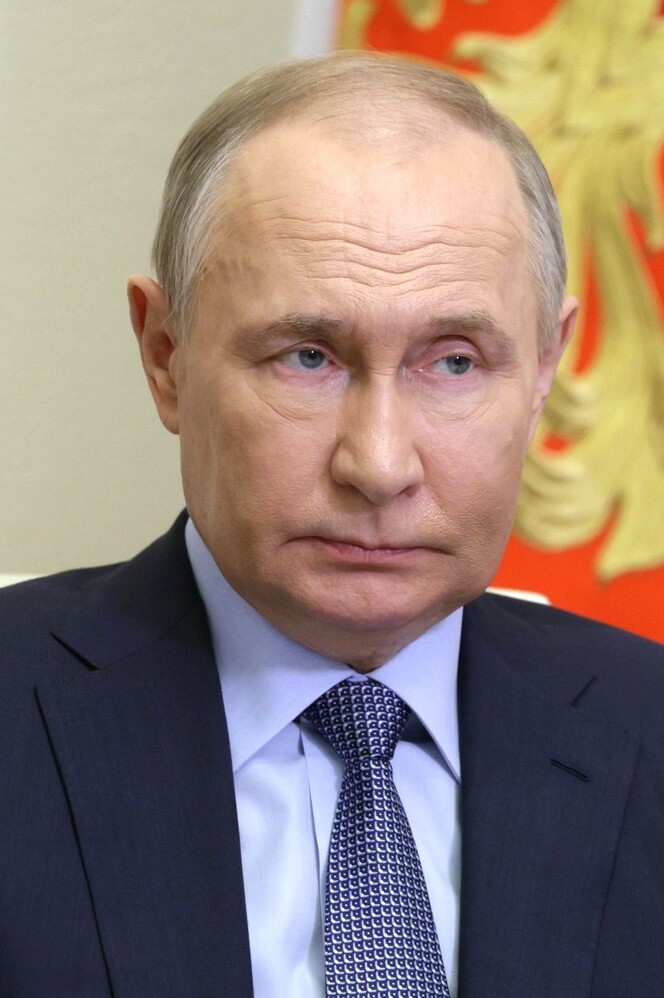
Vladimir Putin
Glenn assesses Putin’s approach to negotiations through the attacks he describes. This links the named leader, without treating Glenn’s interpretation as a verified account of private deliberations.
Image credit
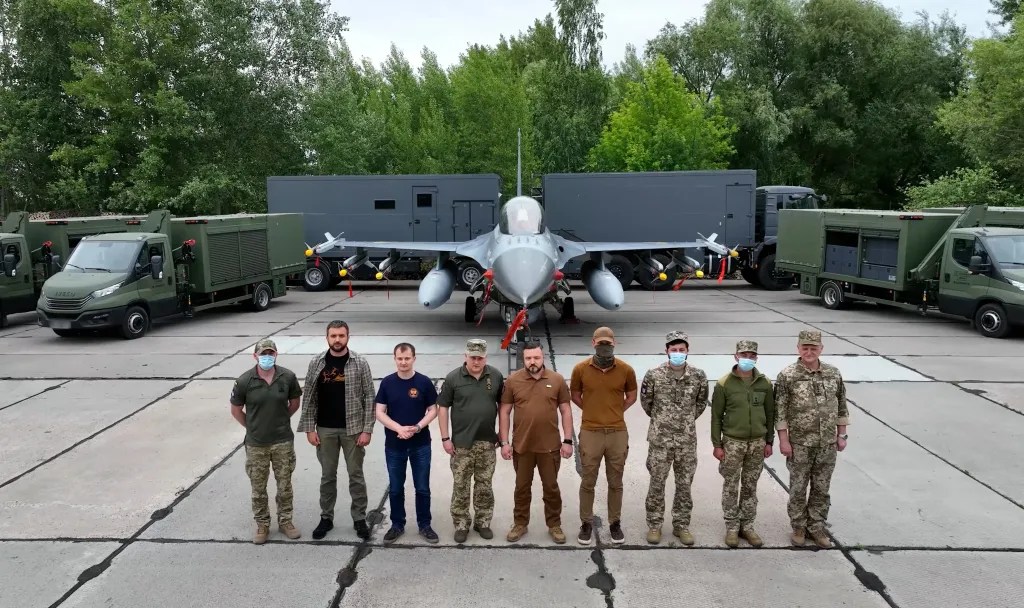
Ukraine Arsenal
Background on equipment in Ukraine’s arsenal alongside Glenn’s discussion of drone surveillance. The passage does not identify a specific drone model or establish current inventory totals.
Image credit
These links are an RH reading guide, not guest endorsements or independent confirmation of every statement in the interview. Episode views reflect its publication date; linked records have their own source dates.
The written account
Remembering 9/11 from Kyiv
Glenn Corn joins Ryan Fugit from Kyiv for a conversation that moves between the anniversary of September 11 and the war unfolding around him. Glenn recalls being at an overseas posting when the attacks began. The instruction from his leadership was to spend that evening with family and return early the next morning, knowing that the pace of life was about to change. Ryan remembers being a college student in Washington and going toward the Pentagon before being directed away.
Their tribute focuses on people whose contributions rarely become public stories. Glenn remembers a finance officer who completed an urgent contract despite the fear and disruption of that day. Ryan recalls attending the funeral of CIA officer and former Marine Mike Spann. Both discuss the sustained operational tempo, family strain, and losses that followed. Glenn also reflects critically on how an intense counterterrorism focus could leave other strategic challenges receiving too little attention.
Resilience and the limits of negotiation headlines
Glenn describes Ukrainians preparing for another difficult winter while repairing infrastructure and keeping communities functioning. His examples include rapidly restored gas stations, debris removal in Kharkiv, and a wounded veteran determined to return to service. These are observations from his travels and conversations, rather than a comprehensive measure of national morale. He emphasizes both the exhaustion imposed by repeated attacks and the determination he encounters.
The discussion of diplomacy is similarly grounded in Glenn’s assessment at the time of recording. He is skeptical that encouraging public statements necessarily indicate progress while attacks and territorial demands continue. He argues that intelligence channels can support diplomacy and welcomes the possibility of a larger role for CIA Director John Ratcliffe. He does not claim to know the content of private negotiations, and explicitly leaves room for developments beyond what public reporting reveals.
A battlefield moving underground
Persistent drone surveillance changes what it means to move, resupply, and survive. Glenn describes underground positions and increasingly elaborate facilities as responses to the danger above ground. The discussion highlights how technological adaptation reshapes the daily experience of soldiers, including the strain of remaining in protected positions for prolonged periods. Neither the conversation nor this recap establishes a specific inventory of the systems involved.
That theme links the field update with the interview that follows. Ghost describes a battlefield in which detection can bring immediate danger and time spent in a position can stretch well beyond earlier expectations. His comments are rooted in his own experience and unit. Glenn’s wider observations and Ghost’s account complement one another without turning either into a universal description of every part of the front.
The medic who saved Ghost, and the work that followed
Ghost describes joining the Third Assault Brigade after completing his studies, adjusting to demanding training, and entering combat with more experienced soldiers. He recalls choosing to help wounded comrades despite his fear. Later, during an artillery strike, a combat medic pulled him down and shielded him with his body. Ghost survived; the medic did not. The account is presented through the interview and interpretation, with the recording remaining the reference for his exact words.
Ghost says his injuries included a brain injury and ruptured eardrums, followed by a difficult recovery that included relearning speech. He now helps fellow soldiers address stress, morale, and personal difficulties. He describes approaching them as a comrade and speaking openly about his own experience of seeking help. His observations about growing trust apply to the Third Army Corps, not to all Ukrainian forces. The episode closes with an emphasis on service, remembrance, and the responsibilities that continue after a combat mission ends.
Based on the Restricted Handling conversation published September 11, 2026. Views and forecasts reflect the discussion at that time. Original episode and show notes ↗
Full episodeRead the transcript
This transcript comes from the published episode captions, with spacing adjusted for reading. Names, punctuation, and terminology may contain transcription errors. Refer to the recording for exact wording.
Today on Restricted Handling. You know, before Witkoff and Kushner went, Director Ratcliffe went to Moscow, and now there's rumors that Ratcliffe is going to play a more, like a bigger role in the negotiations process. To me, that would be a good thing. As I've said before, my assessment, it would be positive because he has a very large organization. That should be well informed to support him. Hello, everyone, and welcome to another episode of the Restricted Handling podcast. You got Glenn and myself on this time. Glenn, as we heard last time, is calling in from Ukraine, studying the language, but also moving around with some movers and shakers, as usual.
Phenomenal interview, by the way, Glenn, with Ghost, this Ukrainian soldier, veteran. We will share your interview at the end of this discussion so people can hear it. It's about 20 minutes long, goes into what it's like on the front lines now and how folks are dealing with some of the stress there. Great. And it's our 9-11 episode. So shout out, of course, to all the service members, diplomats, CIA officers who are still out and around in harm's way. And I thought it would be fitting, of course I thought it would be fitting for you to be in a war zone on the 9-11 anniversary.
Yeah, it's great to see you, Ryan, and as you always say to all our freedom-loving people out there, one reason I love this podcast because it's all about freedom. Yes, so I've been now three weeks in Ukraine, and I'm happy to talk a little bit about this trip. So I was here for 10 days just studying Ukrainian. Don't ask me why. I just decided that out of respect for the Ukrainians, might as well try and learn their language. Which was fun. To my two teachers that I was working with, thank you very much. And yeah, we've been traveling now after that around the country. You had a lot of very interesting meetings, and now we're back in Kyiv.
I was on a call with somebody about two hours ago, three hours ago, talking, and next thing you hear, you see a huge explosion in the background, and the Russians hit him. A shopping mall in the city. I think I sent you some of the pictures of gas stations they'd blown up, warehouses, apartment buildings. So the ghost interview, I hope everyone watches that. That young man, a lot of respect for him and for his comrade in arms who threw his body on ghosts to save his life when they were hit with a mortar round. In a trench. And it's kind of a touching story for our viewers. It's really worth listening to and watching. And then I'll just say like, you know, we were our driver for this trip down to the east was a guy who almost lost his leg and his arm in combat. He's an artillery officer and he's in rehab right now.
And the whole time we were with him, which was about 20 hours in a car, he just kept talking about how he's trying to get back into the fight. And it's pretty impressive. And when we ask him, by the way, both parents are teachers of history, high school teachers in Ukraine, and he just, I asked him, like, why do you want to go back and fight so much? He said, because my, the future of my country is, like, the future of my country is in the balance. So, and then let's talk about 9-11, brother. Well, actually, I want to say, so you mentioned that reference to Ghost just real, real quick and somebody, you know, protecting him, taking his life. That, for people who have, who listened to this show, who had once listened to Combat Story, it absolutely reminded me of one of the Navy SEALs we interviewed who later went on to DEVGRU, who lost his best friend, guy jumped on top of him to take the grenade blast. It was just different language now and a different.
Trench somewhere else in the world. So very apropos for 9-11 for us talking about this. And the stuff that he's dealing with from a psychological standpoint, I mean, very much reminds me of what we all went through. Post 9-11 as well. Right. Yep. I just ran into one of our former colleagues downstairs where I am, and he has a foundation there helping veterans. He's a veteran of the Iraq war, and then he worked with us. Great guy. And he's here with part of his team. They help Ukrainians try and deal with the PTSD. They've had some support from some important Americans who are helping him financially.
By the way, I told him we've got to get him on the podcast. It'd be great to talk to him. And I mentioned combat. I said, you know, my partner in crime, Ryan, he's the founder, the original host of Combat Story. And he was, and like, there were three guys, including a former SEAL. They were like, oh, we love that podcast. So you're the man, Ryan. And it's pretty amazing that you did that. You create that podcast for the community of people who really need to have their voices heard. Now, did you and these folks, because, you know, we're on the, I mean, you're in 9-11 right now where you are. So, you know, it's super late for you or super early, depending on how you want to say it. Did you all talk at all about 9-11 or their experiences? Does that come up?
A little bit. I mean, I think that, you know, the common thread there is that these are people that went to do what they believed was right to protect our country. After 9-11, and I think they're still involved here now because they think, and I agree with them, and that's why I do what I do, because I think it helps America. You know, I always tell the Ukrainians, I say, oh, you must love Ukraine. I go, listen, I really like Ukraine, but I love the United States. And I think it's very important that we as Americans continue. To show resilience in helping the Ukrainians to defend themselves.
You know, the fight is not over, unfortunately. And I know a lot of people don't want to hear that, but the reality is, is that we're still in a state of war. With some enemies, very dangerous. Where were you on 9-11 again, Glenn, for people to hear? I'm not allowed to say I was overseas. I was in a Muslim country. And, you know, I always tell this story. I was standing in my boss's office, the chief's office, and watching TV and waiting for a meeting, and I watched the first plane hit the tower, and I was talking to the front office manager, and I thought it was like, we were joking about something.
I said, oh, it must be a new Schwarzenegger film. And then we started to see the news come through, and then, like, everyone got very shocked, and then I, basically, our boss was in with the ambassador, and I... Bang down the door and I'm like, you guys got to come out here. And they yelled at me. And I'm like, no, you need to come out here now. And the ambassador and the chief came out and they just watched the TV for a little bit and then turned to me and said, okay, get everybody in the bubble. And it was a tough day, but I'll never forget, like the leadership, the command was, okay, everyone go home and spend time with your families tonight because we're at war and you're not going to have a lot of time with your families going forward.
Right. And, uh, you know, the, the order was everyone back tomorrow morning at like 6 AM and then it started. And I remember I went home and my son was, my youngest son was on the couch crying. He was probably four, maybe five. He was sobbing. And I said, why are you crying? And he said, cause they're going to kill us. Like they're trying to kill all of us. And I'll never forget that. Cause like the, the kind of fear in his eyes. And I don't know how he heard, you know, my wife, like, you know, my other son was watching cartoons in the other room. He was completely, like, checked out.
But, you know, my wife was obviously kind of in shock. And I got my wife and kids, and I said, listen, guys, like, something really terrible happened. Everything's going to be fine, and it's going to be a really busy period. You're probably not going to see me a lot. And that was the case. I mean, you're a New Yorker, Glenn. So, like, that's your, that was your hometown. Did you know people in the building or around it? No, I don't like, I don't have any very close friends that were killed in the attack, you know, but watching those events, like I remember flying when I was in college, like a friend of mine was in the Air National Guard and he gave me a lift one day, probably get him in trouble for saying this, but from the West Hampton Air National Guard base, we got, we got to jump on a, on a helicopter and fly into New York.
And I remember seeing like the, you know, it's probably like a 60 mile flight along the coast and seeing like the Twin Towers, how beautiful it was and amazing it was. And the heliport is right by there. And then like the guy that was flying, because I guess he was going to pick somebody up. So they had free space. So we, we jumped out and then we took the train. We went, okay, we went drinking in New York and then we took the train home later that night. But like that, you know, watching the Twin Towers go down like that was Pretty painful and pretty shocking. And of course, everybody at the time was like just in shock.
But what I also remember is pretty quickly, we just got our act together because there were a couple of days where people were, I don't know about you. I mean, where were you? Were you in the army then? I was in my senior year of college in DC there. So I took my moped down to the Pentagon to just see it after it got hit, see if I could help. And they're like, get out of here. So I went back to campus. Yeah. You know, one of my, it makes kind of sound crazy, but one of my favorite stories is when I was still in the agency in a senior position, they had a ceremony for 9-11, one year, probably 2000, I don't know, 15, 16.
And I was invited. I was like in the senior executive row and it was outside. And there was a woman sitting next to me who was very senior in finance. And we started talking in the kind of same question. I said, like, where were you on 9-11? And she said, well, you know, I was here. And she said, I'll never forget, like, they locked down everything. But I had to go out and get, I was a junior finance officer, and I had to get a contract signed with some vendor. And I snuck off the compound, and I went to meet this guy in Tyson's Corner somewhere, and I got that contract signed.
And she said, I was really scared because I didn't know what was going on, but I knew that people somewhere in the field needed this contract done. That's awesome. So I just, I went out and I did it. And I sat there saying to myself, you know, I spent most of my time in the field. And I said, you know, this woman, like, you can't underestimate how much courage people had and have to this day, right? I mean, people are still doing a lot of great work just to get the mission done. That's a great one. I know it sounds like some people are like, oh, like, you know, she went to, you know, but no, like, you were in DC then.
Remember, they locked everything down. All the flights were shut down. The skies were locked down. And of course, you know, being overseas, it was like, okay, what's coming next? Yeah, I can't even imagine. Everybody go out and meet people, I'm sure. Like, what do you know what's happening? Well, that, yeah, then, then, then the pace of work became just, you know, there was, I always say like 10 years, just nonstop. I probably put some of that gray in your beer, Glenn. That and my kids. Yeah. Yeah, no, no, it was like, and it was hustle, man. It was just like, go, because we wanted to hunt down.
The people that did that to our country and to our fellow countrymen. And, you know, we lost a lot of people, too. Like, Americans should know that. You know, a lot of them have stars on the wall that their names are still not identified. Some are known. Some of the stories are now being told publicly. And, of course, the military, there was a huge price people paid. And then families disrupted, you know, divorces because of the constant war zone deployments, the pace of operations. You know, I was just at a dinner with the guy who was a four-star general in the U.S.
Army, and he was telling the story like four years straight, just going, going, going. And it was all about mission. And I got to say, like, I love that. I never resented that. I always thought it was like, you know, because everybody, because the person to your right, the person to your left, they were all going for the mission. Yeah. Yeah. I mean, I've mentioned it on air here before, but I went to Mike Spann's funeral as the first casualty in that war. Because I was in DC, I think it was December 11th, and it was super cold DC at Arlington, but very special. Half the people in attendance were Marines, because he's a former Marine, and then he was a CIA officer as well, I think a ground branch guy. So a lot of folks just in their dark suits and overcoats in the cold weather.
Seeing his family there, they give him the flag, super sad, emotional. Kind of the Pentagon's out there in the distance. So very much like the beginning of this whole thing. Yeah, Qala-i-Jangi. What's sad is that a lot of young people don't know that story. They don't like remember the history. And even when I was still in the building, like younger generations were not, you know, I guess that's, I guess it's natural, but I don't, I don't think we do a great job of teaching history. Reinforcing like why it's important and what the sacrifices people made. And, you know, Mike Spann gave his life for his country, doing great work at a very, very hard time. And the guy that was with him at the time is a very good friend of mine.
And, you know, he survived that, but I'm sure there was a cost there. Great American and super unique person. So, yeah. I mean, I've always given a lot of credit to the agency for the short time I was there. I felt like they did a good job of passing down oral history just from officer, like more senior folks to us younger folks at the time. The way the military did it, the military was very formal in information sharing, I felt like passing down info. This was more like brown bag lunches, just hearing from people's experiences. So you would have had to find someone who was on Jawbreaker.
One of those operations to share that. But I think that they were pretty forthcoming when that happened. I always felt that compared to the military. Right. You know, what I would say is, I think this is my opinion, but the agency after 9-11, we plussed up significantly, right? That's the only reason I got in. You could just say it, Glenn. No, no, no, no, brother. I'm pretty sure that an army aviator who went to Georgetown and with your pedigree and knowing you, you're a great officer and you were a great candidate. You know, we grew very quickly, and I think we lost over time. That kind of had an impact, too, because you just become a bigger organization, it becomes harder to manage that organization, motivate people. And we, you know, we often talk about the war zone mentality, where a very large organization is very focused on a certain type of operations. And we did not, you know, one of my critiques, and we'll go back to where I am right now, is, We didn't, in my opinion, we didn't do a great job on this issue because we, and we're, by the way, we're, you know, the Russians, the Chinese, others have been doing things to us that have been harmful to the U.S.
for years, and we were so focused on the war on terror that we didn't focus on some other stuff. And the war on terror was a righteous war, but we should have been able to chew gum and walk at the same time. And we're paying a price for that now, in my opinion. Let's bring it to where you are then, Glenn. What's morale like on the ground there? Well, I'm not, I mean, listen, I'm not so down, I'm just a little tired. It's like midnight, I'll be honest. This is a rough one. I mean, I'll say, you know, the Ukrainians are getting ready for another cold winter. The Russians have been hammering the infrastructure. As I said, you know, going down, you know, in the car where we were, you could see all on the road, blown up gas stations. What's interesting is a lot of the gas stations are blown up and then the Ukrainians get them working within two or three days. We were in Kharkiv, which is, you know, closer to the Russian border.
They get hit regularly by Russian attacks. And the mayor there, his policy is that they clean up the debris immediately. It's one of the cleanest cities I've seen in my life. And it's, you know, it's a war zone. It's right on the edge of a war zone. It is. You know, the people here are getting ready for another hard winter, and they're worried, I think, a little bit because of the constant attacks. But nobody, again, like nobody's saying we're going to give up. Like I said, you know, the guy that was driving us, great young man, he's 32 years old, he's getting back in the fight.
And we, you know, there are plenty of stories, people you meet who just, they are going to defend this country and they're going to fight for what they believe in and they're not going to surrender. You know, the energy issues here are going to be a challenge in the winter, but people are preparing for it. The Russians are hitting the, like, you know, warehouses. They're trying to disrupt logistics. Ukrainians are trying to diversify. And as somebody explained to us today, like from the beginning of this war, it's been a very horizontal, like the military is a horizontal organization. It has to be that way.
And there's not, it's not like, you know, the U.S. military, like the chain of command, and it's a little bit different. It's almost like, I would say, you know, they're a little bit like fiefdoms. But that's how they survive. Horizontal in the sense of like distributed leadership and command and control. As this guy said, he said, listen, like our unit, we don't get our supplies. There's not like some Central Depot where all this, people have stuff in their houses, they have stuff in their stores. Like they go, they're not like, he's like, you never see lines of trucks moving equipment or like ammunition. There's like people throw it in the back of a van.
So it's kind of like the American Revolution in a way, you know, people just improvising and getting stuff done to fight the enemy. And it's, you know, it's impressive to see how people are taking huge risks, especially up on the front. I should say this, people are saying now it's maybe more dangerous to be in the capital because the Russians are really hammering the city. And I think the other night, they probably, this was after the visit of Kushner and Witkoff, like immediately after, they were like dozens of strikes against Kyiv. And of course, the Ukrainians were saying, and I agree with him, that's a very clear sign from Putin that he has no desire or respect for the U.S. proposal to restart negotiations.
No matter what he says, his actions are saying something else. Let's talk about that for a second, Glenn, just for people who've been following along. In the past week, there's been a lot of discussion about negotiations or agreements, right? So a week ago, Putin said an agreement was possible. Witkoff and Kushner obviously then visit both Moscow and Kyiv. Witkoff is encouraged. Both sides have to compromise. Kushner is insistent on a trilateral US-Russia-Ukraine talk. Trump calls Putin. The next day, Trump says that Putin wants a deal. Peskov, of all folks, says victory is very close, which we probably don't believe, but that also the next day said, you know, he was optimistic and hoped that talks would resume.
And then Zelenskyy had welcomed some of the American ideas that were brought to him, but he just today ruled out three-way talks until after Russia's September 20th election. So I was thinking when we connected that you might say, like, there's some optimism in the air. This is probably going to fizzle out like most, you think, Glenn? Well, what I would say is, I mean, it's just like actions speak louder than words. The Russians are not showing that they have any interest in real negotiations. From what I could tell, my understanding is the Russians repeated the maximalist demands again.
Now, this is all in the media. Maybe behind the scenes, there's some progress. I hope so. I pray. I really pray that that happens because, you know, like the president of the United States. And like many Americans, and I could tell you like many Ukrainians, like I would love to see this war end because it's horrible what's happening. My sense is that the Russians are just stringing the administration along again. They're talking about negotiations while they're hammering the Ukrainians. They're still trying to take territory. We'll see whether they do a mobilization in the autumn. That's the indication is that Putin's going to do that after the Duma elections.
They're going to try and put more troops on the battlefield and overwhelm the Ukrainians to take more territory. And that's a big challenge for the Ukrainians. I don't think that we're seeing real progress in the negotiations. Again, I hope I'm wrong. And then the other news, like, you know, before Witkoff and Kushner went, Director Ratcliffe went to Moscow, and now there's rumors that Ratcliffe is going to play a more, like a bigger role. In the negotiations process, to me, that would be a good thing. As I've said before, my assessment, it would be positive because he has a very large organization that should be well -informed to support him.
Agreed. Right? And it's kind of more of an institutional approach to dealing with this issue, both in the Ukraine and the Russian side. Glenn, I got to ask you on that. The Economist had an article this week where they have a Kremlin insider unnamed, but who says that that move, Ratcliffe going over to Moscow in late August, where he talked to Naryshkin, was likely viewed as weakness the same way by Putin, the same way that Director Burns' visit in late 2021 was viewed as weakness ahead of Russia's invasion. Would be interesting your take on that, like what you know about the Russian people and strength and weakness.
I don't see, I don't... Personally, I don't see it as weakness. I mean, somebody gave me this great quote the other day that was cited to Warren Christopher when he was Secretary of State, and it is something like, when we don't have dialogue, I'm paraphrasing here, so, and it's late, but when we don't have dialogue with people we don't get along with, then diplomacy fails. You have to talk to people you don't like. And so I don't think that going to Moscow, the director going to Moscow, either in the case of Director Burns or Director Ratcliffe is a bad thing. I don't know if it's a sign of weakness. It depends on how you treat the visit and how, like what the message is afterwards.
So for example, in my opinion, if they make, like, if it's true that he was going, excuse me, and he was going to meet with Putin and then Putin canceled that meeting when he got there. My advice to him would have been go home, cancel the whole thing, right? You're the representative of the president of the United States. They should show you the respect that they should show the president of the United States. I don't know what the schedule was, but what I would definitely say is when he left and they started bombing Ukraine again, and to me, that is a sign of disrespect to the United States, to the president of the United States, and I think that should be a very clear sign. Now, what is the United States going to do? To me, that's more important.
Right? The fact of a visit and trying to get the dialogue going or sustain some kind of dialogue, there's nothing wrong with that, but it has to come with a demonstration of willingness by this administration to punish the Russians when they cross our red lines, when they harm our interests or they disrespect the President of the United States and the American people. And I think sometimes people in Washington fail to see that because, you know, I heard Kushner during his talk here in Kyiv say something which is very American. That is like, again, you know, Steve Witkoff said this a couple of months ago, we see a win-win situation. That's what business people do.
That is not what we're dealing with when it comes to the Kremlin. That's why I was asking, because I could see Putin seeing it as weak. I'm not saying it's weak. Right. Yes. Yeah. Yeah. So when you say win-win, I don't think that you're speaking the language of the people that you're trying to talk to. So I think we're probably talking at different levels and there's nothing wrong with speaking to your enemy to try and find peace. But you need to speak in the language that they understand. And they don't understand compromise. They understand compromise is weakness. And that concerns me as an American because I don't want them to see the United States as weak. That is not just going to harm Ukraine. It's going to ultimately harm our immediate interests in the United States itself.
I agree. I've been dying to ask you since I listened to the ghost interview and we were prepping it. You reference these underground bunkers and all we've seen kind of in this war is the trenches and how difficult it is in some netting. But the way it was described, it's pretty substantial underground construction. Can you just talk a little bit about what you've seen or heard since you've been over there? You know, somebody said last year when we were here, one of the commanders said that the future is going to be like the war is going to be fought underground because of all the drones in the air. We've talked about this.
We talked about it with some of our other guests. We've spoken about it. Like there are hundreds of drones, like this ubiquitous surveillance and not only surveillance, but a lethal aspect to it. You know, if they see something move, they kill it. And by the way, the drones are being automated. I saw some stuff on this trip, which is really like scary. When you see what people can do with limited resources, but automating, using AI, using, you know, a drone lying in wait and just sitting. And then by itself, it makes the decision to launch and to strike when it identifies a target, a threat.
So what we're seeing in some directions, now the war is going underground and there are tunnel systems being built. Some of the stuff I saw was kind of like what we're seeing in Gaza. Right? Or maybe on the southern border where, you know, the narco-traffickers were digging tunnels. The Russians are trying to dig tunnels under the Ukrainian lines. This is, like, it's really interesting. And people are living for days on end underground to survive for logistics purposes. You know, logistics are critical in any sustained conflict. So both sides are trying to figure out how to move stuff to resupply their troops.
One of the takeaways from this trip is like the underground aspect is something we probably need to look at, pay a little bit more attention to. And it just has to do with all the activity in the air, the drone stuff. And these are, I mean, the way you kind of heard it described, these are like well-built, multi-story underground facilities now, like with walls that are fairly substantial, not just like round dirt holes that have been dug out. No, like some of the, like what we call the foxhole fighting positions we've seen are multi-story. You know, they have living space in there and, you know, they factor in all kinds of stuff. They have, you know, area for supplies.
They have, you know, like a radio room, communications room. So it's pretty sophisticated. And it seems to be getting more sophisticated. And again, like both sides are trying to tunnel under each other and... Have you ever gone to the Cu Chi tunnels in Vietnam? Frightening. Is it? It's frightening how sophisticated and hidden those were. And at least now, I assume we won't have tunnel rats the way that we did in Vietnam. Like you probably have a drone now that has to go in and clear up. Well, that's actually interesting too. Yeah, I mean... The people are looking at, you know, you have the UGVs, you have drones that are being, you know, small FPVs being flown into the tunnels.
But I think, like, don't get me wrong, there are definitely human beings that have to also be in those tunnels. And I saw some photos of some guys which were captured and they looked like they had been in those tunnels for days, like, like pale, you know, covered in dirt, so. I read an article about a Ukrainian just this week who had been in, been in the same fighting position for maybe eight months. With one other guy, and he died recently. Drone hit him. Pretty diabolical. Glenn, I gotta let you go. I know it's late. So much more to cover. There's like NATO hybrid warfare going on, targeting NATO. There's more questions about what Putin actually needs to get done here.
And actually, when our feed cut out earlier, I was worried that something happened to you. Like, you never know with you over there. So we're thinking about you, and I hope people enjoy this discussion they're about to hear with you and Ghost. Yeah, thank you, Ryan. And yes, everyone, please watch this one. I mean, watch all of them. And by the way, I've met another group of people here, like string of people that will try and bring on the podcast. Very interesting people with different perspectives. You know, we had a meeting today with the national police and it was fascinating to talk to them about what's going on and what the Russians are doing and how they're recruiting citizens using, you know, narcotics networks, criminal networks. To do sabotage, to conduct operations. So I, you know, I talked to them, like I said, listen, I got to get your press people. We'd love to have somebody come on and talk to the American people.
Right? Anyway, there's just a lot of people that we've met on this trip again that we'll have on. And we have a string of people coming on in the next, I think, two months that I think will be interesting for our viewers. And yeah, so like, what are you gonna do for the rest of the day? You gonna have a good day? I'm pumped because football season is back. I know you're not a big football guy, but college football is back. The pros just started this week. And this whole weekend is college, pros, high school, my kids playing. So it's great. What position does he play?
Defensive end and offensive tackle. Nice. I was a lineman myself. I know. There you go. You learn a lot. He's in the trenches. He's in the trenches. Yes. All right, Ryan. Well, thanks. I'm sorry about the delay and getting this thing kicked off tonight, but it's great to see you. And I hope everyone out there is doing well. And just, you know, my one message, I'm a little tired right now, but I'm getting a little emotional. Like, do not, we cannot turn our backs on the crisis here and the Ukrainians, right? For all their warts, they need help. And the help is not for them, it's for the United States and for everything we grew up believing in.
You be safe over there, boss. Okay. See you next time. All right, Ryan. See ya. Okay. Welcome everybody to another edition of the restricted handling podcast. And as we always like to say, welcome to all the freedom-loving people who are part of our community. I am your co-host, Glenn Corn. Ryan Fugit, my partner in crime is back in the States. I have again, have the fortune to be in the beautiful city of Kyiv where I have another great guest today. Ghost, who is a veteran of combat operations. He's also involved now with helping with the PTSD and mental recovery for Ukrainian soldiers and in the Third Corps, which is, I don't want to cause any problems with our other Ukrainian friends, but maybe the best fighting unit.
In the world today. So there's a threat of an attack. As I kick off Ghost, thank you very much for taking the time to be with us. I know you're very busy and God bless you for what you're doing for Ukraine and what you're doing for the world today in defending us all against the threat from Russia. Ghost, where are you from in Ukraine? Can I ask, where were you born? Where were you raised? So you're living here for eight years in Kyiv and you were born about 80 kilometers from the city in Kyiv Oblast, yeah? And when did you join the Third Corps? When did you enter the military?
Yes, I joined in the middle of 2023 as the war started. I joined territorial defense, but it was not the actual unit of the armed forces at the time. A certain period of time, they just told us we need so many of you for the moment. And so he continued his study. He was his third year of the university. So he decided he would get a diploma and then join. And he did so. He got his diploma and he went to Recruit Center, the Third Assault Brigade. He joined the brigade. He passed through physical testing as well. At the time it was pretty severe testing. And even in the first month, he felt that physically it's too difficult for him. Then he got used to and even stuck like in the whole atmosphere. So even though you had experience already in the Territorial Defense Forces, The physical demand of the training or the entry into the Third Corps was that much harder that it was a challenge. It was not the initial physical test, but the physical activity that was daily after I entered.
Also, if I do something wrong, there is a physical penalty, like doing push-ups, and I did a lot of the things at the time, so I had to do a lot of push-ups in the beginning. Yes, I know that feeling. I've had the same experience. What did you study? What did your degree in? I'm a bachelor in economy and law, and I also studied international economy at the university. And if I understand what he's saying, he didn't think it would be... He didn't think it would be, like, useful, but it doesn't, like, ask for me also. It's free. Let it lay for a certain period of time. Then he said, now I feel I need it.
So can you explain what happened? My understanding is that you were in combat, you were seriously wounded. As much as you can talk about, if you can tell our viewers when that happened, what happened, and then we can talk a little bit about what you're doing now for your colleagues and your fellow soldiers. To help them deal with the consequences of combat. So I started in the Third Mechanized Company of the Third Assault Brigade. And I started as an infantry. Now seeing my infantry fellows, I see how hard it is for them, like their daily life. But at that time, as I was infantry myself, I didn't think about it. I started with Avdiivka direction.
And my first combat experience, I got with the fellows who were experienced already, so it was good. But I wasn't even hiding how nervous I was for that first time. And as we were about to... I deployed two aerial bombs here at this school near my other place, which we should be. So it also gave me more nerves. But as I said, I was with experienced combat brothers-in-arms, and that helped me. And so it went okay. For the second combat mission, I've had to pass two big fields. There were eight people with me. So as those eight people were joining, What? In that situation, as a young soldier with not a lot of combat experiences, your second mission, and you on your own decided to go and save your comrades, your fellow soldiers who were wounded, what motivated you then? What was going through your head? I thought that nobody knows what happens next and maybe I will be in the same...
The very same situation. And also my morals didn't allow me just to leave my comrades laying there. And as I ran out on this open area, I got scared, of course. But I had a task and the plane I had in my head, it overwhelmed all the feelings that I had. And so I stick to the plan and so I did it. After that, how long were you in combat before you were wounded? The beginning felt like usual combat mission, but now I recall that there were some strange effects. For example, I used to deploy first and I always did it before, but that time it was cancelled and recancelled and so it was...
And also I used to be in the very same position, which I knew very well. But at that time I was ordered to go two positions further. So it was a position I didn't know well. I was engaged in logistic of ammunition, water, food supply. And that was a good idea, because in just four days, Russia started storming us very severely. With me was our combat medic of the company. His call sign was met. We ordered to go check one position, so one position, so we went there. So we checked that position, it was okay. It's a certain moment. A 152-caliber artillery attack started. So, and we were hearing it, but I hadn't slept for three days, so I didn't feel even stressed. And they went smoked a little bit, and then we were about to head out.
And then I heard a very, like, distinct whistle. And my friend, Met, he was sitting just across of me and he could have bent and he would say it himself. But instead, he took me like to pull me to the floor and she laid on me. And so then there was a spark and I flew out from this dugout. But then I crawled and I saw him only did that. So that was Met. Yes, that was Medik. So he saved your life. He threw his body on you to protect you from the explosion. Dr. Winver Tovov, Tobias, I'm sorry to interrupt you. No doubt. Look for the talk. God bless him. Yeah.
Started crawling away and I heard the gunshots because the neighboring position was surrounded by Russians and there was a gun fight with my fellow comrades. So I just heard that. The next thing I remember is my comrades evacuating me and they also for some reason we didn't choose the usual pass but we chose a different pass and it turned out to be the right decision because that pass was at that. There was one routine for taking me first to the stabilization point, then to a hospital. And it turned out that I had brain injury and ruptured eardrums. I could speak because for some reason the muscles responsible for the speech, they were hurt. So I learned to speak again and even now I sometimes experience some problems. And if I understood what you said is that if they If your comrades had not gotten you to that M113 at that time, and that M113 had not been there, you would definitely have died.
Soldiers who have been wounded recover. Is that correct? If wounded soldiers apply to me, I can help, of course, because I have some experience. But it's not necessarily the wounded soldiers. For example, when the soldiers have been in a position for a while and then they are living, we evaluate their morals, their state. And also sometimes when fighters have personal problems, they can also apply. Many, many. One of my friends and people I served with had the same experience where they were afraid or ashamed to say when they had maybe some psychological problems coming out of combat or being in very hard and dangerous situations. And what we learned in the US is that it's absolutely critical to have units like your unit, people there to help them.
And over time, it's become more acceptable for people to admit that they're having psychological problems, that they're having stress, they're having family problems. How is it now in the Ukrainian armed forces? Are people now feeling more comfortable talking about their problems and turning to professionals like you to help them? So I don't know statistics for the whole armed forces, but I can definitely say it works for the Third Army Corps. As using my own example, I was saying that I applied to the psychologists and it works. And also I was entering to talk to them, not as a deputy commander, but as their fellow friend, their brother in arms.
And as you can immediately see that some infantrymen are afraid to talk and they are very silent or they are reluctant even to leave the room. Or you can find out through their comrades that there is a certain problem. And so I started to talk to them as a friend and maybe in half an hour I started feeling that they were about to open about certain things. As those examples and cases were resolved, it became more accepted because other soldiers saw that certain cases were successful and saw that how it was. And are you seeing the stress level change among soldiers given, you know, there's a lot of talk about how the battlefield has changed.
So yes, the war is definitely becoming more cruel. And for example, we can compare it to the time spent at the position. For example, before it was up to 30 days a month, now it can be much, much longer that you spend there because the moment you detect it, everything just goes there. Because of that, we can say that we're becoming more cruel. And at the same time, we can compare, for example, the level of AWOLs in the brigades. And we evaluate the moral and psychological state, but by various instruments, various tests, I believe that there is even open data about the AWOLs statistics. And we can definitely say that in the Third Army Corps, it's the lowest, just several percents. So it shows the results.
And recently with your commander and we got a briefing and they showed us some of the examples, people living underground three stories down that they've lived sometimes from once on end. When your soldiers are in those positions and they're... In those foxholes for sometimes weeks on end, months on end, how does the response of the rest of the world to what Ukraine is facing impact their morale? Like the news coming from the United States or news coming from Europe, does it impact morale or are people too busy thinking about other things? I didn't have the case that it was an issue for the infantry men because they are thinking about many, many different things and they are sharing many different things. And I didn't have a case that somebody would come to me and say that his mood changed because he'd heard certain news from abroad and it influenced his mood. First of all, how to survive, how to...
And how to leave the position safely and also how to meet with our loved ones. So I think that is what bothers soldiers. Right. Can you just tell me before we leave, how did you get the call sign Ghost? What's the story behind Ghost? So it was as a school boy to play a lot in the call of duty. And there was this character Simon Riley with the call sign Ghost. And I liked this character very much. It was very brutal. His face was always hidden, so I like this character. And as they entered their recruitment center, they told me, you have very little time, either you think of your own call sign or we'll give you a call sign. And that's how he came up with his call sign. OK, well, listen, thank you for taking time. I understand you're very busy and sounds like you have a ceremony, hopefully a good ceremony, maybe a medal or an award. I just want to thank you as we do all the time, not just you and all your fellow soldiers on the front.
And throughout Ukraine for doing what you're doing. For not just to protect Ukraine, but to protect all of Europe and protect the United States and the world. God bless you, Slava Ukraini. Thanks for listening and being a part of the RH community. Would you like to receive the same daily intel brief that Glenn and I read? You can get it at restrictedhandling.com. We've curated what we consider to be the most relevant and reputable sources on all things international security, geopolitics, military and intel ops, and economics and sanctions focused exclusively on Russia, China, Iran, North Korea, and the Middle East to include accompanying podcasts For Russia, China, economics, and spy stories, just head to restrictedhandling.com, enter your email, and you'll get the daily briefs that Glenn and I both read, and you can leave comments and questions that we can respond to. Thanks again for listening. Stay safe.
Back to the Episode Field Guide ↑Keep listening.
All episodes →
Alex Vatanka / Iran
Alex Vatanka on Who Runs Iran and What U.S. Strategy Requires
Dave Berke / Iran and air power
Dave Berke on Iran, Drones, and the Future of Air War
Between episodes
The daily brief is free.
Russia, China, Iran, and North Korea. Straight to your inbox.