Lyle Goldstein on the Risks of a Taiwan War
The China and Russia specialist challenges assumptions about military readiness, leadership purges, and what a war over Taiwan would require of the United States.
Lyle Goldstein / / 49 minutes
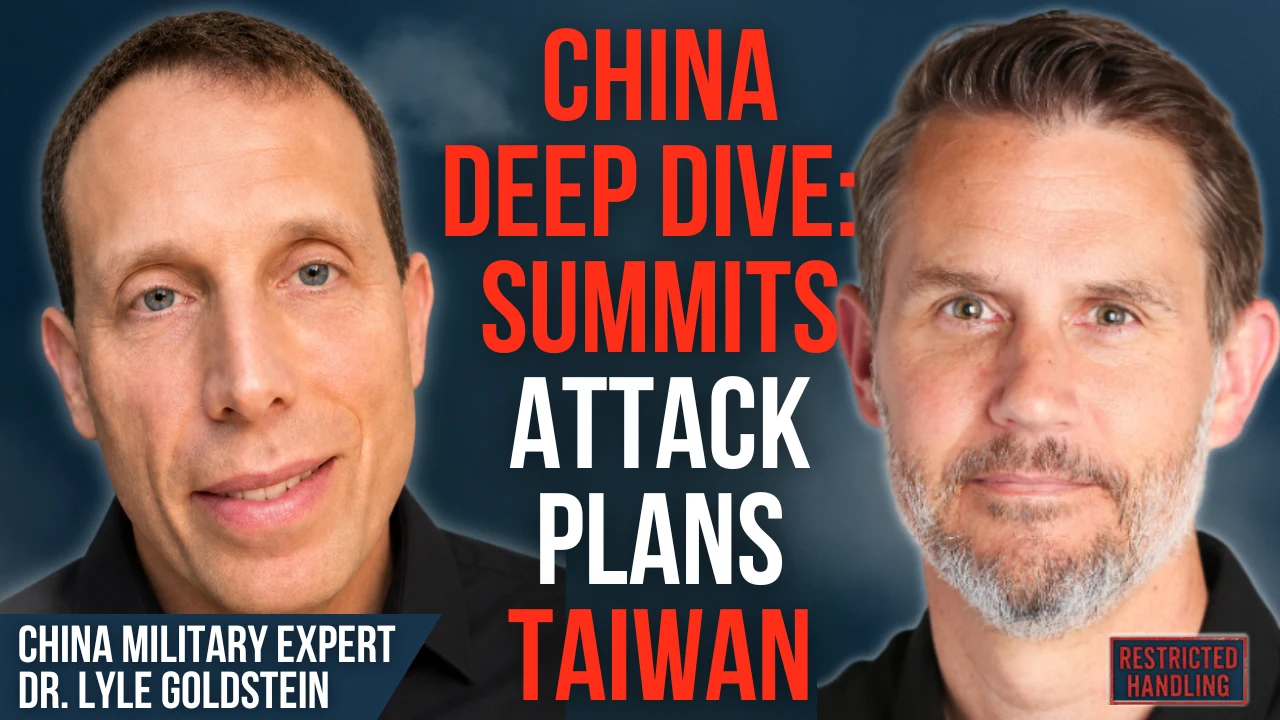
Start here
Three key takeaways
-
Military readiness is not a war calendar
Goldstein takes Chinese preparations seriously, but a capability assessment cannot establish when Beijing will decide to use force. He argues against assuming either that an attack is imminent or that China is incapable of attempting one.
-
Purges can support competing explanations
He questions the conclusion that the removal of senior officers necessarily leaves China's military unable to fight. His alternative reading emphasizes political control and leadership choices, while acknowledging that outsiders cannot see the whole decision process.
-
America's commitments need a hard look
Goldstein makes a case for restraint over Taiwan and for distinguishing that question from existing U.S. treaty commitments. It is a policy argument open to disagreement, grounded in his assessment of the military risks and the interests at stake.
Episode Field Guide
Explore this conversation.
The people, institutions, and equipment connected to this episode. In the conversation marks a direct mention; Related background adds context.
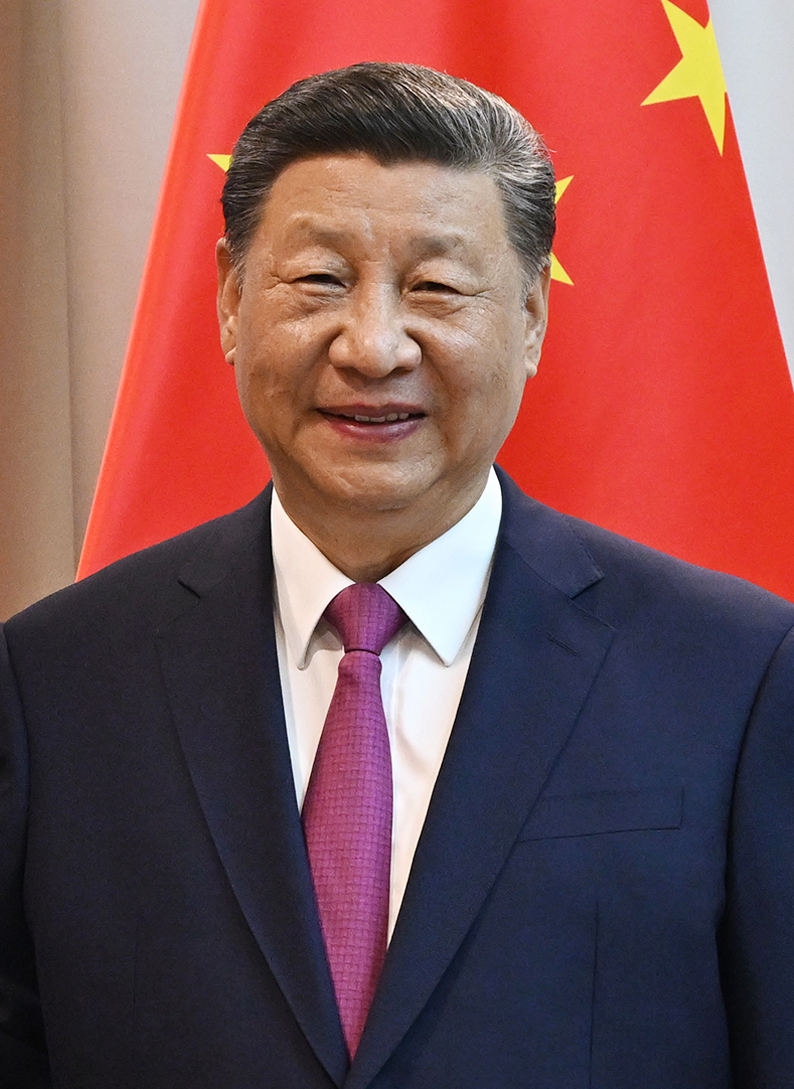
Xi Jinping
Explore the leader’s dossier alongside the discussion of summit diplomacy and Taiwan.
People’s Liberation Army
Goldstein discusses competing interpretations of military purges.
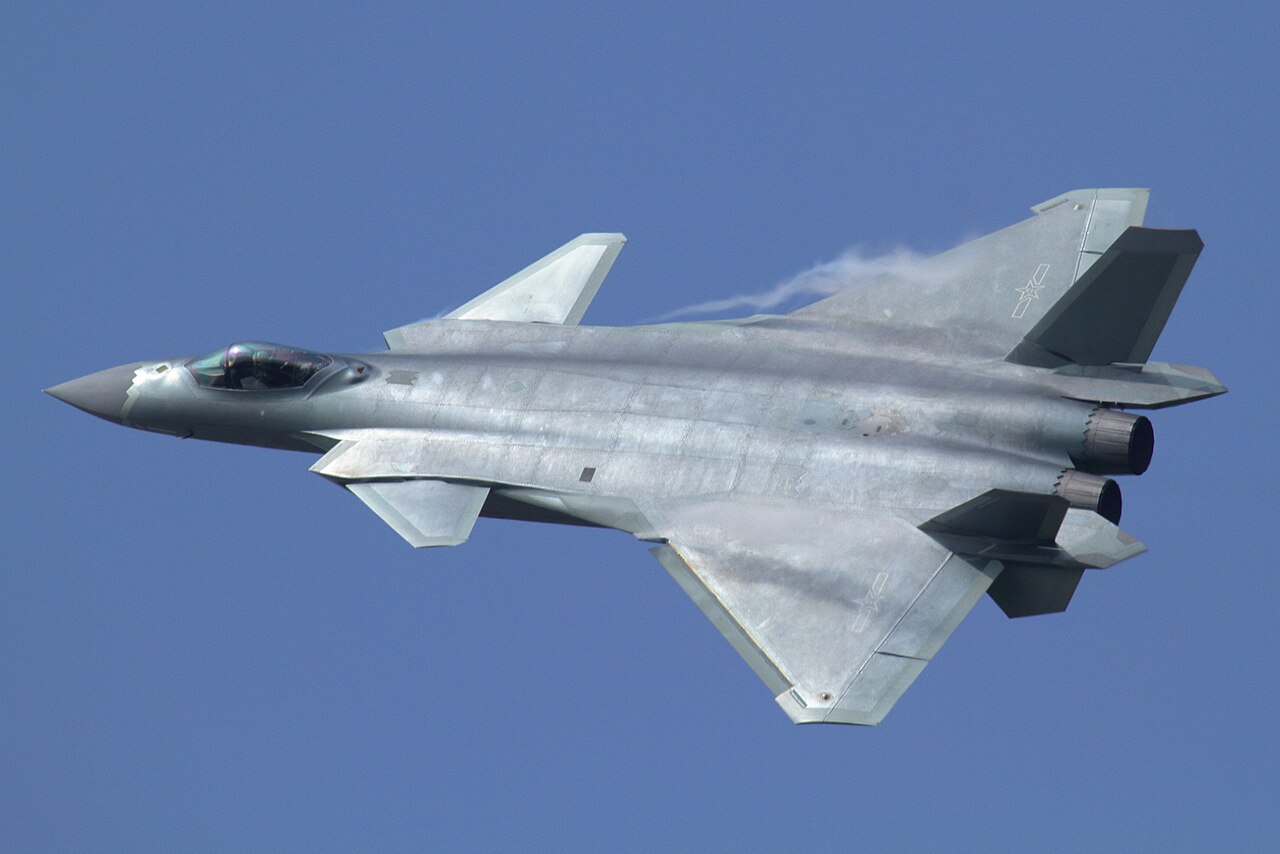
China Arsenal
Background on selected Chinese systems. The conversation does not identify models in this passage.
Image credit
These links are an RH reading guide, not guest endorsements or independent confirmation of every statement in the interview. Episode views reflect its publication date; linked records have their own source dates.
The written account
The issue behind the summit
Ryan brings Lyle Goldstein into a conversation that ranges from the Trump-Xi meeting to Putin, military planning, and the possibility of war over Taiwan. Goldstein favors regular contact between leaders of major powers, even when a summit produces little polished language for the cameras. He sees value in difficult governments speaking directly, particularly when each side suspects the other of preparing for confrontation.
Taiwan occupies the center of his account of Beijing's priorities. Goldstein argues that Americans can underestimate the importance Chinese leaders attach to unification and the degree to which it shapes their relationship with Washington. Understanding that priority, in his view, is essential to assessing risk. It does not settle the separate questions of Taiwan's future, the wishes of its people, or what the United States should do.
Reading preparations without inventing a deadline
Goldstein is skeptical of reassuring arguments that China lacks the means to attempt a major operation. He points to industrial capacity, military preparation, and the relationship between civilian and military resources. He also cautions against judging China's options entirely through the model of how the United States would conduct a similar campaign. Different geography and different assumptions can produce a different assessment.
That does not give him a date for a war. Capability, intent, and the final political decision remain separate questions. The discussion of senior military purges illustrates the uncertainty. Where some observers see an organization weakened by upheaval, Goldstein sees possible efforts to tighten political control and prevent the military from becoming an independent power center. He offers an interpretation, not inside knowledge of every dismissal or of Xi Jinping's plans.
The costs behind an invasion or a blockade
Ryan presses Goldstein on the practical difficulty of a Taiwan operation, drawing on his own experience as an Apache pilot. Moving forces, keeping them supplied, and surviving a contested environment would all impose costs. Goldstein does not treat those concerns as trivial. His argument is that serious difficulty should not be confused with an assurance that Chinese leaders would never take the risk.
A blockade presents a different set of problems. Goldstein regards it as an important possibility, but time can create opportunities for other governments to respond. The conversation also examines whether comparisons with insurgencies in Iraq and Afghanistan are useful. Goldstein stresses Taiwan's different geography and social conditions. These remain contested assessments of a hypothetical war, with enormous consequences for the people who would have to live through it.
A case for restraint, and room to disagree
Goldstein's policy recommendation is to define American interests and commitments more carefully. He distinguishes Taiwan from places covered by U.S. treaty relationships and disputes the assumption that a Chinese move against Taiwan would automatically lead to an expanding series of conquests. Ryan gives him room to explain that case while asking about the military and political judgments on which it rests.
Goldstein also rejects an easy assumption that China's economic or demographic difficulties will soon remove the problem. He sees substantial enduring industrial strength and wants Americans to distinguish the Chinese government from Chinese people. The interview is useful precisely because it asks listeners to examine the assumptions behind their preferred policy. Agreement with his recommendation is not required to take the costs, uncertainties, and choices seriously.
Based on the Restricted Handling conversation published May 24, 2026. Views and forecasts reflect the discussion at that time. Original episode and show notes ↗
Full episodeRead the transcript
This transcript comes from the published episode captions, with spacing adjusted for reading. Names, punctuation, and terminology may contain transcription errors. Refer to the recording for exact wording.
Hello everyone and welcome to another episode of the Restricted Handling Podcast. Today you're stuck with just me. Glenn is traveling over in Eastern Europe. He'll give us a full readout when he comes back. Fairly similar to some of his other work, but he's at a pretty interesting conference right now. So we'll be eager to get a readout from him. We are really fortunate to have a guest here to go deep on China and Russia. Professor Lyle Goldstein, Director of Brown University's China Initiative. long time scholar of Chinese and Russian military strategy, former professor of over 20 years at the U.S.
Naval War College and founding director of the China Maritime Studies Institute. His work has shaped debates on Chinese naval power, U.S.-China rivalry, Taiwan, the emerging China-Russia maritime partnership, which is also the subject of his newest book that came out earlier this year, The New Cold War at Sea. Lyle, you can't believe everything you read online, but it did say that you are fluent in Chinese and Russian and maybe learning a third language now. Is this true? And welcome to the show. Thank you so much, Ryan. It's great to meet you and I hope I'll meet your co-host at some point.
Sounds like he's doing really important work in Ukraine. I myself would like to hear his readout very much and I'll listen for Yes, I do speak both Chinese and Russian pretty well, although it varies a little bit what I'm focusing on at any given time. And yes, I'm... working on Korean and finding it extremely difficult. think I'm just too old to learn a new language. I do, Ryan, let me add to my bio, if you don't mind, I do work at Brown University and very proud to do so. the main hat I wear is at Defense Priorities, a uh Washington think tank where we're trying to promote realism and restraint.
And I should note, and we'll link this in the show notes so people can find it. You've got this really nice five part series on Taiwan at Defense Priorities that's got some really slick graphics to help people digest it. I think folks who like this show will love that opportunity to go deep here. And maybe we kick it off. We're just, there's so many areas to cover, but we're just fresh off the heels of the Trump, Xi summit in China. And then obviously Xi hosted Putin recently. think a lot of people now that we've had. bit of time for the dust to settle? We're curious who came out on top there?
Who won? Who lost? If that's even possible to say, and how did it shape up from China's standpoint? Well, think, first of all, let me say, think these kind of summits are very, very important. strikes me that there's a lot of pressure on this particular meeting between Trump and Xi, but that's partly because the last time we did one of these summits was nine years ago. it's hard to believe, but that's the reality. And to me, that's quite shocking. And we need this to happen very frequently in my view. I believe we should have summits among the leaders of the great powers, certainly among the leaders of the superpowers, but also, you know, I think it's important that Trump and Putin also meet very frequently.
And same goes with the other, you know, major world leaders, you know, whether it be India or France, you know, all of them should be meeting regularly. I've also advocated in the past for a annual, at least annual P5 meeting, meeting the permanent members of the Security Council. I mean, if these leaders knew each other really well, knew each other deeply, were comfortable with each other, I believe, you know, it would be quite a different world, Ryan. So anyway, so let me say, I'm pleased that this happens. And it's, you know, I think the press tends to immediately go to, well, okay, what's the What's the readout?
You know, there was apparently no, uh, no common readout, right? There were just two separate readouts. So right away people are saying, you know, they couldn't agree on anything. that may be true. mean, look, I'm the first to admit there's, literally hundreds of areas of disagreement in the relationship. Uh, it's such a complex relationship. is fraught, deeply fraught. There's a lot of anger on both sides, frustration, fear. That's built up by the way. but, they need to listen to each other and it, that can be painful, right? For both sides to listen to each other, but that's incredibly important part of it as well, just to kind of exchange views to sort of level with each other.
so I, I'm some, you know, maybe I'm a kind of glass half full person, but I I'm, uh, I mean, I think both sides are better off for having done this. you know, look, You know, if one wants to keep score and I'm a little bit against that, frankly, but I will say, think that Chinese are sort of, honestly, in almost all respects in a better position, partly cause they're not, involved in a, uh, in a war that's not going well and that that's threatens to disrupt the entire global economy. So, I mean, you know, the, People asked me repeatedly over the last month, you know, is China at an advantage?
Absolutely. Yes, it is at an advantage. Trump, think, has been uh quite severely weakened by this, what does he call it, an endeavor. To my estimate, Ryan, it's an unconstitutional and unnecessary endeavor, but there it is. You know, I do think it was a win-win. No, I think we're better off. I think they're better off. world is better off and we should do that very frequently. As to the Russia-China angle, I I agree. I think a lot of Americans are little bit disturbed by how quickly came sweeping into Beijing as well. Are the two summits related? Yeah, I think we have to say they probably are related.
there's no question in my mind, I just finished a book on Russia-China relations. These two powers see eye to eye on many things. That makes it very different kind of event. know, it's hard to compare the two relationships because they are so different. But, I mean, the bottom line, Ryan, in my view is these are great powers. or superpowers, depending on how you define these things. And they have to talk frequently, and that's critically important. So I favor more symmetry. And Taiwan obviously comes up just a little bit in this summit with Trump and Xi, with Xi making some comments at the outset about being careful with Taiwan and how this could lead to future escalation.
How do you think that the Taiwan topic was handled during this summit and coming out of it? Any real changes, materially different than where we started from? Any surprises to you as somebody who's looked at this for so long? Well You know, as I see it, Ryan, you know, we can get into this much more, but in to my estimate, the military balance has been shifting for, you know, really for the last 30 years and very quickly for the last 15 years. And that is has changed the situation quite fundamentally in China's favor. And you kind of have to leave it to the political leaders to sort of catch up with this reality.
I think it's clear to me that this is dawning on many American leaders. It's dawning on a lot of leaders, I think, in Taiwan as well and around the region. It doesn't surprise me at all that Xi Jinping led with this in Busan, the meeting from last October. The issue is kind of... pushed off to the side and kind of avoided, I think, because they had little time. So I did expect this, the Chinese to raise this in a big way and they did. Um, but that's quite consistent with their whole approach, you know, over the last, well, really since forever, that's only a slight exaggeration.
mean, since, 1949, and I hasten to remind your listeners that Taiwan. has been at the heart of the U S China relations, throughout our entire, the entire modern period. when Kissinger and Nixon made the breakthrough in 1972, Taiwan was front and center with the main condition of the rapprochement being that U S troops and including U S nuclear weapons would all be withdrawn from the Island. And indeed it took another seven years until 1979 for all of that, you know, to come through and for China to finally agree, okay, ahead a normal relationship with the United States.
By the way, until that day in 1979, China was shelling the offshore islands to make a point. And it only stopped shelling in 1979. So it's kind of remarkable. I hope they don't start shelling again. I also hope we don't. You know, get any crazy ideas like putting nuclear weapons back on Taiwan since we took them out. But my point is this is like, Xi Jinping started the discussion by saying this is an extremely dangerous situation. That's, he said it could result in a conflict. That's a polite way of saying, we're ready to go to war with you over this. And I think Trump and his team understood that and internalized that.
And it's a good thing. I mean, that probably needed to be heard. it's one thing to like read it in a document or a memo or something like that, or, get your intelligence analysts to say, okay, this is a possibility, uh, but it's a, probably a low possibility, but it's another to look at another leader in the eye and have them tell you, know, we, are ready to go to war with you soon about this issue. You know, are you going to, you know, are you going to go there? So, so yeah, I mean, there's a little bit of staring each other down. Um, but that's important, you know, and.
now we could spend the entire podcast discussing Trump's latest comments on Taiwan. They were very interesting during this Fox interview that he gave from Beijing. he said a lot of, a lot of things that he said before, you know, that Taiwan stole our chips and, we can, we can work through a lot of that, but I mean, he broke some new ground here by, I think at one point he, I don't remember the exact wording, but he said something the effect he sharply criticized the president of Taiwan, uh, Lai Qingdao said that he, he's been too aggressively pushing for independence and that that was extremely dangerous, uh, set of, uh, uh, moves and that that could suck the United States into war.
Um, and, you know, it became clear from his comments that this is a, a major concern of his. that's breaking new But I think it is somewhat positive because in the past, think US leaders tended to be kind of one sided and not fully understand the uh dynamics here. ah I'm somebody who believes very fundamentally, and really convinced that this is a, this is a civil war. It's the people's Republic of China against the Republic of China. Go figure. And civil wars have their own particular kind of dynamics. They're, they're extremely dangerous and they can be extremely violent.
But the record to my estimate shows that when the United States gets involved in other people's civil wars, it doesn't go very well. that's one reason I am quite pleased with the president's latest formulation. because I think he kind of understands this and he understands that this is, this is a very tender issue, very tender, but it's not tender for us. We don't really have any dog in this fight in a way we, we don't really care. we just want to keep trading and we want stability and you know, that, that to me is actually a more mature attitude than, what we've seen, um, coming out of Washington for a long time, which somehow has got it in its head that, uh that this island is somehow a vital national security of interest of the United States, which it's not.
mean, it's just, you know, probably many of your listeners would be shocked to hear somebody say that, but it's, you know, this is a reality I want to share with everyone. So let's work through it by all means, you know. No, hear, mean, I guess one of the arguments you might hear more recently is just about the, you know, what Taiwan gives us in terms of. in the AI race in particular, with rare earths or compiling items together that we can then leverage for advanced technologies. And if China were to then control that, they'd control even more of this market.
we had talked a little bit about just the idea of China maybe taking Taiwan by force. I'm sure it can look in many different ways how this happens. And you do a great job of this, actually, I would say, for people to look at the defense priorities work that you've done. But we've heard, I think, Intel suggesting that China aims to somehow take Taiwan in 2027. Trump has said that in discussions with Xi, Xi has indicated that he wouldn't do something like that on Trump's watch. China has bolstered its military capability. They've stated at these various summits, this could lead to conflict.
What do you think is the reality of all these things we hear? How would you suggest people digest what they hear in terms of timelines for such a confrontation. I guess the way I put it, this is this way, Ryan is. Does China really want to unify with Taiwan? Yes, absolutely. And I, I don't have a doubt in my mind. And when I look for signs that they might attack, you know, are they doing this? Are they doing this? Are they doing this? Every time, everything I look into indicates, yes, they are preparing. I mean, some of these things are kind of, if you will, dual use, meaning like, it's not like, I'll give you an example.
mean, one is that we've been watching China stockpile this petroleum reserve for, you know, going out a decade now. And it's very impressive. I mean, there's, to build such a strategic petroleum reserve from scratch. mean, it's, you know, just. just from the economic size of it and the technologies involved, it's impressive. Now, and we're seeing that in the current crisis, how useful it is to have one of these, but could this also be part of the preparation? Yes, and I think they've gone out of their way across the board in their economy to build this very impressive resilience.
the, Pentagon reports that they put out annually have, have, in the last few years, they've really emphasized this civil military fusion, which, uh, is kind of a, fancy way of saying that they their economy is built to to go very easily and rapidly into war Which is no small thing if you know American history, right? I mean, you know, it's takes our country seems to take uh you know a long time to spool up so I mean it's just my view on this Ryan is that they are ready don't think you know, they could go in 2026 nobody knows. if you ask 10 China specialists, you'll get, you know, 10 different dates and half of them will say, well, this will never happen.
They'll never do this. I don't think any of us know, and we shouldn't pretend otherwise. And, and here's the thing, Ryan, they have a very, very profound incentive to make sure we don't know and our, our left guessing. And, and, and nobody really knows probably except Xi himself and maybe, you know, a hundred other uh, uh, Chinese in the top leadership. To your point on maybe only a hundred other people will know, over the past year, there's been a lot of reporting of purges of the senior echelon of the military within China. There's been significant military buildup that you've reported on for years now and you have very impressive capabilities.
We see almost on a daily basis, military activity taking place. closer to Taiwan or within their designated areas out in the South China Sea. What do you make of maybe the purges, if we can start there, how significant have those been and why, if this might not happen at all, why are we seeing purges so rapidly? Yeah. Yeah. I'm happy to talk about the purges. By the way, you mentioned that I'm watching their military buildup and I do. I watch all dimensions of it. And I hope we get to talk about the different dimensions because it's quite extraordinary to watch.
I got to say, I just learned, you're a former helicopter pilot. I do want to just put on the table maybe for us to discuss later that part of China's strategy, I think, depends on this massive buildup of helicopters across the board, different types. And I know many in the West are saying, well, helicopter aviation is kind of obsolete now or something like that. I don't know that that's true. And I certainly think the Chinese do not think that that's true. ah So that's just one dimension of this huge buildup. the fact is a helicopter is a very interesting kind of niche approach to the Taiwan problem, right?
I mean, look at the islands, 100 miles offshore. What could you do with with 1000 helicopters and and China, I think, has put a lot of its eggs in that basket and other baskets too. But but anyway, let's get back to purges. Yeah. Okay. ah it dialed in. We'll talk dimensions, military dimensions as well. Yeah. Love it. I love to interview you. And I I really admire anybody who's brave enough to get into an Apache. That's amazing. But let me on the purges, I'll just say this, the conventional wisdom in Washington now, I won't name names, but some of the leading uh experts and this has been the approach of the New York Times, which is a one of the thought leaders for the American foreign policy elite is this idea that the purges have somehow devastated the Senior leadership of the PLA and that it therefore is kind of lost its way.
Xi Jinping and the people around him have lost faith in the military. They think corruption is pervasive and and they couldn't possibly fight a war in this condition. I strongly disagree. I think it's even possible that it's actually the opposite, meaning that this military is much better prepared, having cleared out a lot of, let's say, commanders who are not judged fit for the coming campaign. You know, I'm just saying that's also a possibility. the major issue is succession politics, right? mean, Xi Jinping is getting older and the question of who succeeds him is an important one.
So my going in bet on the purges is that this has to do with the military being a little too powerful. Xi Jinping needs to knock them down a rung and say, hey, you're not going to play kingmaker here. I will decide who's China's next leader and you will follow my approach. So there may have been some hints from. Zhang Youxia and his faction that they were weighing in in a way that Xi did not appreciate. So that's probably my leading candidate theory. Corruption, I'm a little, I don't think it's as pervasive as uh is often made out in the West. There's too many impressive things going on in the Chinese military that if the...
If the Chinese military was so corrupt, as is often said that there's no way they could pull off these, impressive achievements. My perception watching the PLA for decades is this is a force that's locked and loaded and they have a kind of laser-like focus On this one mission. And that makes it very different than say the circumstance of the Russian military going into Ukraine. So I don't want to distract this year, but I mean, to me, the It's absolutely clear that the Russian officers leading the charge into Ukraine in 2022 were rather confused and did not understand the mission and did not know why they were doing this and suffered from all kinds of morale issues in all respects.
So that's a very different circumstance, right? I mean, this is a case in which these officers and these men in the PLA are trained from day one of when they begin their service that a core a tenant of the PLA is to unify the country. So nothing like that exists in the Russia-Ukraine context at all. Yeah, so interesting. Okay, let's talk military dimensions then, because I know you've written about this extensively. Would love to just hear your thoughts on what this looks like and how Americans should be thinking of this. I usually like to divide it into two respects.
Like one is like, what, what would an invasion look like? And then of course there's the issue of what, what alternatives to invasion there are. those are some sort of branch issues we can cover. then, then there's this bigger problem that, you know, what if, if uncle Sam tries to ride to the rescue, which, which we might, I'll give you, although I rather hope we don't, but if we were to do that, what could happen. And, you know, again, if you ask 10 experts on this, you'll get 10 answers, but I'll give you mine happily. And, the fact is to to nuclear superpowers have never gone to war in a serious way.
So nobody knows what would happen. But so I'd rather not roll the dice, frankly, but so so let's take it in pieces. OK, so Putting aside the sort of blockade scenario and the uh limited war scenario, which I, both of which I think are kind of symbolic use of force. We've actually seen China use, use force, you know, shooting missiles over the island. You know, they've done that now several times, parading bombers around it, sending planes regularly through the median line. So, I mean, they are. already involved in kind of military coercion campaign. And some people call this kind of gray zone.
So putting all that aside, if China were to go for an all out invasion, I think they would pummel the island, you know, to a kind of massive degree with the level of firepower that we couldn't even imagine that would be, on a level that much, mean, remember Ukraine is kind of our, know, what's useful to compare with because that's a modern war kind of unfolding before our eyes. you know, China has so much more firepower, so much more of a deep magazine than Russia has on the conventional side. And remember, The area of Taiwan, physical area of it, is almost 20 times smaller than Ukraine.
So you have a massive amount of firepower in a much smaller area. And remember, more than half of Taiwan is just sort of basically uninhabitable mountains that are very sheer. They face the wrong way, though. They're on the eastern side of the island. So it's actually even a smaller area than that that we're talking about that would be come under just massive fire from glide bombs, ballistic missiles. Even if you can imagine China's protected rocket artillery that can fly across the Strait too, I think that would be devastating. Kamikaze drones. So all those would be used to kind of rain fire over the island.
And then of course, you it hitting military and civilian, like production infrastructure on a civilian scale? Or is this going to be, would you imagine targeted at military targets, I don't know, with the hope that it doesn't further entrench the people of Taiwan? Or is this like all out, they're going to target every... No, think they would. I it's hard to say, to me, I mean, they have, if they want to reduce the island to rubble immediately, they have the munitions, they have the capability, but I also think that they would realize that there's political benefit to trying to keep civilian casualties pretty low.
I mean, they like to say among themselves that Chinese don't kill Chinese, but. Of course, of course, many Chinese on all sides would die. But anyway, as this is going forward, you would have the first special forces elements. And we talked about helicopters briefly, but I mean, truly is stunning area to watch because just how quickly they've come up and I, you'll be interested. mean, again, you're the expert on helicopter operations, but from what I've seen, like they, um, I guess, know, the US worked really hard to develop, guess, this air cavalry concept where the infantry are roping down, you so the helicopter doesn't have to land for long periods.
It just delivers and goes into a kind of hot area. you know, China, to my estimate, has thoroughly kind of perfected those techniques, in fact, to the point where all services, the Air Force, the Navy and the Army, and including also the what's called the People's Armed Police, which is a literally, believe, 600,000 strong. So that's kind of their reserve force. So even the People's Armed Police are practicing this roping from helicopters. So I believe that is a major part of their strategy. And to my calculations, and I think they're pretty conservative calculations, Ryan, I believe China could land, you know, tens of thousands, maybe even 30 to 40,000 special forces on the first day.
So I'm playing the first 24 hours. Now they would take major losses. Absolutely. But, but, because as you know, helicopters can be shot down and would be shot down. But the point is it's a big enough Island that they, they can use them, with drop tanks and so forth to, kind of fly around the defenses, I think quite successfully. And so anyway, that would be the initial, attacks and they, they would land in the rear. They would secure, you know, bridges. would blow bridges. They would, uh, destroy headquarters. I've noticed, by the way, the Chinese are now obsessed with the use of snipers.
Why? Because if you can land a set of sniper uh team at the right intersection, then you can cause total havoc in the rear of Taiwan. And that's when Taiwan fails, right? When they can't bring up their reserves, when the beaches are basically cut off from, the rear forces. And I think so. why not air drop people in? I understand the utility of bringing in a helicopter and fast roping 12 to 25 people in, but why not the old static line jump people in just blanket? I see both actually. mean, look, the terrain is difficult. So, I mean, I don't want to, like, in a way it, it, it, mean, when we, if we compare it to Normandy, it could be harder in that sense.
I mean, you don't have a lot of kind of open fields, you know, but, but you have plenty of opportunities for, for, think for this kind of fast roping and, also frankly, for, paratroop drops, uh you know, Look, they understand that kind of insertion takes major casualties at Normandy. I believe the casualty rate was 20 % for the airborne forces and including the glider forces, by the way, the gliders were, as we know, were really problematic. A lot of people died in gliders on June 6th, but so helicopters are much better option. Okay. Big problem with airborne and hella born forces, right?
They insert probably pretty nicely, but once they're on the ground, they, they are out of ammo pretty quick, right? They don't have a big, they don't have a lot of supplies nor do they have a lot of firepower. So I, I trust me, the Chinese are thinking about these problems very seriously. And one of the ways that they're going to solve that problem, Ryan is for those initial forces that are pretty isolated, pretty on their own is that, they're going to use drones. So. for sure. you know, that force that's way behind the lines has a supply force of like a hundred drones and yeah, 30 of them don't make it, but the other 70 do.
And so that is a kind of medium term solution. the, you know, Taiwan is just not that big. So I believe, you know, with 40 to 50,000 troops in that initial wave of Helleborn and airborne, I think that would be the key. in unlocking the whole operation. anyway, then, okay, the next stage of meanwhile, while this is going on for three days, then you have the force assembling because you always hear people say, well, you know, we're going to see the force coming. Okay. But the fighting is going on. Right. And the force is assembling. think it would, it took about, think five days for the D-Day forces, 150,000 to get on board ships, five days to load them.
I think China could do it in half that time. why? Because they have the most efficient ports in the world and because they've been practicing. mean, how long did Eisenhower have to plan his, uh, his attack? Like, you know, a year and a half, basically, maybe two at the long end. Okay. China's had 30 years to plan this and their ports are extremely advanced and ready to go for this. So, so they're going to board very quickly and it's, you know, it's a short trip. So, I mean, so I do think, you know, we'd already see the initial landings on, you know, day three, day four, day five.
And, know, some of them might fail, but some of them would succeed. They would create these lodgements. They would use the Helleborn forces to take a high ground around some of these ports. They would not, I, I'm thinking they probably don't go for the big ports because that's too hard. So Taiwan has like hundreds of fishing ports. They just use those. here's one more thing, Ryan, I'll just say, and then I'll, we can move on, but. Because I'm glad you asked about it because a lot of people are dubious. to my estimate, like I've heard it said, you know, well, you know, with javelins and stuff like that, we can unhinge their attack because, um, you know, we, can prevent their armor from coming up.
But in my view, this is not an armor fight. If you look at the ground, it's just, uh, you know, it's very dense urban terrain. surrounded by hills and mountains. It's not good for tanks and the Chinese are fine with that. mean, they're pretty good at tank warfare as far as I can see, but they know that this is a oh infantry fight. And from what I can see, they're going all in on infantry tactics. And it's all about morale, morale and well-motivated infantry. And I think they know that going in. So unlike the Russians who We're kind of like wedded to this concept of armored warfare where they, you know, these columns of, you know, T 72s and T eighties.
I don't think the, the Chinese don't have that concept at all uh for, uh, for, for the attack on Taiwan. Uh, it's just, there's, there is no kind of wide open plane. Like Ukraine is sort of would be perfect tank country, but Taiwan is not, not at all. one other point I'll just make quickly on the military side where, where, again, I, quite disagree with conventional wisdom is that the, a lot of, a lot of, uh, Wargames have been done, particularly the one at CSIS in 2023, which has a major that that was a pretty good game. Like they, you know, hats off to the organizers.
mean, they, they did 40 iterations on it, which is, I mean, that's very impressive, right? How many Wargames do you know that they did, uh, so many iterations? So, so they actually have like very interesting nuances and stuff like that. But they made a major flaw and here several major flaws, but here's the one I'll focus on. The major flaw is that they assume that, this was a kind of bizarre mistake because it's so common, uh, that, that it's almost laughable, like, assume that they will attack in the way the United States would attack our, we're going to bring our troops over in those big, beautiful, um, you know, in the Navy, call them like LPH or LPD, like these large amphibious attack ships.
sometimes they call them small decks or something. You know, they carry, you know, a thousand Marines or 800 anyway, all their vehicles really kidded out. They got everything. They can do anything. They have nice set of Helios, uh Ospreys, everything, you know, so it's kind of the, um, Lamborghini of amphibious warfare. So, you know now now Chinese building a few Lamborghinis I think they have already like 12 or 15 and sure they'll keep they can use those but I mean that's where they're missing the point so the assumption is okay. Well if China has about altogether when you include, you know Corvettes Lamborghinis And a few Buicks or whatever when you put them all together The assumption is China has about a hundred to a hundred ten of these All we have to do is sink those ships or sink 80 % of them and we win.
But that is a huge fallacy because I'm telling you, China has, China can deploy its whole merchant fleet, its whole coast guard, its whole, all of its fishing boats. And this is the key that people don't realize. mean, China just flood the zone with a massive amount of vessels. mean, after all D-Day on D-Day, the allies had about 5,000 vessels out there of which most of them were civilian vessels. So. So it's just a fallacy. basically you show me where in our plans, have the 20,000 munitions to sink those 5,000 ships. And there'll probably be more than 5,000, right?
Cause China can bring much more to bear actually than the allies even could at Normandy. So we're talking about five, 10, 15,000 ships out there. And you know, there's just no, sure. We would sink hundreds of them. No doubt about it. It's dropping the bucket. They will get across. Even the CSISN analysis, even they realized that the Chinese will get ashore for sure. I believe after that, it would take about eight to 10 weeks to conquer the island. So this is interesting because I'd be curious, would you expect a counterinsurgency is probably the wrong term, but kind of entrenched groups fighting covertly as much as they can?
Think Vietnam, think Afghan, like all these other examples. And the reason I ask is, Glenn, our co-host, spent 34 years at the agency. We always host other folks who have come out of the Intel community. We're just notoriously wrong in predicting the will of people, the will of the people to withstand something. I think we're seeing it in Iran right now. There are many areas you can point to. How would that play out in Taiwan, you think? Yeah, it's a great question. And it has come up again and again. In fact, it's quite common, I believe in the Taiwanese media and among Taiwan, kind of the more nationalist crew will say things like, you know, we've learned from Iraq how to resist.
We've learned from the Ukrainians. We know how to use kind of people power to stop the PLA. I don't. in this circumstance, I'm very, very dubious that that would have any effect. I'll tell you why. I mean, one is, you know, and here I hope I'm not falling for some cultural stereotypes, but I, my impression is many, Chinese people are often very pragmatic and just, you know, they're kind of, many would probably, I'm thinking many would keep their heads down. But I mean, look at Hong Kong, for example, like, like if you read the Western newspapers, you would think that we're about to have a, you know, bunch of suicide bombers in Taiwan, sorry, in Hong Kong, they, you know, we're seeing a level of repression in Hong Kong that's so horrible that would drive these people crazy.
they would, you know, they want their freedom and they'll be happy to commit acts of terrorism. And they have all kinds of links with the West, you know, so they could surely put their hands on weapons or grow their own weapons. And frankly, they did bravely go into the streets to... to oppose this, although we can discuss that situation more. But what I'm saying is there hasn't even been a not even a hint of any kind of insurgent violence in Hong Kong. And, you know, we can talk about why that's the case, but I do believe Taiwan would be quite similar. In other words, I just don't expect it.
I won't even mention, but it's quite true that, you know, the Chinese are very ruthless in rooting out these kinds of elements, right? And, mean, here, let's face it, the fact that, again, I mentioned this as a civil war. Yes. So guess what? They speak the language. They can understand each other. And, and when the troops go in, they will be, but I mean that, you know, we all, we scratch our head and be like, why, why are Chinese, influence campaigns so successful on Taiwan? Well, because they, It's the same culture. It's the same language. And when you share the same language and culture, you can deploy all kinds of nuances.
Whereas we're kind of very ham handed, right? Because we don't, even if we think right is on our side or that, you know, all these people want to be free and live like Americans, but the fact is we don't know what the cultural cues are and things like that. so they definitely have an upper hand. And let me just say, I've seen good evidence that China is preparing its occupation force. You know, some people have even said that they've been sort of using Xinjiang as a kind of practice, practice ground. And indeed you don't see really like the resistance movement in Xinjiang and Tibet, for example, pretty non-existent from what I can tell.
anyway, it's it's a tough issue to talk about. repression and it's sad to think that repression would be so successful. like, you know, on the other side, for example, I'll tell you, Ryan, um, I've seen some good evidence that, that they understand that, that in order to gain the confidence of the people on Taiwan, in other words, the people they're occupying, they need to get the water on, they need to get the electricity on, they need to like, you know, commit to kind of, dealing with the humanitarian situation amidst the war to gain people's confidence, that they will put the island back on its feet.
So I do think they're thinking about that hard and yeah, they recognize it's all about politics and civil war, like I said, is a particular kind of war. By the way, we can talk about Ukraine. but... I mean, that also has some elements of civil war, right? And we, so I mean, there are actually some interesting similarities there, right? I mean, we all know the Ukrainians and Russians do speak, if not always the same language, a language that's very similar. Yeah. No, I, and actually like if we haven't bored you enough, like we'll bring you back on when Glenn's here.
Cause I'd love to get the Russian. Like he is very well versed in Russia and Ukraine. It would be very interesting. Cause I know you've looked at China, Russia quite a bit. I'll get you out of here in just a second while there's, I don't know how often you hear about or follow these poly markets or Kalshi these like betting sites that are prediction markets, not betting sites, prediction markets on things that are going to happen in the future. I was just looking up today the predictions for China invading Taiwan. So China invading Taiwan by the end of 2026, the odds are 7 % yes, and there's $23 million bet on that right now.
there's that. then China invading Taiwan by the middle of 2027 is 13 % yes, but a lot less volume going on that. I just find it interesting that this is kind of where we sit right now, especially after what you had just said earlier. Very interesting. I mean, those numbers actually are pretty good. I got to say, they often say, you know, there's a wisdom in crowds. You know, it reflects the fact that, like I said, China can do this. And I think most people just applying common sense and looking at a map. And I do encourage people look at a map, folks. It's pretty stark just how close Taiwan is that when you apply that.
and understand that China is a full up superpower can bring all its power to bear against this island. That it is certainly within the realm of the possible. On the other hand, we also have a track record where China has chosen not to use force. mean, even in, we talked about Hong Kong. mean, you can debate the details of the Hong Kong issue, but they did not bring in very severe rep... Repressive apparatus they did not you know march the PLA Through and round up, you know, I rounded up a few people but very few so I'm just saying like and Really China has not used force in a major way since 1979, which is a pretty extraordinary level of restraint So, I mean, I think that's refracted reflected in the polymarket.
Is that how you call it? I don't think that That's reflected there, which is it's a very it's still a very low probability now I believe if you check that polymarketing and said, how about a blockade or some other use of force, like a limited use of force? It would probably be more like 15%, 20%. So yeah, I mean, we can, we can say, and I, I agree with the conventional wisdom that a blockade is, is probably somewhat more likely. Um, yeah, there you go. Check it out. Um, I I don't check these things, but, but yeah, blockade is more likely in a blockade. Honestly, a blockade would probably be quite effective against Taiwan, Taiwan, you know, despite the fact that they've known this for a long time, they don't, you know, I don't believe it's energy or food stocks are prepared for this day when they could be totally cut off.
And China could do it rather easily as they've demonstrated. I mean, with a large Navy and a large Coast Guard too, it's well within their realm of the possible. Now there's a reason why they might not do a blockade and that would be that I mean, blockades work only very slowly. and, and, know, they're kind of giving us giving, let's say the United States and its allies an opportunity to kind of try to break the blockade, right. to, so they are, um, if you will, they're, they're giving us the initiative or at least a chance to, to, make a move. So, so that's, I guess the reason ultimately they, they could go for a more robust military option, like all out invasion.
Yeah, yeah. man. So last question for you and then we'll get you out of here. If you had five minutes with the US administration, what would you be advising on China right now? Sure. mean, look, I would say that this is, um, you know, the, I completely disagree with these people arguing that we're at peak China and that somehow in five or 10 years, we're going to be in a totally different world where China is in decline or something like that. I don't agree with that at all. mean, I don't think we've even glimpsed peak China and China is a very, very powerful country now, much more powerful than most Americans realize.
I urge everyone, uh, all your listeners to make a visit. And when you make a visit, don't just go to Beijing or Shanghai, get out to, you know, get out into the interior, get out to the West, get out to the Southern and Northern China and see for yourself. it's a manufacturing juggernaut, a par excellence, something to behold. and by the way, it's also got great food and nice people and it's quite beautiful as well. So have a look. we need to. come into a position of mutual respect with China. That's the only way we're gonna get by. I don't think China aims to take over the world.
I think they have their core interests among them, Taiwan, which they call the core of the core. But I don't think China is intent on controlling Japan or South Korea or even the Philippines. So I really don't think, I think if we manage this relationship correctly, that we, United States can do just fine in a world in which China is very, very powerful. I I think for the foreseeable future, there will be two superpowers in the world. One thing I, if I could just elaborate on one of those points, which is that it's often said that by the hawks who are very skeptical disagree with everything I've just said, basically, we'll tell you.
Look, Taiwan is actually just a stepping stone or even some people say it's a trampoline. They will jump on this trampoline and then launch into the wider Pacific, you know, take over Japan and all these other, you know, soon they'll be in Hawaii and after that, California. I reject that completely. if you look at the logic of their obsession with Taiwan, which is very deeply held and, some other time we'll go into all the history and why this is the case. Why is such a central focal point of Chinese nationalism? Um, and, in a word, it's, it, a lot of it has to do with Japan.
it turns out Chinese nationalism and it's kind of modern form is, it is very directed against Japan. It sort of formed on this anger of what Japan was doing in China. And guess what? It was during this period that Japan took Taiwan from China. So it's these issues are, are, fuse in the kind of Chinese mind. And, and that's why. a lot of this anger that's directed about the Second World War, about the atrocities that Japan committed, which were truly massive in scale, quite on par with what the devastation the Nazis brought in Europe. But I mean, all that anger is channeled into the Taiwan issue.
That's what I'm trying to say, because Japan did occupy it for 50 years. But what I want to say is Taiwan is its own particular set of issues. Like I said, it's a civil war. It's a very contained set of issues. doesn't threaten the United States to my reckoning does not even impact the United States really at all. And I'm happy to discuss and debate the whole semiconductor issue, the, you know, whether the future of democracy, uh, but also Taiwan is like us. It's strategic position. For example, in our last, uh, think in the NDS or the NSS, the, know, these U S government documents, they talk about the positioning of Taiwan within the first Island chain to my estimate, Ryan, it's just not true.
You know, basically if they take Taiwan, they move, you know, a hundred or 200 miles further in the Pacific, but it's the Pacific is massive. They're not, it's not a threat to the United States. Most important to realize, Ryan, it does not represent a fundamental threat to Japan. And of course we care a lot about Japan. mean, Japan is a country that does really matter. We want them as our ally. Absolutely. But they are not really threatened by a move against Taiwan and same with the Philippines. So, so both Philippines and Japan are very defensible. They are these huge archipelagos.
Uh, we can use defense in depth. The Japanese are very strong. The Philippines also have kind of a strong sense of nationalism. They are not going to buckle under. So what I'm trying to say, Ryan, is that our position in the Asia Pacific is very secure, irrespective of Taiwan. And if we go forward with that kind of attitude of like, we have a great fallback. sure. We would love the Taiwan straight to, to be peaceful and for them to, you know, figure out a way to get along, but it really is not, a vital. national security interests for us. so, uh, yeah, we've got to draw a line.
Japan is vital. Right. And, ultimately we'll defend Japan. Maybe not every rock and reef, but we will. Um, and I, we probably need to say the same of the Philippines, although that's a little more controversial, but I'm just saying we've got to make, we've got to, we Americans need to be clear in our heads about what we're ready to fight for. And once we make those decisions, everything else becomes clear. We don't need a new cold war. We don't need a $1.5 trillion defense outlays. We can take a much more rational approach to national security. This has been great.
Thank you so much, Lyle, for the time. Your students and defense priorities, I'm sure, are beyond fortunate to have you, and I hope we can have you back on. We'll have links to your books and defense priorities, obviously, in the show notes so people can check it out. And you have a book that just came out this year, so it's very timely, China-Russia Quasi-Alliance Maritime Strategy. So thank you so much, Lyle. Appreciate it. My pleasure, Ryan. Yeah, really enjoyed our discussion. Let's talk again.
Back to the Episode Field Guide ↑Keep listening.
All episodes →
John Herbst / Ukraine and U.S. strategy
John Herbst on Arming Ukraine and Raising the Cost of Russia’s War
Steve Wills / The Arctic and maritime security
Steve Wills on Russia’s Arctic Submarines and the Cables Beneath the Sea
Between episodes
The daily brief is free.
Russia, China, Iran, and North Korea. Straight to your inbox.