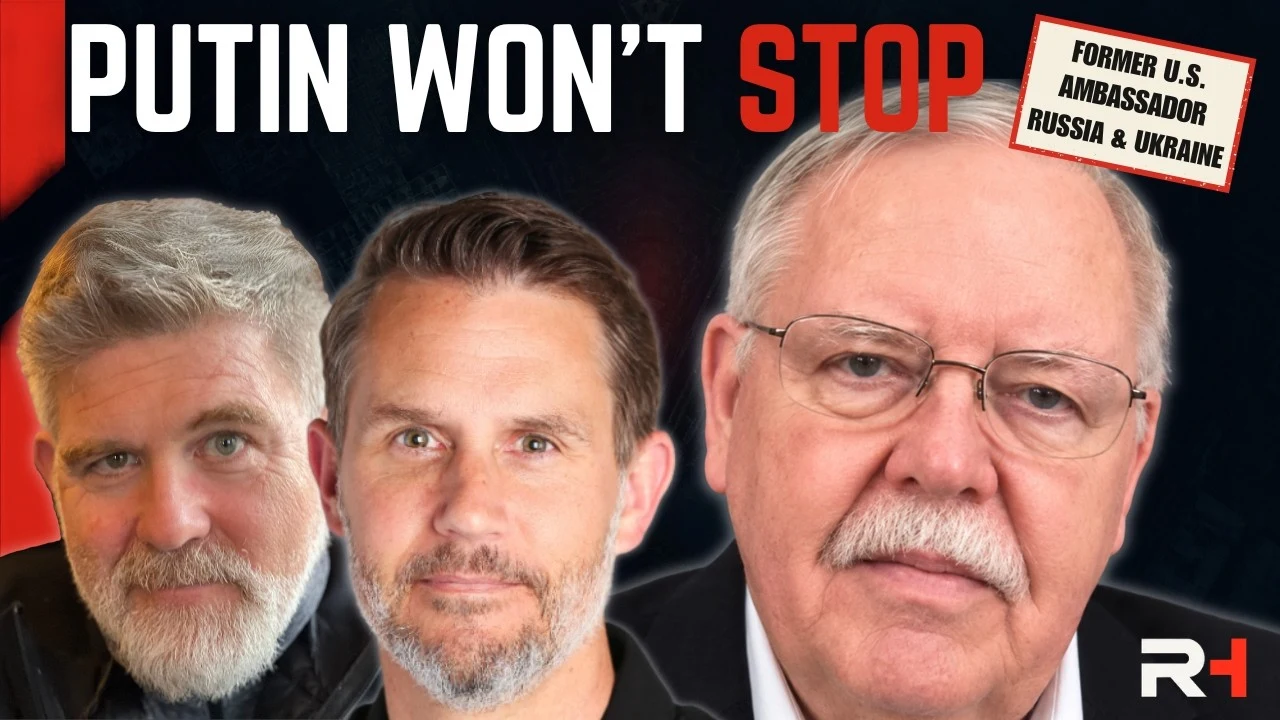
John Herbst on Arming Ukraine and Raising the Cost of Russia’s War
The former ambassador to Ukraine and Uzbekistan joins Ryan and Glenn to connect military support, sanctions, negotiating leverage, and the wider competition with Russia and China.
John Herbst / / 56 minutes
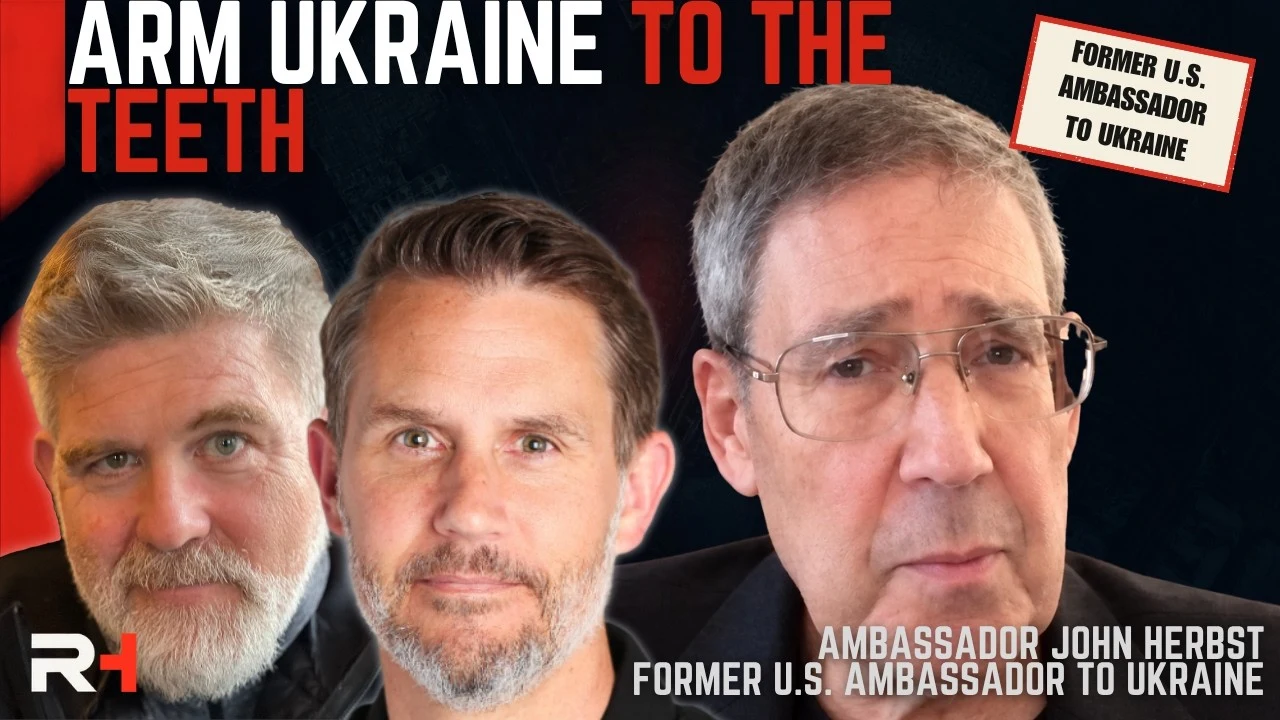
Start here
Three key takeaways
-
Herbst wants support that changes Moscow’s calculation
He argues for stronger military and intelligence support to Ukraine alongside greater economic pressure on Russia. These are his policy recommendations, built around making continued war more costly for Putin.
-
Economic offers need to be read alongside strategic aims
The discussion begins with reporting about Lukoil assets and negotiations. Herbst and Glenn examine how prospective commercial cooperation can be used to seek political concessions while warning against treating unverified deal claims as established facts.
-
Ukraine belongs in a wider strategic picture
Herbst connects the outcome in Ukraine with deterrence toward China, access across Central Asia and the Caucasus, and U.S. priorities in the Middle East. His diplomatic experience supplies context for those connections.
Episode Field Guide
Explore this conversation.
The people, institutions, and equipment connected to this episode. In the conversation marks a direct mention; Related background adds context.
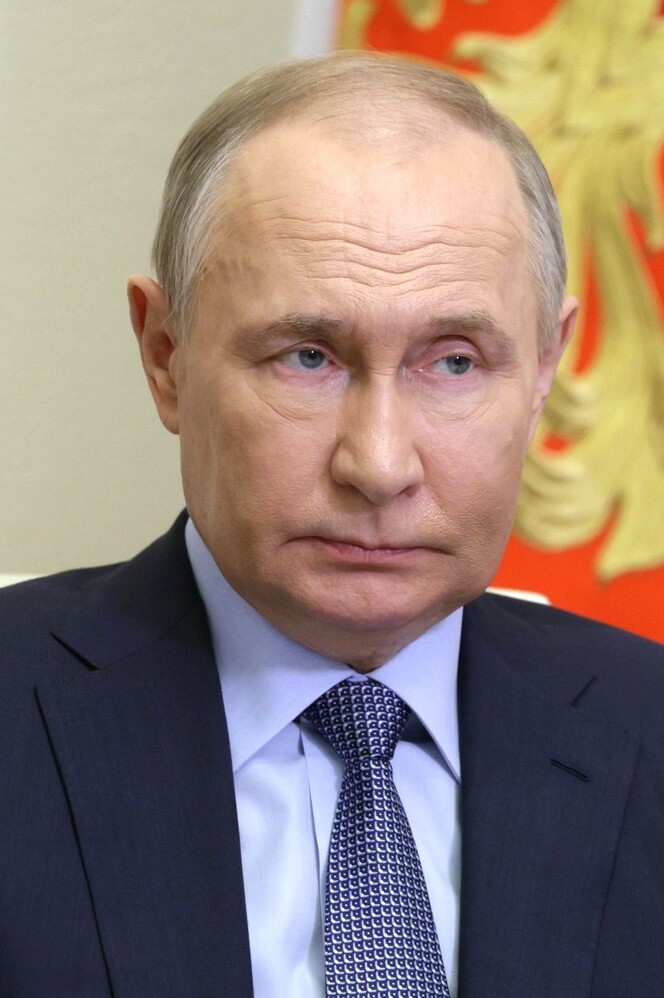
Vladimir Putin
Putin’s aims in Ukraine are central to Herbst’s policy argument. The dossier provides separate public-record context and does not verify the interview’s account of private negotiations.
Image credit
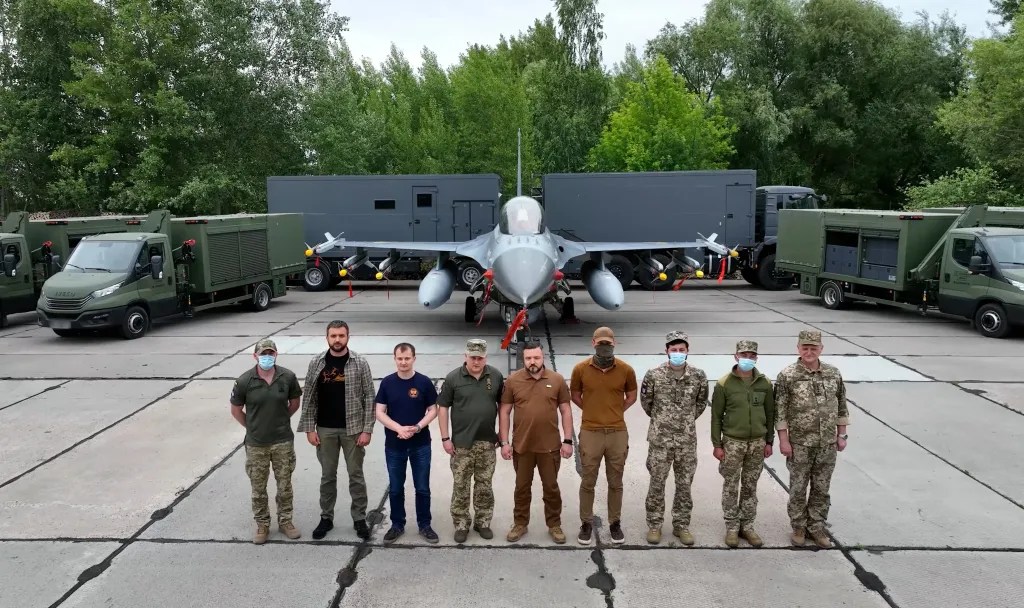
Ukraine Arsenal
Background on selected Ukrainian equipment for Herbst’s recommendation to strengthen support. The passage does not establish current stockpiles, deliveries, or a particular weapons package.
Image credit
These links are an RH reading guide, not guest endorsements or independent confirmation of every statement in the interview. Episode views reflect its publication date; linked records have their own source dates.
The written account
The leverage behind the opening line
John Herbst opens with a direct policy argument: Ukraine needs stronger military support, intelligence cooperation, and sanctions that raise the cost of Russia’s war. Joining Ryan Fugit and Glenn Corn, the former ambassador to Ukraine and Uzbekistan makes the case for changing Moscow’s incentives. His prescription frames a conversation about the choices available to Washington and the consequences of treating the conflict as an isolated dispute.
Herbst sees Ukraine’s resistance as a fight for national survival. He argues that ending the fighting requires pressure capable of altering Putin’s calculations, together with the means for Ukraine to defend itself. The question throughout is how to turn that support into a stronger Ukrainian position at the negotiating table and a more durable basis for security.
Reading commercial proposals in their political context
Ryan begins with reporting about a proposal involving Lukoil’s overseas assets. Herbst examines the possibility that an attractive commercial transaction could be used to encourage a reduction in American support for Ukraine. The strategic question is what Moscow would gain beyond the transaction itself. Glenn adds a warning about circulating claims that an agreement has already been reached without adequate evidence.
That distinction carries into the discussion of negotiations. A reported offer, an interpretation of its purpose, and a completed agreement are different kinds of information. Herbst’s argument is that negotiators need a clear understanding of Russia’s objectives and a willingness to apply leverage. Glenn’s caution about unverified claims reinforces the need to distinguish public reporting from speculation about what negotiators may have agreed.
Russia, China, and the routes between them
The discussion widens to Russia’s relationship with China and the importance of Central Asia and the Caucasus. Herbst describes countries seeking economic opportunities while managing the interests of powerful neighbors. Transport connections and the Middle Corridor enter the conversation as part of this wider regional picture. He welcomes greater American attention while stressing the care required when operating in a contested neighborhood.
For Herbst, Ukraine also matters to deterrence beyond Europe. He argues that the outcome of Russia’s war affects how other governments assess the costs of territorial aggression, including in relation to Taiwan. His argument connects support for Ukraine with the credibility of American commitments elsewhere. Listeners can follow how his diplomatic experience informs that view of deterrence.
Diplomatic experience and the choices ahead
Herbst recalls serving in Uzbekistan when September 11 transformed the urgency of American engagement. His account of developing a proposal for access connected to operations in Afghanistan shows how an embassy can translate local knowledge into a decision for Washington. Ryan and Glenn draw on that experience when asking what effective negotiators need, and how professional expertise contributes to difficult security choices.
The closing discussion returns to Ukraine’s relationship with NATO and then turns to Iran and American strategy. Herbst treats these as connected demands on U.S. attention and resources. His position remains consistent: support partners, understand the adversary’s aims, and bring practical leverage to diplomacy. Watch the full conversation for his reasoning, the hosts’ follow-up questions, and the personal experience behind those recommendations.
Based on the Restricted Handling conversation published October 6, 2026. Views and forecasts reflect the discussion at that time. Original episode and show notes ↗
Full episodeRead the transcript
This transcript comes from the original episode production captions, with spacing adjusted for reading. Names, punctuation, and terminology may contain transcription errors. Refer to the recording for exact wording.
Arm Ukraine to the teeth, provide them all the intel they need, including opening up Starlink for Ukrainian strikes into Russia. And far more massive economic sanctions on Russia make it completely impossible for Putin to continue this war. Hello, everyone, and welcome to another episode of the Restricted Handling Podcast. Glenn and I today are so fortunate to be joined by Ambassador John Herbst, who was the ambassador to Ukraine and Uzbekistan, 30 years plus in the Foreign Service. now serves and leads the Atlantic Council's Eurasia Center. And Ambassador, I would think some people might even say you're one of the strongest voices when it comes to confronting Russian aggression right now. I hope so. very, very outspoken. You've got a great platform. You have amazing interviews yourself. And just for our listeners, ambassador has asked us to call him John, but I said I will not do that unless Glenn does. And Glenn has also declined to do so. So sorry for that, Mr.
Ambassador. But I know the two of you have spent some time together uh, you know, in service, which we can't get into specifically, but we're so glad to have you here. Thank you. Pleasure. Thanks for having me. that's Okay, if we can start out, I hope this is not too much of a distraction, but I wanted to ask about Lukoil. New York Times reports Putin earlier in September proposed selling some of Lukoil's overseas oil assets as part of Ukraine negotiations. Seems like Putin doesn't do anything for free. wondering what you or Glenn might think Putin's angle is with this effort.
Okay. Look, Putin's grand objective remains to restore Russian let's say, great influence across the space of what had been the Soviet Empire. He wants to have direct or substantial political control in all the states of the former Soviet Union and major influence, at least over security decisions in Eastern Europe, Now, the members of the former Warsaw Pact. And he wants to decouple the United States from Europe because he understands that the great strength of the United States, or more broadly, the West, is in the transatlantic alliance and what you might call the political West, meaning beyond our NATO allies, also Japan, South Korea, Australia, New Zealand. And weakening the bonds is the key. To Russia's substantial influence, overwhelming influence in Europe, and to China's overwhelming global influence. Because the Chinese goal is to replace us as the world's premier power.
And you can be sure if they to achieve this, because they work on this together, albeit Russia is clearly the junior partner, they work on this together. If they were achieve it, how our security would be much less, our prosperity be less much less, and our influence would be much less. We would live in a far crueler and more dangerous world. And sadly, a fair number of senior people in the West, and a largest number, maybe majority, maybe not, of international relations commentators don't understand this basic fact, this basic reality. And that's very sad. So Lukoil, that's my prelude to answering the question. Nothing Putin does is inconsistent with the objective I just described.
And what he's trying desperately to do is to wean Western support for Ukraine off of Ukraine. Starting first and foremost now with the United States, because he knows that there's a certain lack of understanding in parts of the Trump administration that Russia, in fact, considers us its principal adversary. And He knows that the administration has people, including the president, who believe in quote unquote transactional gains, and he's hoping that the prospect of a cheap gain for the United States in hydrocarbons could weaken our support for Ukraine. I'm not confident, and this is a good thing, that Putin's gambit will succeed. But that's what Lukoil's oil is all about. He talks about this to Demikiril Dmitrov, who is handled who is his handler for our negotiators. with Russia.
He does it directly, and he's basically saying, here's something we can profit from, establish good cooperation, and you know, that maybe you could ease off on your support for Ukraine. That's his game. I agree with everything the ambassador said. Well, I would add that there's a lot now on social media, a lot of kind of allegations and wild claims that there's been a deal made, that the administration has agreed to something. people are pushing this around, and I would encourage all those people to stop. Because that's just playing into the hands of the Kremlin.
I don't my knowledge, there was no deal made. My understanding is that there is a discussion in these diplomatic channels that if you make concessions that bring this war to an end, then we will look at commercial engagement, trade, and reducing some sanctions. But you have to make some steps towards the Ukrainians, like we're asking the Ukrainians to take steps towards you for a compromise. And my understanding is Putin has shown no willingness to do that. So I'm Disturbed when I see people pushing this around. And it's all over social media. Like everyone today, I'm on like 20 signal groups, and I all these people sending me messages, look, they made a deal, they're betraying America. This is and I keep telling people, stop. There's no deal that was made. I think, and I do think I agree with the ambassador wholeheartedly that Putin at using Kharil Dmitriev is whispering in people's ears that you can make these great deals trying to send the message one to undermine our relationship with the Europeans and the Ukrainians, to undermine the morale of the Ukrainians, and then maybe to try and pick off some people in the administration to divide and conquer, which is a Russian way of doing business.
But, you know, I think my understanding is that people in the administration, the people that really matter, understand that there can be no deal until Russia shows some willingness to compromise. And again, we're not seeing that. I'm not seeing it. I agree with the point that Glenn just added. That's why I said I don't think Putin's gambit's gonna work. the administration has said repeatedly that business deals come after and there you need to have Russian compromise because Putin's aim is to conquer Ukraine, not to stop at the current lines of his forces.
I actually want to dig in more on the on what Putin requires for this war to be over, but Ambassador, you mentioned something about, Russia being the junior partner when it comes to kind of this allegiance or alliance with with China. How formal or structured do you feel that is? Well, there's not a formal there's not a formal alliance. There have been signed memorandums of understanding, the one before the big invasion, one afterwards, and they talked about, you know, the partnership or whatever it is of the century. so a lot of hot air, but not much formally.
Informally though, I mean it's hard to imagine. Russia's still at war today after four and years of failure with their big invasion to actually conquer large, large chunks of Ukraine beyond their initial conquest in early 22, without Chinese buying of Russian hydrocarbons and other things, albeit at a discounted price. And the Chinese not giving the Russians a good deal, but any deal suits Putin. Russian, excuse me, Chinese components for Russian weapons, maybe even some Chinese weapons. I'm less certain of that, but there are reports to that effect. So without that, Russians would be in much harder straits. But also, and this is important, and this is something which some people in Moscow recognize, but they are unwilling to do anything about, China retains territorial, substantial territorial ambitions vis -a -vis Russia, in the Far East, in Siberia. You know, they never refer to the city of Vladivostok by its Russian name. I forget the Chinese name, but they always use it that way. And you've had Chinese scholars, Chinese journalists, and even one Chinese diplomat talk about taking back that territory.
Interesting. Glenn, yeah, I just said I'm in two thousand nineteen I was in Siberia near Kusk and pretty much everybody, every Russian I spoke to there told me stories about how the Chinese were buying up industries, factories, they had special rules that allowed them to do you know, they did the Russian police one policeman told me, militia guy told me they couldn't arrest the Chinese when they did you know, they got drunk and disorderly, and one guy a cab driver you know, their Yandex taxi driver showed me maps that some Chinese had left in the cab, and all of Siberia was marked out as Chinese territory.
So this the sensitivity is definitely there and are there. And you know, I I I the sad thing is I think Putin sees us as a bigger threat than China. And, you know, I don't know that many Russians agree with that, but they're all afraid to say that they disagree with the czar. This is strategic foolishness of the highest order, without a doubt. And the very principles that Putin is insisting on as he takes swaths of Ukrainian territory would be used by the Chinese to justify taking much larger swaths of the Russian territory. let's shift a little bit. Same topic but different kind of focus of region. Mr. Ambassador, you were the ambassador to Uzbekistan, very large Central Asian state, where my understanding is is that the competition between China and Russia is playing out. I mean, I think we saw in the early two thousands when the US went in a big way into Central Asia, especially Uzbekistan, maybe Kyrgyzstan, when we built military bases there.
the Russians got very sensitive to that. And it seemed to me even going back then that the Chinese were also very, very interested in the in having a strategic position there and dislodging the Russians. What are you seeing now in Central Asia? And how do you see the administration's policy on Central Asia? How has it changed over time, US policy, and how are you seeing this competition between Russia and China and the US play out in that region? Central Asia is an area that by and large we in the United States have not paid enough attention to over the what thirty-five years, thirty-six years of its independence.
The exceptions to that were first when I was there because of nine eleven. And we paid a great deal of attention to the region after the after the strike on the Twin Towers. And in fact, the most important cable ever wrote was how telling Washington how to get a base in Uzbekistan, which is the logical place from which we should launch into Afghanistan. And so we paid a lot of attention for a couple of years, and then our mind wandered. And I I give the administration, the Trump team, high credit in the second term for the new focus they've paid to the region. Because the region is very important to us. Now we operate there very carefully. we talk about this as overwhelmingly an economic initiative, not a security one, although we do some relatively small but still significant security things. Nothing to overly excite Moscow or Beijing.
But our presence there is very important because it is a little reminder to both of those powers that they can't forget us in the region. And of course, if we help them develop the Kazakhstan idea of the middle corridor, which is designed to get products into and out of that land block region via a combined land and sea corridor through the Caspian and Black Seas, this will increase their access to world markets, making them less dependent on Russia and China. And again, this puts and we will be doing more investing there. And the Trump team has also done very good work in the South Caucasus.
This carter, the trip carter, the Trump Carter, which would hook up with the middle quarter, is a way to open that region again to further American investment, to move goods more readily into Central Asia, and also help stabilize the still not quite concluded peace between Armenia and Azerbaijan, which is a very good thing. So the again, Team Trump deserves a lot of credit for this because we have interest there and they're paying sufficient attention to it. But as for China and Russia and Central Asia, we saw this a little bit when I was there from over 2000 to 2003.
But it's worth remembering that when I was there, China was in its peaceful rise period. And I remember my Chinese colleague always talked to us, the United States as the world's principal power. That changed by the end of the aughts. And then we have a full-blown competition with China now for the last decade or more. And the Chinese don't are trying to take Essentially economic control of the region, and they've had substantial, though not complete, success with that. and they've acknowledged still Russia's primus into Paris role on securities issues, but it's not there completely. So you have a Chinese base in Tajikistan, for example, and the Central Asian powers understand very well.
the competition both implicit and actual between Beijing and Moscow. And at least in one way, this is a plus for us. There are voices in Moscow, Ravanch's voices, who at a minimum want to annex northern Kazakhstan. Because there's a larger Slavic Russian population there, and then about two thirds of the hydrocarbons in Kazakhstan are there. And I think China would never let that happen. And that's at least a one specific small plus. But we need to be there because we have interests there which we need to protect from both the Chinese and the Russians, for sure.
Not to mention the Iranians also. Glenn, can I turn this one back on you for a second? Sure. we've obviously talked on this show about that region in particular and how much progress has been made to the ambassador's point with this administration. When you look at what progress, I would argue, has not been made with Russia and Ukraine, it's a little surprising. Similar actors have seemed to figure out this particular region, but we still seem to be. slowly moving forward Ukraine. why do we figure it out here and maybe not in this other area? Well, If I understand the question, I think that for Russia, Ukraine is probably much more important than the South Caucasus in Central Asia. Not that it's not important for them.
They think that, they used to tell us all the time in both regions, where I have some experience, this is our sphere of influence. And you have to stay out. And I'm sure that when Lavrov met with Rubio in at the UNGA, he told them again, stay out. And I hope that Rubio told them. Go away. Because you've done nothing for the region. We used to say, what have the Russians brought to Central Asia other than concrete and rust? So the the peoples of those regions have their own histories, their own languages, like Ukraine. but going back to your question, Ryan, I think that the Russians see Ukraine as a much more strategically important region because it's their buffer zone, their slobs, it's interwoven into their identity that they control Ukraine. Of course, Ukraine is a very wealthy country in many ways. They want to control that wealth, both industrial, agricultural, and I think the problem they got distracted and they didn't have the resources. And by the way, for example, the Azares, when they took back Nagorno Karabakh, whenever I say that on any program I get trouble from the Armenian Lobby, people writing me angry emails.
But it was considered Azeri territory by the UN. When they went in and they took it back, I think part of that is because Putin just didn't have the resources or the attention span because the Ukrainians were holding the line and causing so much trouble for the Russians and Putin's strategic failure in 2022 to take Ukraine like he thought he would. And what I've seen is that all the countries in the former Soviet Union especially are looking, right? They're looking do we have an opportunity to step further away from Moscow? Because my experience was that people in those countries did not want to be Russia's sphere of influence. They want to be independent, sovereign. They want to decide for themselves, like Ukrainians have a right to. We want to have a relationship with Beijing or Washington or Brussels or you name the country, Ankara.
we don't need the Russians to tell us who we can be friends with. And they can't be friends And that's what the Russians want to do, by the way. They come into these countries and they tell them you can't have a treaty. They Putin warned the Armenian Prime Minister recently, you have to decide between us and them. So when people are talking about win-win, they should be here. listen to that conversation because that's not win-win, that's either me or them. It's all or nothing for me, or all or nothing for them. And I'm sure, you know, I've said before I and the the Armenian Prime Minister deserves Nobel Peace Prize in my opinion, for the way that he stood up to Putin and he's moving Armenia closer to the West, which is in Armenia's best interest in my opinion.
So anyway, I don't know if I answered your question. I get heated about this. No. It's A lot of passion about the region. Mr. Ambassador, let's follow up on some of the comments you've made before and you just alluded to earlier. Putin wants more than just some of this territory. It sounds like there's neutrality for Ukraine, there are ambitions beyond Ukraine, as you mentioned. what does he need to just end the fighting in the next six months? Like, could he get territory and stop? What what does do you think he actually needs to end this? Well it's not what he needs, it's what he wants.
He wants I always use the phrase effective political control of Ukraine, which means he gets to make the big decisions, certainly on all security issues and maybe even economic and other issues which he thinks has some relationship to Russian requirements. And he probably wants a great deal of territory as well, which includes the entire Ukrainian Black Sea coasts. and maybe all of Ukraine east of the Dnipro River and maybe even beyond. You hear some talk in Russian circles of leaving a rump landlock Ukrainian state small size, in part of the West Bank, the western side of the Dniepro River. That's what he wants. And the Ukrainians are not gonna allow that, because as a Ukrainian official who spent some time in a Russian concentration camp after the big invasion said, it's terrible to live under Russian bombs.
But it's infinitely worse to live under Russian occupation, as the people of Bucha and Irpin, Bucha and Irpin, as well as Mariupol, if Mariupol is freed at some point, you can tell us. And that's why the Ukrainians, they're literally fighting for their lives as Ukrainians. That's why they will fight till the end. so you want to end as quickly as possible? Arm Ukraine to the teeth, provide them all the intel they need, including opening up Starlink for Ukrainian strikes into Russia. And far more massive economic sanctions on Russia make it completely impossible for Putin to continue this war. We have the strength to do that. This is very much in our interest. As former leaders of Japan, South Korea, and Taiwan have said, you want to deter the Chinese invasion of Taiwan, make sure Putin loses in Ukraine. And that's absolutely the logic of stuff that is impeccable.
Because you can be sure she is watching. The West continue. Actually, it's not so much the West. Europe is stepping up. Team Trump has a policy which is, let's say, not consistent. Sometimes it's strong. You know, like the decision to sanction Lukoil and Rosneft was great. That was a year ago, but we're not doing more of that now. You know, maybe Trump will implement the Lindsey Graham sanctions bill. If he does, that would be wonderful. But for those who criticize Trump as selling out Ukraine, that's wrong. We continue to give military intelligence, which is The single most important thing for us to do. But if we turn the screws, if we treated Russia the way Russia treats us as a principal adversary, for us they're number two, but still very important, Who is a risk taker in a way she is not, we would do all these things. And our security would be strengthened, without a doubt.
No, Mr. Matsu, when you talk about if we treated Russia the way they treat us, this reminds me that all the talk about Russian disinformation, active measures. When you were the ambassador in his back to stand in the early two thousands, how did the Russians treat us then? were they let me tell you a story, which I think you'll like. you know, 9-11 happened, and about a week after 9-11, John Bolton, who was then the Secretary of State for Technology, and so he was there to talk about a US base. And at the end of his visit, we kind of had an agreement on this. And I was at a reception a day or two after his visit. And the Russian ambassador, who, as often was the case, was a wheel in Moscow, Rurikov, who had been the national security advisor to Putin at one point, came up to me in a huff and started yelling, What are you guys doing here? And because they didn't want us there, obviously. Now Putin was smart enough, that's when he was playing Pollyanna and and treating us nicely. So he told, you know, he called Bush very fast after war after 9-11. And he never said a word against the base. But the Russians were working overtime to scare the Uzbeks into letting letting us up the base. They sent not just various senior members of like the security team, but also generals to speak against us. But always in the shadows, always on the side.
I just being an Uzbek speaker and I used to follow the local papers in Central Asia and Uzbekistan, and there were often very, very negative stories about the US. Everything as mundane is, telling the stories of Russians who married American men and came to the States and how horrible it was, and how their husbands beat them and misabuse children that were adopted. Everything everything that you could imagine negative, of course Iraq when Iraq happened, all kinds of stories about neo Nazis in the US military and how racists. So the playbook that was, I think, in ninety one when everything fell apart, Russia went through a period where they were so busy trying to figure out who was going after who inside Russia. But by ninety seven, ninety eight, ninety nine it started to come together again and by two thousand when Putin took over. the propaganda machine started again and it started as I recall in Central Asia and the former Soviet Union.
I'm not I'm not gonna speak I don't have I think your your depth of knowledge on specifically active measures as we both like to or disinformation. but I was working at our embassy in Tel Aviv during the first and the second Gulf War, the one when Saddam Hussein attacked Kuwait, but still following Russian stuff from afar. But I returned to working in the Russia account, this Eurasia account, in August of 94. And I can tell you of that the security services in Russia with that anti-American animus never went away. And you saw their policy, a consistent policy of promoting.
Moscow's geopolitical interest in ways that contradicted all of the fine words they were making about democracy and joining the West. They were doing that in the near abroad, literally from the day after the Soviet Union died. I mean, how many attempts were there on the life of the president of Georgia? it was Shevard Nazi was the second one, I'm forgetting the name of the first one. And you know problems of frozen frozen states appeared in Transnistria, Moldova immediately. appeared in parts of Georgia immediately. And of course it appeared in Nagorno-Karabach immediately. so they were pushing this stuff literally from the first days of an independent Russia, and Washington paid no attention to it.
Now I saw that up close and personal. 'Cause I became first the last head of the Eurasia desk, which had been the Soviet desk, and then the equivalent of a deputy assistant secretary working in that part of the department's bureaucracy. Kostrov Talbot hived that portion off from the European Bureau. So I was following this from ninety-four on, and I used to give speeches where I said what I'm just saying to you right now, but the higher ups never really paid attention to it because they were focused on the issue of democratizing Russia, reforming Russia, and so on. Although they did let me In the context of working on the CFE, the Conventional Forces Europe flank steal. This is about limitations on tanks and artillery and I think planes in the western portion, the eastern portions of NATO and the western portions of the former Soviet Union. And the process of trying to persuade Ukraine and Georgia to downgrade their numbers. I was allowed to work on developing a strategic dialogue with those countries, but only because we're trying to get the Russians to behave on the flanks.
So the invasion of Ukraine in twenty fourteen and Putin's games in Ukraine when I was there as ambassador were already pre shadowed, foreshadowed by what was going on in all the other countries in the neighborhood. Right. Ryan. Yeah. Speaking of And this is all before anyone in Washington ever thought about NATO enlargement. Yeah, I mean tha that's a great point, Mr. Ambassador. when people like people here argue, well NATO enlargement caused this problem, they forget about Transnistria, they forget about Nagorno Karabakh, they forget about Abkhaziaa, they forget about everything that the Russians did starting in ninety one to rebuild and re extend. You know, they didn't have the resources to do it the way they wanted, but they were definitely doing it. They were working on it. Yes.
So they and and you know, I used to tell Russians all the time if you don't want people to join NATO, stop being so aggressive. Correct. You're pushing them into our arms. But they anyway, If we had not expanded NATO, Ukraine would be under Russians' control today and maybe the issue fighting talking about would be Russian occupation of parts of the Baltic states or Poland. Right. I was just gonna say, Mr. Ambassador, I think you're hosting a session later this week on NATO and some of the encroachment from Russia into NATO or European territory. We We're well versed in some of the hybrid and gray zone activities.
As you were saying, you know, Putin's aim here could be to drive a wedge between, you know, the Western alliance. I would ask though, it doesn't seem to be working, right? I mean The EU just doubled down on keeping their their diplomats in Kyiv. German chancellor just arrived and is talking about a hundred you know, billion dollars for military spending, hundreds of millions in financial aid to Ukraine. got Moldova speaking out about explosions landing on their territory in the past few days. Why continue with this if you're Putin? If it doesn't seem to be leading to anything. He He has bet on Western weakness ever since he began to pursue an aggressive foreign policy, which I would date to the cyber attack on Estonia in the summer of 2007 and foreshadowed by Putin's speech at the Munich Security Conference the previous February.
And if you look at the response to that in 2007, to the invasion of Georgia in 2008, weakness and weakness. the response to the seizure of Crimea and then the quote unquote hybrid attack in Donbas in early twenty fourteen. the Western response was kind of weak, although I say kind of, not straight out weak, because by the late summer of twenty fourteen we had put some serious sanctions on the Kremlin. But the refusal of us to provide any weapons to Ukraine, the United States, up until Trump came in, was more weakness. So he he's gotten away with a lot. but you're right. You're right. The Europeans have started to step up. they are scared by what they see come out of Washington, so that's part of it. They realize they can't simply count on us anymore. And while they've been they were negligent going back to the 80s, if not earlier, about pulling their share of the defense burden. I think we should not leave the Europeans too nervous about us because we need good allies and they quite as much as they want, but a lot. we have done some things that are good. I mentioned in the military intelligence, which is critical. I mentioned the sanctions on Rosneft Lukoil.
the fact that we're willing to sell weapons is good. But frankly, we should be doing more. We should be doing more because again, Russia is our foe. and if we did more, we could get the results we want 'cause to make it almost impossible for Putin to continue the war. But he thinks he can outlast us. That's his basic conviction. Amen. that was another topic you discussed on air with an amazing panel recently, Ambassador, was just i is pressure building on Putin domestically? Obviously he comes out of an election that everybody understands is set up for a certain certain way. How do you how do you feel his strength is right now domestically?
How strong is he really? there's no question that there are weaknesses today that were not visible a year I pay close attention to what's going on in Russia. and I am just stood say, by November of 2002 that Putin had a progression problem. Though I did not anyway I did not know he was going to actually launch his troops at Moscow, but that was clear then. And what's clear now is you know half a dozen things which just didn't happen before. From military bloggers who've always been much more realistic about the war than the Russian Ministry of Defense, not just criticizing the conduct of the war, but Putin himself, that's one. bankers and senior economists and senior businessmen saying, you know, we can't sustain the economy in the current circumstances. we see a cultural figures criticizing what's happening. We see what's going on with gas supplies across much of Russia.
something that I just read this morning, but I haven't a chance to look closely on X, and X is always early warning but sometimes not good information, about demonstrations with at least thousands of people in Moscow slamming the regime and being beaten up by the police. This is the first time we've seen such if if those that reports are accurate, and again I haven't really checked it out, but I think it's probably true, which is why I'm mentioning it. again. But yes, those are going nowhere, but they're a sign of cracks that didn't exist before. Now there have been a lot of people, other commentators who have I would say as a general proposition that Russia will inevitably win types, going back to twenty fourteen and twenty twenty two, who are saying that Putin's problems are manageable. And they may be right, but we don't know. And we don't know we do know that a year ago we didn't see such problems. And we finally know that authoritarian regimes are quote unquote rock solid until they suddenly dissolve.
So I'm not saying Putin's gone tomorrow, but I wouldn't be surprised if he were gone, in on the next year or two. And you know, there are now reports that there are 15,000 or more Russian troops under quote unquote Ukrainian fire control in southern Ukraine. Now we believe that 250 Russian soldiers surrendered to the Lyman area or Lehman area. If the reports that I've just referred to are true, and suddenly five more thousand Russian troops surrender. That's a potential regime shaking event in Moscow. Mm. Yeah, I think that's a great point. I mean, I've been I see it this way for a while.
Going back to 2022 when the Ukrainians were taking back territory, I was arguing that if they took back a significant amount of territory, that might be the end of Putin because it would be humiliating for many Russians and it would show how how his policies like are so failed. And to the absolutely thinks yeah, I don't think he thinks he has to outlast the Ukrainians. He knows they're tough. He's learned that the hard way. But and they don't love him like he thought they did. But I think what he's worried about already thinks is he can outlast us and the Europeans.
And Ryan, unfortunately, I think we do need to be a little bit concerned because we're seeing some trends in Europe and Germany and France that are not heartening. You know, the Ukrainians are very concerned with elections there. And of course, with the with the tensions in the US. NATO relationship, US Europe relationship. you know, the Russians love to see that. Now I will say I do s also think some people overdo or they they're overplaying that issue because NATO's always had countries that disagree, and I use the example of Turkey. Half of NATO countries don't like Turkey. They're their their diplomatic relations are always strained.
but you know, Turkey now, we have a very good relationship with the Turks. I just read recently the Turks are doing something for the Ukrainians which is really significant. So, you know, not all of NATO is or our relationship with all of NATO is bad. and the administration is committed to putting troops in Poland, right? But some people interpret that as, we're leaving the NATO or we're abandoning because we're moving troops out of Germany to Poland. But there may a reason to do that. And I often think that we're our worst enemy. in the media here, on social media, because we're amplifying messages that I think the Russians want us to amplify, which undermines our relationships, which I wish we wouldn't do.
I you know, it's not it's not helpful and it's just scaring a lot of people, including the Ukrainians. Because the last thing they want to see is the US decouple from Europe. You know, And the last thing I do want to say, and I just was down in Alabama, I gave a talk at a convention, As Americans, we should remember, and I hope anyone in the administration that hears this, they should remember that in the Gulf, when we went to war when we expanded our war with Iran, the Islamic regime, the first European country that really came to our aid was Ukraine. They're fighting a war to defend themselves and their territory, and it's a terrible war, and yet they sent their air defense teams, their counter-drone teams To help us and help our Gulf allies against the Iranians. And President Zelensky came out very clearly in support of what President Trump was doing. So we shouldn't forget that. Some of our other European partners didn't, in my opinion, didn't respond the way I would have liked to see, but the Ukrainians definitely did. and that is what an ally does, and we need to behave like allies as well, my personal opinion.
Our security would be much enhanced by a close relationship with Ukraine. They've demonstrated remarkable ability to fight, to take risks. And this is outside my area of expertise, but I know something about it. We know that they have great intel on Russia's on Russia. then I wonder I wonder if I can have a slightly candid question for you, Ambassador, or a Glenn, but I'll go to you first, Mr. Ambassador. some of this is a little a little biased from my side. my father was also in the State Department career diplomat. So despite my time at the CIA, if we look at Kushner and Witkoff directing some of the engagement with Russia in their capacity, I'd think maybe thirty or forty days ago. CIA director made a trip over to Moscow. There was some reporting that he may take a more prominent role in some of the discussions or negotiations. Doesn't seem to have panned out, at least in the public sphere. But I wonder, you know, if maybe if you were in charge, Mr.
Ambassador, as you look at the people you've served with, who would be best suited to be that negotiator or one or two people instead of Kushner or Witkoff? And if you don't want to answer this, we can cut it out. Well, look, I suspect there are half dozen career diplomats. In fact I know there are a good number of career diplomats who under s have a very realistic understanding of what Putin is up to, that he is no friend of the United States, he is a foe of the United States, and it is very much in our interest to make sure he loses in Ukraine. And if one of people like that were running negotiations, I think we'd be better off. And if the American political leadership from the top down made that clear in our principal national security documents, right, like the national threat assessments, where actually we see it there, national security guidelines where we don't necessarily see it there.
Well, it seems we only in those spaces we only call Russia an adversary when we talk about Greenland, as opposed to recognizing it's an adversary just about everywhere. But if you have people with that understanding, the right of the policy will be sound, Putin's life would be far more difficult, and our security would be stronger. Our prosperity would be better insured. That's what I'd like to see. But let me make one point which Glenn made earlier in a different context. I think that there is overcriticism of Team Trump across the board, including on the issue of our envoys. I do wish we had envoys who spoke clearly about the danger Russia poses, the way Kurt Volcker used to, for example. The way Keith Kellogg did at times.
But we know from reporting that when Moscow, excuse me, Witkoff and Kushner were in Moscow the last time, when Putin said, you have to help us get Ukraine to hand over Western Donbas, because we knew the Russians will take it anyway. Kushner apparently told me you said that a year ago. Now that's type of tough negotiations that I like. So I thought, that's not bad at all. Whereas a lot of people were saying Witkoff and Kushner were there to sell out the United States. And say, you know, give the Russians what they wanted, which is bad for the US. So I think that's a narrative which is overdone.
But one last point on Ratcliffe. I think that his visit was a very good thing for us. I am not sure where it came from in the administration, but there are others in administration who have the same realistic view of the Kremlin he does. The fact that it was realistic. and not welcomed in Moscow was made clear by Putin, who refused to see him. I would not be surprised if Putin, maybe directly or through the meat truth reached out to make sure that Witkoff and Kushner came to Moscow, which they did shortly thereafter, because he needed reassurance that Ratcliffe was not the face of the Trump administration's diplomacy.
But again, let's assume that's all true. if Kushner said what he said, what was reported without denial, then that means that, you know, our current negotiators understand at least partly the problem. And that's not something their critics are willing to give them. Fair. Fair point. Glenn, why don't you round us out here? Well, the only thing I would add there is if it's true that Ratcliffe was supposed to meet with Putin and then Putin canceled his meeting, my advice to the president would be then don't send anybody, because that's an insult to you as the president. Putin doesn't decide who the interlocutor is. If Putin wants to send a meat trip or he wants to send Alexander Bortnikov or he wants to send Ivan Ivanovich, that's Putin's prerogative as the leader of Russia. But the United States president should decide. And not have to work around Putin's sensitivities. And if Director Ratcliffe went there and he was supposed to meet with Putin and then Putin changed you know, said no, because the story is, and again this is all the media, so I don't know if it's true, but that he didn't want to hear the message which Ratcliffe had, which is you're not gaining you're losing on the front.
And it's not going well for you. I think Putin played a role in axing Kellogg as our envoy for Ukraine and Russia. Because that was announced after Trump won the election. And I remember saying at the time Putin would never deal with Kellogg, but I just thought he meant you know he would never receive him. But then, you know, he manufactured a way to persuade Trump to not choose Kellogg to do Russia too. You know, the Witkoff going there after he helped make that deal in the Middle East the United administration and bringing home an American prisoner. Yeah, I you know, I don't think that we should allow any foreign leader to dictate to us who is going to take the lead on the negotiations.
And, you know, when it comes to Witkoff and Kushner, again, I agree with the ambassador. I think there's a lot of chaff out there, there's hysteria claims, some of it's politicized, some of it is just, you know, people are not used to the way they operate. But I think what it comes down to too, and I've said this before and it's unfortunate, but I think that the president after his first term wants to rely on people who he really trusts. And of course Kushner is his son -in -law and he's known Steve Witkoff for many, many years. And it's my view that you know there were some people that behaved in the past in a way that was harmful to trust in the executive branch of government. And the you know, people that work for the executive branch, when there's a policy that's, you know, you're not breaking the law, it's a legal policy. You can't just say, I know I'm not gonna do that because I don't believe it. Like it's not my policy. If you want to do that, you should go out and, you know, start an NGO or do something. But if you join the federal government and your job is to do policy that comes down, and there are many times I'm sure in the ambassador's career, I know in my career, where I didn't agree with something, But my orders were to go out and deliver this message or do this thing. And I did it. And it's because, you know, you follow orders.
And I think the tragedy with this administration to some degree, Ryan, is that they forget that they're the ninety-five percent, ninety-nine percent of the federal workforce is like that. They just want to do their jobs. And they love the And somebody asked me recently, you know. connected with the Republican Party, I said, what's your politics? They kept asking, What's your politics? And finally I said, My politics is America. I love America. Right? I d you know, I didn't pay attention to domestic politics for years because I was overseas. And I don't I just want America to be successful. I want I want President Trump to be successful. And so going back to his envoys, I I wish them success for America.
And a success for America is not making a bad deal To to placate Putin, right? It's holding the line. And if Jared Kushner said that, that's good. And we need to continue to tell Putin no deal until you compromise. Ukrainians have shown a willingness to compromise, readiness? Putin hasn't. And we should not cave to him because we don't want to be seen as suckers. And I and the ambassador and I happen to be from the greatest part of the country, Long Island. And in Long Island, you don't do that. You don't back down. Okay, maybe I don't, maybe California's also really good and other parts of the country pretty good. Ohio. I was just in Alabama, great people.
Anyway. Right. Well, that's how I served in State Department. You're there to do the president's policy, period. Yeah. Can I ask one more question That would be before we leave? Before we so we just you know I hate to say this word celebrated, but we commemorated the nine the anniversary of nine eleven. You were the ambassador in Uzbekistan and it's more of a commentary than a question for you, but I think Americans often don't realize what you had to do as the ambassador because our our inroads into Afghanistan went through Tashkent. Your your country, your AOR. And I'm sure that was a very stressful and busy time. I guess my question would be like how do you look back on those days?
I mean, you must be extremely proud of what you accomplished. Look, was lucky to be there at that time. because it was Uzbekistan was a little bit of a backwater when I arrived, although not really, because I understood O Sama bin Laden was a problem, and I understood that Uzbekistan was very important to managing that problem. So I had that going for me as I arrived, knowing that fact. But our policy was a little bit of a jumble, because we had The US, we had State Department being critical of the country for human rights reasons. DOD was largely comfortable with them because they were the best in terms of military military in Central Asia. And the agency thought they were great because of help with bin Laden.
And I understanding that we had interest in this, I understood his bet was important to us. And of course, once nine eleven happened, they were absolutely critical. So as I say, I wrote the most important cable of my career. I actually told Washington I was gonna write it the day after Wednesday. and they said, Good, send it to us back channel first, which I did. And then I sent it to front channel and it made a very large and helpful impression. And we were off to the races. and yes, I'm proud of that. and it was I mean, to me it was wonderful being in the center of action because, you know, like every American, I wanted to do something.
I had something that was concrete to do. And fortunately, I'd been in Jerusalem were working on the peace process where I was, as I like to point out, the least important member of the American delegation at the Camp David summit. Because I had very little recommendations were never taken as let's say as forcefully as they weren't as flinch flunch as I liked them. But here I was actually people were listening to me. And so that was gratifying. And of course the what we had to do was very clear. The Uzbeks were all in, or largely in, and it happened. So it was great.
anyway. many younger Americans don't maybe know this or don't remember how critical Uzbekistan was for what we did. And those of us that do remember are extremely grateful because we couldn't have done No no way Kyrgyzstan would have set up a base if the Uzbeks had not done it first. And Kazakhstan began to help as well after that. But the reason why the Uzbeks were the natural partner was A, they didn't share a border with Moscow, so they gave them a bit of security. B, they had a very strong sense of self-identity. And so once they became an independent country, they began to move ethnic Russians.
ethnic Slavs, not just Russians, out of the most sensitive areas, the security services, the military and such. So they could make steps they knew Moscow would not like and protect themselves. And again, so they had to be it and they were it. And it was wonderful. It says a lot that that was the most important cable of your career, Ambassador, knowing that yeah, Tel Aviv, Camp David, I'm happy with what I did elsewhere, but that was clearly the most important. But I'll tell you this nothing is as important as the work I'm doing now. And I am sorry to have to say that, because if our policy was smarter, you wouldn't need people like me carping from the sides.
This is a this is a relatively easy thing for us to do if we understand the stakes. And we're only doing it in a less than consistent, less than strong fashion. you're speaking about Russia right now, I'm thinking about dealing with the problem of Russia in Europe. That's first and foremost Ukraine. But as some actually, secondly, but perhaps more importantly, NATO and Russia. Because if Putin wins in Ukraine, the problems with Russia NATO are going to increase. And if the same tendencies we see at work in our policy continue, They might be able to get away with wrecking NATO.
I can easily lay that out for you, but at the end of this discussion. I think Glenn could easily lay it out as well. I just say that I used to joke that if you watch all these like action movies, some CIA guy like was an assassin and he's living in the mountains, like with his dog, happy, and also helicopter lands. I don't know if that's a good impersonation of a helicopter, Ryan, but lands and the director gets out and runs over. We need you back. It is a little I mean, I try to tell audiences when I talk about the Russia Ukraine issue, like I didn't want to be doing this. I wanted to do other stuff. But I believe so strongly, and you know, as the ambassador, like he's dedicating so much time. I was just there in Kyiv with him in a very hard time. I'm sure you could be doing many other things, but it is like this is the future of our country. If we get this wrong, if we end up on the wrong side of history here, it will not play well for all of our children and the country long term, I think.
if a old guy like me can get back in the ring. I think most Americans can deal with, helping Israel, helping Ukraine, sticking with putting up with some of the annoyances from our European allies sometimes and remembering that they are allies and that we need them we need the alliances. One thing that we have that question. a big asset for us. People don't understand how good our world has been as a result of what we did after World War Two and managed through the Cold War and everything else. We take it for granted, which we can't. Yeah. You served in Germany, didn't you, Ryan? Did yeah, in Bavaria. yeah, three years. No well.
Lots of flying. Ambassador, I promise this will be my last question, but it would be remiss if I didn't ask. given what you just said, that this is, your most important role that you're playing right now. how important is Iran to this calculus now? Is it a distraction? Is it like you have to pretty close to what's going on there to inform what you're talking about and analyzing with Russia and NATO. I've actually been doing a fair amount of talking publicly about Iran. look, Iran is clearly a dangerous adversary of the United States, not nearly as dangerous as China or Russia, but dangerous nonetheless.
the problem of their nuclear program is a difficult one. I think what Trump did in the summer of twenty five was absolutely right. I think he made a mistake when he went into Iran because he didn't understand what they could do to the Strait of Hormuz. But having said that, having said that, the Iranians overplayed their hand when they walked away from the very sweet deal we signed in the spring. And Trump was not about to be played further. And now we have managed to kind of open the Strait of Hormuz. Oil is slowing at eighty-five, ninety percent levels. And Trump was in a position to hammer them in ways that could bring them down or get them to force them to do what we want on nukes. He was not in that position in the springtime. He's in that position now. That's why they offered the deal you know, the past couple of weeks at the UN. And Trump smartly turned it down.
so now I think we should, know, with continue to blockade their oil. continue to get our oil out and insist on much tougher conditions if there's going to be a peace. And this would be helpful to our overall efforts. But it's also true that the problems we faced in the Gulf uh, forced us or made it easier for us not to step up as much as we should in Ukraine and in for that minute with NATO. And that was a mistake. Not an irreparable mistake, but a mistake. So, but looking at things today, again, let us win in Iran in a serious way, in a real way. that that'll take probably a few months. We'll be we have to midterms and see how we ratchet the pressure then. That'll be a good thing.
let the Ukrainians do whatever they want in the Caspian Sea, going after shipping between Iran and Russia, I'll be sure that will help supplies from China overland or by sea. that would be a good thing. And again, but let's take care of business number one, which is making sure that Putin cannot win in Ukraine. And one point, you know, I made that talk about people Americans have gotten forgotten how all the good things we've done have made our lives more secure and more prosperous. But in some ways Americ the American public is smarter than the leadership. And this poll is now like nine or ten months old, maybe even a little bit more than that, showing that sixty-nine percent of Americans believe we should be giving aid to Ukraine, not just the type of support with military intelligence.
This figures were twenty three percent said give as much as we gave on Dubai, and forty-six percent said give more, total 69%. So there is some common sense in the United States that our leadership has not always reflected, Democrat and Republican. And similarly polls show that like eighty over eighty percent of Americans understand Putin evil man and our enemy. I wish that our leaders spoke with that clarity. Thank you so much for the time, Ambassador. Glenn, why don't you round us out as you two go back a ways? Well, I just wanna say again, I had to change the time of the shooting of this episode, so I apologize to both of you and I appreciate that you're both accommodated on a Sunday evening.
But it's great to see you. I'll Ryan, I don't know when I'll see you in person next, hopefully soon, but I know probably I'll be walking down the street and watch it in and I'll hear, Hey, you and I'll be my surveillance team, Ambassador Herbst, my fellow Long Islander. No, listen, just have a great rest of your Sunday, and thank you for doing this. Well we finished in topic to watch the Dodgers play the Braves. Are you do are you a Dodgers or Braves fan, Ambassador? No, I'm a Yankee fan. I got to say, yeah, you got to be. although I'm a peculiar New Yorker because I also rooted for the Mets because the Mets live closer to my home and I saw more Mets games. But I'm still I was Yankee fan when I was six when you're that's when you're you establish your real fandom, at least for me.
Thank you so much, Ambassador. thank you all. great night. Bye bye. Thanks for listening and being a part of the R .H. community. Would you like to receive the same daily and telebreathe that Glenn and I read? You can get it at restricted handling .com. We've all things international security, geopolitics, military and intel ops and economics and sanctions focused exclusively on Russia, China, Iran, North Korea and the Middle East to include a company and podcasts for Russia, China, economics and spy stories. Just head to restricted handling .com, enter your email and you'll get the daily briefs that Glenn and I both read. And you can leave comments and questions that we can respond to. Thanks again for listening. Stay safe.
Back to the Episode Field Guide ↑Keep listening.
All episodes →
Steve Wills / The Arctic and maritime security
Steve Wills on Russia’s Arctic Submarines and the Cables Beneath the Sea
John Tefft / Russia and Ukraine
John Tefft on Whether a Peace Deal Would Give Putin Time to Rearm
Between episodes
The daily brief is free.
Russia, China, Iran, and North Korea. Straight to your inbox.