Steve Wills on Russia’s Arctic Submarines and the Cables Beneath the Sea
The navalist joins Ryan to explain why Arctic shipping, vulnerable undersea infrastructure, Greenland, and Russian submarines matter far beyond the High North.
Steve Wills / / 42 minutes
Start here
Three key takeaways
-
Undersea infrastructure is a practical security problem
Wills describes how cable damage can affect communications and why Arctic conditions make repairs difficult. He discusses Russian capabilities without presenting every reported incident as conclusively attributed sabotage.
-
Geography gives the High North strategic weight
Greenland, the Greenland-Iceland-UK gap, and routes out of Russia’s northern waters shape access to the Atlantic. Wills explains the operational importance of those places and the agreements that support activity there.
-
Shipping potential comes with political and logistical limits
The conversation considers Russian control along the Northern Sea Route, sanctions evasion, China’s interests, and the shipyards and icebreakers needed to operate. A shorter route on a map does not resolve those practical constraints.
Episode Field Guide
Explore this conversation.
The people, institutions, and equipment connected to this episode. In the conversation marks a direct mention; Related background adds context.

FSB
Wills names the FSB in his discussion of Russian state presence along the Northern Sea Route. The dossier provides institutional background and does not independently verify an individual maritime incident.
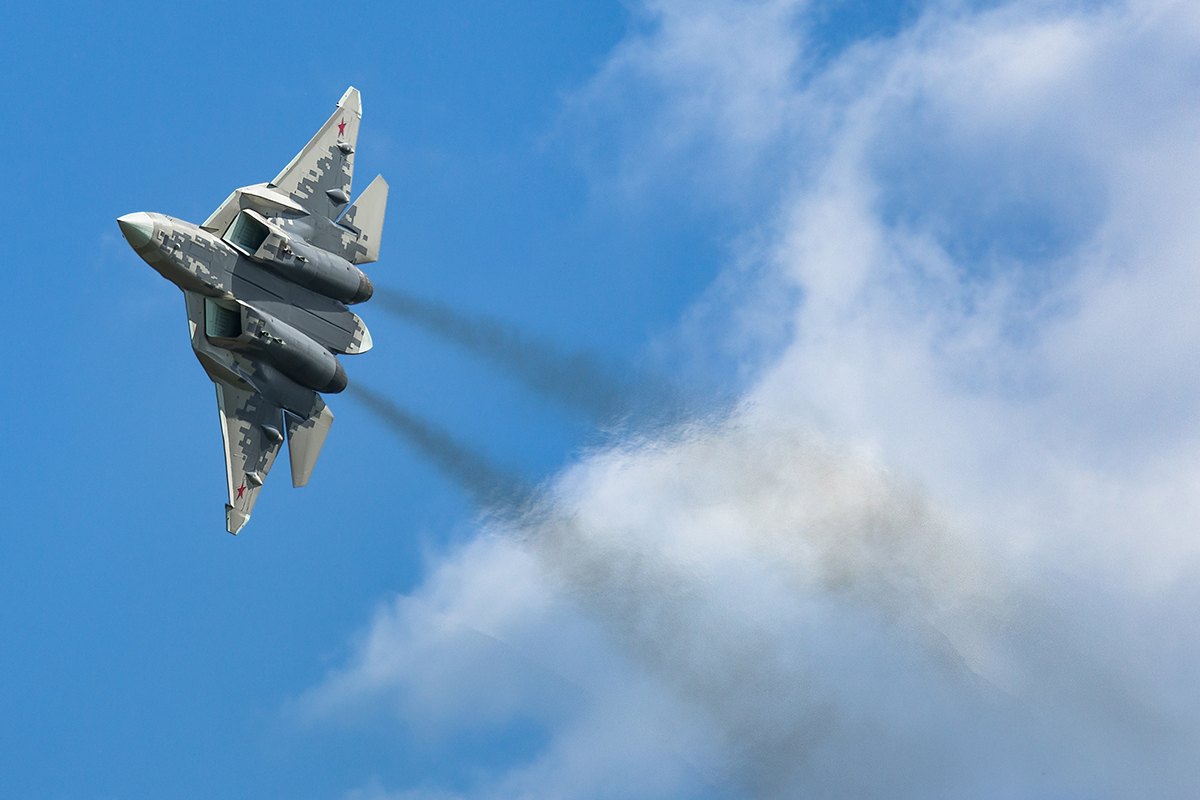
Russia Arsenal
Related equipment background alongside the discussion of Russian naval and underwater capabilities. The existing arsenal is not a catalog of every submarine or deep-sea vehicle discussed here.
Image credit
These links are an RH reading guide, not guest endorsements or independent confirmation of every statement in the interview. Episode views reflect its publication date; linked records have their own source dates.
The written account
An underwater threat with consequences ashore
Steve Wills begins with the capabilities that make the Arctic a security concern: Russian submarines, specialized underwater vehicles, and infrastructure that is difficult to protect. Ryan Fugit hosts this conversation while Glenn Corn is at a separate speaking engagement. Wills brings a naval officer’s experience and a historian’s perspective to a region whose importance can be easy to overlook from farther south.
The interview uses the image of an underwater Bismarck to explain the difficulty of locating and following a dangerous submarine. The comparison gives listeners a way to think about the demands of a naval hunt. Wills uses the historical example to make the pursuit understandable: locating a vessel, maintaining contact, and anticipating its next move each create demands for the forces following it.
Cables, cold water, and the difficulty of repair
Ryan asks what an attack on a cable near Svalbard would mean in practical terms. Wills connects the seabed to the communications and economic activity that depend on it. He explains that the environment complicates repair: weather, cold water, distance, and the availability of suitable vessels all matter. Damage to an apparently remote piece of infrastructure can therefore carry consequences well beyond its immediate location.
The conversation distinguishes a discussion of capability from proof of responsibility for any particular incident. Wills describes Russian interest in deep-sea operations and the vessels that can support them. The broader point is that underwater infrastructure deserves attention alongside the more visible parts of maritime competition. The practical challenge is to understand those capabilities while assessing the evidence behind individual reports of damage and interference.
Routes, Greenland, and the North Atlantic
The Northern Sea Route offers commercial possibilities, but Wills stresses the challenges of operating along Russia’s coastline. Rules, access, Russian state vessels, and possible interference shape the choices available to shipping companies. The discussion then connects this route to energy movements and sanctions evasion. Geography creates an opportunity, while political control and operating conditions determine how usable that opportunity becomes.
Greenland’s importance emerges through the routes that connect northern waters to the Atlantic and through its value for military and aerospace activity. Wills revisits Cold War basing and Project Iceworm, then discusses the Greenland-Iceland-UK gap. He also notes the role of agreements with Denmark and Greenland’s authorities. Those agreements form part of the practical foundation for a sustained military presence in a region whose geography attracts increasing attention.
The ships and partnerships that make strategy possible
China’s Arctic interests lead into a discussion of energy, access, and shipbuilding capacity. Wills contrasts ambition with the resources required to sustain maritime activity. Canada’s experience, icebreakers, coast guard cooperation, and ship maintenance bring the discussion back to practical work. Navies need vessels that can operate, crews who can sustain deployments, and facilities able to keep ships available.
Personal accounts from service at sea and NATO give these strategic themes a human scale. Wills describes a souvenir from the cruiser Moskva and the circumstances in which colleagues obtained it, recalling a different period in relations with Russia. The conversation closes by considering shipbuilding quantity and quality. Watch the episode to follow how experience, geography, infrastructure, and industrial capacity combine in his assessment of the High North.
Based on the Restricted Handling conversation published September 28, 2026. Views and forecasts reflect the discussion at that time. Original episode and show notes ↗
Full episodeRead the transcript
This transcript comes from the original episode production captions, with spacing adjusted for reading. Names, punctuation, and terminology may contain transcription errors. Refer to the recording for exact wording.
today on Restricted Handling. The Russians have always had an interest in expanding their underwater footprint. They've got a number of submarines that dive very deeply. They've got some specialized submarines that can host deep sea vehicles that again could threaten undersea cables and other undersea infrastructure. So that's still a significant threat. Hello everyone and welcome to another episode of the Restricted Handling podcast. Glenn today is at a separate speaking engagement so could not be here but we are fortunate because we have Steve Wills who spent 20 years in the Navy, some time at NATO, some time at DIA if I'm not mistaken here.
You're now a navalist which I want to get into at the Center for Maritime Strategy, also at the Center for Naval Analysis and you teach at GW. Yes. You've been to Svalbard. We're about to talk about what we call the High North which I don't know much about. People who listen to our show have heard us talk Russia, China, Iran. Yes. A host of other topics. I feel like the Arctic comes up from time to time, the High North. Before we get into it, if you've been to some of these places, what's the coldest you've ever been? What's the coldest I've ever been? I think probably out dog sledding on Svalbard even though it was in April. I was not probably fully appropriately dressed for the weather.
We all wanted to sort of John Wayne through this. We were there on a fact -finding visit and one of the activities was to go out and actually dog sled out there. And you can do a whole dog sledding adventure including an overnight camp. And the great thing is whenever you leave the city limits of Longyearbyen, which is the main city of Svalbard, I think it's like the highest most in terms of latitude inhabited, permanently inhabited settlement in the world. You have to take a rifle of some kind with you for the polar bear threat because there are no roads in Svalbard, just dog sleds and snowmobiles. I was pretty cold though because I did not dress appropriately.
Yeah, I feel like in April, you think you have an opportunity in there. No, it's just cold all the time. It was still cold. Also, before we jump into Svalbard, what's the longest you've been out at sea? Because we just heard about obviously the carriers coming back from Iran. Long time out. What's been the longest for you, Steve? The longest period I've ever actually been at sea really is about 90 days. So those good folks on the Abraham Lincoln and before them, the George Washington long outstripped anything that I had to deal with. There were many more port visits that were available when I was in the Navy.
I was not out at sea that long, but I can say that you lock a bunch of people inside a metal box for months at a time and tensions rise, tempers flare. You can bring all of the goodness of the internet. You can have Steel Beach picnic where you provide good food, maybe an occasional beer. I forget what the rule is for that. You're allowed to drink a beer every X number of days if you're underway the whole time. And sometimes they do screw the food up, but that's mostly an ordering thing. I can remember pulling into Australia after a very long Indian Ocean transit and the Suppo had screwed up the ordering and all we had for breakfast was spam and tea.
That was it. So my hat is off to those good people on those ships who've been at sea for a very long time. That was a long one for them. Steel Beach picnic, I don't think I've ever heard that. Well, that's what you call it because you wanna have something fun for the crew. You don't wanna do it inside the ship so we break out grills and so forth and roll them out onto the flight deck. Even a small ship has a helicopter flight deck and you roll the stuff out there. You cook burgers and whatever else. And if the timing is right, you can serve some delicious beer beverages too.
So that becomes your mid -deployment fun thing. Love it, love it. And I don't mean to make light of what it's like for those folks who have been out there for a long time. I'm sure being cooped up is not easy. I was always able to take off and fly somewhere or get out on a surveillance route and just get away from the people. I know you can't do that there. You mentioned Svalbard. We've just been touching on that. Let's start there because we have this fairly recent story of Russia getting caught. I think the US, maybe Norway and the Brits somehow shadowed a Russian vessel that was out rehearsing cable cutting near Svalbard. What do we lose? Like if they successfully cut a cable there, if it wasn't a rehearsal, what are the implications just to ground us in what this means? Because we often hear about undersea cables when it comes to the high nor.
Well, as you know, too, the amount of data that goes through those and the amount of sensitive data is truly amazing. And we, the United States kind of pioneered this in some ways in the Cold War where we tapped Russian undersea cables in the Sea of Okhotsk and in the Barents to better understand what Soviet command and control was thinking about in terms of naval warfare back in the late Cold War. But that was just a trickle of information. And even before that in World War I, it's been noted by a number of historians that the first hostile British move against the German Empire ordered by then first Lord of the Admiralty, young Winston Churchill, was to cut Germany's overseas cables, emanate from Germany and go into the Far East.
And what this actually did is it prevented the local German commander on the China Station, the original Admiral Maximilian von Spee from consolidating his ships in a timely way. Spee didn't hear about war actually being declared for a number of days. And it delayed him in bringing his fleet together and beginning his exit strategy back to Germany again. And it was enough of a delay that it gave the British time to bring forces together and ultimately destroy him. So cable stuff matters. And while we're not talking about cables conveying that kind of important war information over thousands and thousands of miles, when you think about it in the high north though, there's access, it's still very cold, the weather is really bad up there.
So if they're able to cut that cable, the repair time is frankly terrible and could be compounded by weather and all kinds of problems. So it's a significant threat. What's the strategic value of the high north, Steve? As we talk about it, you hear about China there, Russia, obviously us, a host of other countries, Norway, no doubt. What's the value there? Well, there's a lot of stuff up there. So originally, during the Cold War and before, it was just an area where explorers went and very hardy souls ventured into that part of the world. But now because of some climate change issues and other things, you get a lot more people up there now. And there's access to more things that we didn't know about or weren't able to access before. So certainly rare earth minerals, oil, all kinds of other commodities that are available in the area, you've got the potential opening of additional sea routes there. The long sought Northwest passage, you can do that now. Sir John Franklin's tortured ghost would probably greatly appreciate that.
And then there's the actual Northern sea route above the top of Russia that opens up transit between in theory, the Atlantic and the Pacific on a much shorter route in theory. So there's a lot more going up there and you get a lot more regular people up there too. I talked to a Coast Guard Admiral a couple of years ago who was very concerned about this. And he said, you know, you've got all these regular people up there that aren't as aware of the real concerns because it's still a dangerous place. It's cold, there's bad weather, bad things can happen. He said, you get a cruise ship up there that runs into a rock or something like that and sinks. He said, I can have a Titanic like disaster up there and I can't get up there fast enough to rescue those people.
So we've opened the high North. There's all kinds of interesting things going on. We've heard about actual fish stocks that move because of some climate issues where you've got fish that move to another location. That tends to anger some countries who are used to fishing in one place and now they gotta go fish someplace else. Oh, wait, that's someone else's exclusive economic zone, you can't fish here. So that becomes a challenge. So there's a lot going on as some climate issues open more of the Arctic and we return to some of the set of great power competition that we haven't done so much since the Cold War and our Russian friends are very good at this.
This is their home, they're used to being cold. They like it there a lot. I mean, in fact, a lot of their vehicles they use up there have the exhaust pipes diverted to go around the crew compartment to keep them warm. So this is something they know well. Interesting, okay. I wasn't aware of the passage north of Russia. So you mentioned it's theoretical, just everybody's looking at the Strait of Hormuz, Bab al -Mandeb, the ability to choke off significant parts of the world economy, but you mentioned it's theoretical. Is that just like we can't pass it yet or traverse it easily?
What's the status of that? You can certainly traverse it now, but it's got some significant challenges with it. As far as being navigationally marked, well, that's still suspect. Our Norwegian friends have said time and again, well, the Russians aren't very good at setting up the navigation up there. So you could run into some challenges. Maybe they don't maintain the buoys and the lights and everything that you need to safely get through there. And it's still an area where you encounter ice in different places. So you probably wanna be well prepared to go through there and be at least ice hardened at different times of the year. And then finally, the Russians tend to view this as their turf.
They've got FSB ships up there. So if they need an excuse to pull you over and say, you've entered Russian waters here illegally, what do you mean illegally? I'm using, so there's not a lot of rules around this Northern Sea route yet either. So while it exists and it has great potential, it's right on Russia's back doorstep. And if they want to interfere there, be unpleasant and say, well, I want to charge you a toll to go through here or something like that. There are some challenges. So great potential, but still great challenges there, I think. And we obviously have our challenges, not just the US, but many Western countries with Russia in so many areas.
I feel like there are fewer and fewer places where we can coordinate or cooperate the way we may have in the past. Is the high North such an area, like you just mentioned, Russia doesn't make it very navigable. They're not marking where they could. Like, is there still some cooperation there, or has it deteriorated as well? No, I think, interestingly enough, this is one of these areas where some cooperation has continued. And while the Russians are playing kind of games that we'd be familiar with from the Cold War in terms of spying on people, threatening to do bad things and so forth.
In general, they've been pretty good up until fairly recently. They do follow the fisheries stuff. They have shadow fleet vessels that are operating up there and we can talk about that. But they've at least been cooperative on some of the more traditional issues there. They still have their own challenges. For years, they ran an ice camp on an iceberg up there every year and they would airlift a bulldozer up there as part of their camp clearing operation. But then they'd leave it and the iceberg would melt. So the bottom of the Barents Sea has got like 60 Russian bulldozers on the bottom.
Come on. They just gave up and let sink. So there's some environmental issues there that the West would probably disagree with. But there's certainly not been the kind of confrontation you've seen, obviously in and around Ukraine that you saw. You don't see that as much to the high north, but it could be coming that way too. And you mentioned some incidents around Svalbard that highlight that. When you just referenced the shadow fleet, we often hear the Russian shadow fleet in terms of evading sanctions and moving oil. Is that what you're referring to or is it slightly different in that neck of the woods? No, those guys are everywhere, but everybody has sort of awakened to them.
Many Europeans now stop them in different regards. I encountered, I was at the UN in January of this year for an event the Greeks sponsored. And we talked about the Russian shadow fleet and the Russian representative to this meeting was very angry and pounded the table. It said, you're interrupting legitimate commerce. And I reminded him, I said, UNCLOS, the UN law, the Convention on Law of the Sea says you can't change nationality in mid voyage. That's not allowed. And he was upset with that. And he left before the Greeks and some of the other people could get at him for questions.
So the shadow fleet has been an issue where the Russians, the Iranians, others use unregistered or quasi registered tankers, often older ones that are unsafe, leak oil or dangerous to move product around under the view of international regulators. But again, more and more countries are waking up to this. The French, the Swedes, many others have stopped these vessels and impounded them. So that's a good thing. Are there any tolls that are charged traversing that area, Steve? No, no, there are no tolls. The UN law of the sea specifically prohibits that, which makes all this business in Hormuz more challenging.
There is such a thing as an international strait that's open for all to transit. It's considered international waters. There are some regulations about warships going through there and what you can and can't do. But by and large, it's set up to support safe commercial transit of vessels. And thankfully nobody's done that yet. I think the last actual recorded toll within the west is something that Danes used to do in the Skagerrak. When you came into the Baltic Sea, they would charge a toll going through there. But that's been gone for a long time obviously. Interesting, all right.
I wanna ask about Greenland, but I need you to check me. If somebody who's listening to this who knows about the high north, would they be like, hey, Ryan, Greenland is not considered part of the high north, or is it? I would certainly say it is. It's been largely unaccessible in many ways. I mean, during the Second World War, we built some airfields there as sort of lily pads to help move aircraft and supplies over to Europe because aircraft had shorter ranges then and you needed to stop and take on gas, crew rest, et cetera. But it was largely unaccessible.
There wasn't anything there. Then later, as you might know, during the Cold War, we built, gosh, I can never pronounce it right, I didn't, at Pituffik Space Base, which is way the heck north. It used to be called Thule Air Force Base. And up there too, we had an experiment called Project Iceworm. Apparently, we were gonna deploy some nuclear weapons there at one point and we tested and built this cool ice base that was powered by like a truck -sized nuclear reactor. It's very cool. This is something the Army put together very successfully. Very interesting. But then they discovered that ice moves around and ice caves are dangerous because they keep shifting. So the soldiers manning the base would get up and say, wait a minute, that ceiling is an inch lower than what it was. Oh, thanks.
So they couldn't maintain it. So they basically packed everything up, including the nuclear reactor and left. Now there'd been some discussion that maybe some chemicals got left behind or other things, but the Army actually did a good job and picked up the reactor and moved it out. So they took all the reactor components out of there. But the base is still, you know, it shows up when people have LIDAR, take a look at that area, they see disturbed areas, maybe some tunnels that are still there. So what does that mean? It just means that Greenland used to be a very isolated place that you built experimental bases.
But now it's a place that many more people can go and its resources especially are now open and much more accessible. But it remains a very pristine environmental location without a lot of access in its interior, certainly not roads. Yeah, so as people who listen to this will know, and they like to remind me occasionally, earlier this year when I heard some of the contentious comments about the US taking a part of Greenland, I placed a poly market bet that we would annex a portion of Greenland by the end of this year. So I haven't quite lost it, but I feel like I'm gonna lose it.
Question to you is, do you think we will do that? But also like, what is it from a military standpoint, we hope to get there? Because we do have folks based there today, I think. Yeah, no, the space base in the high north continues. We had a number of airfields there, again, that we used as lily pads more or less to move aircraft and some people across the Atlantic. There's military value there in that, certainly the east coast of Greenland sits there across from Norway, across the Norwegian Sea. And that's an area where if you're gonna have Russian submarines come into the North Atlantic, that's how they're gonna get through. This is still the Cold War traffic.
In Hunt for Red October, Mark Oramius is, typhoon class ballistic missile submarine comes down this area in order to drive into the North Atlantic. That part hasn't changed. Russian ballistic missile submarines have enough range now where they hardly have to leave the pier. They can still launch missiles and impact targets in North America. So those ships don't necessarily have to get out, but if they wanna send cruise missile submarines out, they're gonna come through there. And a modern Russian cruise missile submarine is really the equivalent to being an underwater Bismarck.
And if you remember World War II history, it took the British dozens of warships and dozens of aircraft to find the Bismarck and finally be able to engage it and sink it. It was a major operation. Well, imagine the Bismarck today, but a Bismarck that can disappear underwater and a Bismarck like capital ship that has cruise missiles that can attack land targets as well. So it can threaten various cities in this area too. So one Russian submarine can be a significant threat like this and being able to have some kind of military presence there. Iceland certainly helps. That's part of the gateway, the so -called Greenland, Iceland, UK gap across there.
And certainly Iceland being a NATO member that helps. Keflavik is still a place that you could base maritime patrol aircraft out of, but it would be nice to be able to be further north when weather permits and be able to track further north into the Norwegian sea. So I think there's military value there in terms of looking at what our Russian friends are doing before they can try and get down to the gateway to the North Atlantic, so to speak. And there's always great value in being up north as well. Svalbard, for example, hosts a significant satellite tracking station.
Is that Norwegian? Svalbard belong to Norway, Steve? Yes. Okay, sorry, keep going. No, yeah, so Svalbard, so just being in the high north means having access to different sets of satellite data that sites further to the south don't get as much. So there's an aerospace reason for being up there as well. So there's a number of reasons, I think, to be there in Greenland from a military perspective. But of course, how you do that is something else. We've always had agreements with Denmark and local Greenland authorities to use all those places and kind of do what we want there, as long as we weren't hosting nuclear weapons.
Yeah, and now it seems like that's even gonna be in question, obviously, with the relationship. You talked about some of the Russian subs, not aircraft, underwater vessels that could disappear. Obviously, you can imagine as a former aviator, and we focus a lot on Russia and Ukraine, just looking at what drones are doing is completely revolutionizing air power. What's happening underwater in that domain or on the water? Are you seeing similar changes with drones, undersea vehicles, that sort of thing? You're starting to see undersea vehicles. Certainly, the Russians have always been focused on submarines. The submarine has been really a capital ship in the Soviet and then the Russian Navy for decades. And Russia really pioneered submarine development. They actually went and bought an early type of submarine that had wheels for driving on the bottom that they bought from a US inventor named Anthony Lake.
So the Russians have always had an interest in expanding their underwater footprint. They've got a number of submarines that dive very deeply. They've got some specialized submarines that can host deep sea vehicles and so forth that, again, could threaten undersea cables and other undersea infrastructure. So that's still a significant threat. There's been slower development, I think, in terms of underwater drones, but we could see that. Again, as you know, the whole Ukraine conflict has been sort of a battlefield lab for making these things work. And I just saw recently you actually had a battle between two drones, surface drones that fought each other with machine guns and missiles and so forth. So we're starting to see that.
We could start to see that in the high north, certainly, as well. You've got some environmental challenges up there that are more limiting. But we're already seeing surface drones up there and some undersea drones that are used to map water temperature, fish, other stuff like that, in a benign sense, they could certainly be militarized as well. We're not looking at sort of a evil drone swarm perhaps attacking you yet from underwater, but give these things time, we shall see. In the US, obviously, it has to project naval power globally, China, Russia, Southern Hemisphere, now even more, Western Hemisphere even more than before.
I feel like Russia probably doesn't have the same requirement and can be a little closer to home. When you look at where we have to project power and then looking at the high north, how do we fare vis -a -vis the Russian Navy in that area? Well, the Russians have concentrated the vast bulk of their sort of functional naval capability in a sort of a high north base, their northern fleet, based around Severomorsk in this area. So they've got the bulk of their forces up there and they are certainly competent in operating up there. So that's a challenge. They're much, much reduced from their Cold War peak. Surface ships, submarines were down to like 60 Russian submarines and they're spread over four different fleets too.
So you've got the Russian northern fleet, the Pacific fleet that usually comes in number two, and then the Black Sea and Baltic fleets that sometimes one's bigger than the other at different times. But it's hard to move assets around to easily redistribute those. So the Russians are kind of stuck with what they have. In some cases, in the event of conflict, they would be stuck like that too. It's hard to reinforce. And we've certainly seen that during the Ukraine war. There were a number of Russian ships, you might remember that were trapped in the Mediterranean. Some of them were actually part of the Black Sea fleet, but they were doing that sort of repeat of the famous Russian fifth squadron that operated in the Mediterranean during the Cold War. They were there and then the war happened and because of the Montreux Convention, they couldn't get back inside the Black Sea again and sort of became orphans and eventually went home.
So we do have a geographic advantage in that we can move things around easier than they can in order to project power. But it's still a weather condition thing. We don't go up there as much. We spend a lot more time in warm water conditions. You saw when the Abraham Lincoln came back and had all kinds of algae growth on it, they had to clean off. Our guys and gals are much more used to being in warm water than coal. So there's some reacclimatization that takes place. But NATO exercises take place up there and we try and get up there and operate. Interesting. Okay, and then China, obviously, huge world power right now, just on the ascent in so many ways. We hear a lot about their ability to build ships faster than we can, but they don't have like an Arctic coastline, but we hear about vessels going up there, research. What's their interest, do you think, in their angle here? Well, they like to claim their quote unquote near Arctic nation.
Yes, I saw that. Which is stretching the truth. But they wanna be part of that economic development too. They become kind of a big brother to Vladimir Putin's Russia in some way and bankrolled some of his efforts and perhaps they want something in return for that. They certainly carry a lot of oil natural gas out of the Yamal Peninsula, which is accessed through that high, that northern sea route. So they've got an economic interest up there. They generate a lot of their own oil and coal, but boy, they import a lot of stuff, whether it's through that Maritime Silk Road, as it's called, coming from the Persian Gulf region, through the Indian Ocean, up through the Strait of Malacca to the Chinese coast. But now equally from places in the high north where the Russians are looking for natural gas and fuel and bringing it that way. And it's still much cheaper to move hydrocarbons via ship in vast bulk than it is to build a pipeline or use rail cars or tankers.
It's just easier to do and less costly. So I think you're gonna continue to see the Chinese, especially driven by an economic interest, to be up there. And having the Russians there as a friend can enable them to perhaps have military presence there too. Is this the kind of thing that comes up when Trump and Xi meet, or is this too low down on the radar when they - I don't know, that's a good question. I would like to see how they would deal with traffic through the Bering Strait at this point, but that's a Russia US issue more than that. I don't know if that'll come up or not.
There'll be a lot of discussion probably about other trade issues, the administration's focused on the business aspect, certainly. So we'll see what that drives. That'll be interesting. For all the stuff that's in the news about the high north and cable cutting and submarines, is there anything that you think people should be keeping an eye on more closely or that you worry about a little bit more that doesn't get as much attention? Just the fact that it's so much more accessible. I think people in their minds tend to still see the high north as this sort of remote region that's populated by explorers, by indigenous peoples that are hunting seals or something like that. But that's not really what it is now.
You've got a different fishing climate up there because of the movement of some of the fish stocks. You've got a lot of people interested in Greenland for its natural resource base. There's a lot more potential thinking about moving ships up there. And you talked about this different routes that we might pursue to shorten transit time for merchant and cargo ships. Maybe send them to areas that are not being menaced by someone with cruise missiles too. So it concerns me when people kind of take the high north for granted and think it's either a place that only explorers go, but you've got a lot more people. You've got tourists up there taking Arctic cruises and so forth.
One accident, you've got a major potential loss of life going there. You've got potential for ecological disaster if you wreck an oil tanker up there, something like that. It's still a fragile eco space. And there's still a lot of geographic advantage to be gained by being there. Again, you're higher up. You can see what's happening on the other side of the pole sooner. Some of these same concerns that we had during the Cold War matter today as well. So we need to be there. We need to be keeping an eye on what's going on, but we can't take the place for granted either that it's easy to get to and easy to be at, but equally it's not totally inaccessible.
And I think people have these sort of polar views like, oh, we can go there. The cruise ship goes there. Or, oh no, it's only a place where tough explorers and people hunting seals go. It's neither one of those. It's something else. We should keep that in mind. I feel like I'd be remiss if I didn't ask about Canada. Just the relationship with Canada, how close it is to the Arctic, obviously, obviously us not being on great terms with Canada right now. Now, what's their role in the Arctic as an ally? How is that changing, if at all, right now? Well, we're still very, very close.
We talk about building icebreakers with them. The Canadian shipbuilding company, Davie, is gonna build icebreakers here in the United States. The Canadians are expert in that part of the world. That's their backyard. They've operated up there for decades in all aspects. And our coast guards are very close in terms of how they operate there. I think a lot of that has continued in terms of day -to -day practical things that we do with Canada. Other unpleasantness, more recent unpleasant stuff aside. There's a lot of cooperation that takes place up there. It has to, just for the safety and movement of stuff in and around up there. We still have a lot of common military interests up there that have developed since the end of World War II, really.
So I am still hopeful that that relationship continues as it is. The Canadians have some really great military folks that do good things. Admiral Angus Topshee, he used to run their Navy. We had him on a podcast too. He was very intriguing about what he was thinking about in terms of how the Canadian Navy tries to deal with some of its challenges. So I hope we can continue to use them. They've got additional dry dock and maritime space too. And we need every dry dock we can right now, especially in the Pacific region. We just don't have enough to service all of our ships. If we can use theirs, that would certainly help. Is that just for maintenance, Steve? Yes, that's for maintenance too.
I mean, you've got to bring a ship up in a dock. That just makes it easier to take a look at everything. Interesting. Okay, just a couple of fun questions for you, I know we're talking heavy stuff here. No, of course. I just envision you have traveled quite a bit out on ships. Like how many countries have you visited? Do you count? Oh, probably 30, at least 35, 40 or more. I hit most of the places in the Pacific. I spent four and a half years working for NATO. So that was more, yes, yes, that was fun. No, I was in Naples, Italy for four and a half years doing a variety of things, working for NATO. As a NATO mine warfare staff officer, I worked for a couple of Turkish generals at different times.
If you're a US speaker at NATO, you get to write for people. They take you away from all the fun things. They're like going and serving with the NATO mine warfare squadron that actually looks for real mines in the Baltic and then before the war in the Black Sea. And then they said, no, you're gonna come back here and write because you're a native English speaker. That's not fun. But no, traveled a lot there. Traveled a lot in the Pacific because that's where most of my Navy tours were located over in the Pacific. Not as much in the Middle East though. Bendev, the basic place is UAE, Kuwait, Saudi Arabia, et cetera, but not a whole lot. So I guess more in the Pacific and more in Europe. And again, my favorite place though, the furthest north I've been, I think is Svalbard. All right, I was gonna ask like favorite shore leave location or just in general, you've seen a lot of places.
Oh, there are a lot of good ones. Middle Eastern souks are absolutely amazing. Just being able to go through. Managed to get into Marrakech once. Very cool. Took a train to get from a port city inland and that was pretty amazing too. Just everything you could see. Istanbul is pretty cool too. I got into the spice market there. That was just amazing. That was one of the most impressive cities I've ever seen. Like I only went there two years ago. I've traveled a ton, but blew me away. Istanbul is pretty cool. The spice market was cool. And there's an ancient Roman cistern that they put together. You probably see the Basilica cistern that has all these reused columns inside. You know, the Romans are experts at reusing stuff. So like these weird upside down columns, but they support this vast underground cistern.
Amazing. So I've had a lot of good ones, yes. That's cool. Okay, and then last thing. My youngest son is an aspiring historian, especially about military stuff. What's your specialty? I know you're a navalist. You clearly know a ton, Steve. Like this has been very cool. Do you have like one area that you really have focused on academically or just operationally? Yeah, really I'm very much a Cold War historian. So I do Cold War stuff primarily. And especially late Cold War. So the 1980s, the period of the maritime strategy when the United States significantly built up to 600 ships under Navy Secretary John Lehman and how we started to look differently at the Soviets than there was this belief that Soviets were gonna come and menace the North Atlantic sea lanes, kind of like a third battle of the Atlantic.
But after all those sort of surreptitious tappings of their underwater communications cables, we figured out that their real interest was protecting the Soviet Union and protecting these things called bastions. So basically they'd send a couple of their ballistic missile submarines to sea and put all kinds of other forces around it, like a sea -going fort. And that's how they were gonna operate. So we learned a lot in the process of that and that's some interesting history. I'll show you one interesting artifact that I have pulled about for this. This is my banner from the sunken Russian cruiser Moskva.
And there's a great story for how I got this. So back when I worked for NATO, we were still somewhat friendly with Russia before the 2014 invasion of Sevastopol and Crimea. And the Russians were gonna come participate in one of our NATO exercises. And our office, being that we were in NATO office and Naples were invited to come to Sevastopol for a conference about how the Russians were gonna do this. And the Russians, first thing they said is no Americans and no Brits allowed. So my Dutch, German, Turkish and Canadian colleagues went and they had the actual conference on the Moskva.
So they brought some interesting souvenirs back and this was one of them. They brought back great stories too. So they got a tour of the ship and they said parts of the ship looked like they were brand new. And it was sunken before. Is that what you're saying? Yeah, this is years and years ago. Jeez, okay. Yeah, so they said parts of the ship, this is like, this is, you know, 2009 or so. They said, oh, parts of the ship are brand new and they look great. But then other parts of the ship looked like a ghost town. Like no one had been there for decades. And at one point they took them past what had been the political officers' stateroom.
And the Canadian, my Canadian friend peered inside. He said, oh my gosh, there's copies of Das Kapital and Lenin's, what is to be done and all these other things here. And they said, Russia's not communist anymore. Why do you guys still have this here? And the young officer giving the tour had kind of a puzzled look on his face. And he said, well, they might come back at some point. Yeesh. So this is my piece of Cold War history. I love it, I love it. If I could ask one more serious question cause you just brought up the ship counts. Should we be worried about how much China can build? Steve, like when we hear about their ships versus ours? Absolutely, quantity has a quality all of its own.
And as the Soviet Admiral Gorshkov said, the guy who built the Soviet Navy during the Cold War, he said, perfect is the enemy of good enough. And the Chinese may have mastered the idea of good enough. They have a lot of smaller ships, forgets and destroyers. They have some bigger ones too. They're looking at aircraft carriers and submarines, but for them, they may have mastered the right combination of their fleet for their purposes. It'll be a fleet with Chinese characteristics. It probably won't be necessarily what we think it is, but it seems to be working for them right now. So we should definitely pay attention to it. They definitely are able to turn out ships quickly. And again, quantity has a quality all of its own. In World War II, one tiger tank can wipe out 10 Shermans, but yet, of course we had dozens and dozens of Shermans waiting to wipe the tiger out.
Today, the odds are flipped and we're the tiger tank. We have the best ship in the world, but again, it only lasts so long. All right, really appreciate the time, Steve. This was so much fun. Thank you. And you are like a phone a friend if someone's on who wants to be a millionaire and there's anything about vessels of any sort. Thank you very much for the time. We'll have links so people can find you in the description here. Outstanding. Thank you so very much for your time as well. Great being here. Thanks for listening and being a part of the RH community. Would you like to receive the same daily intel brief that Glenn and I read?
You can get it at restrictedhandling .com. We've curated what we consider to be the most relevant and reputable sources on all things, international security, geopolitics, military and intel ops, and economics and sanctions focused exclusively on Russia, China, Iran, North Korea, and the Middle East. To include accompanying podcasts for Russia, China, economics, and spy stories, just head to restrictedhandling .com, enter your email, and you'll get the daily briefs that Glenn and I both read, and you can leave comments and questions that we can respond to. Thanks again for listening. Stay safe.
Back to the Episode Field Guide ↑Keep listening.
All episodes →
John Herbst / Ukraine and U.S. strategy
John Herbst on Arming Ukraine and Raising the Cost of Russia’s War

John Tefft / Russia and Ukraine
John Tefft on Whether a Peace Deal Would Give Putin Time to Rearm
Between episodes
The daily brief is free.
Russia, China, Iran, and North Korea. Straight to your inbox.