China's Quiet Access to America's Infrastructure
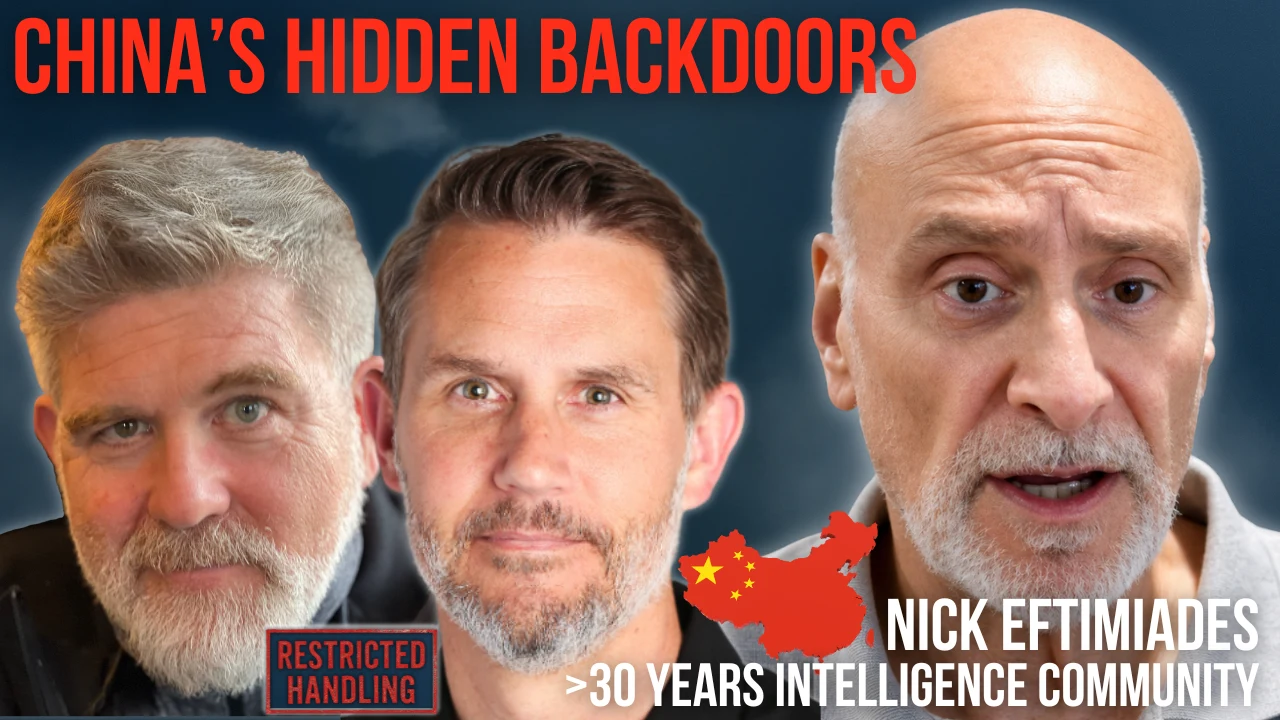
Nick Eftimiades explains why he is taking China's infrastructure access, supply-chain leverage, and long-term intelligence work to Capitol Hill.
Nick Eftimiades / / 38 minutes
Start here
Three key takeaways
-
Infrastructure is an intelligence problem
Nick connects cyber intrusions with dependence on Chinese-made equipment and components. His concern is the access those relationships can create inside communications, energy, and other systems, including access that may matter most during a future crisis.
-
A stronger defense needs a durable policy
Nick argues that repeatedly repairing vulnerabilities gives Beijing too little reason to change its behavior. He wants Congress to mandate a sustained strategy, with accountability that lasts beyond a single administration or a summit announcement.
-
Long-term recruitment can start with an ordinary approach
The conversation moves from local influence efforts to paid research requests and LinkedIn approaches. Nick describes an intelligence service prepared to cultivate access over years, while warning that a capable adversary should not be treated as an all-knowing one.
Episode Field Guide
Explore this conversation.
The people, institutions, and equipment connected to this episode. In the conversation marks a direct mention; Related background adds context.
Ministry of State Security
The interview discusses long-term intelligence recruitment and collection.
Ministry of Public Security
Explore the institution named in the discussion of local and central security control.
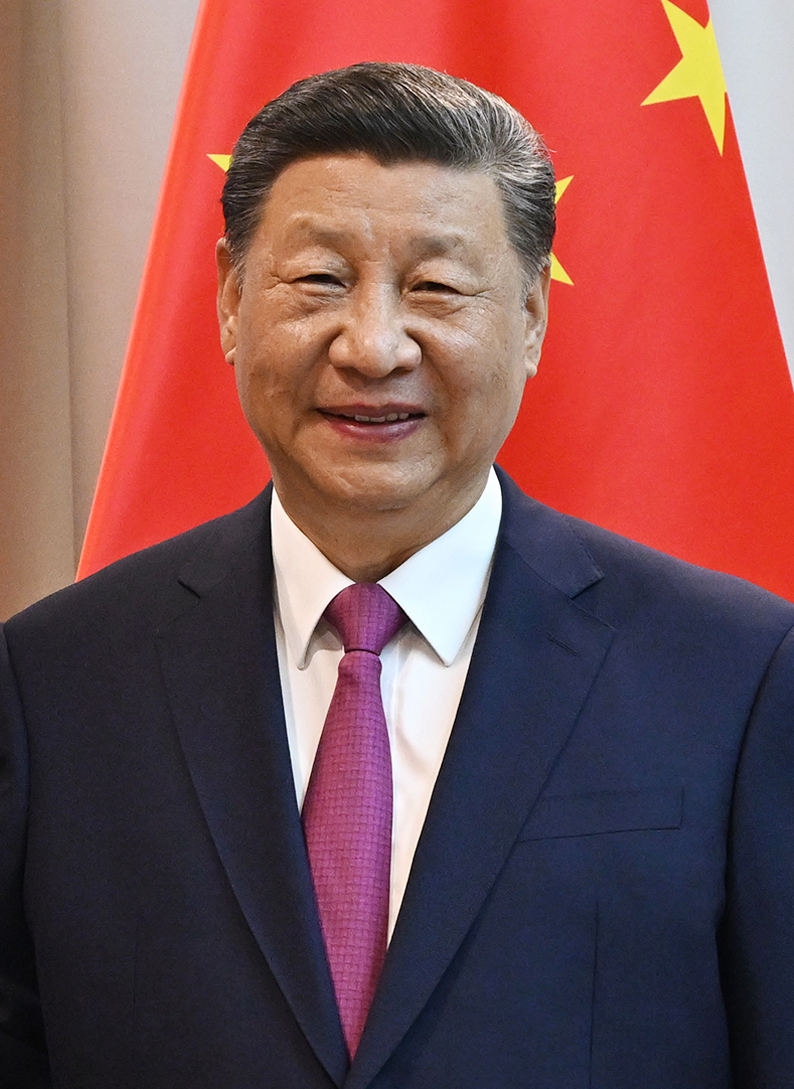
Xi Jinping
The interview considers interpretations of changes in control over security institutions.
These links are an RH reading guide, not guest endorsements or independent confirmation of every statement in the interview. Episode views reflect its publication date; linked records have their own source dates.
The written account
What Nick wants Congress to hear
Nick Eftimiades is preparing to speak with the House intelligence committee when he joins Ryan and Glenn. After decades studying China, he wants the discussion to move past a general warning that espionage exists. His focus is where Chinese access meets the systems Americans depend on, and whether the United States has a coherent response to that access.
He uses the Salt Typhoon and Volt Typhoon campaigns as starting points, then widens the discussion to equipment, software, and supply chains. The danger he describes is not limited to a stolen document. Access to communications or energy infrastructure could provide information now and a means of disruption later. Those are different risks, and he argues that policymakers need to understand both.
Cheap equipment can bring a long dependency
Glenn adds his experience working around solar energy and battery storage. He describes warnings from a Turkish business partner about Chinese market dominance and the difficulty of competing with it. Replacing equipment after a security concern emerges is expensive, particularly for allies that cannot easily afford an entirely new infrastructure purchase.
Nick's proposed response combines security policy with investment decisions. He discusses moving important production to friendlier locations and helping alternative suppliers compete. He also presses a question he thinks Washington has avoided: what reason does Beijing have to stop if the main consequence of an intrusion is that Americans spend more money defending themselves? His criticism is directed at the incentives, not at the people trying to keep those networks running.
A strategy that survives the election cycle
Nick sees an advantage for Beijing in the rhythm of American politics. An agreement negotiated by one administration may receive different attention from the next. An intelligence effort planned over decades can wait through that disruption. His answer is a congressional requirement for a strategy, specific responsibilities, and recurring reports on whether the work is getting done.
The discussion also reaches local political influence and the cultivation of people who may become useful much later. Nick explains why an intelligence service might value a municipal connection rather than only targeting a senior official in Washington. He is describing patient investment in access. Ryan and Glenn then connect that patience to familiar recruitment approaches aimed at former officials, researchers, and people with valuable professional networks.
Take the threat seriously without making it magical
Glenn asks whether some assessments exaggerate Chinese capabilities, drawing comparisons with past Western assumptions about the Soviet Union and Russia. Nick agrees that parts of the threat can be overstated or poorly understood. He is skeptical of treating a particular Taiwan invasion date as established knowledge, even while regarding Chinese espionage and infrastructure access as serious concerns.
Nick closes with the research behind those judgments. His database has reached 984 China-related counterintelligence cases, which he distinguishes from the number of individuals involved. He is also studying the organization of the Ministry of State Security and collecting examples of suspicious online approaches. The episode ends with a practical appeal for scrutiny and sustained attention, grounded in cases and observable behavior rather than a picture of an adversary that can do everything.
Based on the Restricted Handling conversation published July 5, 2026. Views and forecasts reflect the discussion at that time. Original episode and show notes ↗
Full episodeRead the transcript
This transcript comes from the published episode captions, with spacing adjusted for reading. Names, punctuation, and terminology may contain transcription errors. Refer to the recording for exact wording.
Hello, freedom loving people, and welcome to another episode of the Restricted Handling Podcast. Glenn and I are again on separate continents. This time I'm sweating it out in Europe. Glenn is stateside, but getting ready for his own trip to the hot box. we are joined by a guest you've heard before, Nick Eftimiades of Shinobi Enterprises. Nick has spent decades, as people will recall, covering China and particularly the counter Intel threat for China. He's gonna be going to the Hill tomorrow to talk to the House Permanent Select Committee on Intel, specifically about China.
Can't wait to hear about this and what's coming up and what you're planning to talk about, Nick. Thank you so much for joining us again. It's been a long time and a lot to cover on China. Well, thank you very much for having me. It's it's great to be back, Ryan. And Glenn, good to see you again. I see you chewing some gum. That's from one of our sponsors. We won't use that time now, but that's coming up for us later. But I need to get my hands on something. That said, n Nick. Nick, why are you going to the house tomorrow? What's the story here? well the and I just noticed that the DNI kind of testified earlier this week.
the house, and and this is a rarity, has taken a great interest not only in China, but in particular this subversion that China's perpetrated on US critical infrastructure, or at least that's my block of it, and the US counterintelligence response capabilities. So they're doing a deep dive into this on China's activities. And uh asked me to sit in a round table and come and discuss it. what's it like going to i as we call it right hip hipsy and sissy? Is that what we we tend to call them, right? What's it like going in this capacity versus when you're in in the gov?
well you you get to speak your mind, you know, testifying on the hill we used to call putting lipstick on a pig. Uh I mean, and no matter what happened, it was always a good story. And when you're in the human world in DIA, Defense Intelligence Agency, that was always dictated by um by what CIA wanted. So no, no, no, you can't go brief that case. You gotta brief a joint case when you've done with us. So everything going to the hill. was very controlled and very orchestrated. Um, not so much this time. So yeah. So yeah, free free to actually tell the truth. There's a there's a that'll be a switch.
So you have to go with somebody from one of these Chinese police stations, uh, somewhere in the country, they can also get to escort. Is that their demand? Bad jokes. Sorry. I it it should be interesting because I know people who were victimized by those police stations might be interesting from the hip to hear from them. Right. can you tell us what what are you planning to talk about when you go to the hill in particular? Kind of what angle are you taking for this? Um, well, I'm gonna talk about some of the Chinese campaigns for penetration of US critical infrastructure, which is lucky because I just did a briefing on this for um International Conference on Transnational Organized Crime and Terrorism.
And what we see is a um extensive penetration of the critical infrastructures in the United States. We've seen Seoul Typhoon and Vault Typhoon, which are um two campaigns that China did. penetrating US critical infrastructure on a mass scale, tens of thousands, and uh penetrating nine US I think Sol Typhoon was penetrating nine US uh communications providers, right? So in doing that, they had access to all the comms, including those of senior US officials. But uh, you know, there are other things that that we looked at. the um solar panels coming out of China are built in with back doors.
You know, for um for where you're think you're connecting with them, you know, through online, you know, China has a backdoor into them. We see that in um in all sorts in buses that China puts electric buses it's putting out all over the world. and there are backdoors built into those. There are kill switches built into those, so China can shut them off. We see them in a number of products coming out of China. And the the I I was laughing. Transportation Security Administration put out a notice that these signs that they've purchased from China, the street signs, you know, that you see on the highways, have backdoors built into the software in them.
So I I mean, you know, what do we learn from this? We say a massive effort, we see our reliance on China for components of critical infrastructure. And then we see them taking every advantage of penetrating that, using that to penetrate our critical infrastructure. So I i it's you know, making the Congress aware of this and some of the details of what's going on and how vast a scale this is happening. And the fact of the matter is that the US really doesn't have any response set up. And I and I say those words specifically, not defense, but response. We don't respond to it in any way.
You know, Nick, this is a a topic you touched on something near and dear to me, because for the last two years I was working with a Turkish energy company in the in the solar and uh battery storage space, and the CEO of that company kept warning me that the Chinese are dominating the market, they flood the market, there's unfair competition, they're subsidizing their companies. You know, under the previous administration, we were promoting green energy, but almost the entire market was being controlled by the by the Chinese. And so my message to Congress through you would be you we need to start subsidizing and helping US companies and maybe allied companies to counter the Chinese because they really have like undermined any competition.
That's the that's the playbook. And then they dominate. And yes, you know we the this company warned me many times that the the Chinese products have back doors. They can be shut down. They can be used for different reasons. And I am happy to say about a year ago I saw that we started, I think Congress mandated on US military bases that they need to start to start getting rid of a lot of this infrastructure and replace it with stuff which is s more secure, which is great. that's great news. But it's still that you know the Chinese d not just in the US but internationally among our allies, which is a big problem, right?
And a lot of our allies don't have the money to replace the infrastructure which they mistakenly purchased, both whether it's telecoms, you know, we have I mean we could talk about this probably for hours on how how many mistakes have been made by the US and our allies in the last twenty, thirty years in this area. Yeah, i it it gets to be a pretty expansive effort on their part and the response has to be equally, you know, expansive on our part. there are a whole range of considerations that have to come into be a not buying from China, B using US manufacturing that's done in China, moving that out of country.
I mean, you know what? The supply chain for for you know biotechnologies. for active f APIs, active pharmaceutical ingredients. Yeah, that's US investment into China. Okay, maybe we need to do provide no cost loans or something like that and have that investment moved out of China to Central America or someplace where it could possibly be moved close to shores, shorter chain for distributing it. And you know what? Let's create a couple of hundred thousand jobs in in Central America and and ease our own immigration issues in the same way. you know, supply chain through friendly nations.
So there there are a lot of different options we need to we need to do. China dependency is not, should not be an option for the US any longer. they they have proven themselves aggressive in their in threats to the US and sabotaging the US. So mm you know what what's the response to that? okay, let's just keep going the way it is? No. Right. Right. I think w w somebody in the in this space mentioned said to me one day, he said in cybersecurity space, he said, Imagine if Americans woke up and they saw Chinese soldiers running around the streets of the United States in their uniforms, they'd probably, you know, get their Glocks or their shotguns or like they'd go red dawn.
But They're all over our infrastructure and people seem to be oblivious. Like they just I my own assessment is a lot of people don't wanna even accept that there's a problem 'cause it's it's it's a pretty big problem. And it's a little bit daunting, but we need to do something about it. Well, the the US has had a a path, which I think has been a a gross error you know for for the past couple of decades. And that's been, you know, we'll build defenses. So cyber penetrations is probably the biggest example of it. You know, they they attack and we build bigger cyberwalls.
They attack and we build bigger cyberwalls. Well, you know what? If it's the government doing that, it costs the taxpayer, and if it's a company doing that, it costs the consumer. And You provide no incentive for China to stop. What what's the incentive? I mean, it's cheaper to attack in those spaces than it is to defend. So what what's you know, what's their possible incentive to to to stop? As of now, they have the greatest transfer of wealth in history, right? Trillions of dollars in US intellectual property has transferred over to China, mostly through cyber threats, insider threats as well, but mostly through cyber activities.
So I I mean, you know, w what's the incentive we're putting for them to stop? Well, yeah, it's ridiculous. We d it doesn't cost them anything, so they continue to go. And you know, and a true we continue to do the same thing as a true mark of being crazy. Nick, I know when uh President Trump went to visit she just you know a month or two ago, you were on a pretty epic trip so we couldn't connect. But I'd just be curious, did any of this have you heard any of this come up from that meeting or the outcome since? You know what? Um the outcome is pretty interesting because there hasn't been anything that's come up.
If you notice the dead silence on it, which means they actually sat there in a meeting with she and no progress was made. I mean, which is probably from like a assault typhoon, uh like cyber uh defense and yeah. the board, and President Trump came back and basically said that, you know, said that you know, that that they hadn't made a lot of basically they hadn't made a lot of progress. so China's at uh and what you take out of that is China is at a position of strength now where they can defy any anyone. They can defy the US. They feel themselves at that position.
So, you know, in this case the Congress. uh because i it doesn't work when administrations do this. President Trump will leave office in a better part of two and a half years and whoever takes over, as we saw in Biden, when Trump had tariffs in place, Biden took over and China ignored all the tariffs. They ignored all their responsibilities that they signed up to that they would buy from the US. They just discarded it because a new presidential administration came in and Biden wasn't going to chase them down for it. So this four year cycle or four to eight year cycle, is easy for China to wait out.
And they're waiting out Trump now, right? Another two and a half years. And out of that two and a half years, maybe two years they'll act have to actively consider it because the last six months will be elections coming up. and if Congress flips um leadership at at this point or flips its um its members, then You know, Trump's gonna get nothing done over the next two years. So, you know, and and they're patient, they have a long term plan, they have a strategy that sits over decades, so they can wait out this minor bump as they're moving forward. So the key to this, the key to US national security for the future lies in the Congress, lies in putting things in law and saying, No, no, no, we want a strategy and we want an annual update or biannual update, and the strategy's gotta cover one, two, three, four, five points.
We want you to, you know, execute on critical infrastructure. We want you to create this, create that, do this. I my point to the Congress is going to be it needs to mandate these changes. Because we've seen the Congress complain before. We've seen the Congress complain before and inaction on the part of the bureaucracy. And I saw it, I saw the Congress complaining all through the nineteen nineties. We're gonna get hit by terrorism, do something about it. We're gonna get hit by terrorism, do something about it. And you go back and look, and Congress made over three hundred and fifty recommendations for changes to the US government, a dozen of which they actually did.
And all those were geared towards our ability to stop foreign terrorists, you know. coming to the United States or operating against the United States in the US, I should say. And, you know, the bureaucracy just kept going on its norm, ignoring it, and three thousand Americans, you know, paid for it with their lives. My my my closing part of my statement is don't do this again. Right. I guess, you know, this is the message to our our viewers. That means that constituents need to make to make sure that it is known to their elected representatives that this is a priority for them.
They they want them to focus on this and not to repeat the mistakes we've made over the past twenty, twenty five, thirty years. Right. Yeah, you you tell this to your viewers, and I can sit there and tell you, look, it really does mean something. Honestly, if if five people were to write into a congressman, you know, to email in saying, Hey, what is this? You know, do something about China. I'm very concerned about the threat to critical infrastructure and they're they're they're you know stealing US technology. If if half a dozen people wrote in, that congressman would be dumbfounded, you know, to to bring it up.
But people don't. And and you know, as much as You listen to people rant and rave online about it, they take no action. Hey, I can I just ask a question. I what your assessment of this recruitment of a mayor in a larger town or in in California. I mean, what I was on actually a Russian news station interviewed me about this. Like why the question was why would they recruit somebody like a mayor in a municipal municipality? What's your assessment, Nick? so the individual we're talking about is Eileen Wong from Arcadia, California. And she was actually recruited, she was actually part of this when she was on the city council or running for the city council.
the guy who is who was her fiance, Michael sorry, Michaelson, yes, is was convicted actually months before her, a year before her. And he was working with a guy by the name of John Chen. Now, John Chen gets arrested and convicted for bribing what he thought was IRS agents, the FBI putting undercover in, were IRS agents to go after Fal Gong this spiritual movement that China says is one of the great evils. So the plan was to go after Falun Gong and to get them their nonprofit status revoked. And they paid him $60,000, you know, moved through in cryptocurrency and such.
And he had orchestrated a whole thing working with um intelligence and other officials in China. This guy does it. He does it with Mike Sun. Sun then says, Hey, you know, Eileen Wang, my fiance, is running for city council in Arcadia, California. They move that, and and you know, they have letters which were presented as evidence going back to China asking for $80,000. To run the campaign and to move her forward. And this could be a rising star in the US, and we can leverage her to go after Falun Gong Right? That's the argument that they go back to literally the United Front Work Department to do.
And there's some communications going on with the embassy and the consulate in in Los Angeles to kind of move Eileen Wang forward. they create with Eileen a nonprofit association, a China America Business Association. And um they get a lot of people coming in, collect a lot of money from that, and that's all done for Eileen Wong's campaign. Uh Eileen Wang has worked with Mike's son before, and she's worked with him in basically putting out propaganda at CCP direction in a company that they that they had together. So uh, you know, multiple businesses that they that they run together.
comes up that he is eventually, and because the FBI goes through John Chen's, you know. documentation and says, hey, whoa, what's this? He's working with this guy, Mike Sun. And they trail it back to Sun, do an investigation. Ultimately they pop Mike Sun. And you know, that just leads in time within a year later to arresting Eileen Wong as part of this effort. So and the plan was and and if you take a look at that and um the case of Fang Fong who dated former Congressman Eric Swalwell, um she also um it appears she had a relationship with Mike Coleman, who was mayor of of a a s a major city in Ohio.
So uh and it's great because he's sixty years old, she was around thirty. And uh you Nick, the angle for Eileen Wong was Falun Gong specifically? Well, that's what yes, because they were pitching the United Frontwork for money. the interest and they said, Look, this will be a rising star, a long term star that we'll have in American political circles. And that's what China does. They invest they invest in the long term. They invested in Congressman Swawa, they invested in Eileen Wong. there's a term in the Ministry of State Security uses called Chindi. Which is literally translates to bottom sinking fish or fish on the bottom of the ocean, long term asset you put into place and can activate decades later.
And that's what they're doing. Maybe turning the table a little bit, there was a report from the MSS, and I'm just gonna read a little snippet about it. Individual last name Shang, a case of a defense industry employee targeted overseas through paid consultancy, arranged by two foreign Intel operatives, returns to China then I think admits to what he did and is not held accountable quite as harshly as as you might expect. Anything to make of that, Nick, have you heard of that story yet? Yeah, I yeah, the you know, they release stories like this increasingly. And what you find is that every time there's an espionage case that breaks, or you know, a case that breaks seriously with China, like multi foon, the Chinese media will break a whole bunch of cases that they'll put online, you know, sort of in r in r response or retaliation.
How true they are, uh you know, I don't know. but uh you know, could it be? Yeah, very likely, but You you can never tell if it's true or not, which gets to be kinda crazy with the Chinese system. And then even closer to home, Cuba. with what's going on in Cuba right now, with just electricity being out, outreach from the US to Cuba in different ways, there's been reporting that China does have quite a presence in Cuba, as does Russia. But any any concerns you would have with if Cuba were to maybe change leadership to some degree, how would that impact China's counterintel efforts or their targeting of us just close to home?
the hope of course is that it inf uh that it impacts us favorably. Is that you know, you can dangle the the carrot out there of of look, there's no reason to do this. Let's open up trade relationship, let's make an official relationship, and you know, Cuba should be would be thrilled about that. I mean, it is a basket case in poverty. Actually my son spent a month there just recently. So, um, you know, and so I got sort of reports on the ground you you can't get money out of ATMs, you can't use credit cards and stuff because the US banks don't operate there, right?
So it is it's it's in dire straits. Has been for a while, but it really is in dire straits. So unless China's gonna bail it out, it has an extraordinary opportunity of trade and expansion of r its relationship with the United States. you know. The argument of it being a communist country, which is what it was, you know, and us not trading with it right off our shores. Well, you know, China's a massive threat in a communist country. We trade with them. you know, so i it's I I I don't see the arguments anymore. I think we could nullify a lot of the threat. By opening up the doors to Cuba.
And China has a presence there, it sounds like some um comms, yeah. Right. go ahead. it it just leads us to you gotta keep the question in mind. If they have such a robust SIGIN presence, how come they didn't detect the the Venezuelan operation? Or at least they didn't detect and report and get to their diplomats who were on the ground, you know, the the day before. I don't know the answer to that, but it it's an interesting question to ponder. What What the heck were they doing if they weren't monitoring, you know, US fleet movements basically in their back door?
Just a quick word from our sponsor Coveron and we'll get right back to the show. Glenn and I have spent our careers thinking about security and that didn't change just because we hung up our badges. We still travel a lot and Glenn often finds himself not too far from the front lines. We still want to keep a clean digital footprint. Coveron is a digital identity protection service that combines scam detection, identity monitoring, and cyber insurance to help protect your money and recover from fraud if you become a victim. We take our digital security very seriously.
Cover on watches the dark web for your personal information and alerts you when your personal data are exposed. What I appreciate most about Coveron is that when all else fails, Coveron can help protect you financially in cases of identity theft recovery costs, if you lose money to scams or online fraud, or if you're targeted with cyber extortion or threats. And you can reach a real person for help, which is rare these days. One scam can cost you everything. Use code RH pod for up to seventy six percent off at coveron dot com slash rh pod. Just a quick word from our sponsor, Larinco, and we'll get right back to the show.
I've always been a gum person, and I really like killing two birds with one stone. When I was flying in the army or out on an SDR, I loved chewing gum to stay awake, alert, and settled. I don't know why, but it always worked for me. So when I heard about Lorinco, it made sense. Lorinko is a better-for-you chewing gum that uses the same mineral your teeth are made of to support daily enamel health. This is the killing tubers of one stone for me. It's made with the mineral your enamel is actually made of to help strengthen enamel and repair everyday damage while you're chewing, which I love.
Lorinco sent us the gum, the flavors are great, and it lasts. They've got mint, cinnamon, bubblegum, berry. They also make a really good fluoride-free toothpaste. I was already chewing gum after coffee on planes and at the office, but now it actually feels like I'm doing something useful for my teeth at the same time. Right now, Larinco is offering our listeners up to 50% off at buylarine.com slash restricted. That's buy Larine L-A-R-I-N-E.com slash restricted for up to 50% off. Buying Lorenco doesn't just help your teeth, it will also help the show. And now let's get back to it.
So that's a great that no no, that's what kind of leads into what I was gonna say is that that's a great question. You know, some people argue that we're overselling the threat from China and that we're doing what we did with the Soviet Union, you know, in the in the eighties and in the seventies and eighties, you know, we built the Soviet military into being all powerful, the KGB into being all seeing and knowing. And it turns out it was far from that when the when the wall came down. Again, we did that in 2022. You know, up to 2022, the Russian military is one of the greatest in the world.
And then we find out that the you know, actually they're Chinese-made tires on their their vehicles were were were deteriorating as they were trying to go into Kiev. So, and to your point, yeah, I mean they have this this SIGIN capability in Cuba. They they're supposed to be all over our critical infrastructure, and yet did they not see or did they see it and they just decided not to expose the fact that they saw it. And they let Maduro go down, right? This is raises all these questions. So I don't know what do anything about it anyway. So, you know. that uh you what's where do you come down on this?
Do you think some people are overselling the threat or you think that um do. I I I think there are aspects that are are either misunderstood or are or oversold. the invasion of Taiwan. You know, you you hear that coming from American military all the time. So theoretical, yeah, certainly it is possible. Twenty twenty seven is a hundred year anniversary of the PLA. That's the year that that we seem to focus on. Is it logical? Does it make sense from China's perspective? You know, like the second largest currency reserves in the world outside of China. And you know, that's the one you're physically attacking?
probably not. so it's got a lot of people concerned and you know, the the threat there could be well overhyped but you know, we we've done this a lot. We did this in Iraq, you know, uh there Iraq too, you know. So it's difficult and it just it more importantly, it shows how poor our intelligence is in the in the matter. Right? I mean, if US intelligence was really excellent in this matter, the our military wouldn't be pontificating like this publicly and stuff. We'd have a better handle on it. But it's not. And the fact that we have so many questions is is the problem.
Ryan, you're in Europe now. Are w are you like the Europeans you're talking to, are they concerned with China? Do you hear them talking about China's a threat or are they I mean I find it very interesting in in the UK in particular. And again, these are all my own uh opinions as as Glenn and I like to say. just what we saw over the past year with with the UK, I think allowing the Chinese to build this embassy in downtown London, that's coming up. refusing to try a case against um at least one, I think maybe two individuals that had been accused of exactly of espionage.
And again, Glenn, you're right to point out, innocent until proven guilty. It's just, you know, they really didn't take that case on, I think largely to remain within the good graces of China. But I really think they're so focused on Russia. just such a potential threat on their doorstep. And there's so many upsides, I think, economically with China that why risk it when when they're feeling the pain with Russia and now even more with Iran with the war, obviously. Right. Well, I I I would agree. Um, certainly Russia's, you know, first on the agenda. It's in their backyard, basically.
And we've already seen Russia, you know, strike and act against dissidents and such inside the UK. Um, so that's a big concern for the UK. Terrorism is also a big concern for the UK. Right? They have you know, there were decades that went by and MI six did like eighty five percent of its work was terrorism. So you know, very, very focused on that, on those two areas. All of Europe is at this point. So um China's always had a back seat for them. It's not a strategic, you know, long term strategic threat, yes. but not in their backyard sabotaging things, you know, like like Russia, I mean physically burning factories and stuff.
that said, I've I'm in touch with government entities in the UK and there is a lot of concern and they are spinning up to address China in in in many ways, not the least of which is uh the organized crime Chinese government nexus that that has them concerned. So you know, long term threats not like the US where they it's on our doorstep, but they recognize it is a threat and are bringing their minimal resources to sort of Bear on the problem. And Nick, I know we'll we'll get you out of here in a second. Just I know you maintain this kind of beautiful database of, you know, Chinese related CI cases and whatnot.
So just a as we part here, anything new in that database of interest that you think might be uh might be of interest to folks and then separately is there something we're not talking about or haven't talked about that we should be that's on your radar? yeah, uh I've well I it's nine hundred and eighty-four cases I now have databased, and that's cases. So one case might have five individuals involved, or so there are thousands of individuals and hundreds and hundreds of of companies and a hundred universities, you know, all which have been taking part in espionage or economic espionage.
So, you know, what the data starts to show over time is certainly a switch. In the operational tactics, right? And the tradecraft that China's employing. I mean, that that's obvious. The use of social media and LinkedIn, the use of encryption services, the use of setting up websites, encrypted websites for uploads. and what's what hasn't come out publicly, which is or you know, just barely came out in China, is the consolidation of um Ministry of State Security offices. under central authority. So in China's system, in the CCP system, the Communist Party at the local level, at the provincial level, controls agencies of the government.
Right? So in the Ministry of Public Security, Ministry of State Security is uh controlled by the political legal leading commission at the st at the at the provincial level. So it's as if the states would control the federal assets there. Right? Minimal control from the headquarters, you know, from Beijing. Administrative support, you know, logistics, money, that type of thing. But really operationally, they were controlled by the Communist Party at local levels. So the true collectors of information, the true, you know, the biggest power are those local committees, because they're getting all the feed from the Ministry of State Security, all the feed from the Ministry of Public Security.
Mm. the feed from neighborhood committees and and committees, uh party committees inside universities and companies and state owned enterprises, all that's coming to the provincial level, Chinese Communist Party, right? They're the trusted ones and they're reporting up to senior levels in the party. That's how the party keeps control at provincial levels. Just this year we saw that control. move from the um from the control level at the province up to the national level. So many say this is Xi Jinping getting control, you know, in case there's a fight for leadership, getting control of the assets, you know, the state state security and public security assets, you know, throughout China, in case he has fights with different party, you know, leaders in those areas.
But um we'll see it's a huge control issue and it will change the way Chinese intelligence does business. So because they'll have a central place now, kind of looking down, monitoring over, you know, what's being done with different areas. Is that your hypothesis as well that it's him consolidating power, or is that just what people are suggesting, Nick? I I I don't know. I think uh in some ways he's tried to professionalize the service, but it certainly would be an interest in him. And he has we've seen him over dec over a decade now, you know, killing subjecting people to discipline things like that to consolidate power, primarily in the Ministry of Public Security.
I mean Ministers state security is almost a a smaller child. So compared to public security, which you know, anyone who carries a gun is a big deal in China and they're far more pervasive than the state security apparatus. I do have one other thing coming out. Just to let you know, I and I haven't figured out how I'm gonna publish this as a paper, but I got the list and I did research and found 30 Ministry of State Security headquarters locations in China, each provincial level. Headquarters location. And then I got a team of graduate students out of Penn State in our geospatial intelligence group.
And we gave them as their graduate project working under me reading out those building facilities. I went online and China Publishers. Uh you got to do some phishing to find it. But their internal regulations on um office space. you specifically Communist Party and for the security apparatus, how many people per square foot you're allowed to have, you know, per square meter and and uh what an office has to be, how what size, how the the hallways, the width of the hallways. If it's more than two hundred people in the building, it has to be a certain width, that type of thing for fire exit.
So I get those um those statistics, provide those to the team and I did oversight of the team as as they're working. And we did a readout of not only the the exact number of you know and and this has been an issue with in the Ministry of State Security people, there are 800,000 people were you know in the MSS. There are 100,000. No, it turns out they're probably around 70 to 80,000, you know, really. Uh if you just look at the building space, this is what they got to work with guys and this is their regulations for doing it. That and of course Given the fact that I know where their satellites are pointing, having looked at the imagery, we're able to go and tell you exactly which satellites they're using for their communications.
So I intend to publish that in the not too distant future. So I'm I'm gonna look forward to getting that out into the into the public realm. Well done. Well d if you could let me know when you probably so I don't buy any real estate near those uh state security facilities, Nick. I'm looking at a little piece of land. Yeah. In terms of the that's also recruiter tell you that? yeah, that's uh don't even go there. But actually, you know, our our I'm sure our l our viewers or listeners are are aware and they should be very alert that their Chinese are using LinkedIn very aggressively and other social media tools to target and recruit, especially those of us from the you know, retirees from that former world or our former, you know, whether it's the agency or DIA or you know, the Pentagon, FBI, they're very aggressive.
And some if if your user if your viewers get approaches like that, they should send them to me. I'm compiling a I'm compiling a data list on them and I got pictures of, you know, all these cute girls and stuff and and um the the best are the uh are the requests for you to uh to you to provide papers. Like apprentice an unclassified paper and Atlantic Council spelt incorrectly, you know, in the email address, that type of thing. So I'm compiling a a a good group of those things. At some point I wanna make it just public, just post it, you know, so that people can see you know the the the types of approaches we're getting.
No, it's hurtful, Nick, is they asked me for a paper. I sent it and they said your writing's terrible. That was just like really big. Use spell check. I was like, huh. You know, you you have to wonder, and here's a a thought I've been pondering with China pushing all this you know, to people with clearance holders, you know, people who are clearance holders saying, write a paper on this and that. I'm thinking, yeah, you know, sure. Go to link go go to any online um artificial intelligence, write me a paper on this, that, and pass it off. Well, you know, this is sooner or later people are gonna think, hey, this is money in the bank, and you know, I'm just using it through AI.
I think we should encourage that. Well to well to your to your point about like the numbers of employees, one of the things that you know that you gotta ask is are they gonna have to start are they gonna start firing people because they're being replaced by AI? Right? US, you know, companies are having to lay people off or or laying people off because they're being replaced by AI. So, you know, I work with the due diligence companies, they the tools they say they play ten people with one tool. So I see your point though, Glenn. Maybe that seventy to eighty thousand MSS figure is gonna be fifty thousand because they're finding efficiencies elsewhere.
But yeah. watching this program and you're being chopped, there are people that care. Well, they're already using it. They're already using it on LinkedIn. So, you know. Yes. Anyway. for coming on. We'd love to have you on again, especially after you end up publishing that piece. That sounds like a really interesting one that I I know personally Glenn and I would love to hear about. I'm sure the listeners would. Keep us updated on that and we'll have the links so people can find you and what you're doing in the description. All right. Well, thanks very much guys. I appreciate you having me and I'll look forward to being in touch.
Thanks for doing what you're doing and for going down and talking to members of Congress. And again, for all the viewers, US citizens, voters, like the constituent your constituents, you've got to let people know that you're concerned about this if you're concerned about it. So Nick's doing his job from his side. You guys gotta do your job from your side. Otherwise, this is
Back to the Episode Field Guide ↑Keep listening.
All episodes →
John Herbst / Ukraine and U.S. strategy
John Herbst on Arming Ukraine and Raising the Cost of Russia’s War
Steve Wills / The Arctic and maritime security
Steve Wills on Russia’s Arctic Submarines and the Cables Beneath the Sea
Between episodes
The daily brief is free.
Russia, China, Iran, and North Korea. Straight to your inbox.