What Sanctions Cost Russia, Even When It Finds a Way Around
Roman Steblivskyi explains how Russian supply chains adapt, why enforcement matters, and which restrictions he would protect in any negotiation over sanctions relief.
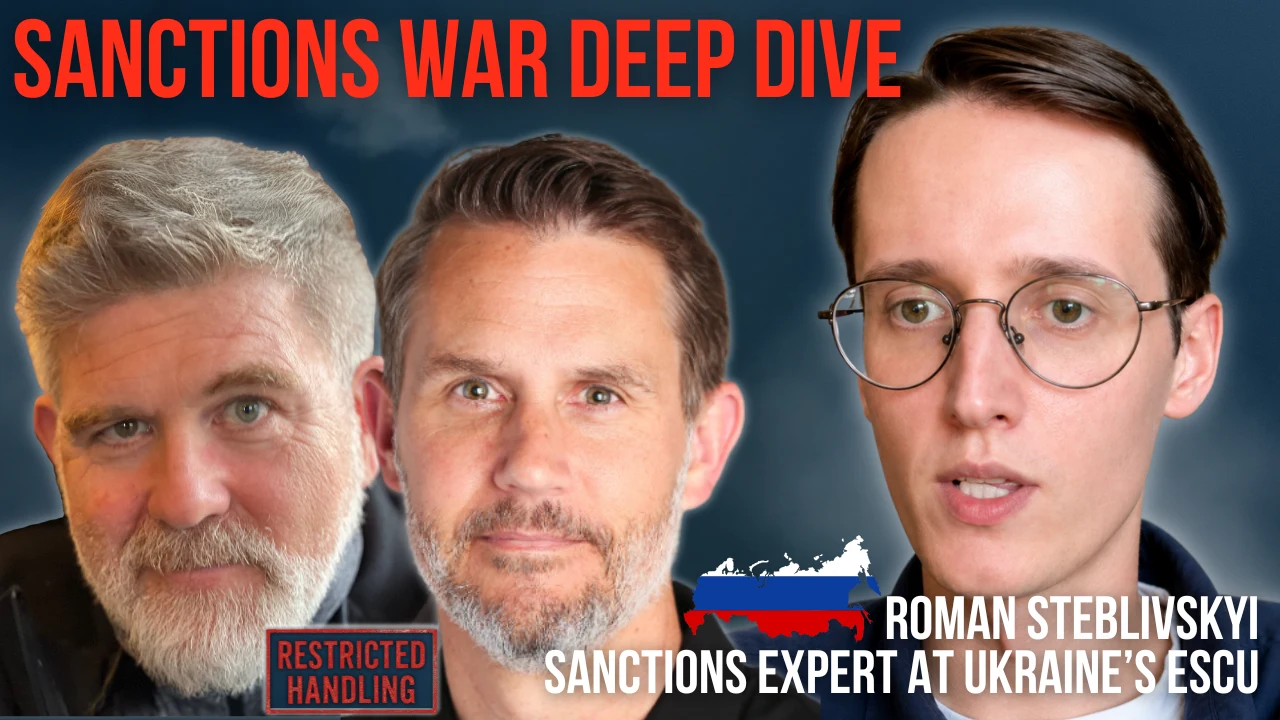
Roman Steblivskyi / / 48 minutes
Start here
Three key takeaways
-
Evasion does not make every sanction pointless
Roman explains that longer supply chains add cost, delays, and risk, even when a restricted item ultimately reaches Russia. The useful question is what a measure does to procurement and production, rather than whether it stops every shipment.
-
Enforcement is the work after the announcement
Restrictions lose force when suppliers and buyers do not expect consequences. Roman wants sustained attention to intermediaries, downstream customers, and end users, backed by governments willing to act on the networks investigators identify.
-
Relief needs conditions and priorities
Roman accepts that sanctions can be lifted through a genuine negotiation. He distinguishes less consequential restrictions from measures affecting energy income, military production, and dual-use technology, and says concessions should follow real Russian steps toward ending the war.
Episode Field Guide
Explore this conversation.
The people, institutions, and equipment connected to this episode. In the conversation marks a direct mention; Related background adds context.
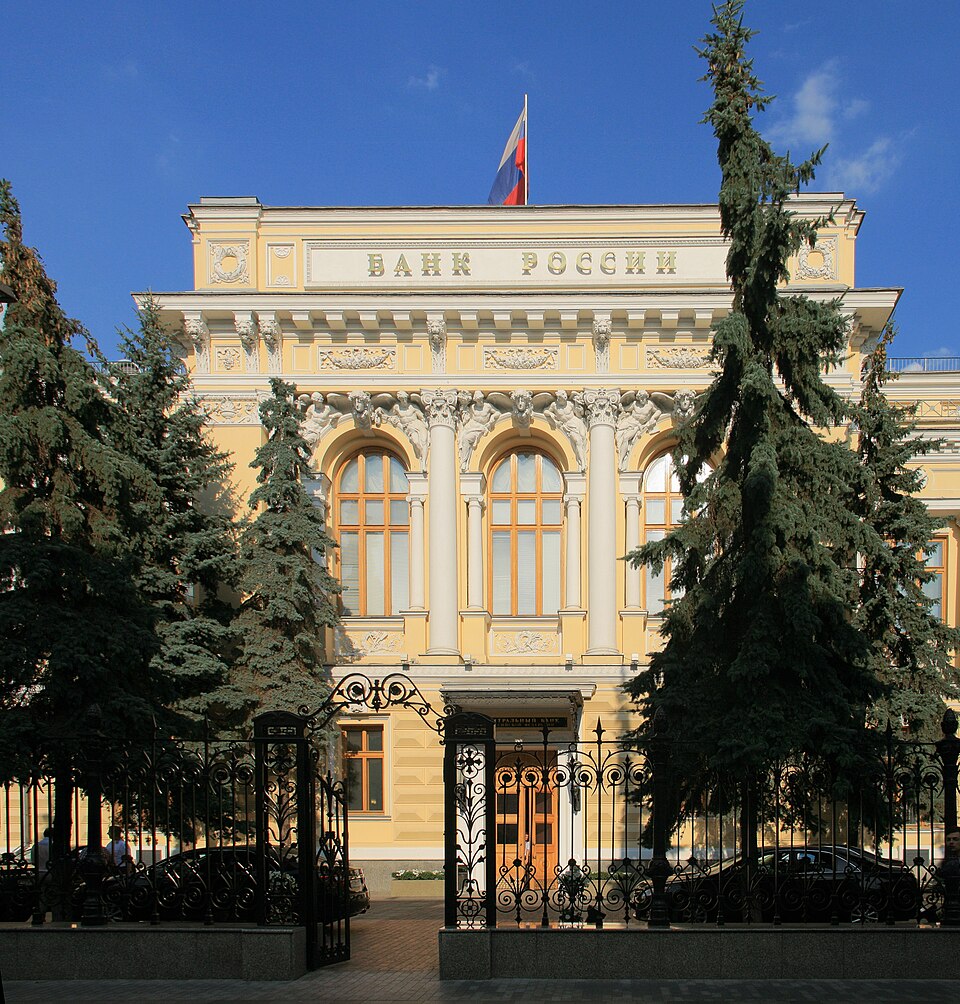
Bank of Russia
Related background on Russia’s financial institutions. This passage discusses banks generally and does not name the Central Bank.
Image credit
Russia Power Network
Explore the wider state, finance, and energy network alongside the sanctions discussion.
Image credit
These links are an RH reading guide, not guest endorsements or independent confirmation of every statement in the interview. Episode views reflect its publication date; linked records have their own source dates.
The written account
Getting past the sanctions scoreboard
Ryan starts with a useful admission: Restricted Handling talks about sanctions frequently, but he wants a better understanding of what they actually do. Roman Steblivskyi joins him and Glenn to make the discussion concrete. Roman's organization, the Economic Security Council of Ukraine, is independent of the Ukrainian government and studies the supply chains Russia relies on.
Roman draws a distinction between sanctions as political signaling and sanctions that impose a measurable cost. A government may announce a restriction to register opposition to an action. For that signal to retain credibility, though, some of the restrictions must have an effect. His preferred place to look is procurement: what Russia can buy, how it gets the item, and what the route now costs.
The price of getting around a restriction
Glenn asks about reports that sanctioned equipment can cost Russia twice as much once it passes through intermediaries. Roman says the extra expense can go beyond the markup on a machine. A procurement network may need new companies, managers, transport arrangements, and people willing to take the risk of penalties. Those layers consume money even when the shipment succeeds.
The examples include computer-controlled machine tools used in manufacturing. Ryan pauses to ask what those machines actually are, giving Roman room to explain why apparently civilian equipment matters to military production. Their discussion covers China, Turkey, Central Asia, and Belarus, while recognizing that influencing a major trading power is politically harder than applying pressure to a smaller transit country.
The difficult part is following through
The hosts turn to energy buyers and proposed secondary sanctions. Roman sees value in measures that reach the countries and companies still doing business with Russia, but his test is enforcement. A threat that is never acted on can become another announcement that a supplier learns to discount. He wants a continuing system for identifying and penalizing the networks that keep restricted trade moving.
Glenn raises the difficulty of asking Americans to absorb costs when European partners pursue different commercial arrangements. Roman replies that the EU contains 27 governments with competing interests, rather than one uncomplicated position. Jobs, energy dependence, national politics, and the requirement for agreement can all shape the result. The exchange is useful because it exposes the practical obstacles without turning them into an excuse to stop evaluating individual measures.
What belongs on the negotiating table
Glenn asks the other half of the sanctions question: if Russia genuinely changes its behavior, what can be offered in return? Roman says that discussion should be possible, but only with clear conditions. He does not see every restriction as equally important. Controls affecting military production, sensitive technology, and energy revenue carry different consequences from restrictions on luxury goods or travel.
For the next phase of enforcement, Roman emphasizes strategic minerals, stronger checks on customers' own compliance systems, and end-user audits. He also supports greater pressure on Russia's shadow fleet. He cautions against assuming that economic strain means imminent collapse. Russia can adapt and receive help. His case for sanctions is therefore about steadily constraining the resources available for war, while preserving leverage for a negotiation that produces real, verifiable change.
Based on the Restricted Handling conversation published June 29, 2026. Views and forecasts reflect the discussion at that time. Original episode and show notes ↗
Full episodeRead the transcript
This transcript comes from the original episode production captions, with spacing adjusted for reading. Names, punctuation, and terminology may contain transcription errors. Refer to the recording for exact wording.
Welcome, freedom loving people it's great to be back today with another episode of the Restricted Handling Podcast. my partner in crime, Ryan, is currently in Europe where he's doing some work and he's logging on early in the morning to make this podcast happen. I'm in Washington, D.C., which is a rare occasion for me. And today we have a uh very important guest. It's going to talk about a Really important issue, which many people don't fully understand in my assessment. But we have Mr. Roman Stebdivsky, who is the senior director for policy and advocacy at the uh Economic Security Council of Ukraine, which is a non-governmental organization.
It's not a Ukrainian government organization, it's independent of the government of Ukraine or any other government. and I met Roman and some of his colleagues recently in Kiev at a conference. And by the way, and Odessa. I learned that they fo they focus, they specialize in analyzing and understanding sanctions policy. And so when I met such fascinating people, I said, Hey, let's wanna invite you on our podcast to maybe talk to our audience, our followers, about sanctions. I'm I'm gonna assume we're gonna focus on Russian sanctions. We may veer off and talk about sanctions on Iran, Venezuela, other countries, North Korea.
I think the focus will be Russian sanctions. Roman, Vitayu, welcome. Ryan. Good day, Mike. I don't know. What do I say to you, wherever you are? Yeah, sorry. Oops. I love the Australians, man. I love the Australians. All right. Uh I guess it's top of the morning to you in the B. Yes. Okay. Roman. you for the invitation. Roman, as I said before we got started here recording, this is one podcast I've been incredibly excited to be a part of. We we reference sanctions quite a bit in our discussions and then we have a daily Intel feed that goes out. It talks about sanctions almost every day.
Every couple weeks we do a deep dive on the economic situation in Russia. Sanctions always come up, but I feel like I don't quite understand the the impact and effects. of some of those sanctions. So I was really excited when Glenn proposed this and thank you for the time. I think the first thing, just as you noted, that the uh the ESCU is not a Ukrainian government organization. Could you just give a little more context on what that organization does, what your role is as we set the table here getting started. Yeah, sure. Again, thank you for the invitation.
It is a great opportunity to speak to you and your audience. the Economic Security Council of Ukraine is a non governmental independence organization, which was like started in 2021 with the idea to look into corrosive capital of Russians into Ukraine and to analyze which sectors Russian money came into and which impact it had. Because Russian invasion of Ukraine started in 2014 and the hybrid aggression actually never ended, I I guess. Yeah. That's why the first goal of the organization before the full-scale invasion was to work with Russian money in Ukraine, but in twenty twenty two after the full-scale invasion of Russia the uh team focused mostly on sanctions.
The specific focus of the organization are the supply chains. So we are focused on the analysis of the supply chains, which of the components are going to Russia, where Russia take it resources which is not available inside the country and which economic instruments can be used in order to stop the supplies. we work a lot of course with the Ukrainian government. We are pretty incorporated into the sanction structure of Ukraine because we need the stakeholders who actually make the decisions. We also work with the EU institutions, with member states, with UK and the US track was also very active I think before twenty twenty five.
Uh so in that part uh ESU also had an advocacy trip uh to US, uh had a lot of meetings with all of all of this uh the stakeholders, so that work um was also a pretty much big and and had a lot of impact which we will talk around later. Roman, we we hear a lot about the effects of sanctions. I was just wondering, you know, some people think of them as symbolic, but we are seeing some effects it it appears in Russia. And you mentioned the US, EU, UK, there are so many different avenues for for sanctions. Could you just talk about uh some of the effects that you might be seeing today or people might see coming up, um, whether it's on the battlefield or in Moscow for Russia?
Yeah, sure. we talked a lot about the difference between uh symbolic role of sanctions, yeah, and the the effect which sanctions have because actually we c we can say that the nature of sanctions is usually pretty symbolic. Politicians use sanctions a lot to react to some activities and to show that you know the country is strong and the reaction of country is strong towards some actions of of other countries. So I think that it is the nature of sanctions that they are like always symbolic and always have this function to provide the reaction. But if the sanctions are always symbolic and just symbolic, then they lose their a threat and the politicians lose their weight actually yeah to show that they are important and the country is strong.
That's why uh at least sometimes sanctions Must be effective in order to show the specific effect of the decision. And uh the story of sanctions against Russia actually provides us a lot of the cases, both symbolic and and effective. When we're talking about supply chains, from my perspective, the sanctions against dual use goods and military goods are uh 100% effective because Russians are not able to buy. Any dual-use goods or military goods from Europe, like directly, for example. Yeah, so it is impossible to have the contract between a Russian company and a European or US manufacturer, because it is uh a criminal responsibility, it is evasion of sanctions, and this trade is done.
Of course, we are talking about sanctions evasion then, yeah, and way how to counter sanctions evasion. From my perspective, the sanctions evasion topic is the next topic, yeah, when we're talking about effectiveness, because it is a common sense that if the sanctions can be evaded, then we are talking about effectiveness. And uh here, of course, we should then describe like the specific supply chains and the specific instruments which government can use in order to monitor those supply chains. even though yeah if if we are talking about the task of sanctions to make the supplies longer and more expensive, even sanctions evasion make them sometimes effective if the goal is to make them longer and more expensive.
in our in our work we have a bunch of examples. For example, when the uh EU banned the export of uh acromium. Russia. The some like European like shareholders in Kazakhstan were afraid of the EU sanctions, stopped the supplies from Kazakhstan to Russia, and we got that in the media, Russian media published that a number of Russian plans actually stopped for a while because they were not ready for such like sanctions and for the al alternative supply chains. That was an example of an impact of like one supply chain yeah on a dozen of uh the plants. When we scale this to all the sanctions which were imposed yeah and which were enforced yeah then this one example which uh could be traced like multiplicates to the scale of the whole economy yeah which is depending on the alternative supply chain.
So Ron, like v very interesting point here. As you said, if I understand it correctly, even though the Russians may be able to evade sanctions, it costs them more to buy any product that is sanctioned or any commodity because they have to go through a whole nother network, recreate. And I've heard uh maybe you can correct me if I'm wrong, but often they have to pay double the price that they would pay usually. Let's say if you're gonna buy a a lathe that they need to produce uh weapons, that if they're buying it through a number of cutouts instead of being able to buy it directly from the manufacturer in Europe or or in the US or in Japan, what you know, name the country, that they actually have to pay double the price at a minimum.
To to s to find that cutout and sustain that cutout. Is that correct? Like what are the numbers that you have? Because I think it's important because people say sanctions don't work. They're getting this stuff anyway. But but the point is that it's like it's breaking the Russian state budget. the more pressure you yeah, uh I would sh uh say here that sometimes you know it is not just only about the price of the product because sometimes for making such a supply you need like to make a new company, for example, yeah, or uh establish a network of companies which will make this supply.
Yeah, and each of these company would need to have the money for their operations, for salaries of the managers who are going to find those items, buy them, and risk for being sanctioned by for example US, yeah, as a secondary sanctions for breaking the the sanctions. Yeah, so we have heard about examples where the supply chain consisted of like twenty entities and that makes the price of the of the final product uh actually sometimes double or even more. It depends on the product and how and how the market works here. Yeah. So w well because we understand that the uh risk well the risk might uh charge fifty percent, might charge one hundred percent, yeah, it depends on the situation.
It is it is not a free market, yeah. It is uh is it is a market of risky economy which make the the things. Of course uh it also made those supply chain networks uh which actually uh got an opportunity to earn money yeah and uh to to make some of the conditional market, of course, some of them are just people who just make money. Yeah, for example, it was one of the cases in Turkey. some Turkish guy just owns uh a company and his business is to resell the used CNC machines to Russia and he openly actually says that well yeah I did it before please do not mention that it is for military use, just mention in the documents that it is for civilian use.
And I will look for some used items on the market and will will share it with you. But sometimes those people are are just the networks of Russian secret services who uh are working as a part of uh the state mostly, yeah. Uh some of them are actually living in in in Europe or in the US. there were a bunch of artists actually in in the US. when people were arrested yeah for uh smuggling the microelectronics and in their internal uh letters which they sent between each other they actually uh on the holiday of Russian army they sent each other messages like uh happy Russian Army Day we are doing the best which we can to do uh to save our great Russia and Homeland yeah.
So it is not about business, it is about the work of the Russian state and the Secret Service. if if it's possible, what are the countries that the Russians are using in your understanding the most to evade sanctions? it is an interesting question because we have had this discussion now in terms of the new instrument of the EU, who for the first time the EU banned the export of all CNC machines to Kyrgyzstan. Yeah, so the EU, 27 member states, identified one state Kyrgyzstan, yeah, and decided to ban the export of all CNC machines there because they ran out of all the diplomatic actions toward Kyrgyzstan and the numbers which we have shows that you know it's like five hundred percent more than the Kyrgyzstan actually needs, but they import the CNC machines and it means that they just resell it to Russia.
If we look at these numbers in money. So it's if I am uh correct, the supply is about like the ten million dollars, which is not a very vast amount of money. If we look at the supplies from China or Turkey, it would be hundreds of millions of dollars or or well well sometimes even billions. Yeah, the the China trade with Russia if we if we count like the Chinese also CNC machines for example, which could be billions of dollars because one CNC machine can cost like five hundred thousand dollars just for one one entity and their plans need hundreds of them. N are you saying C N C machine?
What is that? Yeah, so the machines which are using the the special computers to make all the details on the plans. So they can be big as my room is and they are the tools which are making the details on the plant, so they can make I don't know, like like a thing from metal or wood or or plastic both for civilian use. And for the military use. And so when the EU bans the export of these machines to Kyrgyzstan, it is uh understandable because you know Kyrgyzstan is not a big trade partner for the EU. Kyrgyzstan will not make such a big noise out of this case and will not have the impact of the instruments here on EU as China can have, for example.
So here the discussion is you know like We know that China is the biggest supplier of both Western items and Chinese items, to Russia. We know that like Turkey is a big logistic hub of the supplies. And nevertheless, being a member of NATO, yeah, they still have this this uh regional impact and would like to be like between yeah, all of the such uh sensitive issues as as like sanctions evasion. the question is what to do with this like next. Yeah, which instruments can we use to actually have the impact? It is easier maybe to have the discussions and negotiations with Kazakhstan, Georgia or Armenia sometimes because for example EU yeah might have more impact on them and it is a very big question what to do with with China concerning all the political issues which are and are now in the world.
So that's that's the the the way to have a look at it. Right. I can follow up, Glenn, you know, we had mentioned wanting to do a a show on Belarus given recent reporting about Moscow pushing Belarus a little bit more to to help them in their war in Ukraine. And there's been recent reporting about signal relay sites that they've allowed and then Belarus has stopped using. There's been discussions with the US of sanctions relief. How would you advise, given how close Belarus is to the battlefield? What's the right approach and utility of sanctions when it comes to Belarus?
the context is that the Belarus enterprises of course have the cooperations with Russia. Russia is the only friendly market for them, yeah, in in their location, and the historic connections between enterprises of the military industrial complex are remained th the same, yeah, so they do not change over the years. So the role of Belarus and they have some of their enterprises which produces some of the semiconductors if if I'm if I'm not mistaken, and some of the machines, yeah, like the the the vehicles. So the role of Belarus and also the re export from the EU, because here the role of Belarus is also that Belarus is not sanctioned as heavily as Russia.
by the EU, for example, which is the member of of which has the border with Belarus, yeah. And that's why Russians also used that loopholes to get the items from the Belarus which gets it from the EU. Now the EU is working out in each package like trying to make more of the bands against Belarus to close this black loopholes, but it it was a case and vice versa also when when Belarus, for example, like uh sells some of the um wood from Russia but making it as Belarus wood and it's uh it's also a top sort of sanctions evasion for Russia. So the role of of uh Belarus as Russian partner in this field yeah is pretty obvious.
So here I think that the sanctions part should be a part of a more political discussion yeah of how What is the strategy towards the Belarus? Because the strategies uh can be different. Yeah. One of the strategies was like not to sanction Lukashenko, for example, and uh in order to save the contacts, in order not to give him entirely towards Russia. And that was actually a strategy of of Ukraine also. but It didn't it didn't help in twenty twenty two when Russian troops went actually through the territory of Belarus to to Russia, to Ukraine, yeah. which is which Ukraine will remember, yeah, and uh because it was an an opp an opportunity for Russian military troops to locate and and have the attack against Kyiv, against the capital of of Ukraine, because it is not far away from where now I'm sitting towards Belarus.
It's like pretty pretty close. So uh that was the strategy. what is going on now? Well we can see how how Lukashenko actually apologizes also for saying some words against Zelensky. So he he continues to play this game, trying to show that he's not against Ukraine, he is ready for the negotiation. Yeah, we can remember that Minsk negotiations which were before Fulscane invasion were actually in Belarus, peace negotiation. Yeah. So this role of Lukashenka, I think it is a political game w which continues Zelensky invited Tichovska yeah a couple of months in Kyiv, who is like elected president here of the Belarus, also showing you know that Ukraine is is ready to to cooperate with different players in in Belarus and to support actually the the politician who was elected on the elections, yeah, showing signals that you know we we also can can meet with the Belarus uh of course uh Ukraine doesn't need a pro Russian Belarus on the border.
That's obvious. Yeah. If Belarus might be able to be a more democratic society with elected president and democracy which will not be into Russian LA, that I think is the biggest the biggest victory which you might have. The question is how to get there. Right. let's talk about like oil and gas sanctions a little bit. Have you studied the sanctions packet that Lindsey Graham has been working on in Congress? My understanding is he has bipartisan support for a new round of sanctions against Moscow. That he's he's been trying to get the president, President Trump, to sign.
recently there was some indication that the president may be seriously thinking about this. what is your assessment of how it would impact the Russians if the US enacts these new round of sanctions? This new round. Yeah, so the idea to impose tariffs, yeah, like the secondary sanctions on buyers of Russian oil and gas, which is also one of the proposals as as far as I understand in in this package and which was used by Trump in autumn last year. from my perspective it is a good idea, it is a good instrument because it shows that the US is ready to counter Russia not just directly but also to fight for the allies, to fight for those countries who are not willing to make these sanctions happen on their own, like India for example.
And uh when Trump made uh that sanction against uh Russian oil companies in 2025 which was the first package of US I think in in 2025 and told that like it would be tariffs for India yeah and China if they buy the oil from Russia, it it was a great idea. It was a great opportunity to actually cut off some of the supplies yeah and cut off uh Russia from its biggest uh clients. The problem started with the enforcement, yeah, because if you impose sanctions and uh do not control whether anybody actually buys uh the oil yeah and do not impose secondary sanctions on those who buy it then these sanctions are like just nothing it is just a rhetoric a symbol how we talked about it before so from our perspective those sanctions which were into place in 2025 were more symbolic than the real real impact so here with the new sanctions which the US might have.
I think that the biggest question here is whether it is going to be a system of enforcement rather than one political decision. because the ideas like to impose tariffs on on clients of uh Russian oil i they are great. The question is about the the terrorist. And in terms of the US sanctions generally, it is a pity that US actually are not doing sanctions policy against the supply chains of the Russian military industrial complex as they did it before. Because that what was I talking about when uh you play this game and you identify the suppliers of Russian military industrial complex.
You sanction them all around the world. Everybody in the world knows that if you're going to supply some some things like to Russia, which is a breach of sanctions, the US might sanction you and you will lose all the access to the financial system, to the global market, and maybe even being arrested somewhere even outside of the US if your role was pretty important. Yeah. So this uh policy how it worked before twenty twenty-five, it was a a pretty effective uh way how to do it and the problem is yeah like this the the US uh stopped this this job since twenty twenty five yeah so it would be interesting actually to see whether they w uh are going to be any renewal of this global sanctions shield of the US.
Yeah, how I I like wrote an opach in the Brussels time where um I mentioned that the the EU is not just losing like the security shield of the US, it is also uh like losing the sanctions shield of the US. Because EU is not is not ready for such active work as the OFAC or BIS did. The EU needs the consensus of 27 of uh members, and none of those members are ready to have this job done on their own. So it is now a question for the EU how to regain that uh scale which the US had before and which the EU also relied on. You know, this is this is a a challenge that the US has because I give you you give the example of India and the tariffs.
Right after President Trump announced that, you know, and h after his meetings with Modi, Prime Minister Modi, the Europeans signed a uh what they call the like a historic you know deal with India, trade deal. But they didn't mention anything about tariffs on Russian oil or gas. That upset many Americans because they asked the question, why are we doing this? And yet our European partners are leaving it out. Right. And this is the debate that happens here in Washington because the constituents of the like policymakers, the elected officials, are saying, Okay, why are we doing this?
And yet our European partners are still doing business with, you know, Russia. They're still doing business with China. importing buying stuff from China which which we don't want them to do. So it's very complicated. And you know, again, this this sanctions packet that that Lindsey Graham has, my understanding it's it's quite robust and it's been with I think it's been the the bipartisan support is there. The question is whether the president will sign it. And of course he may be concerned about the impact on the US economy, on gas prices, you know, we we saw that in the with the Iran war.
And how that impacted, you know, which by the way, my own assessment is it really didn't hurt the United States the way that many claimed it did economically. there was a great article. Yeah, I mean, look, there th it's a little bit painful, but when you look at what the Ukrainians are going through, like we talk about resilience, we could be a little bit more resilient and we we did not have to bend to uh you know, the the sanctions on the Iranians or the Russians, because we lifted on some of the the stuff that was already out at sea. in my opinion, you know, we didn't have to do that.
Americans could survive a couple of months with higher gas prices. Now, you know, it's easier for me to say that. I'm not like living in the in the middle of the United States. But anyway, very complicated issue. And it's good to have people like you that study it and kind of really analyze it. A quick word from our sponsor CoverOn and we'll get right back to the show. Glenn and I have spent our careers thinking about security. Between my time in the Army and CIA, protecting information and managing risk was basically the job. CoverOn is a digital identity protection service that combines scam detection, identity monitoring, and cyber insurance to help protect your money and recover from fraud if you become a victim.
Given my background, I've been doxxed and targeted by some unsavory groups, to say the least. So I take my digital security very seriously. CoverOn watches the dark web for your personal information, which is great. It alerts you when your personal data, logins, or payment details are exposed so you can do something, and it warns you early when something doesn't look right. Here's the part most tools don't cover that cover on does, Cover-on can help protect you financially in cases of identity theft recovery costs. If you lose money to scams or online fraud, or if you're targeted with cyber extortion or threats.
And you can reach a real person for help, which I love. This is why I was interested in cover on. One scam can cost you everything. Use code RHPod for up to 76% off at coveron.com slash rh pod. And now back to the show. Yeah, I I will just give a remark. Yeah. you know the the the the EU so when we are talking about the EU as one entity, you know that the US does something the EU doesn't. Yeah. I think it is a mistake because EU is an entity of twenty seven member states and the when the uh Orban regime yeah buys Russian oil, it is not the EU which actually buys Russian oil.
And uh it was the case, yeah the Russian oil actually went to to Orban and to Slovakia and those are two countries yeah which have their vote yeah of course and uh who as we have seen Orban's regime actually coordinated with Russia his foreign minister tried to get out of a sanctions list some of the Russian oligarchs because Russian ministries ask him to do so. So that is the problem of the EU that it is not uh a one entity and that's why its foreign policy is divided into into everything. So the the point here yeah is that the US had its its own goals when it did the sanctions work before.
Like the goal was to to have the impact on Russia actually, to make Russia weaker and to m to have the impact on on how Russia leads the the war. if that is the goal, it doesn't matter what the EU does or or or or not. Yeah if it is the goal and the US has its own instruments, how to have this impact, then The goal might be achieved just with the US instruments. But if it is not the goal, yeah, then we can have all these questions why we do and they do not. Now the same example, for example, is in Ireland. The supplies, yeah, the the work of Irish uh alumina factory, which is owned by Russian Russell Network, owned by by Russian oligarch, yeah, and the EU does not impose the ban of export of alumina from Ireland to Russia because Ireland is not able to do to work and to find other other markets for that entity.
Because this uh a plant provides a lot of the working places for people, yeah it is an important element of Ireland economy and then the position of Ireland why we should ban the export if we lose the working place of people. The problem is that alumina is is then done into aluminium and aluminium is a metal which is which has a various usage yeah in the military. And the reason why EU does not have this ban is because of position one country, Ireland, yeah, because they are national interest is to save the jobs and it doesn't important that their plant even have the signs on Russia in Ireland.
So all of the signs on the plant are written in English, Irish, yeah, and uh Russian. So that is the example yeah how and now it is it is a problem they are trying to to deal something with it on the EU level, yeah, but EU is not able just to say like close the factory and uh yeah uh who are going to deal with those people who lose the the jobs. It's very hard to get real data as to what's happening in the Russian economy. I would just be curious of how you see their economy right now. Is it as weak as some people think? Ukraine for example has a lot more problems with the economy because it is smaller.
Nevertheless, because of the support of uh partners because of the support of the US, EU, yeah and other countries, Ukraine is able to have this war yeah since twenty twenty two when half of the budget of Ukraine is actually dependent on the allies. well I think that even if Russians have the same number of economic problems, they might have the same support from China. Yeah, and maybe other of their allies, they are now starting to do it. For example, asking Kazakhstan, if I remember correctly, to supply the petroleum to Russia because they have now the lack of it because of the attacks of the Ukrainian drones.
So if we are interested in the state of Russian economy, of course it it has problems. It has problems with banks. It has problems with the military production when the banks are actually obliged to give the loans to military factories. it it doesn't depend on the market, it's just the their task to support the military producers. Of course the uh spending of war is growing and it means that instead of building infrastructure Yeah, for their country they spend millions of dollars on missiles and they they have to do it. of course these problems are there, but I do not think that it will collapse in this way just because of it.
Yeah, so I think that the What about let's maybe look at this a little bit differently. There's there's discussion that if the Russians actually come to the negotiations table and show a willingness to make an agreement which would be fair in the eyes of Kiev, and abide by the by the terms of that agreement, then we need to talk about rolling back sanctions, reducing sanctions, which we see now the administration here talking about with Iran, reducing sanctions. And I'll be honest with you, I've you I've dealt with this issue for many years from the US side.
And you you said something. I don't know that the US policy is to make Russia weak. I think the US policy is to try and modify Russia's bad behavior. And that was why we put sanctions on Russia to try and punish them and get them to behave differently. Now it hasn't worked very well. but I think some people would argue that is what why the US has put sanctions on Russia. So they if you have a stick, you have to have a carrot. Are you guys in your think tank, are you analyzing what sanctions should be with with how would it be reduced on Russia? Lifted. Lifted, thank you.
Uh on Russia or and and what would the impact be on Ukraine? Because I think there will be an argument that. If we are if the Russians stop fighting and they stop bombing Ukraine like they're doing and they show some willingness to make an agreement, we have to have some kind of carrot to reward them for the better behavior. Yes, sure. That is the nature of sanctions that you impose them and then you leave them. Yeah, because sanctions are not uh for forty years, yeah they they shouldn't be for forty years on. so yeah for sure that is the discussion which is going to be done if it is going to be the proper negotiation process.
And we actually have seen a number of leaked documents here. the sanctions which Russians wanted to be lifted first and one of the most important requests from them were the aviation aviation parts yeah oil of course and the supplies of of of oil and gas and uh a number of of assets of course the the sovereign assets and these discussions towards whether to seize them or or not if we analyze like the sanctions which are now imposed from my perspective the uh the most uh important are the oil and gas sanctions because they provide Russia with money and with impact.
Yeah, we can remember when Germany, yeah, how Germany was impacted by Russia because of the supplies of natural resources, energy resources, yeah, and how they they impacted the politicians, the society, think tanks, businesses, etc. It's just an impact of soft power. They work the same way on Rossatom, yeah, with the nuclear energy which was not sanctioned because of the impact which it has. And they had the same thing with oil. The EU was actually successful in cutting this uh like dependency generally on Russian resource Russian energy resources yeah for the last years and if it comes back I think it would be a problem because it will just renew money, people and soft power.
So oil and gas, I think the is the most important one. the supply chains, yeah, of the technology, of the dual use goods, of the military goods. here we can also differentiate, of course. We can talk about purely military things, which from my perspective should not be lifted until until Russia loses its military uh threats to uh Ukraine and EU. Yeah, here we can talk about dual use goods, which are now pretty the same. This this war has shown that actually the civilian drones can be scaled for a lot of the usage and and now drones are more important uh than artillery.
Yeah. The FPV drones, the civilian one which just get attached to the grenade two and fly from like ten kilometers. So the dual use goods should be now at the same level of of control as the military ones because it is important. The technologies uh in the cyber dimension. Yeah, the EU has even specific sanctions regime against Russia because of the hybrid and cyber attacks of Russia against EU. So the technologies which could be used by Russians for delivery and for the development of their cyber things should also be beyond, because that is the the part of their actual capacities to pose the threat.
So from my perspective, these things are the most important. If you are talking about, you know, like the things such as assets, travel bands. Yeah um the trade in the items which have more civilian than military usage. yeah, so these things I think might be types of the negotiations. because like yeah, sanctions are the things which could be lifted lifted once and and yeah this this this thing like luxury for example, I don't know what is the reason to ban the export of luxury cars to Russia. Mm maybe the idea in twenty twenty two was that Russian oligarchs would be so deprived without luxury cars that they stopped the war.
But I I think it's it's just like it's i it is not a very effective way they they still get those Mercedes from the Georgia and all and nobody cares because well actually the impact here is not very very big. my perspective. So yeah, sure, we shouldn't be afraid of these discussions. We should be prepared for it in order to make them more effective with with the differentiations what is more like a priority in a strategic perspective yeah and what is less. So interesting. Yeah, great question on that one, Glenn. my last question, Roman, I know I can't even believe how fast this went, and we could ask you questions for hours.
Thank you for taking this time. Specifically over the next six months, you know, you just talked about potential sanctions that could be lifted. And you know, it's widely reported that there are different gaps. You mentioned the supply chain when it comes to imposing sanctions. If you could orient the US, the EU, the UK, and others on a specific part of the supply chain or a part of the sanctions network that needs to be covered in the next four to six months, what do you think is most important to orient those sanction packages on? I wanted here quickly to add about lifting of sanctions because I didn't cover it.
So the the point of lifting is a point of conditions. Yeah, so I do not b uh see that now Russia is actually ready to stop the war, and we shouldn't be trapped here in the situation when Russia just taking its time. uh making us thinking about sanctions lifting but not actually doing any steps to stop the war. So here when I said that we shouldn't be afraid of this discussion, another condition like is that this discussion should start with the real steps from Russian part and real negotiations which which which we should also somehow to to see that it is worth it.
But yeah coming back to the to the specific recommendation so As we are more focused on the supply chains, I would uh recommend the specific things in this field. However, I I support like you know the recommendations, for example, to to ban the the arrival, the the moves of Russian shadow fleet in Baltic Sea, for example, in the Black Sea, in the Mediterranean Sea. So those seas where actually NATO countries can use their fleet to physically stop Russian shadow fleet to move, I think these these recommendations are pretty solid and would have a real impact on the Russian economy.
But from the supply chain's perspective. So the first thing is to pay more focus to strategic minerals. And a specific recommendation is to add the strategic minerals to the common high priority items list, which was created by G7 countries, EU, US, as a list of uh more critical items which Russia needs for their military. it doesn't contain any strategic minerals. However, we have analyzed now the Russian dependency on the minerals which they need for the military perspective, because despite being a a huge land. Russia is not able to develop their deposits which they need.
they have to invest money and time sometimes to build new cities around these deposits of the minerals in order to make them in condition to actually have the product. that's why it they now have this goal to work on this dependency until twenty thirty. And from our perspective it is important actually to to focus on where they get the strategic minerals and the technology for developing their own deposits and actually to make more focus on that. Because supplies are going not just from China. Some Maliban, Tantalum, Rhenium, other minerals are going to Russia from Armenia, Kazakhstan, Uzbekistan, so actually those countries which might be like in the in the more diplomacy and economic dialogue with like sanctions coalition and I don't know maybe uh Trump's family would like to buy some of those deposits for example for the for the US and use the those minerals for the economy of US.
It might be the way out, so why not? the second thing is to actually make businesses like check their compliance system of their clients. And here I'm talking it might be like at the level of the EU, for example, or the member states, or the US. Yeah. So the compliance is a is a pretty difficult way, but what we now understand that businesses usually like if they have a good compliance they check their client. But the task To check the compliance system of your client so that the client has the same compliance as you and do not re export your uh sensitive item further, that is a task which might need more resources into and here also the audits of the end users, yeah, and use of the items, which can be done.
the problem is that for this the you would also need more resources here. for this task. And the uh third thing, yeah, that's what I like a more political one. how I told you the sanctions need more scale in the supply chain field, and this scale of the uh sanctioning and the usage of secondary sanctions, yeah, that is was now a lack of after the US uh stopped uh to do this work on uh a big scale. So here uh I think that we also need a player uh who would be able to scale the work, not afraid to uh of the secondary sanctions yeah and uh to have this actually political will to have the impact on on on Russia.
That's might be the uh the three recommendations here. Gwen, why don't you round us out? No, just wanna say thank you, Roman, for your time, for sharing all this really interesting and valuable insight with our viewers, our audience. Ryan, thank you. Wanna wish you luck in the heat. Stay hydrated, like I said yesterday. That's right. That's right. and yeah, I mean hopefully we can maybe do an update in a couple of months on where we're at with the sanctions. You know, one one we didn't really talk about today, but I'd like to talk about the future is China, like how the Ukrainians are because the Chinese are a problem here because they're they're doing a lot to help the Russians and some of the other countries that are also being used as as you know, middle countries, middlemen in the process.
But we'll put that off for our next engagement. everyone, thank you very much for your time. Thanks so much, Roman. Yeah, thank you for the talk.
Back to the Episode Field Guide ↑Keep listening.
All episodes →
John Herbst / Ukraine and U.S. strategy
John Herbst on Arming Ukraine and Raising the Cost of Russia’s War
Steve Wills / The Arctic and maritime security
Steve Wills on Russia’s Arctic Submarines and the Cables Beneath the Sea
Between episodes
The daily brief is free.
Russia, China, Iran, and North Korea. Straight to your inbox.