An Air Defense Officer on the War NATO Needs to Understand
In Kyiv, Glenn Corn speaks with Artist, a Ukrainian officer who traded sculpture and design for military service, about adaptation, air defense, and the life he had planned before the war.
Artist / / 45 minutes
Start here
Three key takeaways
-
An advantage has a short shelf life
Artist describes a war in which both sides adapt quickly. He warns against dismissing Russian forces as incapable and explains why a method that works in one part of the front may be less useful elsewhere.
-
Frontline problems should drive innovation
His account starts with soldiers identifying what they need, then getting engineers, commanders, and institutions to respond. He sees that bottom-up approach, combined with speed and mobility, as an important lesson for Western militaries.
-
The purpose of fighting is personal
Before volunteering, Artist wanted a peaceful life in art and design. He describes defending Ukraine in terms of dignity, freedom, and the right to decide its future, while recognizing that the war has consumed years he expected to spend differently.
Episode Field Guide
Explore this conversation.
The people, institutions, and equipment connected to this episode. In the conversation marks a direct mention; Related background adds context.
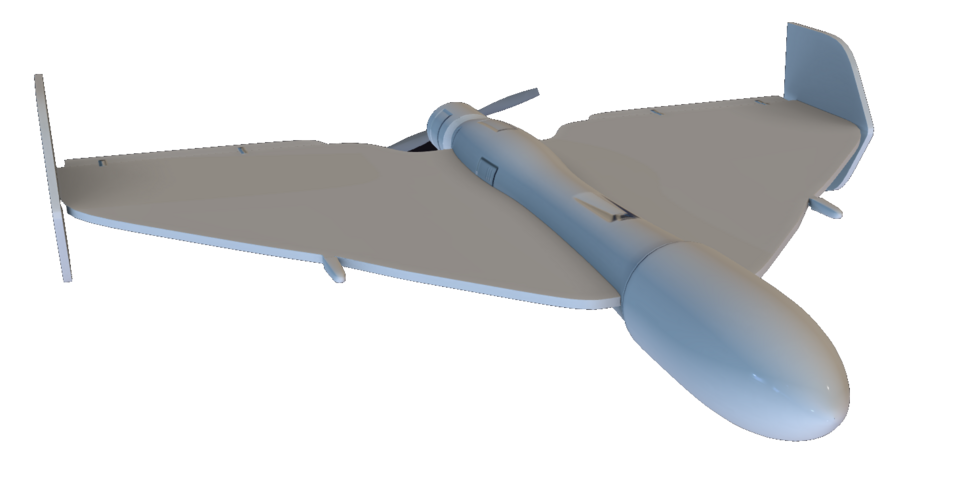
Geran-2
A related Shahed-derived system in the Russian arsenal. The transcript does not establish the exact variant used in the attack.
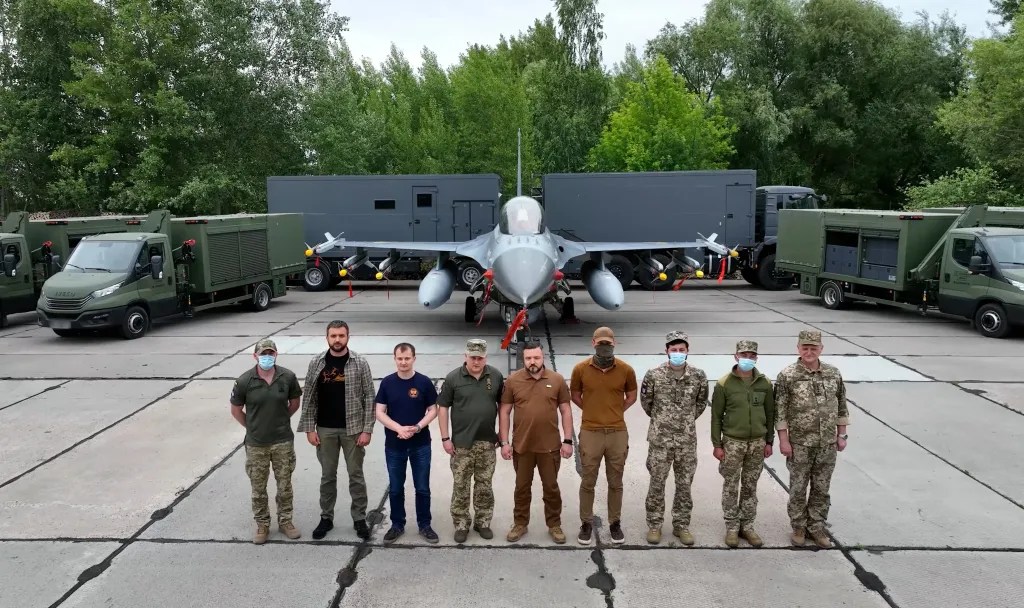
Ukraine Arsenal
Background for the interview’s discussion of air defense and adaptation.
Image credit
These links are an RH reading guide, not guest endorsements or independent confirmation of every statement in the interview. Episode views reflect its publication date; linked records have their own source dates.
The written account
The life behind the callsign
Glenn records this conversation in Kyiv after another night of Russian attacks. His guest, known publicly as Artist, is an air defense officer in Ukraine's Third Corps. The opening is a reminder that discussions of systems and strategy take place alongside civilian deaths, interrupted sleep, and people continuing to work through danger.
Artist had a different career in mind. Born in Odesa, he studied art and design, worked on sculpture and interiors, and spent time working in China. He volunteered in 2014 because he believed it was the right decision. What he had not anticipated was how much of his life the war would take. That background gives his account of military adaptation a human starting point rather than a purely technical one.
Respecting an enemy that learns
Artist is blunt when Glenn asks about Russian capabilities. He describes an opponent that makes mistakes but learns from them, just as Ukrainian forces do. He does not find it useful to substitute contempt for an assessment. The urgency comes from understanding that a successful response today may prompt a different problem tomorrow.
He also cautions against treating the entire front as one uniform battlefield. Different areas have different mixes of threats and different rhythms. His account of air defense stresses the need to understand the environment and connect the available systems, rather than expect one piece of equipment to answer everything. When asked whether strikes on Russian logistics have already changed his own sector, he declines to claim an effect he has not personally seen.
What Western militaries should learn
Asked what he would tell an American or NATO counterpart, Artist emphasizes mobility, speed, and the willingness to adapt. He describes several changes in the war's character since the full-scale invasion. The point is not that Western forces should copy one Ukrainian solution and consider themselves ready. They need a way to keep learning as the problem changes.
That leads to a discussion of who gets to define military requirements. Artist contrasts a program conceived at the top of a large organization with an urgent need identified by people on the front. In his description, troops say what is missing and innovation moves upward from there. Glenn sees the willingness of commanders to listen to that initiative as an important part of the unit's effectiveness.
Freedom, responsibility, and the next partnership
The conversation returns to Odesa, the Maidan protests, and the choice between political systems. Artist's account is rooted in his own experience, including why he joined protests and what he wanted to preserve. Speaking Russian or coming from a particular city does not determine how a Ukrainian understands the country's future. He is describing decisions he made, not a role assigned to him by outside powers.
Glenn and Artist also discuss American support, China's relationship with Russia, and the effect of the Iran conflict on Ukraine's situation. Artist stresses Ukrainian responsibility for its own defense. Glenn argues that the United States has much to gain from a lasting partnership with a country accumulating hard-earned experience. There is room for music and humor along the way, but the interview never loses sight of the peaceful life Artist would have preferred.
Based on the Restricted Handling conversation published June 8, 2026. Views and forecasts reflect the discussion at that time. Original episode and show notes ↗
Full episodeRead the transcript
This transcript comes from the original episode production captions, with spacing adjusted for reading. Names, punctuation, and terminology may contain transcription errors. Refer to the recording for exact wording.
hello everybody. Greetings. Vitania in Ukrainian to all of our freedom loving people here for the Restricted Handling podcast. I'm here in Kiev again in the studio of the location studio with a great team that we worked with a couple of months ago to do another podcast from here. and we have a wonderful guest today. Uh his call sign is Artist. He's an officer in the Third Corps. We'll let him talk a little bit about his background. But before we start, I want everyone to to know that's watching that uh we were awoken this morning by more Russian attacks across Ukraine.
One of the largest air attacks that the Russians have conducted against this country as part of their mass aggression and attempts to terrorize the Ukrainian people. Here in Kiev, my understanding is that seven people were killed in the attacks. they were struck with Shaheed drones, cruise missiles, and larger missiles. Ukrainian air defense units which have done an incredible job defending the country are stretched and we're un unfortunately unable to to stop all of those threats. And among those that have been killed and injured are children. So this is just another example of how the Russians are waging a war that is not respecting any any terms or any kind of uh rules of war that people in the West might understand.
So I just want to take a moment to Say a prayer for all those families that have been impacted and for the Ukrainian people who continue to fight against an aggressor that is trying to take away their culture, their language, their ability to decide who should lead them, and their dignity. And the Ukrainian people are not gonna let that happen. And I hope all of us in the West, especially in the United States, my country, we will continue to support Ukraine and maybe even increase our support for this country which deserves it greatly. So, kicking off with our podcast, our guest today is Artiste.
he's an officer in an air defense unit in the Third Corps. I'm gonna let him talk a little bit about w what he does and we'll have a little back and forth. But my understanding is Artiste that you were not in the military until 2014. You were actually an artist. You were studying art and design. well th welcome to the program. Thank you for taking time. I know you had a long drive. thank you here in the artist just told me before we started how the Russians blew destroyed his car, which is unacceptable. Nice Mercedes, so we're gonna make him pay for that. I'm sure Artiste and his teammates are already doing that.
Artiste tell us about yourself a little bit. Um I was born in Madesa in nineteen ninety one, peaceful city. lived planned just to wanna live one my peaceful life. So I have almost you know understanding of what I want for this life. And it was actually a change in twenty fourteen. So since twenty fourteen I would say my life is not my plan you were uh first of all for those of you that uh don't know, Odessa's a gorgeous city on the Black Sea. It's incredible incredible history. many Americans don't know this, but some of our greatest comedians in the United States trace their roots to Odessa.
many, many great artists. My understanding is our probably the most famous, and in my opinion, greatest American musician Bob Dylan is famous, came from Odessa. Woody Allen, Neil Syndrome. So there's a whole list of Americans that come from Odessa. She's Also from Odessa. It's a beautiful city. And you you studied art, you studied design, and you were working as a sculptor before two thousand fourteen. And like many Ukrainians, you had to give up your dream, something that you loved. You told me you really enjoyed being a sculptor, doing sculptor rest restoring sculptures.
but you had to give that up to defend your country. How how difficult was that? And and from time to time when you're when you're um you're fighting, when you're on duty, do you ever just wish you could go back and s do art? Oh no, I was twenty three when I volunteered first time. It was during twenty fourteen. I wouldn't say it was some hard decision. I mean i in my opinion it was only the only right decision. So my parents told me so. I there was a lot of uh things I believed in so n it this decision wasn't so hard but who told me that time that uh it would take half of my life, or maybe all of my life so Yeah.
That's that's where it goes. Right. uh you also mentioned that at some point you worked in China. Yeah. Yeah. Were you doing artwork there, design work or yeah, it was design of interiors? mostly and uh design for one big company. well. Okay. when you when you s think about the fact that the Chinese have been supporting the Russians and selling a lot of equipment and armaments to the Russians, do you ever wonder the the Chinese people that you knew that you work with in China what they think about this, whether they understand how their country is is funding basically this war.
in the Wogda for three months and I would say they are completely different people. They live different in completely different way. They think in not as around so I wouldn't say they support anyone they are strategically thinking it's about China, not about the support any anyone on on this planet. it's commercial only commercial part for them. I mean the support business, yes, on the business. Do you think that the Chinese respect the Russian Russians and see the Russians as equals culturally? Do you think that they want to have a a real strategic alliance with Russia or do you think they're using Russia for their You know, it's a part of thinking of Europeans, Americans as well.
we want uh everything here and now. It's a part of our thinking, but it's not about the Chinese because they could think and you know far far ahead in the long term so uh they not respect Russia in any way and they just don't need to destabilize the situation by force right now. What for because why you should take some kind of offensive uh leads if you can just wait. Wait for twenty years, maybe fifty years. And whatever, but you will have your re result. Right. someone told me recently that a Chinese official told him that he w that the Chinese were very happy to see Russia exhaust itself.
Right. And then eventually take control of what is Russia today. let's talk about we've we've interviewed several of your your colleagues from the Third Corps. Uh I do want to ask you a question. The commander of the Third Corps we were talking before this podcast started, you talked about how unique he is as a as a thinker and as a leader. Can you speak a little bit about Andrey Biletsky and what he's accomplished? Sure. In twenty fourteen when we have this first wave of a big war, actually it's not a and no uh some kind of a different campaign, it's only the first step of this big war we have right now.
I'm look to for uh regiment I want to go in. So few of my friends so they already w were in Azov. and when I spoke with them they told me you should go here because our leader, our commander, he thinks and he n don't consider us as uh meat bags So you should go here. I make the decision, I came to Azov and you know my decision. Because since there I follow him and as I told you before, I saw a lot of times uh how he create something, I mean great something, great things from nothing. Right. And it's you you have to to have some some h very unique talent for that.
Uh my understanding is that the Third Corps is maybe the most successful, one of the most successful combat units in the Ukrainian military, and that you've been inflicting extensive damage on the Russians as they try and seize territory, more territory from your country. m I would also say that Third Corp is one of the most successful uh regiments in in Ukraine. doing air defense right now, yes. Right now. Yeah. How long position? a year and a half. half. we talk a lot now in the US about the you know, the drones, the FPV threat. we've seen in the Gulf that we were probably unprepared for what was coming to coming at us from the Iranians and our Israelis partners are now facing the same problem in Lebanon from Hezbollah.
yes. how do you see as a as a air defense commander, are are the Russians good in the drone space? You know, we hear about Rubicon, we hear about these different units they've created. We know the Ukrainians are very good and I want to talk about that a little bit, some of the the latest reporting we're hearing. But are the are the Russians well, how do you assess the Russian capabilities, their equipment and their tactics? You should never underestimate your opponent. they are enemies and we would like to destroy them completely but uh you can never you cannot you know lie to yourself.
They are pretty good. They have their own problems, I mean which is connected with their you know huge huge war machine. they have problems with uh understanding what for but let us be honest, in modern war Ukrainians and Russians are the most experienced soldiers in the world right now because now this war it's terrible and so on so on but also it's such you know machine of evolution and since both of us uh trying to find the most uh effective way to destroy each other, so we also have uh ways to countermeasure each each other. Uh so yeah, they actually they real powerful they're learning also, so you cannot say they you know uh it's m like in some media you may read or hear that uh they barbarians are savages, no.
They also learn and also learn fast. Right. that's a great point. I say that all the time, that Russians lear they make a mistake once, they don't make it again. So you better take advantage of the opportunity when you have it. so air defense. y you're doing tactical air defense, so you're providing air air s air defense support for the different units on the front. yes. all the forces which are the part of Third Army Corps. So the entire area of responsibility. Yes, uh some of your colleagues in other units have s have told me that it's not just about one system, it's gotta be integrated systems.
And uh electronic warfare has become very important. Um how would you describe it? I mean, how do you manage all that? You cannot consider uh any war. I mean i as a parts It's all the time. time, it's uh only the complex. So uh you have to understand, the distances where our enemy could reach. the they are actually mm the units which were against what type of munition they have and so on so on so you have to also understand how to create your counteroffensive measures I mean in the few uh steps. So it depends on the depth of the front line or and of uh the type of uh materials that which they use.
And generally what is the depth now of the front line? Because it's not it's not a static line. Uh even if we consider call the front line. I mean you break in a front line l uh U Ukrainian Russian front line, I was in different part of it. So I would say it that even you have different dynamics of war on a different part of this front line because when I was in Zaporizhia they have uh a completely different war. So it depends. It depends. Can you explain that a little bit what's different about Zapolushi from say Kharkiv or Sumi or mostly for now on, a lot of pressure we and Kharkiv oblast, a lot of pressure, they have they use uh also a lot, really a lot of UAVs which use optical wire.
A lot of it and it's a problem because since since we they created uh until now you don't have an effective countermeasure for it because any electric won't work. So you have to destroy it you know by some I mean weapon, only weapon. Right. and the the depth w which was started about ten kilometers right now can be thirty five kilometers sometime about fifty. also dynamic of uh usage because in uh Hobas you have you have a lot of UAVs uh which trying to destroy troops, forces, and logistics. In Zaporizia I saw completely different dynamics. they mostly use cub and barrigen missiles, but so I Never saw such a amount of UAVs which use optical wires on on our road.
So the so the cob for our listeners, a cob that's a guided bomb, right? These are the they're being dropped by aircraft, correct? Do you think there's a lot of talk now that uh and I'm glad to see that you guys are now acquiring the grippin Sweden? Yes. do you think that will be that will help? manage the th the threat from the cob 'cause my understanding is that right now the r Russian aviation, tactical aviation has an advantage that they can fly close to the lines. Drop no you can't. No. Okay. Because of you. Yes. Well done. what is the range of a cob it also depends.
Different, but it m maybe thirty five, fifty five kilometers, it depends. But the the how far can you go like air defense wise to threaten Russian air assets? our task is be situated as as close as as we could be to the front line to push them back, you know. Uh they afraid of uh g come closer because they know that if they will come to our range we will destroy them. So it's also the one of the part of the work to push them, push them back. And the reporting now from op from the open source, from the media, is that the U Ukrainian armed forces in in and the intelligence services in recent couple of months has been very effective at mid strike at targeting I think it's the two hundred and two hundred and eighth highway.
uh logistics at Crimea, right? Yeah, yes, mostly. Yeah. are hitting both radars, you're hitting uh logistics hubs, uh lines of communication. So the Russians are you seeing that on the battlefield? Is it beginning to wear on the Russians? Are they running out of supplies or are they having a hard time resupplying their units? Or is it too early? Uh hope we'll see that in future because at up part I mean of a front line no I didn't s I I know about the results but I mean uh as as long as front line is huge. So on our front line mm I wouldn't say that we have some kind of changes d which was connected with that.
Okay. And uh how about the the the war in Iran? So has that had any impact on the Russians? You know, the the fact that we've been targeting Iranian defence industrial complex? I would say mostly analytics because the war in Iran uh gave Russia money. We both know that uh they still lose the money every day and so on, so they have real economic problems, but since the Iran conflict uh they could retrieve some of their uh economical loss of the last time. So that's not good for us. So due to the rise in oil prices. So that's in your your assessment that's an advantage for Russia.
Yeah. although you guys have also been doing a great job targeting deep strikes, targeting their oil and gas infrastructure, and my understanding is that's also made it very difficult for them to take advantage in the way that they could have maybe a year ago. so again that's completely Ukrainian done and pretty impressive some of the units that have been responsible for that. Going back to the air defense, what do you see the future? I mean, what would your recommendation be to your counterpart, let's say in in a a US military unit, an air defense officer? What should they be thinking about?
This is the be as mobile as they can and and real quick. This is the the ma the main the main thing the main goal of modern military because since even twenty twenty two we have you know uh few at least few you know this evolutionary steps in the modern war. So in twenty twenty two we didn't have UAVs. After that they we you know Mavics as one of the part of reconnaissance, modern reconnaissance. After that UAV which could go on the middle middle strike and barogene missiles. So it changes and it changes very very quick. So you should react also as soon as possible on on all the threats it could create.
many experts talk about how incredible the innovation cycle is here in Ukraine, how engineers are working on the front lines. the thing is, I mean i here in Ukraine that uh mostly military innovations in the modern countries they go from up so country some big company or military, I mean as staff military, they understand what they want, so they create a program, they create a bureaucracy, they create an economy, and trying to create something which would be the game changer. so this is the how it mark was mostly in the world. in Ukraine it works completely different way.
So we create all of those innovation from from from the front line so from from below because only those guys who on the front line as the sales only they knew what should n what what what material what weapon should they have so they uh tell what we have what we need and they go to up and only there then uh the government tell can can do da work. So it's completely different. of the things I I I've observed with other officers from your unit is that from the Third Corps is that the commands the command uh encourages that kind of thinking from below, leadership from below.
They're not suppressing it. There's not a lot of like subordination maybe in the traditional military sense, which my own assessment is that's why you're so successful. And it's also one of one of difference between us and Russians because Russians as you know they're a post Soviet country in the Soviet military they have such a phrase that initiative yes, initiative inspiration and uh mostly they still think in that way. Yes. Well by the way in my family I also have that policy, but that's different. Joking. Okay, so y your advice would be then to your American counterparts or your counterparts in NATO, you need to be ready to adapt very quickly.
You said uh you need to be ready for mobile air defense. And and and I um thinking about one more thing. I I should I suppose I know just I analyzed different campaigns of American army. You should be ready that war would be dirty, very dirty. And without any rules and it would be really d dirty thing. that that's a great point. I mean, sometimes I think people in the West, people in America think that there are rules. They they want there to be rules of engagement, there you know l the laws of war, which I is noble, but what you're saying is you're facing an enemy that does not pay attention to any of those rules.
So they're brutal. Yeah. that is definitely something we need to remember. How about just as a Ukrainian One of things that amazes me about this country is the resilience. You know, this morning the city was hit with multiple strikes. I I was awoken to air air air defense activity and then I looked out the window of my hotel, probably shouldn't have done that, but I saw one of the strikes. You could see the smoke bellowing from a target that was hit. And yet people are driving, they're walking on the street, they're going to work. N nothing's nothing stops. People and by the way, if the Russians are listening, I I keep saying this, I don't see any indication.
I've been traveling to Ukraine now for three years since I retired from the government. And I see no indication that the Ukrainian people are ready to surrender, that they're gonna surrender, that this this terrorism that that Putin is trying to lay upon the people is having any effect. It's almost having the opposite effect. How how where does this resilience come from and what should Americans learn too about resilience from what you know? That's a hard question, really hard question because I don't s think I have an answer. try to think about it. but also one of the things that you mentioned about about my own city, Odessa.
it before war, I mean big war, twenty twenty-two, it was mostly as we could say pro Russian. because They mostly r Russian speaking and so on, so on so on, r uh pre Russian history and so on. But all of those strikes they have the opposite you know result as the Russians could mm expect right because people Odessa right now mostly hate the Russian. So it's really have o a positive effect that uh they could ex uh expect about it. why? I think partly of history because Ukraine almost all time it was and also Ukraine wanted freedom all of the time and fight for it and receive it in nineteen ninety one in light way but right now I suppose we paying some kind of a price if you want to be free independent have something you want so you have to fight for it and maybe in the long term it it is good because you can only know keep something, protect something if you pay the price for it.
em The Maidan was organized by America, by the CIA, by the you know, the people of Ukraine were manipulated. They actually want to be part of Russia or at least closer to Russia, but that the United States and the European Union f you know, f falsely created this narrative that Russia was bad and But what you're saying is people are willing to fight for their freedom. Uh even the Russian speakers here are angry. I've I've had many tell me that they'll never forgive Russia for what they've done. I was in Kharkiv um last year and there was a cafe downtown that had been struck by a missile and it was a r it made all the signs said come come in and have coffee in Russian and I find it ironic that, you know, these are the people that Putin said he was liberating.
He's killing. Right? But this narrative you you were part of the young generation, you know, when you were in school and then when you you know, before you you went in in two thousand fourteen to defend your country, that was making changes in Ukraine. For you know, this Russian narrative, is there any truth to that, do you think? Do you do you feel like Ukraine was manipulated or tricked by the West? No because I saw and I I could remember and have some my own opinion about you know the Orange Revolution. So after that my dan also was one of the activists of Maidan and uh not because I wanted to go to European Union because in Odessa in the first meetings the police uh also tried to kick us out and one of them hit me in the head and I don't like when someone hit me in the head for no reason.
So for me it was you know like no I I don't want to live in the country even i in in which some big men could shut you mouth and said go do something I won't. I don't like that so it was you know it's also about independence, not about some European Union activists it was uh also about in independence. We don't want to live in the country in like Russia, we we are not slaves. This is an incredible feeling every time you you c as an American when I come to Ukraine, it's inspiring because I meet people like you who talk about and and are basically living this ethos that to be free you have to fight for it, you have to struggle for it.
It you know, there are people in the world that want to take that away from you. That's been throughout history. No no democracy, no society has ever been able to live without war, the threat of people trying to steal their liberty. destroy their culture. And the Ukrainian people are are setting such a great example for everybody, including, I have to be honest, in the United States where I think many Americans have forgotten the the roots of our history, who we are. We were once a very, very resilient country. We Americans were willing to accept any sacrifice, any hardship for liberty.
For the first immigrants that came to the United States and that settled the West, that settled parts of the United States, they they suffered incredibly. I mean it was a very, very hard Mm-hmm. So this is other this is my my last question. And then if you have any questions for me, I'm I'll be happy to answer them. But don't ask me about art because I'm not very good about the but Actually I should ask you two more questions. My f my first question is unfortunately the sense I get, I've been here at in two conferences, one in Odessa and then one here in Kiev, is there's a sense that Ukrainians feel that the United States has just forgotten them, that the United States is is not helping anymore or is not gonna help.
Is that true? I mean, do you feel that? And what would you tell the Americans that are gonna watch this this podcast about the importance of what you're doing and what you're fighting for? Also a hard question, I can explain why. Because I may consider it as for me as a person or as for me as a person who trying to analyze I mean uh geopolitical some things, threats and so on. So as for me as a person, yes, I would uh like to have as much help, support as we can. But on the other hand, why anyone should help us if we didn't make our success before. We have uh some time since nineteen ninety one till twenty fourteen, so I would gladly receive any help but if you know not like the personal and just from analy analysts Nam ni chu dolg we don't owe U any yes.
Nobody owes Ukraine. Yes. So if uh Ukraine shows itself as uh strong partner in the future that would be great. So it would interest in some other countries in you know some kind of alliances in the future. But I as as you said, we I don't think someone owned us something. We need to change things by ourselves and consider our own, you know, strength to to do this. Well, I have to disagree with you, Artist, because one, I'll just give a very practical example. When the United States went to war against Iran, or or actually, in my opinion, you know, the Iranians declared war on the United States in nineteen seventy nine, this Islamic regime, when we finally decided, when President Trump finally decided to take action on a large scale against the Iranian regime, Many of our European partners turned their backs on us or they didn't want to join.
Ukraine was one of the first countries, maybe the first country in Europe, and definitely the the most active European country to to come to our assistance. And President Zelensky and offered assistance. He offered strong diplomatic support, which is important, and then he actually sent your colleagues, air defense experts, counter drone experts to the Middle East to work with us and uh and our uh partners in the Gulf. So while I would say I don't know if we owe you anything, we do owe you something. First of I like as an American, I'm very thankful for that because we have Americans whose lives are in harm's way.
They're being threatened by Iranian Shaheeds. and Ukraine's willingness to share its expertise, its technology, to me is very significant. And then the other thing I would say is an American going back to this idea of sovereignty, you you guys are fighting for values which we as Americans were raised to believe in. And you you're on the front line. I tell this to Americans all the time, Ukraine is right now on the front line of a of a very large battle. I think American troops now in the Middle East and our partners are on the part of that front line as well.
I see Iran and Russia as a as allies in their you know, these are two dictatorships, ruthless regimes that treat their own people terribly and they treat people around them terribly. They're a threat to their neighbors. The Iranian regime is threatened to destroy the state of Israel, the Russian regime is threatened to destroy Ukraine as a country. The United States should support both Israel and Ukraine, in my opinion, because both Israel and Ukraine are fighting for our values and fighting to protect us. And I know this is, you know, there's the the idea of the domino theory, some people don't believe in that, but if if we let Ukraine fall to an aggressive dictator like Vladimir Putin, I think the United States will lose in many, many ways, both morally, diplomatically, it the impact on the United States will be terrible.
So everything that you're doing, and you and your your uh fellow soldiers on the front and the people of Ukraine throughout society are doing I think is actually serving the interests of the United States, the country that I grew up in. And so for this I think we're also we ha we owe a debt of gratitude and we owe we we owe it to Ukraine to continue to support you and what you're doing. I mean because I believe that alliances of the future I mean the the modern global security system it almost collapsed. so I believe the future alliances, as you said, it will be alliances between the strong, not between no some kind of uh hegemon or and satellites.
No. It will be alliances between the strong. So we should consider uh on on force to be in uh that other partners would be interested in alliances with us. Let's remember that again, going back to the Iran example, while Ukraine was offering assistance to the United States, the Russians were providing intelligence data to the Iranians to target US troops and our allies in the Middle East. So Americans should remember that too. Anybody in the United States that thinks that Russia can be an ally or should be seen as an ally or a partner, and there are unfortunately the some people in Europe and the US that think that should remember that.
The lives of Americans were put at risk by the Russians while the lives of Americans were being defended by the Ukrainians. So for this again I think we should be thankful and we we do have a debt of gratitude. One more question if I can. Your call sign is artist. Who's your favorite artist? By the way you told me too you were also a musician, so it can be any artist. Who's your favorite artist? ah As band I would say one of my favorites is Pink Floyd and David Gilmer because his guitar playing is awesome, it's a completely different level. you he showed that you don't have to play fast to be the best.
From the modern I would say it's Dream Theatre, it's uh progressive metal group. and from guitarists I suppose T Y Giuseani Giobonamasa also. Ukrainian bands? Can you recommend any great Ukrainian music like progressive rock? Um yeah, from modern I would say it's Vinter. Vinter? Uh I would say Garna. Garna? it mostly I mean I mean rock or hard rock groups, so and yeah, but uh i it that's all. Yeah. Also have a few questions for you. Yes, sir. from your opinion, uh why Russia started war? opinion why did Russia start this war? I think because Putin is deathly afraid of of freedom, the idea of freedom here uh in Ukraine.
I think he was very afraid that it was going to spread into Russia because you know you have a common history and after nineteen ninety one when U Ukraine got its independence, the Russians for years used their what we call you know the term active measures to try and control Ukraine politically, diplomatically, keep keep Ukraine as part of Russia's alliance, you know, an alliance with Russia so that Russia could continue to dictate to the Ukrainians how they can live, how society should develop. Uh after the Orange Revolution and then after the Maidan, they started to lose control over that.
They started to see a generation like yours that was talking about rule of law, that uh that they wanted to be able to decide what language to speak. you know, what religion what what faith to believe in. And most importantly that they didn't want people that just some big guy, as you said, to come with a stick and be able to beat you whenever they wanted and beat you into submission. So I personally think that was the main motivation. Putin is deathly afraid of Ukraine's success. Ukraine, I can tell you I was in Russia in Not so distant past And uh I would frequently hear Russians tell me, why are the Ukrainians allowed to elect their leaders, especially when President Zelensky was elected, but we can't elect our leader.
We're told who has to rule us. Why are the Ukrainians able to to to become part of Europe and yet we're we're stuck being p allies with Iran and North Korea? So I think Putin and his security services understood the threat that Ukraine as a free nation represented to their hold on power. And of course, historically the Russians, I say this all the time, the Russians are extremely afraid of the outside world. And and they're afraid of the threat, you know, this they create this threat in their minds that Europe and the United States is gonna you know, NATO is gonna attack Russia, and they see Ukraine as a buffer zone.
And they they they think that it's their right to keep Ukraine as this buffer zone between them and Europe, instead of understanding that if they had treated Ukraine differently, Ukraine could be a bridge between Europe and Russia and they could be living a lot better. you know, today life in Russia is worse than it was ten years ago. It's worse than it was when Putin invaded Crimea, invaded the East. So the Russians haven't benefited at all from this war. The only person that's benefiting is Putin and maybe the people around him. Because they've been able to hold on to to power by creating this false narrative that there's a threat from Ukraine.
so I think those are the two main reasons. But most of all, I think he's just afraid of freedom. And you can you can feel the sense of freedom here. You can you just you're you're one of many, many people I've met here who are willing to fight. There have been people that have laid down their lives for their freedom and for the freedom for their children to have that freedom. And uh You know, I think there are probably Russians that want that. They see it. They they wanna have it. but guys like Putin will never want them to have it because that just undermines their ability to amass amass wealth and dictate to everyone in the country how they should live.
And so as an American I always say I used to tell the Russians all the time, if you wanna live with a guy like Vladimir Putin, that's your business. But the United States should always stand with those countries on your periphery, on your border. uh that wanna make a different choice and we should support them in their s or their choice and not allow them this idea that this is Russia's sphere of influence is nonsense. We shouldn't have spheres of influence like that in my opinion. So I hope I answered your question. Also one of opinion as I told you before, uh modern global security system it's almost collapsed.
you can you know be dependent of United Nations from now on and as for me it's like modern global system, you know, it's creating right now. I mean the real modern system. And all of the deeds last time since mm not maybe even twenty fourteen, it's about twenty four. I mean uh when they invaded Georgia. it's about to find their place as one of the hegemons of the future. because as you saw they show the world that we could destroy all of your rules all of United uh nation rules about the borders and so on so on so on and you can do that n could could do nothing to us.
So this is you know um about an influence uh on the on the uh world map. So they show that uh we could do anything and no one can do anything less. Right. So I believe this is one of the biggest problems because They are not democratical country, they never were, and I don't believe they would be in some nearest future. So it's not about uh you know the power inside the country, it's about influence on the outside. Right. So this is my opinion why why they do this. Mostly. It's not about uh the threat to some some kind of you know eastern democratical threat which could be considered as part of threat from Ukraine.
No, it's about an influence from the to the outside, it is my opinion. Well exactly with you that the the the global order, if there ever was a global order, by the way, is changing. as an American, we need allies, we need partners that are effective, that are they take action. Unfortunately, probably some in our alliances, we had some allies that for too long were very complacent and they were very willing to instead of def investing in defense, investing in their ability to defend themselves. They were very reliant on the United States to protect them, and then they were using that money to do other things, which made Americans angry.
And we see that today in some of the polling in the U.S. And probably why right now we have a very fragile relationship with our NATO partners. Because there are many Americans who felt that we were being used for years by European countries that were living well, investing in social welfare programs and education while we were investing in their defense. very complicated issue and it's not black and white cut and dry. Uh but you you know going back to Ukraine, this is a country that is demonstrated it is very effective on the battlefield. It's very effective in the intelligence field.
I tell people all the time if we want to manage Russia, which we have to, then we have to have Ukraine as a partner. Nobody understands the Russians better than you do. Nobody understands the the language, the culture, the mentality You know, I I work this issue since I was probably eighteen years old, nineteen years old, and I tell people all the time, I don't understand anything about Russia, but our Ukrainian partners do. And we shouldn't forget that. And and we just have to have partners that are willing to take risks and sacrifice to to stand up for what we believe in.
So our common values. And I think people in the White House, people in Congress, people in throughout the United States should should know that and remember it. This world is a dangerous world, as you said we have a lot of people out there that don't play by the rules. and going forward, it's only going to get more complicated. And we're going to need, you know, I saw this in my career. We needed really good partners. And when we had good partners, we were very successful. Ukraine is a great partner. And if I were going to invest in a partner and a friendship, this is the friendship I would invest in.
Going back to Russia, if anyone thinks that Russia's going to be our friend or ally, just study US Russian relations, we've never had a strong relationship with Russia. And the best way to to deal with Russia is to have partners like Ukraine, in my opinion. So this new this new security architecture, it's being formed right now. And as an American I just hope that we can form it together with our Ukrainian friends. Yeah. And I hope we can get your car back. You can get you compensated for your Mercedes. That's wrong to destroy someone's car. Americans love cars, so it's part of our culture.
Well thank you for your time. God bless you. Slav Ukraini. God bless America. And for all of our listeners and followers and Ryan over there on the west coast of the United States, thanks for all your support, and we'll be back to you with some more podcasts, including from here in Ukraine in the near future.
Back to the Episode Field Guide ↑Keep listening.
All episodes →
John Herbst / Ukraine and U.S. strategy
John Herbst on Arming Ukraine and Raising the Cost of Russia’s War
Steve Wills / The Arctic and maritime security
Steve Wills on Russia’s Arctic Submarines and the Cables Beneath the Sea
Between episodes
The daily brief is free.
Russia, China, Iran, and North Korea. Straight to your inbox.