Satterfield on Iran: Military Power Needs a Political Plan
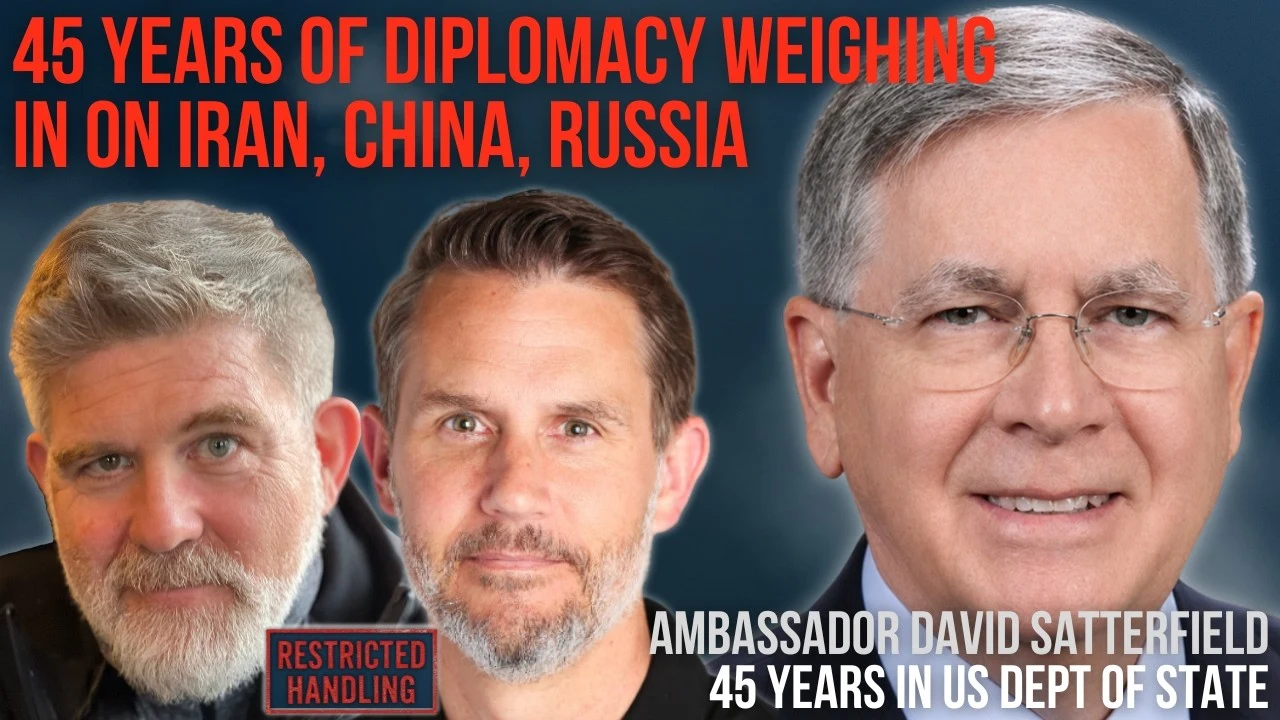
Ambassador David Satterfield joins Ryan Fugit and Glenn Corn to discuss Hormuz, armed groups, China, and the diplomatic work that has to accompany the use of force.
David Satterfield / / 73 minutes
Start here
Three key takeaways
-
Battlefield damage leaves political questions
Satterfield explains why killing leaders or destroying equipment does not automatically remove an armed group's influence. A durable result also requires a workable political alternative, institutions capable of governing, and time for those changes to take hold.
-
Hormuz gives Iran a different kind of leverage
He distinguishes damage to Iran's military from the confidence shipping companies and insurers need to resume business. Economic pressure can accumulate slowly, and civilian suffering does not guarantee that a regime will change course.
-
A capable team makes diplomacy stick
Satterfield wants prepared positions, professional country teams, and a functioning policy process. He recognizes occasions when an unconventional envoy can break a deadlock, while arguing that a small number of individuals cannot carry every crisis alone.
Episode Field Guide
Explore this conversation.
The people, institutions, and equipment connected to this episode. In the conversation marks a direct mention; Related background adds context.
Islamic Revolutionary Guard Corps
Satterfield discusses Qassem Soleimani’s historical role. The current institutional dossier is separate background, not a biography of Soleimani.
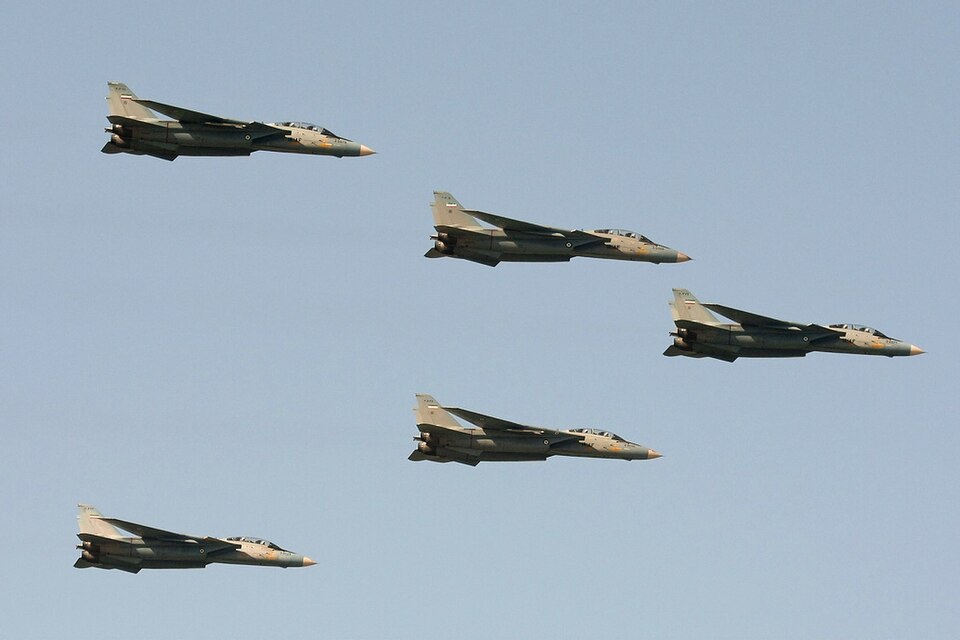
Iran Arsenal
The interview emphasizes uncertainty about stockpiles. The arsenal retains dated estimates and explicit unknowns.
Image credit
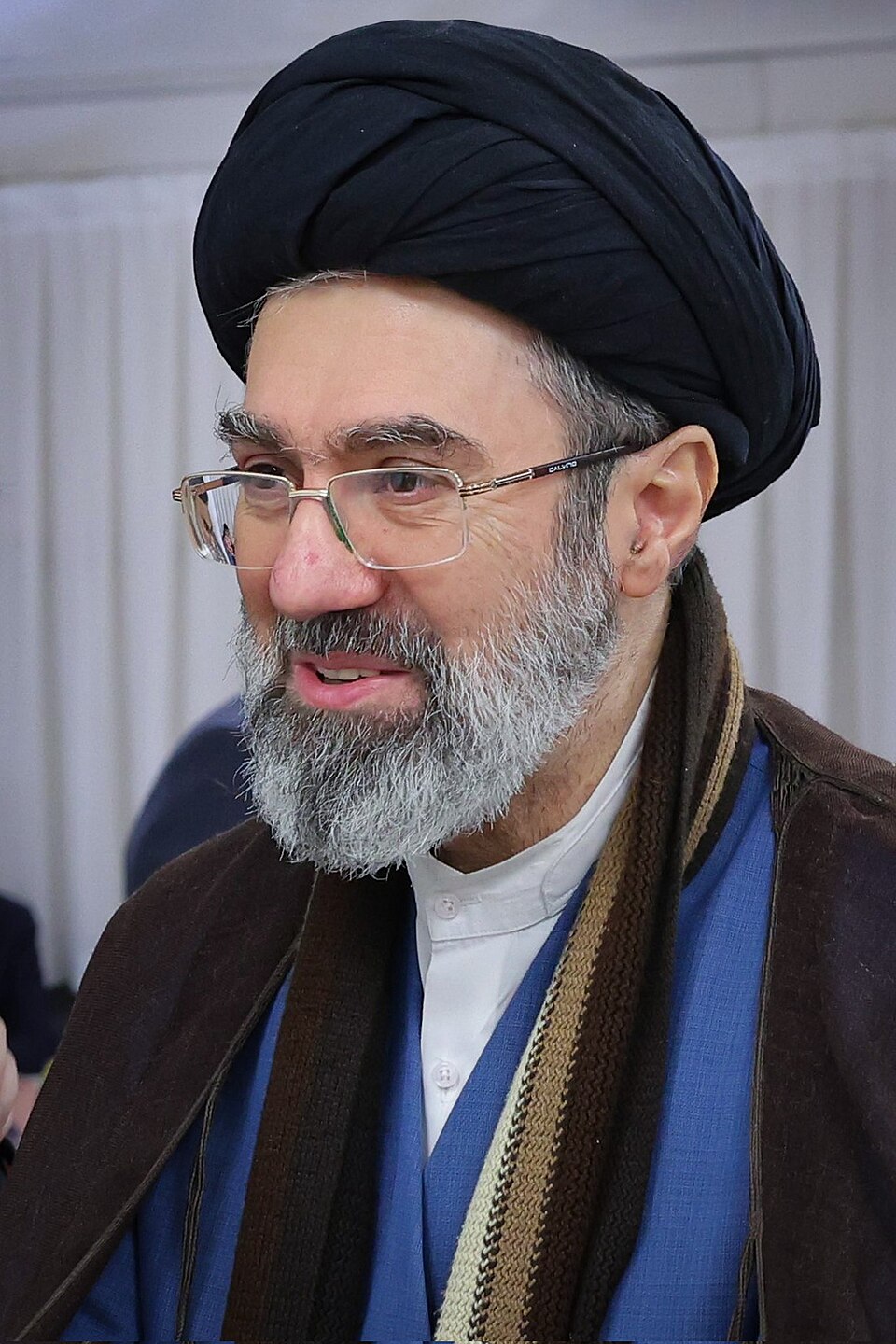
Iran Power Network
Explore the leadership and institutions alongside the discussion of military effects and political outcomes.
Image credit
These links are an RH reading guide, not guest endorsements or independent confirmation of every statement in the interview. Episode views reflect its publication date; linked records have their own source dates.
The written account
What military power leaves unresolved
Asked how the current Middle East compares with earlier periods in his career, David Satterfield comes back to frustration. The United States and its partners possess extraordinary military power. Yet the ability to destroy equipment and kill leaders has repeatedly outpaced the work of building a political situation that can last after the fighting changes shape.
Hamas, Hezbollah, and the Houthis feature in that assessment. Satterfield describes organizations that can absorb severe losses while retaining the ability to intimidate communities and influence political decisions. He wants policy to address the conditions that preserve their power, including weak institutions and the absence of credible alternatives. That requires attention to governing arrangements and local interests, alongside the immediate military problem.
Iran's leverage reaches beyond its armed forces
Hormuz makes the distinction particularly sharp. Damaging Iranian capabilities does not, by itself, persuade commercial operators that a shipping route is safe. Insurers, crews, and companies respond to risk, and the resulting economic effects extend far beyond the governments directly involved in the conflict. Satterfield argues that Iran has demonstrated a form of leverage whose consequences cannot be measured only in destroyed military assets.
He also revisits the nuclear agreement. Satterfield had criticized its limitations, including sunset provisions and the failure to address other Iranian behavior. In this conversation, however, he says withdrawal was a mistake because the agreement provided time that could have been used to improve the broader position. His assessment combines criticism of the original deal with criticism of the decision to leave it. Pressure needs a purpose, and its effects rarely arrive on a convenient political schedule.
Why the people around an envoy matter
Glenn and Satterfield discuss the strain of assigning a few individuals responsibility for multiple difficult negotiations. Satterfield wants experienced officials developing options, testing assumptions, and maintaining a consistent record of American positions. He does not insist on the largest possible bureaucracy. He does insist that the essential work of the State Department, the National Security Council, and country teams still has to get done.
His judgments are not uniformly critical of unconventional diplomacy. He gives credit to President Trump and Tom Barrack for an opening in Syria and recognizes Jared Kushner's role in the Abraham Accords. A person with access and authority can move a decision that others could not. The challenge comes afterward, when a breakthrough requires coordinated implementation and when commitments made in one negotiation affect American interests in another.
Preparing for China and knowing what success means
China brings the conversation beyond immediate Middle Eastern crises. Satterfield emphasizes industrial capacity, technology, critical minerals, and the vulnerabilities created by dependence. He wants Washington to prepare its position before a high-level visit, drawing on the knowledge and tools spread across the government. He also views arrangements with Saudi Arabia through a wider competition over security and economic relationships, rather than through one regional headline alone.
Near the end, his recollections of Yitzhak Rabin and James Baker add a personal dimension. He describes leaders wrestling with difficult choices, accepting the limits of what they could achieve, and knowing when a negotiation had reached the point of walking away. The standard running through his account is the protection of American interests with a realistic understanding of others' decisions. Sometimes progress means reducing harm and preserving room to act, with no quick victory available.
Based on the Restricted Handling conversation published May 10, 2026. Views and forecasts reflect the discussion at that time. Original episode and show notes ↗
Full episodeRead the transcript
This transcript comes from the original episode production captions, with spacing adjusted for reading. Names, punctuation, and terminology may contain transcription errors. Refer to the recording for exact wording.
Hello everyone. And welcome to another episode of the restricted handling podcast. Glenn and I are very fortunate to be joined today with a special guest, Ambassador David Satterfield, who is a, I would say a heavyweight diplomat behind decades of experience in US foreign policy and some really difficult and challenging parts of the world. A lot of experience in the middle East, done a lot of work in Turkey, Iraq, Lebanon, Syria. uh North Africa, of course, you've worked NATO tensions extensively, and you've been in the middle of what I would just call it many times.
You know how Washington handles crises from home and abroad, having worked obviously in Foggy Bottom and then in many embassies overseas. just looking at your background, Ambassador, it looks like your career overlaps with almost every major post-911 diplomatic effort we've had in the Middle East. We're so fortunate to have you, and I know you and Glenn know each other. We can't say exactly from where, but I would just like to start by asking, how was it working with Glenn those years ago? It was a superb experience. Look, I had a 45 year uh plus career with the Foreign Service.
I saw many, many country teams, many of which I headed. I'm very pleased to have had the association that I did both during the time of our services in government and afterwards with Glenn He's a real pro and a great guy. And I will, I was going say, will say, will Venmo you some money after this call. After this, yeah. Now Ryan, I mean, just from my end, listen, I love working for ambassador Satterfield. He's a great ambassador, great American. I don't think I saw anyone that understood the way that the national security apparatus should work the way he did.
And, uh, was a team player across the board. So it was. Every day with him was uh an education. So thank you. I know you're very busy, Ambassador Satterfield You have another big job after government, post-government. Ambassador, if we could start out just with how hectic and chaotic things feel in the Middle East right now, I think just looking back over the decades, it would rarely be called quiet, but I would say right now with Hamas, Hezbollah, Iran, strait, it, OPEC changing with the UAE pulling out, how crazy are things at Foggy Bottom and in embassies in that region right now?
If you were back in the frenzy, is this one of the- more chaotic moments. Well, Ryan, you really asked two questions. One is what's going on in the Middle East and how does it contrast with with previous times of let's call them highly dynamic circumstances. um The second question, though, is what if I were back at the Department of State, the NSC and the U.S. government, which are two very different things. Let's talk about the Middle East first. Look, the Middle East is not an area which is stagnant, nor has it been for many decades. There's change going on and some of that change is actually quite positive.
You cannot look at the evolution ah within Saudi Arabia for all of the problems and beyond problems ah under Crown Prince Mohammed bin Salman. The changes that have been wrought in that country in the past 10 years justify any prediction if you walked the clock back to his initial period as Crown Prince. UAE. The UAE's withdrawal from OPEC was not a surprise. The only surprise was the question of timing. This was a shoe we all knew was going to fall for many years now for different reasons, uh some of which have to do with policy differences with Saudi Arabia.
And we can talk a little bit more about the strategic different directions in a regional and transregional fashion. the Saudis and the Emiratis have taken because they're significant. uh But the real reason they left is UAE is moving in a different direction in terms of its own economics. uh When they withdrew from MOPPE, ah their ambassador to the US, one of the most senior diplomats serving in Washington, um issued a long statement. The statement noted the UAE depends for less than 30 % of its GDP on hydrocarbons. The rest is generated by other sources of income, from tourism to chemicals to investment income to a variety of other ventures, including notably AI and the tech transformation of the world.
uh The UAE did not wish to be bound for that section of its economy that was indeed hydrocarbon based by the production focuses of Saudi Arabia. for whom hydrocarbons are the main, almost entire source of income to the country. So of all of the dynamic events in the region, UAE withdrawal from MOPAC was not really one of them. It was an expected development. It is not going to shake up very much. And the fact that it came at a moment of closure of the straight meant that it had zero impact on markets, none whatsoever. But let's go to the region. Look, for all the positive dynamics, that had been at play in the region.
I'll include the Abraham Accords, the coming out from behind the curtains under the table of what had been longstanding, Gulf and other Arab relations with Israel, usually in the intelligence and security area, now overt and political and formal, very positive step. Something else has been happening as well, which is the growing role of asymmetrical challenges, asymmetrical conflicts in which classic military might, technical prowess, Israeli, US in the case of Iran, put up against an asymmetric opponent. And Iran really is still more in that asymmetric opponent class than state on state.
Certainly Hamas, Hezbollah, the Houthis absolutely fall into that. You have had now several years experience. And in the case of Lebanon and Hezbollah, 40 years experience in the application of classic military kinetic force against that asymmetrical actor, that sub-state actor. And in the case of Iran, almost two years of varying forms of conflict, some of which the U.S. is engaged in, some of which has been exclusively Israeli, some of which has been largely intelligence-driven, others overtly kinetic. But still, in each of these cases, the inability of the state actor to effect the strategic objective through use of force.
This is a puzzlement and it is a frustration. And boy, if I had to use a single word to describe the current situation in the Middle East, ranging from US to Israel to the Gulf States, it's frustration. Why can't we open the strait? Why couldn't we eliminate, in quote marks, Iran's ballistic missile force? What about the drones? What about, quote, sinking their navy? Close quote. And then there's Hezbollah. Decapitation of leadership, massively. Strikes against their weapons facilities. High-end production places. yet has Bala remains maintains its sad death grip on the Lebanese polity.
Hamas, almost two years of devastating, devastating combat on the ground and from the air. And right now, who governs two million Gazans with the gun? It's Hamas. Diminished, disrupted, degraded, but still potent. and still a potential threat, as are the Houthis. After all the U.S. Navy rocketing of launch sites, the Houthis remain capable, should they choose or Iran direct to interdict shipping or raise the war risk insurance to the point that shipping would not move through the Bab al-Mandin. What do you do in these circumstances? Well, it requires patience, strategic patience.
And it requires beyond kinetic application of force, political application of force, meaning you've got to accompany what you possess in terms of military might with political frameworks. sadly, in Gaza, that was completely missing, even though the Israeli national security establishment at the highest levels, quite rarely in my almost 50 year history of working with Israel, called publicly. for a political framework because we have done, we the IDF, all we can do kinetically to achieve strategic objectives. Similarly, Hezbollah in Lebanon, deeply frustrating.
The Lebanese government, this government wants a peace with Israel. They've said that. There's no hidden message there. They want a peace, not just normalization. But Hezbollah maintains its grip. Hezbollah threatens their lives, the lives of Lebanese, as it has done in one incarnation or another for 50 years. How do you break that? There are political ways to isolate Hezbollah, but to go at it frontally, ground occupation, strikes on infrastructure, destruction of housing doesn't take you there. And then we come to the great problem of Iran. Look, uh I hate to be reductionist, but I will be.
ah And you can come back at me on this from any direction you want. I'm perfectly susceptible to other persuasive argumentation here. I was not a fan of the 2015 JCPOA because of the sunset clauses and because it did not address either ballistic missile program, which was still relatively nascent, but threatening at that point, nor did it affect at all Iran's support for the proxies, the Houthis Hamas Hezbollah. terror around the However, I have come to recognize over the years since that withdrawal was a mistake. Withdrawal was a mistake, and my comments now are going to be echoed by those of the most senior Israeli intelligence community and nuclear enrichment bomb acquisition specialists.
It was a mistake because it shortened the window. shortened the period of time that Iran would have required to build those centrifuge cascades to enrich beyond the 3.67 levels of the JCPOA. That's radio isotopes for medicine, as well as a civilian nuclear program. Iran does have a nuclear reactor in Boucher uh that's under construction. It shortened that. And in doing that, again, I'll quote the Israelis. It chopped five to eight years off of the period we had to adapt to other protective measures in the event Iran went to an enrichment program or a device acquisition program.
And that latter had not been pursued by Iran, hasn't been pursued by Iran since 2003, based on what I believe are still current US assessments. We lost that window. That was the first mistake. The second mistake was February 28th, to go into a conflict with Iran. And the decision, let's be clear here, was the president's. He was not duped by Benjamin Netanyahu. Netanyahu has long sought, throughout his political career, a definitive strategic end to the Iranian threat, a threat to Israel, a threat to Jews around the world. That is a genuine motivation for Netanyahu.
And so certainly he has tried to argue the case as he argued the case for withdrawal from the JCPOA, quite famously in front of the US Congress and the UN. But it was President Trump's decision, and a decision I believe was very much informed by his experiences, plural, the assassination of Qasem Soleimani outside Baghdad airport, which I think was an extraordinarily appropriate, smart move. No one in the IRGC possessed the expertise, the command, the experience of Soleimani. And the volume of American and allied dead on that man's hands was profound. So no tears shed at all for this.
But there was virtually no consequence to that act in terms of an Iranian response. Then came June of last year. the end to the 12-day Israeli campaign, which eliminated Iran's air defense network, when the U.S., again in my view, very appropriately, stepped in for those famous three hours in which we used the weaponry and the delivery vehicles that only we possess to significantly damage, I'm using the most conservative language, significantly damage, Natanz, Isfahan, and of course, Fordow. very limited and in fact almost entirely performative response to al-Udayid from the Iranians.
Then came Venezuela, the removal of the president and his wife and the quote acquisition close quote of Venezuelan oil. Great success is all of them in and out, one and done. I believe the president believed he could effect a variety of strategic objectives in Iran in similar rapid fashion. Whether regime change was ever really part of that or not, unclear. And I'm not going to indict on this podcast, Mossad, ah which has been variously accused or exonerated from having overestimated the chances of regime change, because I didn't have those conversations and have heard varying different uh points of view on this issue from a variety of Mossad directors over many, many years.
I'm going to hold this one in abeyance. But the president certainly believed he could achieve on the nuclear program, beyond JCPOA objectives, a long-term 20-year or permanent freeze to enrichment, uh accountability for removal from Iran of the legendary 900 plus pounds of 60 % enriched uranium. By the way, folks, oh this is a bit of a red herring. Iran possesses 11 tons of enriched uranium beyond civil nuclear levels. The fixation has been on the 60 % because, quote, it would be less than two weeks if you had the cascades running to bring it up to bomb grade quantity and then convert it into metal from hexafluoride gas.
But you know what? You could bring tons of Iran's uranium up to that 60 % level. with the centrifuges in a relatively short period of time. people want to focus on things that are graspable. So it's the 900 pounds might be at Isfahan, might be at Natanz, who knows. But that's been the focal point. President thought he could get those things. And he could say this was better than the JCPOA, no sunset clauses. I got it. I closed this down. All of the sucker presidents before me who couldn't do this. going back to 79 to Jimmy Carter. Look what I did. And if regime change comes, I'll take credit for that as well.
And I've devastated their Navy, their Air Force. They are in a weaker position and I've taken out their missile force. Well, guess what? Iran's threat, its power projection challenge of maybe acquiring a nuclear device, maybe, and being viewed as a potential nuclear threat to its neighbors and beyond, sort of as Pakistan was before it actually put the pieces together and assembled the device. That was a theoretical threat. So was closing the Strait of Tehran, I'm sorry, the Strait of Hormuz. That strait and its closure has been debated for years within the U.S.
community. military and intelligence and political. The assumption was, you know, we're not quite sure they could do it. If they could do it, we're not sure they would because of the consequences they bring on themselves, given the fact that they need those exports every day and imports that come into Iran to survive. And if they tried it, well, you know, it wouldn't last very long. It could be broken. It was a theoretical threat. Now it's not. Now it is a genuine weapon with global import. 12 % of the world's maritime transport goes through that straight. 30 % of the world's helium, that's an irreplaceable component in semiconductor manufacturing.
30 % of the world's aluminum, not just any aluminum, but the very highest grades used in the US and other military and strategic systems, about the same amount of the world's highest quality steel that can't be replicated easily, not by the US, not by Europe, not by Japan, and 50 % of the feedstocks outside the US demand for fertilizer. Those are huge global economic supply chains, all of them halted. Plus, of course, natural gas and crude. 30 % of one, 20 % of the other. Iran has demonstrated they can and they will close it. They can keep it closed. And the US in the Parsi phrase can't do a damn thing about it.
Now, why is that? How could that possibly be? Because the threat doesn't require a tanker to be hit. It doesn't require a plastic lint-net mine, carried by an inflatable zodiac boat, cruising along at high speed at wave height, difficult to detect. Doesn't need any of that. It's the threat that it could happen that resulted in the dropping of war risk insurance and the refusal of shippers to move their vessels through the strait. That was, that is the situation right now. How about those other fronts? Nuclear program. Well, the nuclear program has been hit hard.
There's no question about it. Has it been set back further since February 28th and was the case last June after the US bombings? Doesn't appear to be the case. What about missiles? Well, there was a known unknown here in Don Rumsfeld's famous term. We didn't know how many ballistic missiles Iran had. We sure didn't know how many drones they had. And we knew that. What has been the impact of the massive campaign? Tens of thousands of strikes on at least 10 to 15,000 separate targets? Well, in Jim Mattis's phrase, target tree doesn't substitute for strategy. You can hit any number of targets you want.
Those are outputs. What are your outcomes? And I think you have all seen the public reportage of the outcome, which is Iran possesses still a massive, perhaps even over 50 % or significantly over 50 % of its original capacity of both missiles and on drones. um The quantity was so vast, the production so rapid, it's very difficult to see how you constrain that at all. Drone technology goes by leaps and bounds. as those of you who follow Ukraine more closely than I do recognize, uh you now have drones that are pilotable through microfiber optic cables that can go as long as 30 miles, that can't be jammed.
They're all made of plastic or carbon materials. They have no radar signature. They're on you or coming in through your window. I don't exaggerate the case here. And being detonated with a first-person view. by the controller, POV. How do you defeat those technologies? Iran's got them in spades. Was any of this a surprise? And here, Ryan, I'll come to the close of this. Should it have been a surprise to Israel, should it have been a to the United States? I do not believe there was an intelligence community failure or a failure on the part of our military professionals in assessing what we knew and what we did not know.
and in presenting those in a factual manner. But there was a political override of all of that. None of this should have been surprising. Now, how is it that Iran, which has been blockaded now, or has itself mutually blockaded the strait for all this time, how are they not near collapse? Because no state on earth is more experienced in dealing with the most extreme sanctions in the world, including constraints on production. Iran ratcheted down in 2020, not all that long ago, to only 300,000 barrels a day of production. They can do it. They know how. And they are a security regime top to bottom.
They killed at least 8,000 of their people in January, maybe many more than that. They would kill again if they needed to. There is no organized structured opposition in Iran, and they could care less what the situation of their people are. I think a conservative estimate is it would take a matter of months to inflict enough economic pain on Iran that they would begin to bend. But bending is possible, but you need patience. You need patience that is not interrupted by escalatory actions. And that's what happened last weekend when the U.S. switched from a patient strategy of quite effective maritime blockade coupled with going after shadow fleet elements and fund transfers around the world, something the Treasury and the intelligence community in the U.S.
are expert at doing. It moved from that to something new. For reasons I don't fully grasp, we were going to take another step. we were going to overtly challenge the blockade through some form of military guidance and largely aerial protection of ships. The Iranians saw that as an escalation, attacked the UAE now three times over the last five days as a signal to us and to the other Gulf states, back off. This in the midst of negotiations, back off we did when Saudi Arabia told us to, worried at the consequences. You cannot engage a strategic adversary like Iran, whose leadership was always hard-line, but now of an even harder, more rigid posture, focused now not on the nuclear program, but on the strait itself and what governs the strait after this all comes to a close.
Much harder issue than the nuclear program ever was. You cannot deal by tweets every 30 minutes, shifting your position, threatening, belittling, insulting. We've never done that in the history of U.S. diplomacy, and it isn't working now. That was excellent. Thank you for sharing that. know the students under your tutelage probably get a lot of that. Glenn, I'm going to go to you, please. didn't answer the last part of your question. What would I do if I were in foggy bottom or the NSC? Answer is I would be unable to do anything because there is no functional department of state or national security council.
There are a handful of associates of the president in whose hands lie, you fill in the blank, Ukraine. Iran. Lebanon, Syria, Iraq, plus a galaxy of other issues that used to be managed by, what was the word for it? The US executive branch and its various cabinet agencies. That's not the case today. So the answer is there is very little I could do, were I in a department which itself can do very little. Indeed. Thanks. No. So Ambassador Satterfield, mean, there's so much unpack here and talk about, but let's, let's start at the end there. mean, you were the, you were the U S ambassador to Turkey, the Republic of Turkey, right?
And I always find it interesting. Like we have now an ambassador in Ankara who's also covering Syria. And if I still, he's also the special envoy, envoy for you were also the ambassador in Lebanon. And what do you think? Like, can you, can one person handle all those three? critical and super complicated issues. mean, how much espresso do you have to drink a day? How many cigarettes do have to smoke to stay up? truth in lending here. um I do have regard for Tom Barrack I think Tom has spoken bluntly in a fashion that a career diplomat would never have used, I would not have, about some basic ground truths and realities.
And those range from the US relationship with the so-called SDF, uh the Kurdish Armed Force in the what used to be the Court of Autonomous Administration of Northeast Syria. He has spoken quite bluntly and I think factually about realities in Lebanon and the complexities of dealing with not just Hezbollah, but self-invested Lebanese elites. uh And he's spoken about the value of Turkey at a meta level to the NATO alliance with all of the difficulties that are attended in that relationship uh because of reasons Glenn, you and I know. extremely well with respect to the leadership of Turkey, for whom I have great regard, but I also acknowledge the problematic character of many of their actions.
So Tom is an extraordinary individual. And with respect to Syria, I will extend my acknowledgement of the right thing being done, not just to Tom, but to President Trump. President Trump overrode many of the classic voices at the time of that dramatic collapse of the Assad regime in late November, December of 2024, who would have seen an elaborate set of US guided constitution drafting, withholding of assets and support. president made a comment, and I agree with every word of it, when he was in, believe, Abu Dhabi. And he said, I don't know what's going to happen in Syria.
I don't know if this leadership now ah is going to be jihadi in character. turn to the jihadists, be taken over by the jihadists, but I do know this. If we don't move swiftly to provide relief from sanctions and strictures, if we don't give them a chance to stabilize the place, it will go in only one direction, which is fragmentation and threat generation for the region. The president was absolutely correct, wouldn't change a word of that. And Tom was a critical implementer in all of that. And you know the administration held to its rhetoric. We did remove all of the executive branch and then legislated the Caesar Act.
Restrictions on Syria, it was the right thing to do, as was the extraordinarily, and to me surprisingly in a positive sense, smooth working out of the fate of the Kurdish entity in the northeast of Syria and its allied forces. It did not come as I expected. with Kurdish forces in Kobani, with Kurdish forces in Qamishli, Hesseke, fighting, dying. It didn't. It came out in an extraordinarily peaceful fashion. There reasons for that, but some of it was Tom's diplomacy, backed up by the president. So I give him credit for that. As I give credit to Jared Kushner for his work in the previous Trump administration on the Abraham Accords.
Strong supporter of that. And Jared did things which no conventional career diplomat could have done. So credit where it's due. But you asked Glenn, can one person manage all of these different issues entirely? No. No, they can't. They really can't. You need embassies. You need qualified country teams. You need a backup in the Washington environment, which isn't just intelligence and military. You need a functional State Department at all levels, and you need a functional NSC to strip down the bloated NSC, which grew after the second term of the Clinton administration out of all conceivable proportion to its actual tasks.
Absolutely. I'll raise my hand in support of that. The George H.W. Bush NSC, which is what Bill Clinton inherited in his first term, had 72 people total. including technicians, administrative staff, secretaries. It grew to the hundreds, the many hundreds, packed like sardines into the old executive office building. That was too big, too small to be the government of the United States, too big to be an advisory group for the president. So if you want to cut there, absolutely, but you cannot eliminate it. It is supposed to present a variety of views to the president.
It is supposed to articulate what are at times differing positions of agencies. You're not getting this. Yep. You know, I've said everything that you said, Mr. Ambassador, I agree with that 100%. I think the president gets a lot of credit for doing things that are bold, that many people traditionally would have been objected against. They would have argued against. They would have probably fought against in the bureaucracy. We've seen that ourselves in our careers. But what worries me is the sustainment of like we have opportunities that he's taken advantage of.
Let's just use Syria. Can we sustain it? And there, think I agree with you. You have to have teams that can do that. You can't rely on one person. You can't rely on, you know, a very close inner circle. I think you're going to have to, at some point, trust some people outside of that inner circle to get the job done who have the regional experience in the background, because we see that in some cases you may be very, very talented, but if you don't know the region, you don't know the issue, you don't know the country, the history, that could be problematic. because you keep stepping on landmines uh without, because you just don't know the background.
Absolutely, Glenn. But look, while everything you have said is absolutely true, it's certainly been the experience during my career, you need a balance here. You need a mix, whether it comes from career, Foreign Service or career bureaucrats, Treasury Department, oh others who are capable of thinking outside the box, who are not bound by their or others prior experiences. And this is a powerful challenge. It certainly is for all of us. The longer you stay in service, whatever your service is, and the more senior you become, the more policy ventures you become vested in and with, both failures and successes, you start ruling out automatically certain choices.
David Petraeus used to say, 36 months in Iraq, you should cut and go. Don't stay. I stayed for 48, which was probably an error, but I had a negotiation to do. But it's because you believe you've seen it all and you know what the options are. You don't have to have somebody talk to you. You've lived through it. That becomes a constraining factor. So I am all about creative thinking, bold leadership, proximity to the president. For certain issues, it's absolutely critical. There could have been no Abraham Accord. There could have been no resolution in Syria, particularly the Northeast.
highly sensitive issue, deeply fraught and fought over within the Congress and the U.S. bureaucracy and within the U.S. military. Our battle buddies, the Kurds, we will never abandon you. We'll be there forever with you. Well, you know, but that message was never getting through. It took a combination of that forward thinking out of the box, a president willing to back and support in the face of Washington opposition, sometimes powerful opposition, to make it work. You need the balance, but in the end, when you make your breakthrough, you need a team. You need a team to carry the ball, to sustain the motion, to see the problems coming before they become crises.
And when there are crises, to have a team that can manage them, deal with them, analyze them, coach them. You you haven't asked about AID. I'll tell you this, I have no nostalgia for AID. As chief of mission four times, ah I had profound concerns over the content of legacy AID programming. I understood much of it was congressionally mandated. There wasn't a choice here, but I was rarely happy with it. Occasionally we got it to the right place. There was a lot of bathwater to be thrown out here, but there were also a number of extremely healthy, promising, and changing babies to hold to that analogy.
And that was a bad thing to do, and a hell of a lot of expertise that went out the window with it. So massive reform, absolutely. Cut programs that do not serve demonstrably, credible U.S. interests, either regarded as such by the Congress, the Executive, or the people of the United States? Sure. But this went too far, too blindly, and frankly, for no logical reason whatsoever. Right. I want to pivot us to China in the interest of time, Ambassador, but there is one thing you mentioned with your former colleague, the ambassador in the region, Tom. I did not catch his last name, so I apologize.
When you were describing that he has recently been speaking in a way that you felt like you probably would not have done, can you just describe that a little bit more? What is it that might be driving that? Is it just the political climate? I'd just love to hear more about that. Sure, Tom reflected the views of many of us who have devoted a great deal of our lives and seen our colleagues' lives lost in Lebanon by making a separate set of not indictments, but simply observation. Lebanon has two problems. One is Hezbollah. It is a massive problem, the dimensions of which I think all three of us And most of the people listening to this podcast will certainly grasp and understand, goes back to 1982, at least to Islamic Amal, Hezbollah's cover, before it declared itself openly.
But the other problem, Tom said, it's the Lebanese elites. It's the Lebanese themselves and their unwillingness to give up privilege and confront national responsibilities if it means any form of sacrifice. Well, Tom Bravo. It is what all of us know and understand. But no ambassador ever speaks that way, at least while they remain ambassador or desirous of having a continued career dealing with Lebanese. So I applaud him for that. Tom, speaking of Syria, very recently, I believe in the last two to three weeks, was criticized for saying, look, there's a problem here.
Problem is indeed the conduct of the Syrian regime or its inability and willingness to constrain other elements, Bedouin, some other jihadi, foreign jihadi groups present, but it's mainly a Bedouin issue, targeting Druze communities in Southeast Syria, in Sweda. That's a problem, and it's a Syrian problem, but there's also an Israeli problem here. He's vocalizing this now and you're saying this probably wouldn't have happened in the past. Is it frustration? it just... It is that Tom does not feel constrained by the classic factors which govern all of us. As I think Tom would say, you're unhappy with what I've said or I'm doing, so fire me.
Love it. All right. um Ambassador, we were, this is great. As we were hitting record, we had asked you, if you were advising the administration, they're coming up on this fairly significant trip to Beijing soon. How would you advise the administration? We'd just love to get your take on that so people can hear this interesting perspective. I'll respond in two different ways. First is contextual. China is a formidable adversary, the most formidable adversary we confront because of its economic weight, because of its technical weight. And here I'll foot stomp home a point that needs reinforcement always.
Up until a year, year and a half ago, China was regarded as a major competitor in sort of fourth generation as opposed to cutting edge fifth generation fill in the blanks, chips, systems, aircraft, whatever it might be. They could make more of them more quickly and more cheaply than the US could. And they had better marketing, but they couldn't do fifth generation. We got to wake up Paul when deep sea. was suddenly sprung. Guess what? China is at fifth generation capacity. It's education of hundreds of thousands of individuals who have material applied or process ahead of their specialty, engineering, chemistry, physics.
They've taken over a field now where the US has lagged, which is educating people for cutting edge work and then educating them for the production facilities to move them out at high quality, at high speed and cheaper than can be done elsewhere. China is formidable. I'm less concerned, frankly, about the South China Sea threat. I think that is largely power projection. and performative rather than an indicator of intent to fill in the blank, invade Taiwan, blockade Taiwan, take other action against the Philippines, Vietnam, South Korea, Japan. I'm most concerned about the competition, which is very much of an adversarial character at a technical level.
at an industrial espionage level, which is extraordinarily sophisticated and global in its scope, and China's ability to establish itself with access to possession of critical minerals, rare earth elements globally in a campaign that began a long time ago and where the US is playing catch up and not playing it all that well. Not everywhere China is active around the world requires the U.S. to intervene. Some of it is purely performative. I don't care if they build a sports stadium or a ministry of defense in countries X or Y, because you guess what? The facades are going to be falling off in about seven or eight years.
And China doesn't do things for free. There's a price tag attached to all this stuff. But I am worried. where they attempt to expand a presence which threatens infrastructure, which threatens our or partner national security networks or public networks, that worries me greatly. Port facilities and the acquisition and control of those critical minerals where earth elements, that's a worry as well, the strategic character. Shaping presence. We didn't want Saudi Arabia, Ryan, to go the way of the UAE. where we had to move heaven and earth to get the UAE to block and unroll a very significant Chinese security challenge to the United States and to our partners.
It took quite a lot of pressure to do that. We didn't want Saudi Arabia to ever be in that place. And so that famous US-Saudi deal you've all heard so much about, it's not really about normalization with Israel at all. It is primarily about strategic concerns and constraints regarding the Saudi-China relationship, regarding the US dollar as a reserve currency, regarding certain guidelines, guardrails for some future date where sustained consistent production levels and supplies of hydrocarbons might become an issue. They're not now. I don't foresee it coming, but that was in there as well.
But the Saudis wanted two things out of all this. They wanted an indigenous nuclear enrichment program, but they weren't willing to sign up to a 123 agreement or an additional protocol. We substituted for those the most intrusive U.S. direct presence in that system start to finish that's ever been done anywhere. And we would acquire the fuel when it came out because, by the way, we need it because we're not getting it from Russia anymore for U.S. nuclear needs. To make all of that hold together, they wanted a treaty-level, pacific-style South Korea-Japan security treaty pledge.
Not an executive agreement worth the paper it is or isn't signed on. They wanted a Senate-binding commitment. To get that Senate vote, we needed normalization with Israel. So I've just unwrapped for you what is often misrepresented in the press. This was about China, almost all the way down the including the dollars reserve currency. So how do you negotiate with an adversary like this? You know going in what your toolbox contains. Your toolbox contains a full awareness of your vulnerabilities and Chinese vulnerabilities of where their power center has worries and concerns, where you've got worries and concerns.
China is not a Titan bestriding the earth. It'd like to be seen that But it isn't. It does have weaknesses, partly because of its presence in the global economy and its massive holding of U.S. Treasury paper. It cannot damage the dollar without basically shooting itself in the head, not just the foot. You got to understand that. Then you have to understand your market tools. The Chinese are market rule violators massively. That's what the 301A trade barriers and 301e labor related. Read Winger's forced labor here. Trade provisions are built upon, but guess what?
To use 301 authorities, which are a great tool, powerful as hell, you need to item, issue, process, case specific argumentation. You got to get it vetted. through the ITC, and then you can go to town with this stuff. You can put any kind of reciprocal tariff in place you want, and it is solid as steel. But it requires Glenn, a professional team at USTR, and at Commerce, and Treasury, and State, to build that case, get it through, vet it, and then apply it. And you got to be patient with it. Hell, we used these with the EU for years, and we eventually broke through.
And that was with the EU partners, much less China. This administration has shown no interest whatsoever in building or having the patience to build and then execute these kinds of classic reciprocal tariff cases. None. And I question whether the expertise to even do it still exists. between USTR. Now, I have no case for the Biden administration on international trade whatsoever, but at least they were open. They didn't want to engage in any international trade negotiations because the putative damage to the, quote, blue collar factory worker, close quote, in the United States.
Well, how did that work out in terms of electrical, electoral outcomes? So I'm not defending or justifying one administration. Deep problems with Biden. on these issues, huge problems with Trump. So China, what would my recommendation be? Don't go. And that's not a trite answer. Don't go. Mr. President, you are at a disadvantage already because of your mercurial flip-flops on tariffs when they apply to China. The Chinese believe they have you on the run, that they can convince you not to impose those types of tariffs, which now you have more and more limited, thanks to the courts, authority to use.
The original uh authority, he cited, was struck down. Now the 122 authority was struck down, no surprise. What's he got left? 301. But that takes a legal case to be built. That's part one. Don't go until you're set. You know exactly what your tools are and what you're going to get and what you threaten them with. Point two, the timing. The Iranians right now have you caught in this frustrating stalemate. They know, the world knows, you want to make your way out of this. The Chinese want an end to this as well. Believe me, they want to see this end. They had a 120-day stockpile of crude.
and an unknown quantity of natural gas, but enough. But they're still now drawing down that. That may be half gone. They've brought in a lot off of floating Iranian shipments that were on the high seas when the blockade began. But in time, this is going to be exhausted. They want an end to this. But they think you're vulnerable, Mr. President. They think that clock is ticking against you. And their advantage is you don't need to buy another confrontation in the global marketplace. You're about ending these confrontations as quickly as you can. They will take that and they will go to town with it.
So you tell them the timing's not right. And by the way, your pressure on Tehran to restore the status quo ante February 28th. is what really needs to be done right now. We get the straight reopened on that pre-February 28 basis, then we can talk about trade issues. Don't be in a hurry. That would be my advice. Because I want to see him succeed. China is a violator, huge violator, but you got to go after this in a prepared, careful fashion, not based on 3 a.m. in the morning. tweets on X. Great point. Agreed. So Ambassador Seifeld, speaking of tweets, the president has announced that the Russians and Ukrainians have agreed to a three day ceasefire over the Victory Day celebration in what would be the former Soviet Union.
What is your assessment of this ceasefire? You think it could lead to something greater or you think this is a ploy by or something just Putin wants because he's afraid his Traditional nine May parade will be ruined by the threat of Ukrainian drones. uh What do you think? Glenn, you know this far better than I ever can, but Putin's already got a problem with his May 9th Great Patriotic War parade, and it's very much in the public. This is going to be, I guess, the smallest, most downscaled parade in Soviet slash Russian Federation history. I think this is a ploy.
I don't think it's going to lead anywhere. It was preceded by some of the heaviest attacks on Ukrainian infrastructure that we've seen in a long while. And I have no doubt it will be followed by similar such attacks. Why is that? Again, Glenn, I'll turn to you for the answer. But I believe a victory as Putin defines it in Ukraine, which is to say a Ukraine in which there is no government. capable of moving to quote the West whether that's the literal West or the global West as Putin describes it Which is wholly subordinate a la Belarus to Russian Dictat Maybe an independent country but closer to the old Ukraine SSR Than what has happened after the fall of the Soviet Union.
That's what he wants It's inherent in his narrative of power and authority in Russia. It is also part and parcel, Glenn, you and I have talked about this in the past, of what Yevgeny Primakov described to me as Putin's view of the world, which is he hates you all, north, south, east, west. It's not about the US. It's not about NATO. It is the world. The world destroyed his world, this mid-grade administrative KGB major, not a spymaster as the legend has built, forced him out of his station, forced him into a period of doing things which he did very cleverly and very well to ascend to power, but then the world in his view deliberately collapsed in 95 the rubble.
and danced on the bones of the Russian Federation, all to humiliate Russia. Well, he is damned and determined. Russia will get its comeuppance under him. It's not just a narrative of power in a sort of transactional fashion. He genuinely is out for blood. And Ukraine is part of it as he evokes not Lenin, quote, the bungler, close quote. but Alexander the Second. Right. Yeah. Yeah, know, question for Putin now is how's it working out for him? How's his game of revenge working out for him? And I have to say, I just wrote an article about this, but President Trump has an opportunity now, I think, to really put pressure on Putin with the new sanctions package.
know, Lindsey Graham has gotten it ready. My understanding is 80, at least 80 members of Congress have signed onto this. And the president, in my own opinion, just needs to move forward and stop allowing Putin to drag out these negotiations, these ceasefires. I mean, I think we all would love to see peace. We'd all love to see this war come to an end. But Putin is not going to stop fighting until he sees that there are serious consequences for him. The consequences are beginning to build up, but I think we need another my own assessment, pushed from the US and signed to the world that we're done listening to Putin's narrative on this.
But you know, Glenn, I agree with you. I agree with every word you have said. But that gas station with nuclear bombs, as John McCain famously described ah Russia, it has just gotten a huge shot in the arm. There is one country on the face of the earth that has benefited, start to finish, from the closure of the Strait of Hormuz, and that is Russia. No more heavily discounted oil and gas. They're getting premium prices for it. This is a gift that just keeps on giving. Putin would like to see the strait closed forever, if he could, because of the gains to the economy.
So right now, he has gotten a very unhelpful reinforcement. But the real question you're asking, Glenn, is what will Donald Trump do? And I cannot answer that. question. I still believe the president by his own wording sees Zelensky as a weakling, um a loser in a world he believes is divided into killers and victims. Putin's a killer. Zelensky is a victim. Why would you support another loser? For all the reasons you and I know, that is absolutely the wrong logic from a strictly US America first standpoint, much less America, NATO, the allies standpoint or a moral standpoint.
But I don't know if his thinking has shifted on this. I really don't. Yeah, neither do I. The one thing I don't understand is how can you argue that Ukraine is a loser in this? Because if you remember, you go back to December when we were rushing, or US officials were telling Ukrainians, make a deal now because the front's going to collapse. And actually, since then, the Ukrainians have taken back territory. And the Ukrainians will tell you, they're not on the roll to Moscow tomorrow. They don't have the resources to do that, but they are holding the line. They are fighting a very, very valiant fight.
And the president himself has said that, that they have been incredibly courageous and very good at what they're doing. So I, you know, I can't answer because all of this lies within one man's view of the world, of himself and decisions. But I will say this. I see in Ukraine and in Iran, um opposite, not opposite, opposite cases. To the president's consternation, Zelensky and Ukraine like The IRGC hardline leadership in Tehran and Iran itself have demonstrated agency. They have shown will and capacity to stand up despite rhetoric, despite kinetic action. They're challenging.
That is something I believe the president finds extremely difficult to deal with. Glenn, can I fire a question at you and we'll wrap up here shortly, Ambassador. em And it's back uh to the May parade topic. There was a report in the past two days of a leaked GRU document suggesting that Russia was going to send something north of 5,000 drones, including FPV drones to Iran that would aid them in holding out today. Separate from that, just looking at what's going on in Russia with Putin really wanting this ceasefire, initially suggesting it would be unilateral, sounds like announcement that you just mentioned was a three-day ceasefire that's going to take place.
When you're advising the Ukrainians, and I know this is a tactical question and it'll sound crass, but I think it's more illustrative of a broader concern, would you advise them to attack on that day from a propaganda standpoint, or is that entirely counterproductive? to what they should or could be doing. Well, to be clear, I wouldn't advise the Ukrainians because I think that they're much smarter than I am. That's what I've seen. think they don't need a lot of advice from Americans. think, you know, I, I, now, if you ask me if that would be a good idea now, no, because it would look bad for them.
And, know, Putin is going to sell this. The Russians are going to sell this is that, you know, Putin and Trump had an agreement for a ceasefire. Putin's being, you know, a good guy by saying, I want to ceasefire. course, he gets he wins more in this the Ukrainians are going to have, you know, they have a different view of uh May Day, sorry, of uh the Victory Day parade. Even though many Ukrainians died fighting. They have a whole different uh view of this. And you know, for the Russians, it's it's a big, big celebration. And as Ambassador Satterfield said, this is going to be the smallest one they've ever had.
There's a lot of security, they're very afraid they're not going to deploy a lot of the traditional equipment that they deploy for those parades. so, I think Putin is also upset because a lot of they've invited, they invite a lot of foreign dignitaries and many will probably not go now because they're concerned that there will be disruption. So it doesn't look good for Putin, right? He's trying to make the best of this propaganda wise information space wise, they'll try and claim that he is doing this because he's a good guy. And, and, you know, he's maybe president Trump.
agrees that he's a good guy. you know, Zelensky said, and the Ukrainians said a couple, a couple of days ago, okay, let's just, if you want to ceasefire, let's do a ceasefire, but not one day. Right. So now again, the Ukrainians, they're, they're pretty smart. They know what they're doing. Uh, what concerns me is that the Russians could very well stage something during that parade, which would include killing you, killing Russians. They've done that before. at their own hand and then use that to try and blacken, know, or undermine our relationship with the Ukrainians, blacken the image of Kiev.
And I'm sure the Ukrainians are well aware of that too. And I hope it doesn't happen, but there have been cases in Russian history where the regime itself will use a provocation, which results in the death of a lot of justify some other action. Ryan, I will just add to this from my understanding of the military picture in Iran. Iran doesn't need 5,000 Russian drones. Russia needs drones from Iran, and Iran has got them. I don't see the supply line going in the opposite direction. Ambassador, this has been fantastic. I've learned a ton here. Is there anything that you think people should be talking about or thinking about more that might get crowded out with everything going on in the front pages?
Great question. the real issue here is not Iran or Gaza or Lebanon, it is, or China. It's how do you conduct national security policy in defense of fundamental U.S. interests? And we all start from that same point. Absolutely. Fundamental U.S. interests. They are first and foremost. Don't need to be told that by any particular administration. How do you best advance them or mitigate harm? Because sometimes that's the best you can do. You cannot move the needle into the green very far, but you can keep it from going further into the red. Look, for 35 years, after, well, 45 years, after the end of the Second World War, that's where we were.
Containment strategy. And it worked. Patience, strategic patience, but you apply force. and you apply diplomacy where you see opportunities. But you've got to be consistent. You must be strategic. You must be prepared to acknowledge the enemy gets a vote. Sometimes that vote doesn't mean very much, Venezuela. Sometimes it means a heck of a lot, Iran. And you base your policy and the conduct of that policy on a constant self-correcting manner based upon a professional team willing always to speak truth to themselves and to power. Amen. Yeah, amen. have a just a very personal selfish question of all the rooms you've been an ambassador 45 years.
You've probably run up against some amazing, interesting people, some surreal events. Who's the most interesting person that comes back to mind for you? um It's actually a mix of two people. It's Yitzhak Rabin, because he was the most extraordinarily self-examined individual I believe I have ever met. This is Mr. Security, the man who established more settlements than any prime minister of Israel until this most recent Netanyahu government. uh A man who fought tooth and nail against Yasser Arafat and the PLA. Who told us, told President Clinton, the rest of us in the Oval, September 13th, 93, the famous handshake on the South Lawn with Arafat.
I will not shake hands with the murderer of that Israeli baby. This is a man who told us, I'm not happy. I'm not at ease or comfort with myself. for what I am doing, but I can see no other way of mitigating harm to Israel over the time ahead. If there were a better way, I would choose it. This wasn't my process. This was Shimon Peres' process. Rabin was focused on Syria. So were we. But he could not find. Now, he tore himself to pieces. Wow. But the fact that despite all of this inner torment, he not only could do the handshake— Bill Clinton had a powerful role in that— but sustained for two years that process, which fell apart the moment he was assassinated.
That was extraordinary. I have rarely seen individuals with that kind of vision and conduct. The other guy for whom I have enormous regard is Jim Baker. Jim Baker, my boss in a number of different capacities, my fishing pal. Jim Baker combined pragmatism with principle, practicality in policy formation and execution with values. And I think it's that unique combination plus simple personality, not because he was a wonk on every minutia of a negotiation. Of course, he was when he had to enter a room, but he was knowing how to conduct. a negotiation, or as he puts it, when to sit down and when to close your briefcase and get up.
Both are critical and the highest integrity possible. So Jim Baker is a personal hero to me. I think he is one of the greatest public servants ever post-World War II to serve, but he would tell you, don't look at me Jim Baker is the reason for that. Look at Brent Scowcroft. Look at Bush 41. Without Bush 41, neither Brent nor I could have done what we did. George Shultz, the Treasury. Everybody worked together. Extraordinarily talented people. George Bush 41 had skill sets, knowledge, understanding that exceeded that of, I think, any president. in modern history.
He knew the world and he knew the United States. He knew business. That's a rare combination. When we can see, Ryan, I think we have to say that Ambassador Satterfield, you are now the head of the Baker Center, correct? I am the director of the Rice University Baker Center for Public Policy and have been since I left Ankara in 2022. It is a great job because I get to work not with academics, but with experts in their field. And those fields go from U.S.-Mexican relations to tax policy to demographics in the United States and the implication on everything from flood control to civil infrastructure.
where you build highways and where you don't, to classic Middle East issues. And of course, energy, energy, and more energy. We are in Houston, the energy capital of the world. That's a trademarked phrase. Glym, why don't you round us out here? Yeah, I that I just say that, you know, Jim Baker, you said is the great, great public servant you were as well. You've done so much for this country and many, many hard jobs. You've I've seen it, the dedication, the commitment to mission. So the Americans that are following this should just know how much you left on the on the battlefield for them.
And your diplomacy was amazing. You're just like this podcast, like I learned something from you every day when we work together and it's an honor to know you and thank you for taking the time with us today. And Ryan, it's an honor to know you too. Brian, thank you. Glenn, thank you as always. Wishing you guys a great weekend. The same.
Back to the Episode Field Guide ↑Keep listening.
All episodes →
John Herbst / Ukraine and U.S. strategy
John Herbst on Arming Ukraine and Raising the Cost of Russia’s War
Steve Wills / The Arctic and maritime security
Steve Wills on Russia’s Arctic Submarines and the Cables Beneath the Sea
Between episodes
The daily brief is free.
Russia, China, Iran, and North Korea. Straight to your inbox.