What a CIA Director's Visit to Moscow Can Signal
Speaking from Ukraine, Glenn Corn weighs the reported Ratcliffe trip, the value of intelligence backchannels, and what Kyiv needs beyond another round of talks.
Glenn Corn / / 13 minutes
Start here
Three key takeaways
-
The choice of messenger matters.
Glenn sees significance in sending the CIA director, with the agency's expertise behind him, rather than relying only on special envoys. Intelligence channels have long been a way for Washington and Moscow to deliver difficult messages.
-
The reported message is still unconfirmed.
Glenn discusses accounts of warnings about sanctions, NATO, and the war in Ukraine. He is explicit that he does not know exactly what was said. The visit and the speculation around it should be judged separately.
-
Talks need to change conditions on the ground.
Ukraine still needs air-defense interceptors and political unity. Glenn welcomes the possibility of renewed negotiations, but warns against letting Moscow use them to buy time while attacks continue.
Episode Field Guide
Explore this conversation.
The people, institutions, and equipment connected to this episode. In the conversation marks a direct mention; Related background adds context.
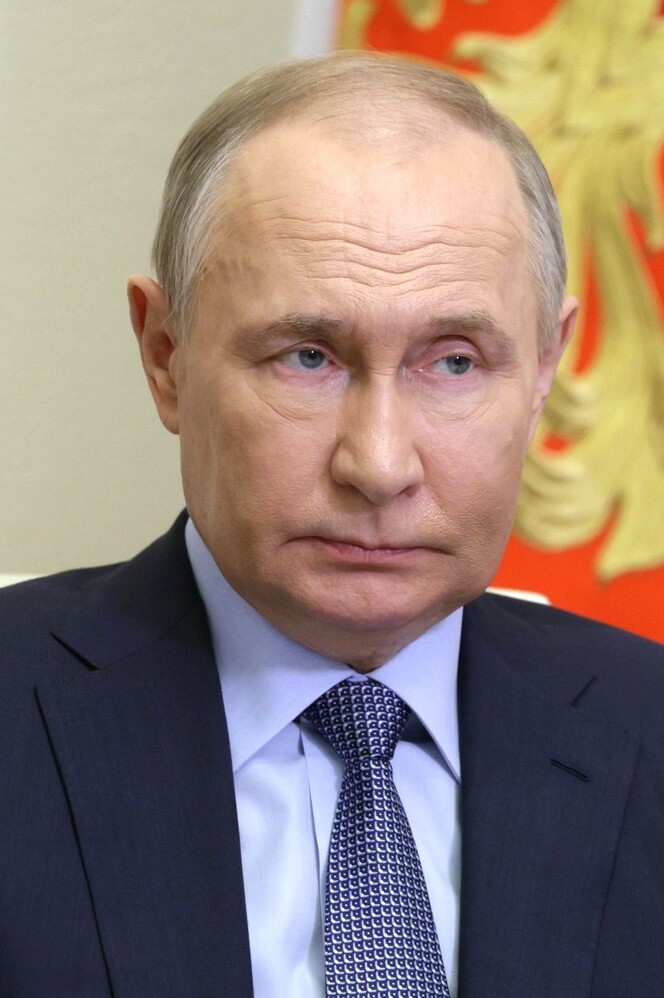
Vladimir Putin
The conversation centers on a reported message to Putin. The episode itself treats the report as unconfirmed.
Image credit

Patriot missile defense
Read the system-family record alongside the discussion of Ukrainian air-defense needs. No interceptor variant is established here.
Image credit
These links are an RH reading guide, not guest endorsements or independent confirmation of every statement in the interview. Episode views reflect its publication date; linked records have their own source dates.
The written account
What the conversation covered
Glenn was in Ukraine, working on his Ukrainian and watching a busy diplomatic week from much closer range than usual. Ryan called with a straightforward question: why would President Trump send CIA Director John Ratcliffe to Moscow now?
The reported visit lasted about eight hours. Its contents were much less clear. Glenn ran through what he was hearing locally, but repeatedly separated those accounts from anything he could confirm. That distinction matters in a story where nearly everyone has a reason to suggest they know what happened behind the closed door.
Why send the CIA director?
Glenn's clearest conclusion concerned the channel itself. Moscow has long valued direct intelligence contacts with Washington. For a Russian leadership shaped by the security services, that is a familiar way to communicate, including when public diplomacy is going nowhere.
A CIA director also arrives with an institution behind him: officers who collect intelligence, analysts who test it, and specialists who understand the people across the table. Glenn welcomed that depth. Asked why Ratcliffe might be sent instead of Steve Witkoff or Jared Kushner, he suggested the White House could be looking for a different voice after earlier efforts failed to produce a settlement. He presented that as an interpretation, not inside knowledge of the decision.
Warnings, possibilities, and what remains unknown
The accounts Glenn described included possible warnings about additional sanctions, Russian action against NATO, and support for Iran. There was also discussion of renewed ceasefire efforts. He would welcome a firm message, particularly reassurance to NATO allies, but did not claim to know the meeting's agenda or whether Ratcliffe met Putin personally.
Ryan raised reporting about a possible ceasefire framework. Glenn's test was practical: would renewed talks actually restrain the fighting, or give Russia more time to strike Ukraine and take territory? Starting a conversation can be useful. Whether the parties change their behavior is the harder question.
The view from Ukraine
The conversation then moved from Moscow to Ukrainian politics. Glenn described internal tension and competing interpretations of personnel changes, while cautioning against treating every appointment as a coded American message. A senior security professional at a high-threat embassy might simply reflect the threat to diplomats.
What struck him more directly was the pride around Ukraine's Independence Day. The people he was speaking with were focused on defending the country. He also worried that internal divisions could weaken that effort. Ryan pointed to reports of additional Patriot interceptors and air-defense cooperation with Britain as welcome developments, while emphasizing how much more protection Ukraine still needed.
Glenn left room for renewed diplomacy. His condition was that Ukraine's partners keep watching the war itself, not just the meeting schedule.
Based on the Restricted Handling conversation published August 27, 2026. Views and forecasts reflect the discussion at that time. Original episode and show notes ↗
Full episodeRead the transcript
This transcript comes from the published episode captions, with spacing adjusted for reading. Names, punctuation, and terminology may contain transcription errors. Refer to the recording for exact wording.
Today on restricted handling. the main focus of the discussions were warnings from Director Radcliffe on behalf of President Trump that Putin needs to make a deal to stop the The war Hello everyone and welcome to another episode of the Restricted Handling Podcast. We're calling this a quickie. Glenn and myself were both matching this time. For those who can't see, we got our our black ~ polos on. Glenn, how are you doing? I'm good. Good choice of ~ polo short there, Ryan. I like your style. You're a man of great taste. Right. how's the family? They're great. They're great. Kids off to to college.
Other kids are in school now. So easier. Whoa. Wow. Wonder wonderful. Easier. And you're you're right, I'm I don't want to go to I find myself doing a lot of math homework right now. A lot of math homework. Well boy, if if my kids needed that yeah. help for me, they'd be in big trouble. Big trouble. Thank goodness for AI. Can't say that. I guess you can nowadays. I can. If you don't, AI'll say it for ya. That's true. How you been? How's the trip? What can you share about where y where you're at, I can just say I'm in a very nice place, very interesting place. working a lot and learning a new language, which is at my age not easy, but it's something I was been meaning to do for a while, so it's kinda fun.
How's it coming along? This is Ukrainian, right? You had told us about before. Yeah, but now just gave it up, man. Like, yeah, no. I'm in Ukraine. Well no you had already said that on a past episode. I'm studying Ukrainian. You could be studying that in in the in the ~ French Riviera. We we miss no. Yeah, I'm studying Ukraine. It's fun. It's you know it's it's a bit of a challenge, but it's fun. I like I like foreign languages. I like studying foreign languages and my high school friend's teacher would not believe I said that if he heard this podcast, but I doubt he would even listen to it 'cause he thought I was such a troublemaker.
Monsieur Dugray. Bonjour Monsieur Commons. What did he know? yeah. So yeah, it's busy. I figured and I didn't want to take a lot of your time, but yesterday I had I had pinged you because there was news that CIA director John Ratcliffe had visited Moscow. What's being reported is he was there for about eight hours on the ground. Very curious to get your take, Glenn. ~ what does a director go over there for? What do you think will come out of this? well I think one, I think it's important to note that the President of the United States sent the director to CIA that to to Moscow.
We don't know exactly what was discussed. There's a lot of h like hearsay rumors, people speculating. One of the things I'm hearing here is that the main focus of the discussions were warnings from Director Radcliffe on behalf of President Trump that Putin needs to make a deal to stop the The war or the US is going to enact the president's going to move forward with new sanctions, That Ukrainians are going to take action to unblock their ports in the Black Sea and that the US is gonna support them in doing that. A very stark warning not to do anything against any NATO country.
If the Russians do, there'll be serious consequences. And the US will stand by our NATO partners. If that message was delivered, then I applaud the administration for delivering that message. and I think there was I heard someone speculating that there were discussions about Iran. warning the the Russians not to support the Iranians because we're you know ~ Scott Bessent announced the Secretary of Treasury a new phase of sanctions, you know, a new element in the war against the Islamic Republic. And then also to note that the ~ a representative of the Vatican was in Moscow around the same time.
my understanding is that the the Russians the the Vatican sent someone to also talk about Promoting peace negotiations between Ukraine and Russia. And then one other thing I heard is that the Russians agreed that the director can visit or that the Russians agreed to stop shelling Kiev if there's a senior level visit from the White House to Kiev to talk to the Ukrainians. Which tells me that if that's true, then there is definitely discussion about some kind of ceasefire. Or some kind of you know, ~ re re energizing the peace talks. Yeah. And looks like Dmitry Peskov, the spokesperson slash wild wild dog for Putin came out and said that there was no discussion with Ratcliffe and Putin directly.
It was all through ~ security service channels, which I think makes sense from at least that's the the official statement from the Kremlin. And then you had mentioned maybe a ceasefire. There was some reporting over the past couple of days about a ~ one-page framework that Zelensky Some European partners and reference to the US had assembled for a potential ceasefire, free economic zone in the Donbass, future roles for the EU and NATO. that was potentially passed over to Russia for their review. So the timing's good. And yeah, you mentioned the economic D Day reference from the US administration targeting Iran's economy.
So seemed like Right. an opportune time for a visit. Well, somebody gave me this great quote the other day, someone I know who basically it was a quote from Warren Christopher who said diplomacy becomes lazy when we don't speak to our enemies. Some something like that. I maybe been paraphrasing. So it's important, you know, I I would stress that the Russians put a lot of value in maintaining an intelligence channel. With the White House, they've done that going back to Soviet times, traditional way that they like to communicate, makes sense to me, especially given Putin's background and the fact that Russia is run by the security services or people who come from the security services, they they like that channel. and I would say, you know, I think it's significant that the president sent the D DCIA because if you had people before going to Moscow who had very little background on the issues at hand.
And very little background in diplomacy, you now have someone going who has an first of all, some experience. He was in Congress, he I think spent time at the DNI. But more importantly, he has a huge apparatus behind him, as you know. An organization which is you know its sole purpose is to collect intelligence and anal analyze intelligence. And ~ know, Director Radcliffe has a a very large team, and and I am happy to say I know some of the people that work that issue, and they're very, very good. So I think they're some of our best officers, some of the best officers, I maybe the best officers I work with that I know that are still in the agency.
So you know, it's good. And if it's true that the president sent a message warning Putin not to make a move on NATO, I think that's also good. But hopefully that should be reassuring for our NATO. Partners. And you know, I was talking to someone today and they said, well, Director Burns went in twenty twenty one and warned Putin not to invade Ukraine, and Putin did it anyway. The difference is I think that ~ hopefully Putin understands he's not dealing with the Biden administration now. He's dealing with a president who's taken action in Iran. He took action in Venezuela, and during his previous presidency, he also took direct action against the Russians when they crossed this red line.
So I think we've all or I can say I've been a little frustrated that he's I thought he's given President Putin too many opportunities to bring this war to an end and Putin has not taken them. but it's possible that he's come to the end of his rope, that the President of the United States is tired of being, as he says, tapped along by ~ Putin, and he's getting ready to do more. to put pressure on Putin to bring this thing to an end. Because I do think that he wants the war ended, as many people do. Why why why not send Whitkopf or Kushner in this case? Kushner might be, you know, Could involved with Gaza or one of the other discussions, but why not Whitkoff this time?
I think again, because you you probably have to have a new a new channel, a new voice. you know, ~ maybe again, I'm only speculating, but you know, Whitkoff and and Kushner haven't had much success on this front with the Russians up to this point. maybe he wants to try a new figure. And I think, you know, probably Director Radcliffe represents a more I don't want to say hawkish, but hardline. vision on the issue of Russia. And ~ maybe if I were the president, I would want to send someone who's seen as being not as open to being you know, not as open to just listening to Moscow's allegations and then not pushing back.
So so I think it's probably again smart move. I think it's a good move. And I think it's ~ it's reassuring to me that that That he sent the director of the CIA. Just from a on the ground standpoint, Glenn, from what you're reading at least, are you noticing any change in political tensions in Ukraine? Just with ~ there was talk about Mikhailov Fedorov, ousted defense minister, kind of rallying up some support. How are you seeing Zelensky's position right now? Stronger, weaker, any difference? ~ well there's a lot of ~ internal turmoil here and there's a lot of speculation on what's happening, what's going to happen. I don't know that President Zelensky's position is any stronger since he removed Fyodorov.
It might be a little bit weaker. you know, there's a lot of dynamics that you'd have to go through, you know, in great detail to understand who the players are and you know what's going on. There's a lot of speculation, a lot of allegations. You know, the US I just somebody sent me an article one of the Ukrainian newspapers now. The US has sent a new Charger de Fares. He's a regional security officer. Which is not uncommon to have a Charger in posts that are considered high threat posts. but this I think probably the first time in Kiev that the senior diplomatic representative is a diplomatic security officer, special agent. And some Ukrainians are reading into that that this is a message that the US is going to really drill down on corruption.
You know, cooperating with Naboo, which is the counter corruption agency in Ukraine. I don't know I don't know if that's really true. I think maybe it's more because it is a high threat post and the Russians are hammering Kiev and we have diplomats that are under threat and you probably want a security professional to manage that threat at a time like this. But it's an interesting development. by the way, we should say the the Ukrainian just That's interesting. I had not seen that. the Ukrainians just celebrated their ~ Independence Day, thirty five years of independence, two days ago. And the day before that their flag day.
And I have to say where I am, there was a big celebration. There's a I mean, one of the things you notice about Ukraine is they're very, very proud of their country, their flag. You know, it's almost like being in the States, you know, on fourth is like being in the States on Fourth of July. ~ and and frankly, most of the Ukrainians that I'm talking to are not really focused on the internal dynamics. They're more focused on the war and stopping the Russians. But there definitely is a lot of internal turmoil happening right now, which is not great. If you know Ukrainian history, you know, one Ukrainian general told me two years ago we've never really lost a war to the Russians. We lose wars to ourselves because we can't get along.
So That is something could be, you know, problematic. That's a good way to put it. I will say there is some positive news, right? I mean, it sounds like Ukraine got a few interceptors, Patriot interceptors. They're still, you know, obviously hoping they can get more than that. And they're still, you know, beyond short when it comes to their air defense. But they also had an interesting agreement, with London, some joint RD ~ research. support when it comes to air defense. So all of this I think is positive for them and that's a missing link as we talked about the ballistic missile threat that they face night in and night out.
Yeah. again I heard one of the messages was from the White House like stop. There needs to be a ceasefire. The the what I heard is that Putin came back and said, and by the way, I don't know if it's true that he didn't meet with Putin. That would be very interesting to see whether he actually met with President Putin or not. Yeah. Right? I I don't believe Peskov, believe it or not. what he says. I agree. So one of the things I you know, one of the speculation or Some of the news I heard here is that the that Putin said he would stop if the Ukrainians agree to stop striking Crimea, and stop deep strikes against oil and gas infrastructure, something like this. I think that there may be the basis for a restart of negotiations, which is good it as long as we don't let the Russians do what they've been doing.
I say we, the US and European Union and Ukraine's friends, we don't allow them to drag use those negotiations to buy time to continue to strike Ukraine and to try and take more territory. That makes sense. Yeah. That's the hope. Yes. All right. fingers crossed on that. I have all these questions I want to ask you, but all of them require me to know where you are or for people to know where you are. So we're gonna we're gonna not ask. We'll we'll pick this up when you're back in the States. All right, Ryan, again, ~ Thanks so much, Glenn. congratulations to your son on starting school.
Tell him it's the best time of his life. Except for when he's with his dad. I
Back to the Episode Field Guide ↑Keep listening.
All episodes →
John Herbst / Ukraine and U.S. strategy
John Herbst on Arming Ukraine and Raising the Cost of Russia’s War
Steve Wills / The Arctic and maritime security
Steve Wills on Russia’s Arctic Submarines and the Cables Beneath the Sea
Between episodes
The daily brief is free.
Russia, China, Iran, and North Korea. Straight to your inbox.