What Would Actually Get Putin to Stop?
Glenn Corn and Ryan Fugit debate sanctions, ceasefire terms, Ukraine's air defenses, and the ways the Iran conflict changes Washington's leverage with Moscow.
Glenn Corn / / 45 minutes
Start here
Three key takeaways
-
Do not begin negotiations by conceding Russia holds every card.
Glenn argues that Moscow faces real costs and that Washington should use its economic and military leverage. Ryan presses him on whether territory and NATO, rather than economic pain, remain Putin's decisive concerns.
-
A ceasefire needs enforcement and incentives.
Glenn's proposal combines consequences for violations with conditional benefits for compliance. He distinguishes stopping the fighting from recognizing occupied Ukrainian territory as Russian, and insists Ukraine must have a say in the terms.
-
Iran and Ukraine compete for attention and equipment.
The hosts connect the Iran conflict to Ukraine's shortage of ballistic-missile interceptors. They disagree on how much leverage that gives Putin, but agree that diplomatic pressure means little if partners cannot defend themselves.
Episode Field Guide
Explore this conversation.
The people, institutions, and equipment connected to this episode. In the conversation marks a direct mention; Related background adds context.
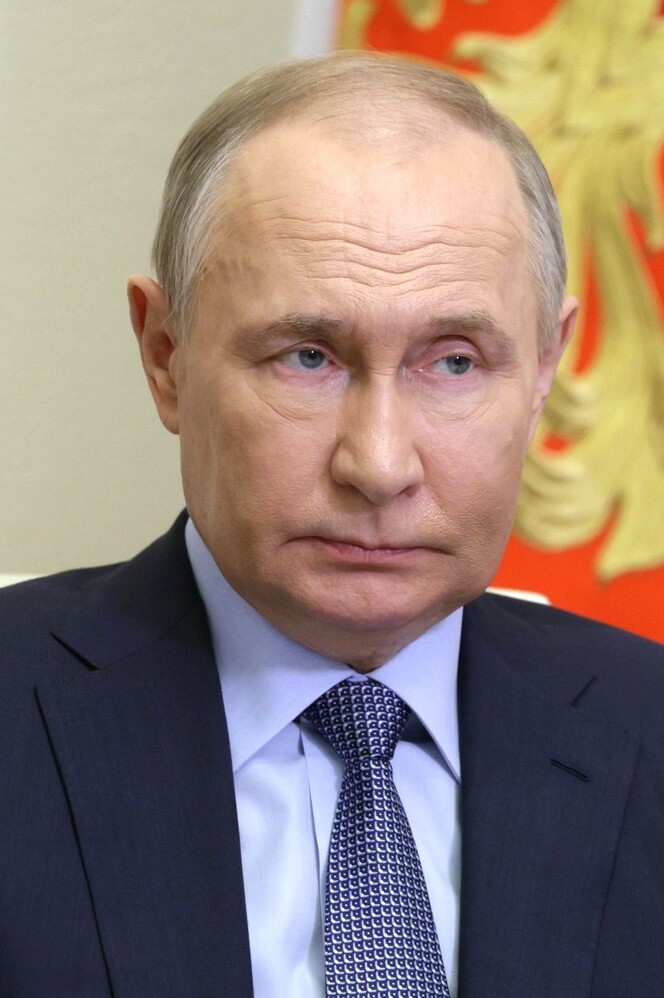
Vladimir Putin
Explore the dossier alongside the argument about leverage in negotiations.
Image credit
Islamic Revolutionary Guard Corps
The hosts discuss an IRGC media appearance. The institutional dossier provides wider context.
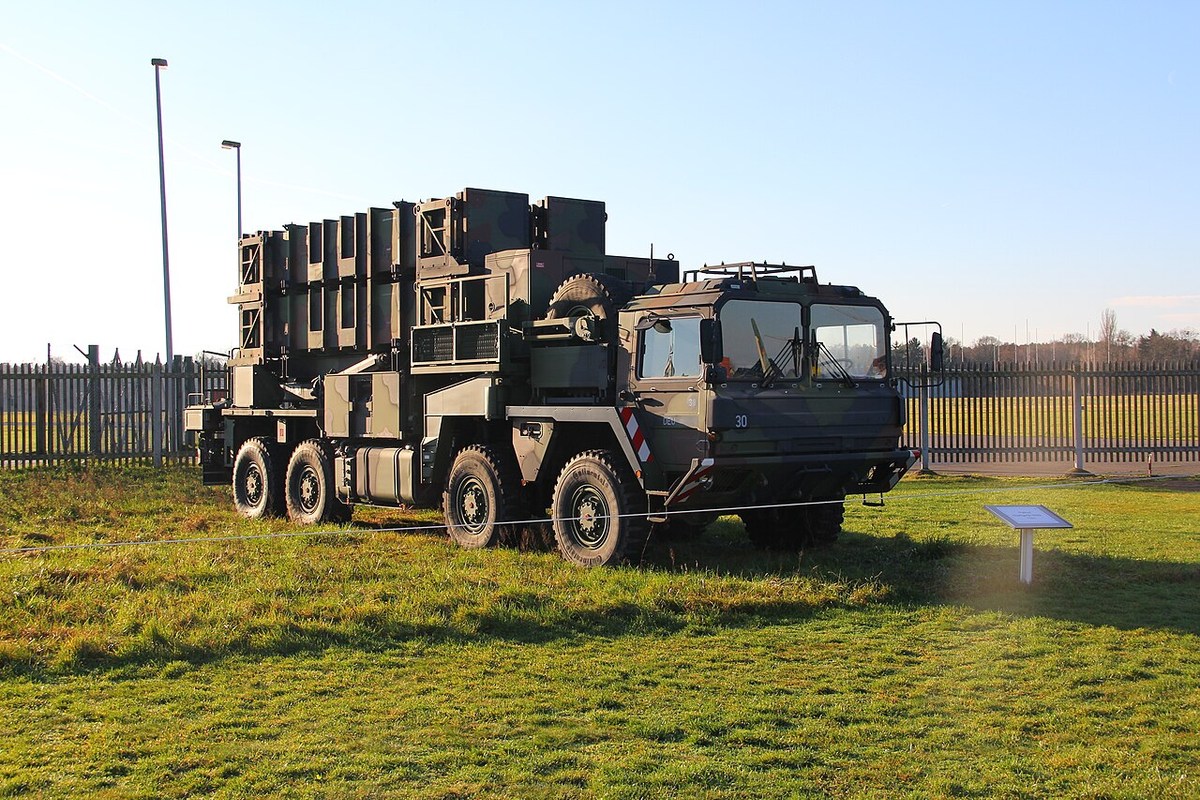
Patriot missile defense
The conversation discusses ammunition shortages. The linked record covers the Patriot family, not a verified current stockpile.
Image credit
These links are an RH reading guide, not guest endorsements or independent confirmation of every statement in the interview. Episode views reflect its publication date; linked records have their own source dates.
The written account
What the conversation covered
Ryan put Glenn in a hypothetical room with Steve Witkoff and Jared Kushner. If the objective is to end the war in Ukraine, what should American negotiators actually put on the table? Glenn started with the premise: do not let Moscow convince you that Russia holds all the cards, or that Ukraine is responsible for the war.
That opened a genuine debate about leverage. Glenn emphasized the costs Russia is absorbing and the pressure Washington could still apply. Ryan questioned how much economic damage changes Putin's decisions, especially if control of territory and keeping Ukraine out of NATO matter more to him. Neither treated an announced meeting as evidence that a durable settlement was close.
The terms matter more than the announcement
Glenn argued for a ceasefire that can be monitored and enforced, with consequences when either side violates it. He also made the case for something politically uncomfortable: conditional sanctions relief and civilian economic ties if Russia actually changes its behavior. A credible offer needs benefits for compliance as well as penalties for refusing.
He drew a distinction between halting combat along a line and recognizing Russian ownership of occupied land. Ukraine's territory is Ukraine's decision. In Glenn's view, the country should not be pushed to surrender the fortified positions Moscow has failed to take.
Ryan kept testing the proposal against Putin's demands. Could particular cities, territory, and a commitment on NATO be enough? Glenn remained doubtful about a lasting deal with Putin himself. Both worried that a pause without strong safeguards could let Russia rebuild for another attack.
The air-defense problem does not wait for diplomacy
Glenn described a dangerous mismatch between Ukraine's ability to counter drones and its ability to stop ballistic missiles. The limiting factor was not simply the presence of Patriot batteries. They need interceptors to fire. He argued for additional support while Ukraine develops alternatives of its own.
This is where Iran entered the Ukraine discussion most directly. Equipment, attention, and political energy are finite. Ryan worried that the Gulf conflict gives Putin a useful distraction and another source of bargaining power. Glenn believed the United States could sustain pressure on both fronts longer than its adversaries could withstand it. The difference was about endurance and leverage, not whether the conflicts affect one another.
The Gulf, the messaging, and the limits of public information
Ryan's Army aviation background came through in a discussion of a reported Navy helicopter strike on a vessel in the Strait of Hormuz. The conversation moved from weapons and aircraft to the much larger question of keeping shipping routes open and maintaining American reach overseas.
They also discussed an IRGC commander's interview with Western media. Ryan described a message designed to present Iran as confident, resilient, and prepared to outlast Trump. Glenn challenged that framing, while making clear he had not watched the interview himself. His response was to the account Ryan relayed.
A reported threat involving the president's travel produced another caution. Glenn said he had no access to the sensitive reporting or Secret Service decision-making. The hosts considered the possible implications without claiming to know how developed the threat had been.
The cost of getting the settlement wrong
The conversation ranged through Russia's diplomacy, a released American prisoner, and countries looking for more distance from Moscow. Glenn saw reasons for Washington to approach negotiations with confidence. Ryan returned to the cost in lives as the fighting continued.
That tension runs through the episode. There is an urgent reason to stop the killing, and a serious risk in a settlement that merely postpones it. Glenn's answer was sustained pressure paired with terms Russia could benefit from honoring. Ryan's challenge was whether Putin wants the kind of outcome that offer assumes.
Based on the Restricted Handling conversation published August 14, 2026. Views and forecasts reflect the discussion at that time. Original episode and show notes ↗
Full episodeRead the transcript
This transcript comes from the published episode captions, with spacing adjusted for reading. Names, punctuation, and terminology may contain transcription errors. Refer to the recording for exact wording.
Today on restricted handling. Glenn, if I had to start and you were in a room with Witkoff and Kushner. Right. What are you suggesting to them if we want to end this war? Well, I hate to say it, but I would suggest do not be weak and do not fall for this this line that Russia's got all the cards and Russia's should, you know, dictate how this war ends. Putin is not in the driver's seat. Hello, Freedom Loving people, and welcome to the Restricted Handling Podcast where Glenn and I break down interesting topics in international security and geopolitics. Today we focus on what Putin actually needs to end the war in Ukraine.
We also dive into how the Iran war is providing leverage and distraction, hell fires being launched in the Gulf, interesting counter-sanctions worked by Russia, And how Glenn would advise Jared Kushner and Steve Witkoff ahead of negotiations with Moscow and Kiev, which are coming up in the next couple weeks, We also hear from Glenn about picking up a new language and a few other things, including a trip to Ukraine that's coming up for him. With that, please enjoy. Glenn, you're getting ready for a trip overseas, ~ I think. can we hear anything about what's coming up for you?
air travel. My least favorite thing. No. I will be in the UK and then in Ukraine. So yeah, we could talk a little bit about that. obviously I'd rather talk about it when I'm done, because it probably be more useful for those the for our listeners, for our viewers, but ~ and the UK should be interesting. I haven't been to London in a long time. Can you give us a little taste of what's kind is it business? You're gonna be talking to some senior folks, or do we just need to leave it? I'll no no in ~ the UK I'll be meeting with some business contacts, ~ academic contacts, and then same in Ukraine and traveling a little bit.
And I'm gonna be studying Ukrainian. Which is that's my version of vacation this year. I'm I'm gonna spend some time just doing nothing but studying Ukrainian. And just, you know, people have heard on the show, I mean you you know Russian so well, Glenn, but Ukrainian, big difference yeah, I mean it's like maybe Spanish and French or Spanish and Italian. You understand enough to not understand. Or you you you're following something and then it just you lose it. and and honestly, like I just can't talk. I can understand, I can read, I just can't speak. So I've had people, you know, like you're like a dog, like you can understand commands, but you can't speak back.
Although we don't know, maybe dogs speak when we're not around, maybe they have long conversations and they call each other. But you're you're working on the speech part. What's your trick? 'Cause I know you're quite good on Russian and with other languages. it just gotta this like you know, you gotta immerse yourself, you gotta make yourself speak. I'm one of the learners like I will I will learn if I say something to somebody like a native speaker, and then I'm in interaction with them, then I'll remember the phrase, the word, and then it sticks. Although I will I bet you tell a lot of jokes. Do you try a lot of jokes out?
yeah, that was always like for me, that's the highest like when you really can joke in a foreign language and get the nuance, I think that's a good sign. Some people say dreaming. which reminds me of a great Woody Allen story where he talks about being chased by a verb of motion in one of his dreams, but that's a whole nother. but no, I think if you can get to humor and understand humor and then use it, that's really good. So I've always tried to do that and it also helps me remember 'cause it's kind of fun to tell jokes. I I agree with that. I think 'cause I've dreamt in French before and I'm not great at French, but I would not be able to deliver humor with the subtlety and nuance required to a French person.
No chance. Well, I don't know, Jerry Lewis did it. I always tell young people, you know, when I was studying languages, you know, as a kid, I had a shortwave radio my father gave me. And no, I was not a spy. I wasn't listening for like dot seven seven dot dot dot seven seven. But I had this little shortwave radio and I used to try and find like French channels when I was studying French or like Russian when I was younger studying Russian. But you know, now it You got it everywhere. it's all over. You just go on the internet, look up YouTube, and you just say like French news or French, you know, comedy program.
Mm-hmm. Yeah, streaming shows. Speaking of learning So things, when I turned on the camera today, just before we hit record, just for everybody's awareness, I was not greeted by Glenn's beautiful face, but instead a DJI drone hovering, watching me. B So I thought this was Glenn prepping for his trip, really trying to understand the mechanics of drones, but turns out it's not. listen, if I were flying a drone in Ukraine, it'd end up somewhere in like I don't know, the Netherlands. I'm such a bad I can't Yeah. fly these things. I have no hand-eye coordination. But I I bought this for my son to have fun with and he's working, so I decided to have a little fun with ~ my co host.
Yep. Yeah. Well, I will say the book that I'm working on with my dad, you know, there's a lot of talk about rotary wing aircraft, of course, and the future and its drones. And I'm just trying to envision people going to Fort Rucker, Alabama for flight school, and instead of hopping in an aircraft, they're just flying stuff around. So it's very much changing how things are for all these new recruits. Well, I think I can say this. I have a nephew who went to the Air Force Academy, and that's what he's doing now. God bless him. He's ~ serving Mm. our great nation in that capacity.
So he's Cool. a pilot, a new kind of pilot. And yeah, you know, I y you know this debate, this goes back for twenty, thirty years, maybe more. Like, should we have non piloted aircraft? you know, same in the Navy. Like, some people are absolutely against the idea of taking the operators out of the the the aircraft or the the the the fet the vessel, but you know, in the case of the Ukrainians they had no choice. Well, there was a very interesting shot taken. An MH sixty, a US Naval helicopter, fired two hellfires over the past two days to stop a vessel in the Strait of Hormuz.
And so I got a kick out of that. We used to fire some hellfires, obviously, from the Apache. Seeing them on a Black Hawk is a little odd. Usually that's just one sixtieth on the Army side. But it looks like the Navy had those outfitted and took a couple shots and it worked. Disabled this vessel for the time being. Remember we we talked about that early on in the war in the Gulf, like, you know, in your experience, could you like would you use rotary aircraft or like ~ helicopters to go after like the the ~ either the mines or the naval vessels, you know, the small boats.
God bless the crew that did it. That's right. Even though I mean, I kinda give ~ heat because they're Blackhawk pilots and not gun pilots, but I guess now they're technically gun pilots, so it's a little weird. We would have What does that mean? What does that mean? Like explain that to the others, like between a a gun what's a Yeah. Apache gun pilot? Apaches and Kiowas, like all they do is carry weapons. They go from point A to point B and shoot things. Blackhawks, Chinooks, had been designed to move people and logistics. You know, that's their their role. Obviously, back in Vietnam, they had door gunners on Hueys, they've had door gunners on Blackhawks.
But typically guns controlled by the pilot in the seat are typically on what we'd call gunships. So Apaches or Kiowas. Little birds in 160th is another one. Okay. It's changed a little though. 160th over the past 20 years has evolved to have, you know, MH 60s. So instead of ~ 60 Blackhawks that are utility, utility helicopter, they have MH 60s, which are modified helicopters, where they put on some armament that can be controlled by the pilot themselves. So they can fire missiles, they can fire rockets, they can fire bullets. But when we go through flight school as conventional people, if you go fly Blackhawks, you're not shooting guns.
You have to go into 160th. Okay. But I think in the Navy it's it's different. Okay. Your your favorite movie must be Apocalypse Now, that one scene. it's a great one. It's a great one. They did they just Did you came out with a new show called Gun Pilots. I haven't seen it yet, but a few guys I know are in it and it's all about Apaches. Just came I don't know what streaming place. Did your dad play music out of his aircraft when he flew with his helicopter? No, he was notoriously bad with music. He never listens to music even today, Glenn. I don't know if I've told you this.
He just listens to the news, that's it. Really? No mus the only music he'll listen to is Irish music. I like The Clancy brothers. Like old school Irish, yeah. All right, shall we jump in? What's up? So look yeah, we we should jump in. Here's what I want to talk about. Zelensky just sent over a proposal to the US for some arrangements and ideas on how to end the war. There's talk that Kushner and Witkoff are going to be visiting Moscow and Kiev, or at least interlocutors from those countries, to start maybe some consultations, pre-negotiation consultations coming up in the next couple of weeks.
What I want to focus on is what does Putin need to end this war? So if you are a Kushner and you're a Witkoff and you want to see an end to this, what is it you need to put on the table to get the appropriate outcome? What are you suggesting to them if we want to end this war? Well, I hate to say it, but I would suggest do not be weak and do not fall for this this line that Russia's got all the cards and Russia's should, you know, dictate how this war ends. Putin is not in the driver's seat. the the the threat of sanctions, enhanced sanctions still hangs over him.
Right. I we're we're moving in that direction. He can avoid that for the Russian people if he brings the war to an end. ~ I don't I definitely don't think that we should let him believe that the US is desperate for an end to the war. And I don't get me wrong, I mean, we want to see an end to the war, but there has to be a just end to the war, and a just end for the people who were aggrieved, and that are the that's the Ukrainians. Putin started the war. So my second message to them would be you know, whatever you've been told by some people, by Kirill Dmitriev or whatever.
The Ukrainians did not start this war and NATO and the US did not. We are not guilty, right? Be proud Americans. I had a boss tell me once, never forget that you are the representative of the greatest country in the world when you go into any meeting. You can be humble, you can be respectful, you should always be respectful, but never forget that you represent the greatest country in the world. We're not guilty of starting this war, that it's propaganda. We weren't building biolabs, we were not threatening to invade Russia. you were in the military. I'll ask you this question, Ryan. How many times did you do an exercise where it involved ~ flying into Russia and taking Russian villages or capturing Russian territory?
No. I I had an officer once who told me this story. His father came to visit him in Moscow. His father's from Texas. And the father had not not traveled a lot. He grew up on the kind of the southern border. He came to visit him in Moscow and he got to the the border guard. The border guard took his parasport and said, you know, what is the purpose of visit to Russia? And he said, Well, son, I'm going to tell you, I know my history, and I'm not here to repeat the mistakes of Napoleon and Hitler. And I am not here to try and occupy your country. I'm here for a visit. I want to visit my son and my grand my ~ my daughter-in-law, and then I'm going to leave at the appointed time.
I promise. ~ Ha ha. That was a great line, and I think that is a you know, the Russian people need to know that. So I'm I'm digressing a little bit, but I, you know, I'm concerned sometimes. I think US officials often allow the Russians to convince us that we're guilty, that they're the victims, and that we need to make concessions and we need to make ~ our allies here, the other party, the aggrieved party, make concessions to end this war. And I don't think that's the case. I think if they see that the American side is resolute, committed, and willing, you know, I think here like we'll shift a little bit to the Iran picture.
I think what President Trump is doing now with the Iranians is actually the right response. Like, don't be desperate for an a bad deal. And we can wait out the Iranians. The same thing with the Russians. And I think the message has to be to the Russians too that, you know, we will make provide the Ukrainians with more military assistance. And in this case, it could end up being more more help targeting Russian ballistic missile facilities, launchers, launch sites, if the Russians keep attacking civilian targets in Ukraine. So you're y that that recommendation is kind of more targeted at what type of sites, Glenn?
wherever they're launching the ballistic the ballistic threat is the problem. Now if you look at the statistics, ~ I just saw some yesterday, they're still the Ukrainians are still very effective at counter drone activity. I think like eighty-nine to ninety-three percent success rate in destroying incoming drones. It's the ballistic missile threat that's the problem. As you know, there's a shortage of Pac-3 ammunition. in many cases, the Patriot batteries. Are not firing on incoming ballistic threats because they don't have the the ~ the ammunition. And the Ukrainians are scrambling to come up with their own system. And I'm convinced they will, because they've demonstrated they can do that.
But in the meantime, the Russians are or seem to be doubling down on ballistic strikes. And I think probably Putin thinks that he can win this war by doing that, by again terrorizing the Ukrainians, causing major problems to their economy. My understanding is they're going after Odessa again, the port. They're in the Black Sea. They're targeting ships. and that's having an impact on the Ukrainian economy, of course, just like the Ukrainians are having an impact on the Russian economy, and they have been for several months now. Do you think for Kushner and Witkoff, if if they're talking to to Moscow that they have to say, hey, you gotta stop where you're at?
I I assume Russia is not gonna give up any ground that they've taken. But is it more stop where you're at, ceasefire, and we won't then go and shoot some or support Ukraine's counterair capabilities or give them an ability to strike you more? Well, I think that this is a tough one because one thing Ukrainians have to say have to say, you know, it has to be their call. It's their territory. But what I've said before is I've heard the Ukrainians say ~ for over a year now that they're ready to make some concessions ~ to stop the the fighting, to achieve a ceasefire, which is enforceable. So I think the message should I mean if depending on what the Ukrainians would say, I would say, okay, stop.
Where the fighting is. You're the Ukrainians are not going to surrender the fortified belt, which you in the Donbas, which you keep demanding. Stop the fighting. We with the international community will enforce or or monitor. There will be repercussions for either side that violates the ceasefire. And there will be benefits. And this is one that's controversial with a lot of people, but you also have to have a carrot. You have to be able to say, and we can start rolling back sanctions, we can start increasing trade. We can start doing stuff to help your economy recover from this disastrous war because we have to remember Putin is painted himself into a corner with the war.
The the war economy, if he stops fighting now, they they're probably going to be in big trouble economically. I mean, they're already in trouble, but the the the economy seems to be completely dependent on this war economy. So what do you do when the veterans come home? What do you do when you're not producing everything just to sustain this war? You don't think they'd be better off economically if the war ended? ~ long term I think they would, but this is where I'm saying what I think we have to say, and our European partners have to say, and some of the the you know countries in Asia look, if you stop the fighting and you demonstrate good behavior, we will reciprocate by maybe lessening some of the sanctions, opening up trade, you know, allowing investment into the Russian economy, into the civil sector. Right.
You know, and again, this is controversial with many people because they're you know what the Russians have been doing, but ~ long term, we're gonna have to find some kind of solution that isn't just a stick, that doesn't work, and diplomacy is all about finding that balance. So, you know, Steve Whitcroft, Jared Kushner, I think that should be part of the package. But the first thing needs to be we have the stick and we will use it. And we don't want to. But you guys have been dragging this out for well over a year and a half since President Trump has been in office.
He's giving you multiple opportunities to like for off ramps. And we're not gonna give you like opportunities forever. And we're not gonna abandon the Ukrainians. They're not the guilty party. And just maybe a little spicy take from my side. You mentioned the fortified belt and Ukraine's not going give that up. I I completely agree with you. I think if we look at a lot of Putin's original demands, he's taken much of the Donbass. I think he just doesn't have Zaporizhia City and Khersan City. He's got those other provinces. He's effectively given and he's got Crimea.
He's effectively got the Sea of Azov contained now. But I think if he could get those two cities And a guarantee Ukraine's not going to join NATO, which I don't think is going to be a hard guarantee to get in this environment. It'll just be some security guarantees like you mentioned, but not NATO. I do wonder if that would be enough for him to stop. I don't think in any circumstance is he going to pull his troops out of the provinces or the territory he's taken, even for sanctions relief. And I want to Right. Right. believe in the the harm to the economy, but I don't know if that actually does impact him.
I mean, he's Years removed from an election. He doesn't come up again until like 2030. He's got parliamentary elections coming up technically in a month. He's gonna win, those are gonna go one direction only. They're talking about possibly mobilizing more people. I feel like those two cities could be key. Like, are they gonna have another election and try to influence Zelensky out of office? Maybe. Denazification makes no sense. Like, I don't know how you achieve that at all, but those locate, I think that territory is key for. Well, Two. I mean let's let's start with denazification.
Like forget it. Like that that that there's no denazification because there's no Nazi there was no Nazification, Yeah, so there's no way to prove it. right? Yeah. I mean if if they say that, I say, okay, fine, then we're gonna denazify Russia. How about that? Because you have more n like neo Nazis in Russia than you do in Ukraine, by far. That's that's number one. Number two, again, I think the Ukrainians are ready to say that we will agree to stop fighting. We're not gonna try and take back by force the territory which you have occupied. We're never gonna say it's not occupied.
Right? And I I agree, and I don't think the international community will either. I don't think we should, right? But to stop the the bloodshed, I think we can say, Okay, look, let's just draw a line of like demarcation or or A ceasefire line. Let's enforce that. And then let's talk about ~ how it's going to be monitored, what the repercussions will be if you violate the ceasefire and and what the benefits will be if you adhere to the ceasefire. And again, this is controversial and it's tough because it's hard to argue that you should lift sanctions on a country which is still going to be occupying large parts of Ukraine.
And by the way, George by the As the equestrian. I agree. way, Georgia, let's not forget Georgia, right? I have a very good Georgian friend who's visiting California right now. So Dato, I'm thinking about you. the Russians are still occupying Georgian territory. So it's hard to say roll back sanctions, but we've got to think about some character, right? And I think we have to, you know, we have to be a little bit more mature here in the US because when when people talk about that, when the president has suggested letting Putin back into the G twenty or people go crazy.
And I don't like the idea either, but at some point we're gonna have to figure out like how do we how do we bring this thing to an end? now personally I don't think that Putin is like as long as Putin is the leader of Russia, I think there there's very little chance that this is gonna end. Because even yeah, because even if there's a ceasefire in a year or two years, they'll start again. That's the mentality. I agree with that. You're right. That's the mentality. Sorry, I agree with Right. And and the the active measure stuff that was going on before 2014 will continue, which is also a state of war, which we're seeing in Europe, which we're seeing in other places.
So you know, I've said this for a while. Unfortunately, I think Vladimir Putin has already lost. Like we we he's not somebody you can make a a really good deal with. And we talked a little bit about that with Peter. We'll get him back on. you know, the question often comes up maybe in academic circles, or you know, when did he become so anti-West? it's a very fascinating discussion, which we should have. And I have a a guest I'm trying to get on the program who actually knows him and spent time around a lot of time around him in the late I I assume you mean Peter or Putin?
about Putin, around Putin. Yeah. Wow. Okay. So I'm trying to get him to agree to come on. Because it might we have some fascinating discussions when you hear his perspective. But you know, again, the Ukrainians have demonstrated a willingness for ~ to make a deal. The Russians have not. The Russians r continue to maintain max demands. And, you know, we we shouldn't allow that, in my opinion. We shouldn't put up with that. And I I just don't think a lot of those are real. I think it's a negotiating ploy that they want all these things, they'll take a few of ~ I just think something about the territory is key and I think NATO is key. The others I think are fungible.
That's my personal opinion on this. this is very interesting. Like, you with President Trump, when the Iranians this week said, Okay, we're we know we're demanding they put they're put out their demands, one of them is reparations. Like, and he said, Okay, then you're gonna pay for all the families that lost people and our you know, all the terrorist attacks you conducted, you know, let's add all the Americans that got killed or wounded in Iraq from their militias, ~ all the damage that their proxies did in Lebanon and Yemen and And so and I you know, somebody asked me, I was on a news program and they asked me like, what do you think about that? I said, actually I think it's smart. And we should do the same thing to Putin when he says denazification, say, okay, what are you gonna do to denazify Yeah.
your country? Right? What are you gonna what are you gonna do to make amends? Yeah. I mean his argument would be something I would imagine something like, we'll have elections, which we know will be rigged. Zelensky won't Right, right. You know have that. you know the elections that they that they're preparing for, they just ~ banned the the one opposition party that is saying that they're against the war. Right. And by the way, I would remind Whitkoff and everybody else, when they talk about, you know, like Ukraine and the and what's going on there with corruption and politics and like at least in Ukraine there are parties that are in opposition.
There are individuals that are opposing Exactly. the government. In you in Russia, it doesn't exist. And that's a good point. So yeah, they just banned that party. Some of the other things that happened recently, Dablica. former Marine, Robert Gilman, who was just released from Russian custody. Apparently, not in exchange for anything, a humanitarian gesture. Glenn, how often does Russia do something for nothing? Well, I definitely don't think it's for nothing. I think this is part of the effort to woo like sympathy or and maybe it's a good thing. I mean, first of all, it's good that he's been released, 'cause my understanding was he was ill, Yeah. Yep.
right? And they needed to release him. And he'd committed no crime, from what I know. Right. He was just the victim of this bilateral, you know, hostage war. but I'm sure that they want some something in return, whether it's positive public PR or And I again gonna be very controversial, but sometimes the Russians, you know, they're not animals. They behave terribly, and they're behaving terribly right now towards Ukraine. But they can also do good things sometimes. So I just can't imagine it was for nothing though. I it but I could see No. in ad in advance of consultations or discussions with Witkoff and Kushner, maybe. But not out of the goodness of their heart unless it was they didn't want an American to die in their custody.
Mm maybe. You know, I again. They're definitely gonna want something for this. Right. But it may not have been an immediate like. Okay. Yeah. Then we got Putin visiting his Pacific command folks talking about a willingness and readiness to start seizing European vessels at sea, the same way that European governments have seized Russian vessels as part of sanctions. Again, potentially blustering ahead of discussions with the US. Maybe it's something more. You make anything of that, Glenn? I don't think the Russians have the the capacity if the Europeans show will, or you know, including the US as part of NATO.
I think when it comes to naval presence and basing and all that, we we have a major advantage and we shouldn't let them threaten us like that. The fact is those Europe sh those Europe European ships are not break well, they shouldn't be breaking sanctions. If they are, they should be seized by European and you know international forces. But it's the Russians that are violating sanctions and they're trying to fuel a war economy. Yeah, exactly. I my other hot take here that I that I would propose is I if I think if you're on the other side, if you're Putin and you're trying to get leverage, I think that the Iran war is working in your favor.
And I think if there's a way that you can keep the Hormuz situation difficult for the US, it benefits you if you're Putin. And I think Russia's this is where I want to get your take, Lynn. Does Russia's history with Iran give it enough influence to change what they do in negotiations? Like could they bring Iran to the table and unblock hormous? could they get the Iranians to unblock it? Yes. Not alone. No. Like, but but if they were in my opinion, if they were a constructive actor in all this, that they would come together with our other, you know, with other al with other countries and say, okay, stop this. Like we are all together.
Like we're gonna send Russian ships to part of some kind of convoy to clear the Strait of Hormuz. Right. If you sink a Russian ship or you sink a Belgian ship, you sink a South Korean ship, you've declared war on all of us. So just stop this craziness. I don't think they do that. I mean, they I think that they are probably encouraging and using all their influence to encourage the Iranians to keep going. I you That's exactly what I mean. Yeah. know, I yeah, I I've argued for many years. They it's a zero sum game for them. If it's a problem for us and it draws away attention, and let's just use like a ~ specific example, as long as we have the issue.
Issues with the Iranians in the Gulf and the current regime in in Tehran, we can't supply the Ukrainians with the Pac Threes that Ukrainians need to stop this Russian ballistic missile threat. Right? If I'm the US president, my number one priority is protecting US forces in the Gulf. You need them there. So I'm sure the Russians see that's drawing away resources from the Ukraine front and attention to some degree every time there's a ~ dust up. it's unfortunate. But I I also think that they're probably overplaying their hand because I don't think that President Trump is as desperate on Iran as some people think.
And I think, you know, President Trump, one, he's not gonna be he's not gonna run for office again. He by taking action against the Iranians in February, he demonstrated he's willing to to take action, where many people for years were unwilling to deal with this problem, in my opinion. He took action. Now, was it like the way that we did it? That's debatable. And some people argue that, you know, people around them convinced them it would take a week. That was silliness. Anyone that's been studying this problem f at all would know that the Iranians, you know, were probably gonna this is gonna be a long term effort.
They have weapons, they have proxies, you know. but the Iranian economy is crumbling. And this is one where I would argue we we just need to stay like committed. And stay in the ring. We can't get out of the ring and just, you know, wave the towel. That would not be good. And the and the Russians, we can sustain this, let's say, a two front effort in in Iran and with Ukraine longer than the Russians can with the Iranians, in my opinion. And there are alternatives to, you know, the energy resources coming out of the Strait of Hormuz. And so, you know, I don't know that the the the markets haven't been as negatively impacted as a lot of people thought they would be.
it's interesting to like look at why. But US, I mean, if if I were talking to Whitkopf and Kushner, I'd say, look, like we're having success. Don't give it up. Look, let's look just take a step back. In Venezuela, things there was actually I think Newsweek where it says Trump was right about Venezuela. It's right. in again the South Caucasus, Azerbaijan, Armenia, countries are turning their backs on the Russians. We just saw, by the way, big event, significant. President Vucic Serbia hosted Zelensky for a visit, and and he He made in a statement, he claimed that Serbia recognizes Ukraine's territorial integrity, right? Which is a big step.
And it doesn't mean that Serbia is completely on the side of, you know, Ukraine or the West, but it's something that should be, you know, applauded, in my opinion. Because anyone that knows Serbia, we talked a little bit about with the Ambassador Godfrey, the Serbian issue. We'll have some other guests come on and talk about the Balkans, but You know, the Serbians, that's a very divided country politically. There's a lot of support for the Russians. So for the Serbian president to do that was to me pretty interesting and pretty brave, gutsy. ~ and it's also assigned to Moscow.
Like you just don't dictate to everybody. You don't have the throw weight. They the Syrians just renegotiated the basing rights in ~ in in Tar Tartos and how it's it? Ham Hamania, or that was the name of the Yeah, the airport. I'm not yeah, I don't know how to pronounce it. Yeah, so we're we're having success. And we're in a position of strength. Again, that boss, he was a great boss, and he told me he'll, if he's listening to this podcast, he'll remember. He told me in his office one day, he said, someday you're gonna be a chief of station. And when you are, never forget that you always represent the greatest country in the world. Your interlocutors are gonna try and convince you that they're in a position of power, that Be respectful, be humble, but also be be proud of who you are.
And remember you're representing the greatest country in the world. And I would say that to our special envoys because you they don't want to come across as groveling or naive or being manipulated. And by the way, let's talk about this visit to Ukraine. If they go to Ukraine, I think it's a good thing. There's a lot of debate. I saw somebody saying the other day, they shouldn't go, you know. I don't know why they would say that. I this is You're talking to US delegation, Glenn? Yeah, yeah. Somebody was arguing, some American was arguing that they shouldn't go because Zelensky shouldn't receive them. They you know the Ukrainians shouldn't meet with them, which I thought was an insane argument, because actually Zelensky has been asking them to come, saying you can't negotiate a deal if you haven't seen our side of the story.
Agree. Well. Right. And I my understanding is Laura Loomer was, you know, told President Trump after she was there or while she was in Ukraine, send them. And so it looks like President Trump has said, I'll send them. And I hope they go. Yep, looks like they're going. Yeah. Speaking of some propaganda and acting like they have more position or clout than they do, there was a very interesting interview yesterday on PBS with an IRGC Brigadier General, Nakdi, who is sanctioned. I mean is very much one of the bad guys, but one of the few interviews Granted by the IRGC with a Western media company.
And very much the propaganda you would expect, but quite interesting, right? So talks about the US had these two objectives coming in. One was toppling the leadership, the other was breaking up Iran. Neither of those were achieved. We are winning because the US hasn't achieved its objectives. Are they going to wait out Trump until he's out of office and somebody else comes in? Basically said. Yes, but we also want to deter anyone from attacking us again. Talked about their missiles being depleted and of course a lot of bluster that they produce more than they could even fire anytime in the future.
very much said that it was faith alone that's kept them in this. It had nothing to do with weapons. talked about attacking civilian ~ vessels in the Strait of Hormuz because this is a war and those vessels are going to go on and help their adversaries. Talked about the US killing 168 children, which of course they bring up. And then I thought this was very interesting since he knows this is going to be heard by Americans. ~ mentioned how the Trump administration uses this war to intentionally create a volatile stock market and oil prices that they can then bet against and make money against, right? All Right.
the standard propaganda, not denying that at all, but quite interesting now. that they're delivering this and trying to act like they're in a position of strength. Yeah. I you know, my I first of all I I didn't see the interview. I hope that the the journalist that conducted the interview asked some hard questions of the of the Iranian interlocutor, including like, why if you're so confident, why are you hanging and killing so many of your fellow citizens? How's your economy doing? and you know, my response to everything he said is it's not over. You seem to think it's over. It's not over.
And and yes. Probably people in Washington made the mistake of thinking they could finish this in a month or three weeks. Same mistake Putin's guys made and Putin made in twenty twenty two when he thought he would take Kiev in four days. Okay, now you gotta r reassess and and re engineer. and you know, the the sign of a of a winner is not someone that doesn't make a mistake or doesn't fall down sometimes, someone that gets back up. We gotta keep going. Like and this this has been building for years. The Iranians have been stockpiling weapon systems for Yes. years. They've been building their proxy network for years.
And when he talks about faith, I have no doubt these guys are hardcore. They are like they are I don't want to say insane, but they are they are they are true believers, many of them. So that's what we're up against. So we need to be true believers, right? We need to be hardcore. And I warn everybody all the time when I lived overseas to be careful with Americans because we come across as nice and naive and but we could be some hardcore mofos when we when we have to. You've seen it, I agree with that. Yes. Yep. We've we we've seen brother. You served in the greatest military in the world. And you know when when push comes to shove, I work with people, I serve with people who are stone coal killers.
They are tough and they are mean. When they get when you push them too far, they become really mean. And that's not like a great thing, but it sometimes you have to like our country like the Iranians better remember that. We can be just as dedicated to victory as they are. And we sh and and Americans should remember that too. Like we have now getting a little preachy. I apologize, but like we're all fighting against success in Iran for political like partisan political reasons. That's insane to me. The Iranians started this war against the United States, not against the Republican Party or you know Donald Trump or they started this war against the United States of America, our way of life, our culture in Long ago. Yeah.
nineteen seventy-nine. And they've been fighting it ever since. And victory here is victory for the United States, just like victory in Ukraine is victory for the United States. I mean, ~ I'm a little disappointed because I feel like this gives Putin more leverage, just us being distracted. I I understand we can fight on both sides. This is not like an Eastern front, Western front type of war. But I do think it gives him a little more leverage, which I don't love. That being said, the way this interview ended was funny. I don't know if this is because of how they edited it or this is truly how it ended, but the last question that the interviewer asked was, have you seen Moshtaba personally?
And he said, let's leave this matter. And that was it. So again, who knows what his state is. speaking of bad people, let's also talk about this Air Force One challenge that ~ Trump and the administration just went through. ~ more I I don't care about like how they moved and and who was put at risk in this. I can't even imagine what it's like having to be Secret Service making these calls. More just the idea that the Iranians would have had intel on the floor that the president's staying on, his movements, which aircraft he might be on, probably easier, but somebody with a shoulder fired something was identified or concerned that there would be somebody.
Like I was a little surprised that the Iranians had this in them ~ at this point. Well again, I mean that I think there was the the potential threat. I don't know how developed that threat was. ~ and you know, I'm I don't have any access to the sensitive reporting and the decision-making process for the Secret Service. I would say one, I think it's pretty cool what they did, right? I'm you know, like Well and it moved him in in what, like a like a food cart? Yeah. Yeah, yeah, they that's like a sp you know spy thriller. I have a feeling the president probably thought it was fun.
~ Yes. and you know, I I'm surprised, like we're well, I mean, like, why is this a news story? I don't know. I I would have I would've wished that we have kept that secret because now in the future, you know, other other adversaries may know or the Iranians may know it a trick that the Secret Service had up its sleeve, but okay. what we know that the the summit was in Ankara, the Turks are pretty good. And you know, I don't know that the Iranians can just do whatever they want in Turkey. They have been very aggressive in Turkey in the past. They've assassinated and kidnapped people there.
~ hell yeah. you know, they they've gone after opposition figures, journalists. but to get a shoulder fired, you know, like a man pad in and shoot down Air Force One, I don't know. That seems kind of far fetched. That was my thought too. Yeah. Yeah, it seems far fetched, although I'm sure if there was some indication that, you know, better safe than sorry. And ~ you know, we do know that the Iranians have been again laying the groundwork for to create problems worldwide since the late seventies, early eighties, building networks. I've always been surprised, we we've talked about this before, that they haven't done more to retaliate since Soleimani and strikes last summer and all of this talk about how they're gonna have revenge.
We've seen very little of it. This probably one of the more credible ones I've seen or heard of. Well, well, this is my opportunity to sing the praises of some people I know that you know I worked with in the past. I've said this before, with all the people that I worked with that do like Iran threats and proxy threats were some of the greatest of like officers I ever dealt with. I love them to death. And, you know, I think a lot of the what we know, I mean they've tried, they've been disrupted multiple times. We know now they were trying to kill the president during the election.
twenty twenty four. They were trying to go after his daughter. You know, you know, they went after, I think, a journalist in New York in ~ Ethnic Azary. They used it in the Ethnic Azary, if I remember the story, an o like a opposition journalist. So we've known that they're doing stuff and a lot of it's been disrupted. but they'll keep trying. And and there's been reporting coming out of the Intel community, about Russia providing some targeting information to the Iranians. So there's no link to that here. But again, if I'm Putin and that's a lever I have to pull when it comes to negotiating with the US, like I can make this worse for you all in Iran.
I agree. I think Trump can ride this out a lot longer than Iran can. But it does seem to dominate news cycles right now in a way that it probably not what he or the administration wants. well, one again, I'm not saying like, you know, the economy isn't great in the US, but it's nowhere near as bad as the Iranian economy. Number one. Number two, I think that there are other issues going into the midterm elections, which are people are much more focused on. And I, you know, what Trump is saying now is okay, look, we're, you know, we're we're just gonna take it slow.
Like we don't have to go with the with the level of fury that we started with. We can wait this out. You know, we can continue our blockade of we're we're blockading the Strait of Hormuz. That's right. Yeah, that's what the hell fires were for. Right. We will we will, you know, embargo the the Iranian economy. We'll drive it into a hole. And this is kind of ~ I think I said this once on one of the programs. We were speaking to a very wise Ukrainian once about this war in Ukraine, and he said, Look, and this guy happens to be a boxer, and he said, This is like a boxing match.
He said, You know, when you're in the ring, you like you get to the 14th round, 15th round, your whole body's aching. You're you're tired, you're exhausted, your hands are like aching, you're you know, you've been beaten, you your ribs are aching. But you have to remind yourself all the time the other guy is also in pain. And it's all about who can outlast the other guy. That's how you win the fight. And so you take blows, you give blows. If you just throw up the towel when something hurts, then you're not gonna win. And the last thing I'll mention here, Glenn, is and I agree with everything you just said, I think is well said, and the losses that Ukraine and Russia are taking right now, obviously pivoting there. ~ I think Russia is estimated to have had over 20,000 killed in the past two months.
So June and July. 20,000. And Ukraine probably 2,000 killed a month. It's not insignificant at all. And they're fighting day in and day out. So the idea that you could stop this war could save a lot of lives. But at at what cost, you know, strategically, there's all these questions. But it is sad that many people are dying every month on that front. It is it it is absolutely tragic. But again, as Americans, we need to think about this because like let's look at the resilience that both sides are showing. That's Yeah. something that we need to remember. Like by the way, I was working out today and I was watching this great history program on YouTube about how 400 Americans at Fort Mercer during the during the Revolutionary War sto stopped 4,000 Hessians from the best.
trained mercenaries in the world with the help of a French engineer and some smart thinking, we defeated like four thousand Hessians. We won this battle. And it no no no. Was this by tunneling? No. ~ we had a fort. I didn't know this history either because I'm not a revolutionary war buff, but to control traffic on the Delaware River. Washington put is when the British took Philadelphia. And to choke their lines of communication, he built two forts on either sides of like ~ the river that were controlling the river. The British sent the Hessians to take one of the forts.
And it was if the commander, the American commander, realized that the fort was too he only had 400 troops, and he couldn't con like he couldn't sta ~ man all the positions, right? His lines would have been very thin. So a French engineer, I forget his name, but merci beaucoup to the French again, never forget Lafayette. the the French, this French engineer who was with the Americans came up with a plan to basically he rebuilt the fort and he left like a kill zone from the original wall to the new wall. And No. the Hessians, when they came across the wall, they thought that was the original wall where the Americans were.
The commander put a small force out there to make it look like it was still staffed, defended. The Fren the Hessians came across into the kill zone, and then the Americans gave them a load of you know what Genius. right? And and the Hessians they lost the battle. So that reminds me of like what the Ukrainians are doing, like innovation, you know, being creative. You can defeat a much larger force if you have the willpower. And the drive, of course, we were fighting, the Hessians were paid soldiers. We were fighting for our independence, for our for our country, like the Ukrainians are.
And sometimes I think we should remember that like what's going on in the Gulf, that's fighting for our country. It may not be in Trenton, New Jersey, or it may not be Fort Mercer, but it's still, you know, when people say we and now this gets into the discussion of like, should we be isolationists? Should we bring everything home? Okay, that means then you don't control the lines of communication. You have very you know, like American business is gonna be impacted, your ability to access certain things is gonna be impacted. The whole world changes, right? Yeah.
And we should remember that. We have to be able to project power internationally. And if we turn and run and let the Iranians get away with what they've been doing, I think it's a big mistake personally. But before we before we are because we're running out of time, we should also say important development in Colombia recently, elections where a much more conservative president was elected in Colombia. They just had the inauguration of the new administration, and then I'll I think on the same day they had a massive earthquake. So to all our Colombian friends, we do want to say, you know, our condolences and God bless that that was What I understand seven point four and a lot of death, a lot of destruction. And this is the new administration in Colombia is now gonna have to deal with this.
we will get a good good person to come on and speak about Colombia, a critical ally of the US. yeah. So that's right here in our Western hemisphere. I will say on on that note, the gentleman who edited most of our combat story interviews and to this day continues with AJ's work, ~ lives in Colombia with his family and lived in that area that was kind of the center of it. So It is he okay? he's okay, his family's okay, but he's spending all of his time right now helping to like rebuild and pull people out. Very sad. Very sad. Yeah I'm yeah, I'm sorry to hear that.
We also have some friends in Colombia, including a great guy, I won't name his name, but he he speaks great Russian. I met him, he was a journalist in the Soviet times, and he became a Colombian diplomat. And he was a true ladies' man. Every time I saw him, he always had like What a cliche. two beautiful young women on his one arm, one arm right arm, left arm. So yeah. Yes. What a cliche. He must have known fitts. ~ all right. Yeah. All right, Glenn. Thanks for the time, safe travels, and good luck studying Ukrainian. Thank you. Dużo diaku.
Back to the Episode Field Guide ↑Keep listening.
All episodes →
John Herbst / Ukraine and U.S. strategy
John Herbst on Arming Ukraine and Raising the Cost of Russia’s War
Steve Wills / The Arctic and maritime security
Steve Wills on Russia’s Arctic Submarines and the Cables Beneath the Sea
Between episodes
The daily brief is free.
Russia, China, Iran, and North Korea. Straight to your inbox.