Ukraine Can Hit Back. It Still Needs Air Defense.
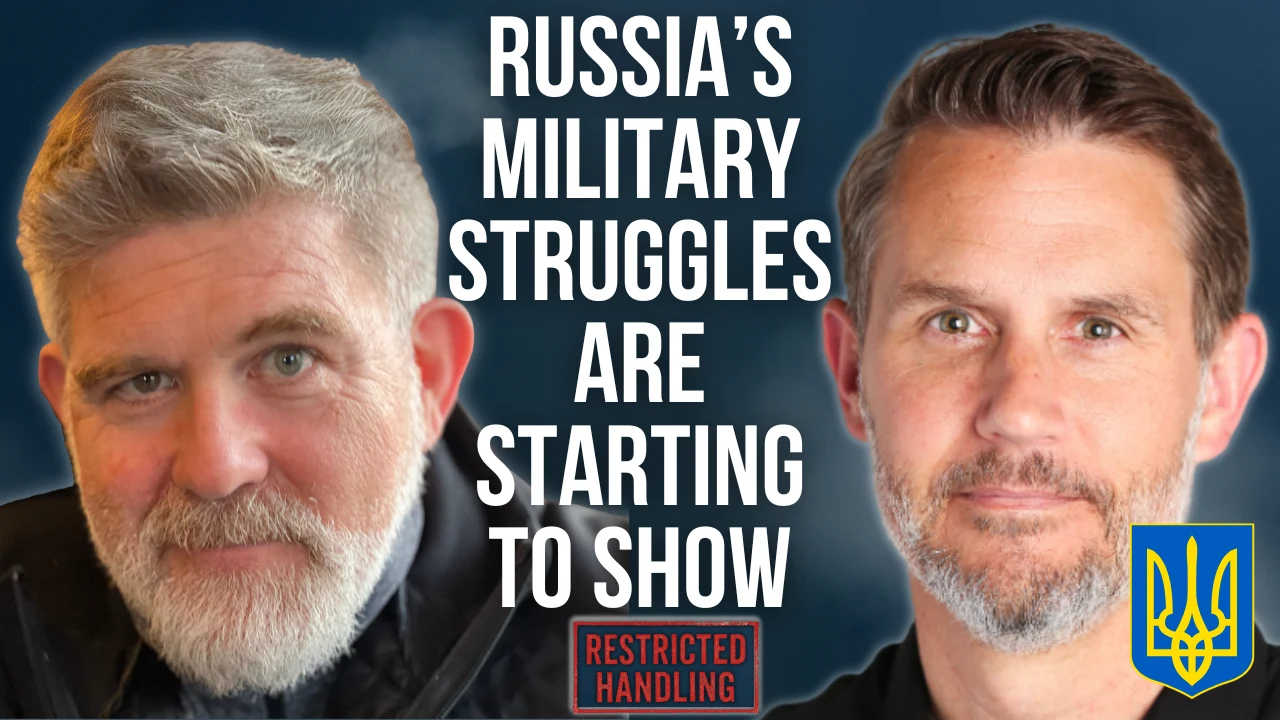
Glenn Corn and Ryan Fugit weigh Ukraine's strikes, Turkey's relationship with Washington, and the risks hiding behind military signals from Russia and China.
Glenn Corn / / 40 minutes
Start here
Three key takeaways
-
Offensive success leaves a defensive problem
Ukraine's strikes are putting Russian logistics under pressure, Glenn says, but that does not solve its shortage of air defense interceptors. The ability to hurt Russia and the ability to protect Ukrainian cities have to be assessed separately.
-
Turkey's relationship with the U.S. has its own logic
Glenn explains why personal diplomacy and respect matter in Ankara. He sees an opening in the relationship, while stressing that the S-400 dispute and the possible return to the F-35 program still involve difficult decisions.
-
A military signal can be misread
The discussion of China turns to the danger of interpreting launches and exercises with too much confidence. Activity meant to send a message can look like preparation for war, particularly when governments are already expecting the worst.
Episode Field Guide
Explore this conversation.
The people, institutions, and equipment connected to this episode. In the conversation marks a direct mention; Related background adds context.
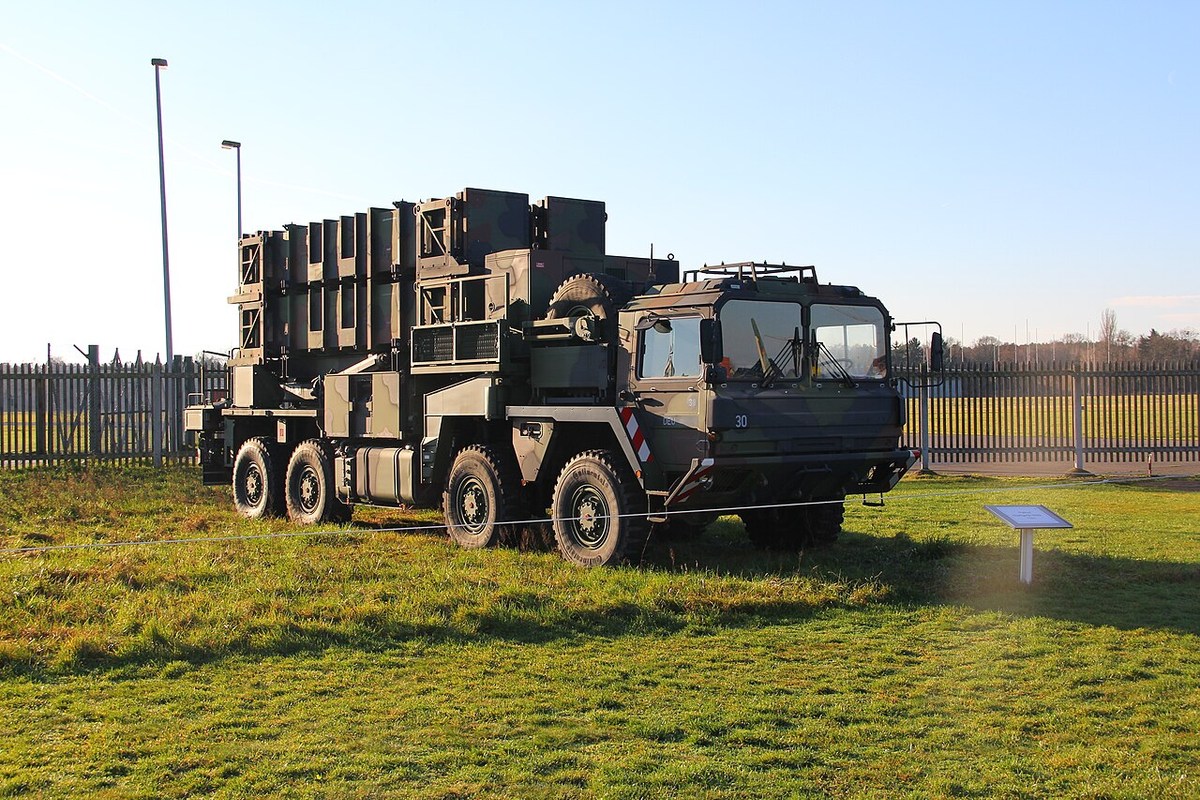
Patriot missile defense
Explore the Patriot-family record alongside the discussion of interceptor production and supply.
Image credit
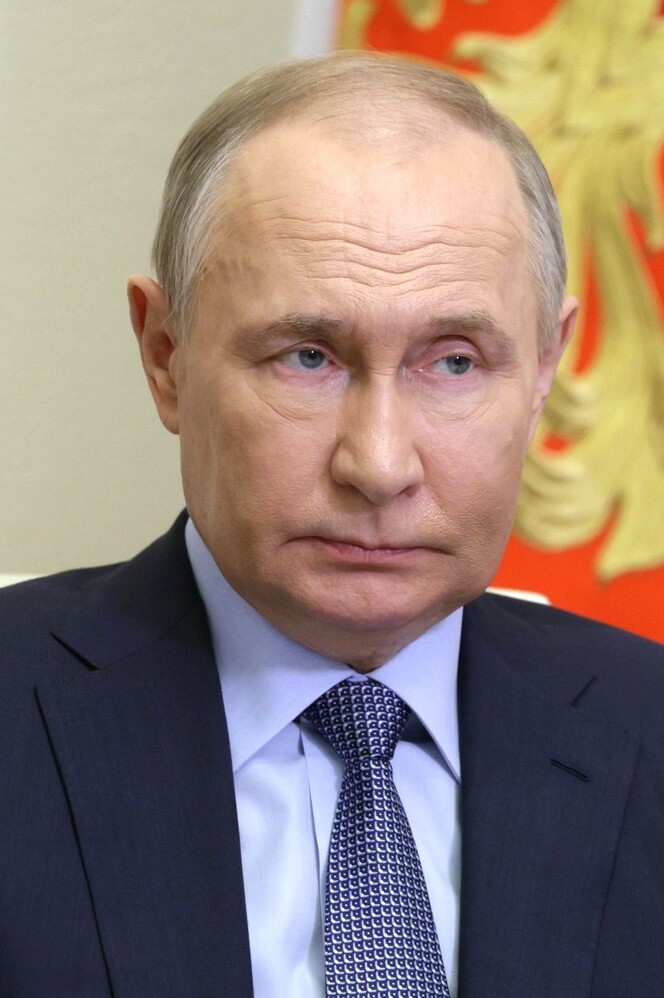
Vladimir Putin
The episode notes that reports about pressure inside the leadership are difficult to verify.
Image credit
These links are an RH reading guide, not guest endorsements or independent confirmation of every statement in the interview. Episode views reflect its publication date; linked records have their own source dates.
The written account
Two things can be true about Ukraine
After comparing notes on their travels and the World Cup, Ryan and Glenn turn to a less cheerful scoreboard. Ukraine is having success against Russian logistics, Glenn says, but he is cautious about claims that those strikes are about to make Russian positions collapse. He wants to distinguish visible damage from a lasting effect on the forces receiving supplies.
At the same time, Russia continues to strike Ukrainian cities, and Ukraine's stock of air defense interceptors is a serious concern. A successful long-range campaign does not make that problem disappear. The episode keeps returning to this uneven picture: Russia can be under pressure while Ukraine still faces dangerous shortages. Neither side's difficulties should be used to wave away the other's capacity to keep fighting.
Why the Ankara reception mattered
Glenn draws on his experience with Turkey to explain the warm reception for President Trump at the NATO summit. He argues that gestures Americans may see as ceremonial can carry considerable weight in Turkish politics. Recognition of the elected president, a White House invitation, and a few words in Turkish all become part of how the relationship is understood.
He also separates Turkey's independent behavior from the assumption that it is leaving the alliance behind. Ankara has its own priorities and a substantial defense industry. The possible route back into the F-35 program is important, but Glenn qualifies his account of plans for the Russian S-400 system. Political warmth creates an opportunity; resolving a defense dispute still requires the details to hold up.
Pressure on Moscow, uncertainty in Kyiv
Ryan and Glenn examine proposed sanctions pressure on buyers of Russian energy, including the difficulty of coordinating policy across partners with different commercial interests. Glenn sees potential leverage. He also cautions that reports about divisions inside Putin's circle and the state of Russia's economy are hard to verify. The existence of problems does not tell an analyst exactly how the Kremlin will respond.
The conversation then moves to Ukraine's political reshuffle and the demands of representing Kyiv in Washington. Ryan asks what an early ambassadorial departure might mean. Glenn explains how relentless the job can be: supporting visiting delegations, managing an embassy, representing a government at war, and navigating American politics. That offers context without requiring every personnel change to be read as proof of a single hidden cause.
The signals beyond the front
The hosts range across Russian recruiting pressures, intelligence activity in Japan, China's submarine-launched missile signaling, and the emerging contest over satellite communications. Glenn's warnings about exercises are especially relevant to a crowded crisis environment. Governments can observe the same deployment and draw very different conclusions about its purpose, increasing the danger of escalation through miscalculation.
The final stretch includes lighter talk about travel, gum, and football. That change of pace is part of the conversation rather than a retreat from the subjects covered. The serious conclusion remains measured: watch logistics, interceptor supplies, alliance decisions, and observable behavior. A dramatic headline or an impressive demonstration may identify an important development, but it rarely supplies the whole assessment on its own.
Based on the Restricted Handling conversation published July 16, 2026. Views and forecasts reflect the discussion at that time. Original episode and show notes ↗
Full episodeRead the transcript
This transcript comes from the published episode captions, with spacing adjusted for reading. Names, punctuation, and terminology may contain transcription errors. Refer to the recording for exact wording.
Hello, freedom loving people, and welcome to another episode of the Restricted Handling Podcast. Today you've got Glenn and myself. For those who haven't been with us before, do our best to break down what's going on in the world of international security geopolitics and inform mainly Americans about ~ some of the things that we think are important, worthy of being on the radar. Glenn, for those ~ who don't know him, spent over 30 years in the US government, most of that in the CIA, working on a host of topics, multi-time chief of station. Won't let me say that he's an expert on Russia, but he knows Russia very well.
I myself spent time in the Army and the CAA not quite as long as Glenn. I worked a lot of counterterrorism, Western Europe, North Africa, with that, Glenn, we both got back from travels. You look like you got some sun. How was it? it was wonderful. Let's start up by saying a big international event going on right now. The World Cup of Snooker. No, okay, the World Cup. ~ just watched the end of the England Argentina match. Mm. Incredible game. Last six minutes. I know everybody, a lot of people out there are following, including Americans who have now become hooked on the World Cup, which is great to see. my wife and I were just down in Florida.
And we were watching the England Norway game match match at a bar and there was an a kid from Argentina Argentina there and we started chatting him up not kid, I mean he's probably in his 30s, but very nice guy, and we started talking to him and I said, Who do you want to win? And he said, ~ we want the Norwegians to win. We don't like the English. Have you he said, Have you ever heard of a place called the Falklands? It's a what's you going on? Yeah. So I was like, okay, I don't want to touch that one. But ~ great game tonight. I mean really and now it's just Spain.
And you, sir, were just in Spain training the Spanish team to to defeat the French. Tell tell me what was what did you tell them when you were with them, Ryan? Will say it was nice to see the French go down in that one. I have a love hate with the with the French. but on Bastille Day, that was tough, I am sure, for much of France to see them lose on that day. I got to see Switzerland play when I was in Switzerland, the English play when I was in London, the Scots play when I was in Edinburgh, and Spain play when we were in ~ Seville. It was awesome to see how these different teams, Wow.
or how they're fans at least. get up for these games. I mean, and they're all late in the night, you know, like ten PM over in Europe. It's a blast. So much fun. Right. I don't have nearly the depth that you have, but I did get to spend in 2018 when the French won the World Cup. I got to celebrate with the French community at the French Embassy in Moscow. It was probably two, I don't know, 3,000 French citizens. It was a huge party. ~ It was a lot of fun. We watched the game on big screen TVs and then they celebrated. I think the I mean, my wife and I probably went home at about two in the morning.
I think the French were still partying the next morning, like at nine o'clock when we were going to work. So I can't say that I wanted either France or Spain to win. We have friends in both countries. but I think Spain was that was a bit of a surprise. Everybody was predicting that France was gonna win the World Cup. So and this has been a strange World Cup, a lot of different surprises. So That was a very diplomatic way of you to say something instead of me saying, Go Spain. Glenn, what what should we start on? I I'm curious, you've got a lot of ~ contacts. You know, you travel back and forth to Ukraine periodically.
it's been two weeks since we really sat down. What are you hearing from your network or folks about what's going on right now? to start? I mean, the the Ukrainians are having success on the battlefield ~ in certain areas. We've talked about that before. Their mid-strike capabilities are causing some problems for the Russian rej logistics. It's hard to say how I mean there's a lot of stuff in the media about how Crimea is gonna collapse. They're cutting off the Crimea from the rest of Russia. The lines and communications are being severed. Some people say that's exaggeration.
I I don't know. ~ I will be returning there in a couple of weeks. For an extended period, it'll be a very interesting visit. ~ the deep strikes continue, but of course, you know, on the other end, the Russians are mercilessly hitting targets with their deep strike capabilities in Ukraine. And we know that the Ukrainians are running out of air defense capabilities to contend with the the cruise missiles. and and so you know, well we we didn't have the opportunity to talk. Big summit in in Ankara. We should probably talk about that. That's right. Yep. You know, ~ President Trump was there, very warm reception with Turkish President Erdogan.
definitely want to talk about this on the show tonight a little bit because it's very interesting to see the reaction of some people who are aghast that the president was so well received by the Turkish president. I can tell you that the Turks are ecstatic. They they loved having President Trump there and they they pretty much big fans of our our president. and of course some big Let's get in let's get into it here, Glenn. Like why is that? F from someone who's worked both sides. Why do they like why do they like President Trump? Yeah. Yeah. Like we Well, because President Trump has has done a very good job of like personalizing the relationship with President Erdogan. He, you know, you saw the like the the kind of interaction between both of them. He he had President Erdogan at the Oval, when President Erdogan was here for the UNGA.
That was big. The previous administration didn't do that. That really insulted not just President Erdogan, I think, but the like the Turkish people. And I I always say this, you know, Turkey's a very polarized country politically. There's a big opposition, and a lot of the opposition have no love for President Erdogan or his party, but they were very insulted when the US president did not invite President Erdogan to the White House for a meeting. If that happened last summer, sorry, summer twenty four during the NATO summit in Washington. So that was kind of a slight.
President Trump invited President Erdogan in the White House, was warm reception, says very nice things about President Erdogan. I thought it was interesting. He, you know, he got in front of the Turkish military honor guard and he said two words in Turkish, and the Turks just went crazy about that. and of course, you know, I I think President Trump's policy towards Turkey is a lot more forward-leaning and realistic than maybe previous administrations. He announced while he was there that he wants to Bring Turkey back into the ~ the F 35 program. Turkey was removed from that over sanctions because they purchased the Russian S 400 ~ missile system.
And my understanding is that the Turks now have agreed to sell that system to one of the Gulf countries. And so that has been a bilateral irritant for several years. That seems it's on the way to being resolved. I don't want to speak too soon because My I if I understand correctly from the Turkish media, the Turkish government has to get approval from Moscow to sell it. So of course the Russians are probably trying to try probably tr throw a monkey wrench into all this. But while we're talking about President Trump, it wasn't just President Trump, it was the NATO summit in Ankara.
So all the NATO leaders were there, everybody was waiting for a disaster, given the Trump administration's Difficult relations with some of our other NATO allies. And I want to stress that because we often hear about how we have a bad relationship with our NATO allies. That's really not true. Some allies right now is very tense. Others are actually pretty better than they were before. Turkey being one of them. And we often forget that Turkey is a major NATO ~ ally with the second largest standing military in NATO, a very robust and growing defense industry. So from my own assessment, I'm sure that President Trump appreciates that.
You know, he's criticized the Europeans for not doing enough. He can't really make that criticism on the part of the Turks. The criticism the Turks get a lot is that they're doing stuff without coordinating it with Washington. The Turkish response is we don't have to coordinate it with Washington. We're not a vassal of the United States. We're not, you know, we're an independent country. but other announcements, President Trump met with President Zelensky, he was in He was at the summit. on that, there's no guarantee that they would meet, right? Like that is good that he took the time to meet with them.
Yeah. Yeah, there's no guarantee that he would meet. And of course, I think he he announced during the meeting that ~ we're gonna give the the ~ the Ukrainians the approval to build the Patriot the actual missiles that you know you the interceptors that are launched from the act from the the launcher. other good meetings, I think generally we there was no disaster, which I think the Russians were hoping for. and of course, jumping ahead, Lindsey Graham passed away over the what was it two days ago, yeah? Right. Days ago. Yep. And he had just been in Ukraine. and my I read today in the paper that President Trump has said he supports Lindsey Graham's sanctions package, which we've spoken about multiple times on the show.
So that's significant because what they're talking about is a hundred percent tariff on countries that buy energy products from Russia. And that would be significant. a lot of pressure on India too, right? I mean there's the calculations on on whether or not to enact that and what that means from a secondary standpoint. I'm sure it's not easy, but it is a movement in the right direction. Right, the India, my understanding is PRC, it's the People's Republic of China, other countries that are still purchasing Russian oil and gas. And I think it's very symbolic too.
It just sends a very strong message to Moscow, which in this period we've seen more talk or rumors about deepening economic problems in Russia, frustrations with the Putin regime, problems Putin's having with some of the people around him, growing dissent within the inner circle. It's hard to vet much of that. Right? And then Jimmy back to Ukraine, Yeah. we have the Ukrainian government being reshuffled. So President Zelensky, the prime minister stepped down. There's rumors that we know that the ambassador here, who's only been here less than a year, she's going back to Ukraine. She announced she for personal reasons she wants to leave.
There's also talk now in the Ukrainian media that she's under investigation on corruption charges. The Prime Minister was offered the ambassadorship. My understanding is she doesn't really want it. So there's a reshuffling and some power struggle going on in Kiev at a very interesting time. any from your from your take, like an ambassador leaving early like that, implications of corruption, somebody not taking the ambassadorship, anything to read into that? I I know it's hard to speculate, but just you've been around it for decades. Anything you would you would pull away from that?
I well, just my sense that this ambassador was nominated and sent here very quickly. ~ the previous ambassador had been here for quite a bit of time. She had very deep connections here. I think she stayed in the US after she left the ambassadorial post because her family, by the way, wonderful lady, very, very bright lady. And I've I've met her and her family. Had the honor to sit with them at a honors dinner. She got an award. Her husband ~ is a US citizen as I recall. Her children are US citizens. So but there was there was a lot of moving and you know, shaking, and next thing you know, we had a new ambassador here. I don't know if she ever got her legs under her.
I also had the opportunity to meet with her a couple of ~ weeks ago at an event. Very nice, but I don't know that she was cut out for the ambassadorial rule. And being an ambassador is a hard job, right? Especially in a key place like Washington, trying to keep up with all the politics and all the demands. You know, the Ukrainians have constant delegations coming here, co I mean f no all the time. So it's a tough job 'cause you to support all those delegations, as you know. Toe the line for your government and then also just take care of the day to day affairs of the embassy.
~ I've always loved the Ukrainian Embassy in DC. It sits right on the edge of Georgetown at the edge of Street, right by Key Bridge. I just remember that from twenty-five years ago, going to school there, seeing it. It's been there since, obviously, taking on more meaning for many Americans in the last 10 years, certainly the last four. My understanding is that building was given to the Ukrainians, it was by the by the Ukrainian diaspora in the States when the Soviet Union collapsed. And it's a great location, Yeah. right? Right on Street at the edge of by near by the bridge.
Beautiful building. yeah, so it's you know, I I'd say it's one of the nicer embassies or locations in Washington. I think the nicest may be the French or the German. Embassies. They're pretty Those are also in Georgetown, right? But they're kind of tucked away. They're a little farther from the action. They're you know quiet. Yes. Yes, for people that don't know, like Massachusetts Avenue is Embassy Row, that's where a lot of the embassies are located. But some are s set off set off in other places. ~ Possible I may have stumbled past the German and French embassies while going to school there late at night, coming home from bars.
~ you know, the one thing I will say is people that don't have an embassy in their city, it's nice to have the diplomatic life, but ~ I it drives me crazy every time I'm looking for a parking spot and I get I see one open, I go to pull and then it says diplomatic parking, like embassy of Ecuador, embassy of ~ Cape Verde, and it's like Yeah, but you got the benefit from that for many years on the other side, right? Like you got to park wherever you wanted, That is true. I always just wonder what it's like to be a diplomat in Washington, right? It must be a a good life to be a because as you know, Yeah.
being a diplomat overseas is a lot of fun. It comes with its challenges, but one of those benefits was yes, Mm-hmm. and many countries I serve you just park where you want to park. so what else is going on in the world? I mean, of course the war in in the Gulf started again. Cease fire is over. It it's back on. Shooting's happening again. Arcade. Blockade is back in effect. They're now talking about the Houthis in Yemen, kind of on the west side in the Gulf, blocking off Bab al Mandib as as another entry point for shipping, which would kind of create a two pronged artery blockage for shipping and logistics in the region. So not just Tormo's.
But some of the proxy forces over there on the western side of the Gulf. Yeah, I think one of the things we're seeing from all this is that people are now very actively looking for alternative routes on a long tur longer term basis because they recognize that this could happen in the future at any time. And it hasn't even been resolved yet. you know And actually I wanted to get your take, Glenn. I'm gonna pivot back to Russia Ukraine just real quick. ~ drones operated by the Ukrainian Special Operations Forces, the Birds unit, targeted a hundred and sixteen vessels in the Sea of Azov over the past nine days.
very much disrupting maritime traffic by the Russians. Could you give people an idea like how important is that that part of geography? And from a resupply, it seems like it's critical, a critical artery, it gets into the Black Sea basically. Yeah, maybe let's look historically the Russians have always been striving for access to warm water ports, right? To for trade and to project power outside, you know, you know, Peter the Great built a navy. Catherine the Great expanded looking for warm water ports. In the beginning okay, the the naval base in the Black Sea at Savastopol was probably one of the main reasons why the there was a huge Dissatisfaction with many Russians after 1991 when Crimea stayed with the Ukrainians and Savastopol naval base was outside of their control.
The Russians had control of the base. So let's say it's like one of our bases in the, you know, the Far East or in Europe. It was under Russian control, but it was on Ukrainian territory. And many Russians started arguing going back to 1991, 92, we need to take Crimea back. So we can control the access to the Black Sea. The Sea of Azov is also a very important like line of access. I will say this is a little petty, but most people don't remember this. But in two thousand eighteen, if I remember correctly, the Russians seized a a Ukrainian vessel in the Sea of Azov. They basically kidnapped the crew.
They claimed that they were in Russian w waters, not international waters, and there was a a standoff for several months. They had these Ukrainians in captivity. And I read today that the Ukrainians blew up the sh the the Russian vessel that actually seized their their their their sailors, Yes. so that's a bit of maybe justice. ~ I love it. Yeah, and and of course. Going back to your main question, Brian, I mean, economically it's very important because the you know, the Russians have still continued to export grain, wheat, oil through the Black Sea. And the and the Ukrainians now are increasing their attacks on Russian vessels to hurt the Russian economy. I you know, I think one of the Ukrainian ministers said they're focused very much on on going after.
Assets that are part of the strategic war effort for Russia, and that's absolutely that's ~ energy resources, oil and gas. And the Ukrainians have been merciless mercilessly going after those targets, including on the water now. Right, yeah. I mean the Ukrainians get credit for using s naval drones, maritime drones so effectively. My understanding is now the US is using them in the Strait of Hormuz. I saw a video of one hitting a a U a Iranian target, like a pier. There was obviously some kind of Iranian weapon system on the pier. which has been very interesting to see.
So the US is quickly adapting. You probably know there's been a lot of resistance in the military and in the defense industry to going to drones. there's always a debate, you know, like un unmanned aircraft. You can't do that. You need to have the pilot. Especially Apaches, you know, without the pilot, the Apache would be effective. You need our smart guy behind the what do you call that? Totally. Sh Studmwall, the ~ what do you call it? A cyclic. Did you just w did you just use a Russian term for it? Yeah, what do you call it in English? Cyclic. A cyclic. Stu the cycling behind the cycling. anyway, so yeah, the Ukrainians are they are definitely doing a lot of damage to the Russian logi the lines of communications, logistics.
How about a couple other stories I wanted to get your take on in Russia? Huge front page spread in the economists of Andrei Melnachenko. I'm sure I got that wrong, but Russian oligarch very much speaking out against not hard against Putin, but just in general, warning the the West not to get too focused on seeing Russia implode, but also not as ~ supportive of Putin as one might think, and I would imagine this is a really fine line to walk even for an oligarch. What what's your take when something like this happens, Glenn? I'm always a little hesitant. ~ this is traditional like disinformation operation, a little bit of information warfare to scare, you know, when you say that, like don't don't r disrupt, don't push too far because everything could collapse and you could have a big problem, or you know a new leader can come along who's worse.
He may you know, he or she may use nuclear weapons. There's there's I think there's some of this going on from the Kremlin. They do it traditionally to try and Influence decisions being made in Brussels or Washington. I'm sure that people are growing frustrated with Putin. There's no doubt about that. Th these oligarchs are losing money. And I've written about this, I've spoken about it publicly. Yeah. the the Russian people should know that their leadership right now is digging a hole deeper and deeper for that country. And for what? Like, what are they gonna get out of it?
The Ukrainians were not denying them access to Sevastopol or the Black Sea. And neither was NATO. There was no plan to occupy Ukraine by NATO or or you know the Sevastopol naval base. So this was a miscalculation. It was driven, in my opinion, the war by Putin's ego and his confused psychology, I think. And the Russian people are paying a price for it. And so you're beginning to see. videos of people complaining. You see the gas lines in Russia, right? I read an article where Russians are now like selling their children, Right. Yeah. not selling, they're renting their children out to stand online for people, these gas lines. Who says Russians can't be entrepreneurial?
But And they're not letting so the Kremlin is not allowing regional governments to direct some of the fuel to address some of the shortages. They're centralizing decisions in Moscow, which is really upsetting ~ folks on the periphery, which feels like we're hearkening back maybe to Soviet times, we probably didn't work so well. And and they're feeling a pinch you got people really frustrated at the gas lines, which we haven't seen quite since ~ twenty twenty two like this. Right. Right. again, I'm always a little careful because you know some of this is probably propaganda.
Some people are pushing a lot of like these stories into the media. also noticed that the Russians are recruiting women now. And I didn't realize that was kind of off limits for so long. So my understanding their recruitment rate has fallen from about 1,200 people a day, which is insane to me. 1200 a day just two years ago to around 900. So they're not able to recruit as many. And they've started getting women into particular billets that they could then use for. deploying potentially. And I was just surprised. Right. I don't know why I just assumed that this was more commonplace in Russia.
But dipping into that seems to be a significant departure now. No, there's there's a there is a a a a good high level of chauvinist feelings among the Russians. you know if you see the Ukrainians, many, many women are fighting, they're on the front lines, they're doing all kinds of stuff. Logically, if you're smart, then you say, okay, a lot of the jobs that can be done, you just need smart people to do them. And there are a lot of smart Russian women, right? lot of educated, they can do a lot of these jobs. by the way, I have to say, like my experience in Russia, the the women actually like they carry a lot of the weight in society there.
You know, you you used to That's why I I was wondering if this might spark not spark, but like create a little ~ undertone of frustration, even more so than normal. possible, why not? I mean, somebody said this to me recently that women are the ones that tend to also take to the streets first. They get they get frustrated first. They don't buy so the argument was that the male population buys the propaganda a lot quicker and easier than the female population in Russia. I you know, I don't know if that's true or not, but I will say that my experience was you'd see a car like on the side of the road with a flat tire, the the woman was out changing the tire.
Yeah, I and maybe that's cultural, but w women carry and by the way, I mean, I think part of this is after this Second World War, what the Russians call the Great Patriotic War, so many men were killed. There was a there were a higher ratio of women. They had to and they had to work at the factories, they had to take a lot of the jobs that the men had, work in the fields. and so it it it does not strike me as odd that they would do this. What's odd is that they didn't do it sooner. But that just that's the Russian mentality. Having served in combat with women, I'm also more concerned now that they're gonna have women on the front potentially I don't know if they'd get to the front lines, but they are effective and I'd rather just have some some idiots out there handling things still, but ~ we'll see.
Yeah, yeah. ~ I don't know that I mean it's gonna take the Russians a lot to reorganize to like accommodate, right? But but I always tet t say to people like in my career in my gosh, could you imagine? the agency that probably the best officers I had were females. Incredibly talented. So I mean a lot of good male officers, Yeah. but o overall When I close my eyes and think back, like the you know, who were the most effective, often they were female officers who were just very, very competent. And ~ you know, w we have figured out that that's part of the equation. The Russians still have not figured it out.
Maybe they're just figuring it out now out of desperation. But if I were a Russian woman, Yeah. I'd also understand that now they're in a crisis, now they they call you up. Right? Where were Yeah. No no one was giving you like ~ uniforms to parade in and medals before that. And and this reminds me of a conversation I had with the Russian once where we were talking about he how could you make the director of the CIA a woman? And I said, Well, why? She's like incredible. Like to know her. I work for her. She's like super smart, like great. He said, no, no, we would never do that.
And I said, You know, in your history of your intelligence services, you had some. Officers that did incr they died, they gave their lives during the Second World War doing incredibly dangerous work. He yeah, that's in wartime, like in a crisis, but I I said, Whoa. Yeah, So now it's okay. Yeah. now it's okay. Anyway. Separate very interesting story that came up. New York Times reported ~ Japan as a den of spies. I don't know if you saw this one, Glenn, but after so just for listeners who haven't, I saw that. basically reporting that after 2022, with the special military operation from Russia into Ukraine, many Western governments removed their Russian intel.
Folks who are in their capitals or in their countries. Those folks, some of them, have been relocated to Japan, where, according to the article, Japan's ~ kind of World War II history has led it to have pretty lax espionage laws. So these Russians are able to operate a little more freely, they're closer to technology that they can export out more readily for their war effort. But they describe it as this den of spies. Glenn, any any take on that from your end? I mean I if I remember correctly from the article, the main guy was a Aeroflot employee. If you're dumb enough not to think that the Aeroflot staff is working for the Intel service, then I don't know what to tell ya.
I mean, so I I I honestly I think the story's a little exaggerated. Everyone gets like super exagger like excited about this stuff nowadays, and I guess it's espionage. But I would think that I would be paying attention to that a long time ago. And you know, the Japanese Experience are they pretty good. the Russians are definitely all over the world look using different mechanisms to try and because my understanding, this unit was look going after tech like technology, dual-use technology or or sanctioned technology, and that's what they did in the Cold War. They stole what they couldn't get.
~ Yeah, they called it the twentieth directorate, Glenn. That's what they I think that was the the unit that they were describing. The twenty twentieth directory. Yeah, twentieth. Yeah. They've been doing this for years. I mean, they that's one of their missions to go out and steal technology or buy find goods that are sanctioned to defeat sanctions. So by the way, I just read a very interesting book. I didn't realize that you know, we talk about like sex sex spies, like ~ honey traps. The Japanese were were some of the original. the I've heard about the Germans were actually the first to create like a a brothel where they used it the intelligence service used it to lure in targets and then get information from them, blackmail them. And then the Japanese learned from the Germans and actually had the German guy that did it come to to Tokyo and teach the Japanese.
So very interesting story. Is this kind of World War Two timeframe? No no no, it goes back to like I don't know, the Miji Empire, like many, many Yeah. I was gonna say this has to be as old as time, right? Yes, we we could have a whole podcast on that topic. I have some s very funny stories. Yeah, who do you bring on for that? Who's the expert? Yeah, probably you gotta be careful there. Okay, and then one of the things that came out of ~ China in the past week was nuclear submarine conducting a ~ missile launch. Very little warning to neighbors, including the US. ~ but analysts suggesting potentially a show of force, deterrence, you know, like this is what they could do to have a second-strike nuclear capability if required.
Also part of their gray zone tactics, but probably. I don't know if I would say something to watch, but something interesting that came up that we haven't seen from them before in this in this area. Yeah. I mean, I'm I'm not a Chinese military expert, naval expert, but I'm sure that people were watching it. I don't know whether the jap ~ the Beijing was messaging by doing this, or maybe there's just a lack of like sometimes we do things like I don't know, you know the story of our ~ Abel Archer exercise in in ni in Europe in the eighties when you know, the Reagan administration, we were doing a we did periodically large scale military exercises in Europe.
like for coordination between NATO forces and the US would deploy troops from the from the US to augment the troops so that we were you know with the height the height of our presence in Europe, I think we had three hundred thousand US troops serving all across Europe. But we would send units, they would deploy, they'd mobilize and deploy to augment that and we'd have large scale exercises. Well, there was a period where the KGB decided they saw some of this activity. They thought the US was getting ready to go to war. And you know, w the the British found out through one of their sources that the KGB was like telling the Politburo the Americans are getting ready to go to war.
And then the Politburo gave the order okay, we need to like strike first. So this is like this escalation started by mistake. The British, Oleg Gordievsky, who was a British source, told the British the the MI6, MI6 told. I my understanding is Margaret Thatcher then sent a message, gave the the order to send the message to Ronald Reagan through the agency. and when Ronald Reagan found out that like steps were taken to de-escalate, because there was almost a mistake that like this training exercise was misinterpreted. So could that happen? Sure. Sometimes we, you know, we give our enemies like it's that we assume it like ill intent.
Maybe it's just stupidity or a mistake. Ru. Could be. I don't think you know, people people all the Chinese are so wise and they think hundreds of years in advance. And humans are humans and they do things, they make mistakes. So but to this topic, there was also a lot like an article about about 10 days ago about how the Russians and the Chinese are coordinating, how they were trying to crack Starlink. They were talking about how to destroy Starlink in the time of war. And that was definitely something we should pay attention to as well. Yeah. The Chinese also were able to recover a rocket that they they fired into the atmosphere, I think for the first time, like safely recover it, which is a big deal. Obviously, we hear a lot about SpaceX being able to do that, cuts your cost down dramatically, allows you to move much faster.
So when it comes to kind of like the satellite battle that could ensue, their ability to do that independently is a big deal. The other thing I just noticed, and and this is why I'll never go to China. I'm curious if you would go there ever, Glenn, but Yulin Chen, who had been detained since 2024, ~ American citizen was traveling to China, visiting family, works in the scientific space on seismic data used to analyze underground explosions that could be nuclear as opposed to regular seismic activity. ~ associated with earthquakes, has been detained there for two years.
President Trump has made comments to she when they've talked in the past about this, but the family has come out more publicly in the past two weeks about this person's detention, feeling diplomacy hasn't worked. But it's just a reminder, this doesn't this isn't the first case of somebody being detained and not allowed to leave China. Would you ever go back there? Or not I don't know, go back there, but would you ever go there today, Glenn, with your background? No. I mean, for one thing, I don't like flying that far, No, me neither. so that's a long trip. Second thing, I yeah, I don't wanna be a permanent guest.
And you know, I'm sure there's a lot of interesting things to see in the People's Republic of China, but I have other places I prefer to go. So by the way, while I'm well I have you, I saw ~ Ahmad Shargi, he spoke at the Institute of World Politics last week. So and I got to meet his sister, who was instrumental in lobbying the US government to get her brother out of ~ Iranian custody. So he asked me to pass on his regards to you and all of our our Listeners, viewers. I don't know. They listeners, viewers, maybe both. Viewers. Viewers. Yeah, Viewers. Yeah, mainly viewers.
They want to see your beautiful face, Glenn. I've never had that said before. But I think one thing we don't do is we have to do is say click like if you like. And there's some click like. Subscribe. That's right. Subscribe, like, turn on your notifications. It'll help the show for sure. Right. you an important question. Lorine gum that you have tried that has sponsored us. Have you chewed it overseas yet? Uh-huh. Did it work as advertised? Okay, I'm gonna say something which is probably not appropriate, but I smoke shisha, hookah. And I was smoking hookah with some guy, and he said, You I love hookah, but I hate like my mouth gets dry the next day.
I said, Yeah, it's like that's one of the downsides. And he's like, I smoke cigars a lot, this guy that I know, and he's like, and you know. So literally the day that he said that to me, the package arrived at my house. And that is really good gum. The tooth the toothpaste is good. And the gup. So yes, I have chewed it overseas. Yes, I would recommend it. It tastes good. it helps with the dry mouth. My understanding is it's good, like healthy. so highly recommend it. Mm-hmm. And folks, this was not a setup. Glenn literally got this, tried it, Yeah, I think it won't.
and I was just gonna ask him about it right now. ~ so it's legit. Wait, let me read my script. No, seriously. And it and it showed up at my house. Matter of fact, I I that person that I went to see I they were in Dubai when I went and I brought a a box of the gum. I said, This is for you, since you have the dry mouth from smoking cigars. So now you can enjoy your cigar at night and not worry about the next day. where'd you pick up hookah? many years ago in Pakistan. Interesting. Okay. Long story. Late, late at night when I one of my very good dear friends, who is now a dear friend, I just met him at about two in the morning.
We were still working, and he Hey, you want to go smoke shisha? So we were working like a lot, and I said, Yeah, let's go. So we sat under the stars and we smoked shisha. And that that's when I got hooked. Yeah. That's cool. Very cool. My friend keeps saying we need to do it and I have never ~ taken the plunge. So maybe I need to. Maybe I need to. Someday. Yes. All right. What did we miss, Glenn? Anything else on your radar that you ~ you're watching? No, I mean you were in ~ Spain, right? You s what you said Spain and Italy? Yeah, and like you were saying it's extremely hot, That's right. Yeah.
a hundred and eight in the south of Spain. Hundred and eight in southern Spain. We went to the coast to get away from the heat. It worked. We got to see Gibraltar. I feel like it's worth going there, seeing the monkeys and then checking out an English pub and then getting Yeah. out of there. W when when you were there, is it when President Trump made his comments about you know he's very frustrated with the Spanish Prime Minister, a lot of back and forth, and then he said, No more trade, I'm gonna order the we like was there any response from the Spanish? Were they upset or?
There was none, but that's because I think the world literally cause the World Cup is going on and they are you know, they're playing every three days and that cut and they're electric. They've only been scored on like once. So I think that's what everybody cares about. Yeah. And I it was good. So this I I will say for folks, like having my kids overseas, you know, they they've spent time overseas before living there, but they're a little bit older now. And it's been good moving like just traveling around. 'Cause I think from the US, we believe everybody thinks about what's going on in the US all the time around the world.
Honestly, I think they could care less most of the time. You know, like they're happy you got an American tourist, they want to tell you about what's going on, but you know, they're not living and breathing necessarily all these, ~ all the stuff we might read. I think it's good for the kids to catch that. That's a good That's a good point. Yes, I think sometimes we probably exaggerate our importance. Nobody held it against you, good. No. Listen, I don't I couldn't imagine the Spanish doing that. Whether we were we're in a diplomatic row with them about something.
Yeah. I always had very good experience with the Spanish. So I will say, if there are listeners in Spain who know a company that makes Tinto de Verano, which is now my favorite alcoholic beverage, half red wine, half sprite, and ice, I am totally up for Glenn and I, you know, marketing that for you to an American audience. We will sponsor. Yes, we will. Bring it on over. Yes. I like it. Teamto, what do you call Teamto the? Tinto de Verano. So it's like Verano is summer. So it's like ~ tinto I think is like a tint of something. It's like the wine of summer though. It's good amazing. Amazing.
I like it. Tinto de Verano. Tinto de Verano. See. So we're ready. For all you listeners in Spain, there gotta be a couple of you. prediction for the World Cup. Ooh. I'm really hoping it's Argentina. I just like Messi a lot. How about you? Okay. I like both teams, but well we want that Tinto'd Verano sponsor. All right, that's true. So I gotta s no. I don't really know. Yeah. I I I like both teams. I you know, it'll be just fun to watch. I think they're both very, very good teams. But yes, Messi is kind of amazing. He's he's just a killer, you know, like the instinct in him he just comes back and yeah.
But he doesn't have that face. No. No. He's an assassin. He doesn't look like a killer. He's seems like a nice guy. I was watching that. I was like, this is the kind of guy you want to like live next to. right, sir. You have a great evening. That's right. Awesome. Thanks, Talk to you. You two.
Back to the Episode Field Guide ↑Keep listening.
All episodes →
John Herbst / Ukraine and U.S. strategy
John Herbst on Arming Ukraine and Raising the Cost of Russia’s War
Steve Wills / The Arctic and maritime security
Steve Wills on Russia’s Arctic Submarines and the Cables Beneath the Sea
Between episodes
The daily brief is free.
Russia, China, Iran, and North Korea. Straight to your inbox.