Ukraine's Momentum Has a Political Weak Spot
Back from Kyiv, Glenn Corn separates battlefield progress from political turmoil, then follows the connections to Russia's negotiating tactics and Iran's regional pressure.
Glenn Corn / / 51 minutes
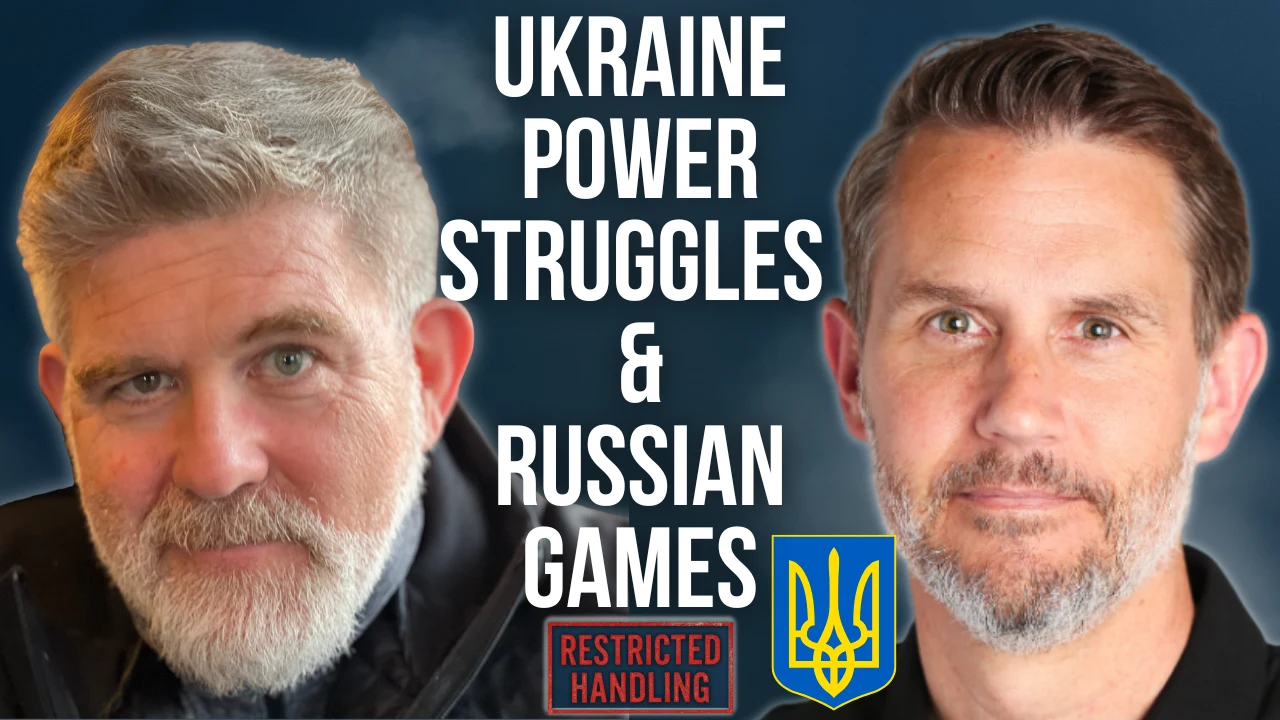
Start here
Three key takeaways
-
Battlefield gains need political backing
Glenn describes a Ukraine making progress against Russian logistics while facing a disruptive leadership dispute at home. His concern is that political turmoil could weaken morale and outside support just as the military is building momentum.
-
Technology and manpower belong in the same argument
The discussion pushes beyond a simple contest between old generals and young innovators. Drones matter enormously, but so do trained people, ammunition, command relationships, and the confidence that troops will have support when they reach the front.
-
Russia benefits when attention moves elsewhere
Ryan and Glenn connect Ukraine's war to shipping threats, Iran, and the Gulf. Higher energy prices, competing demands on Western governments, and Russian information campaigns can all work against Kyiv even when Ukraine is performing well militarily.
Episode Field Guide
Explore this conversation.
The people, institutions, and equipment connected to this episode. In the conversation marks a direct mention; Related background adds context.
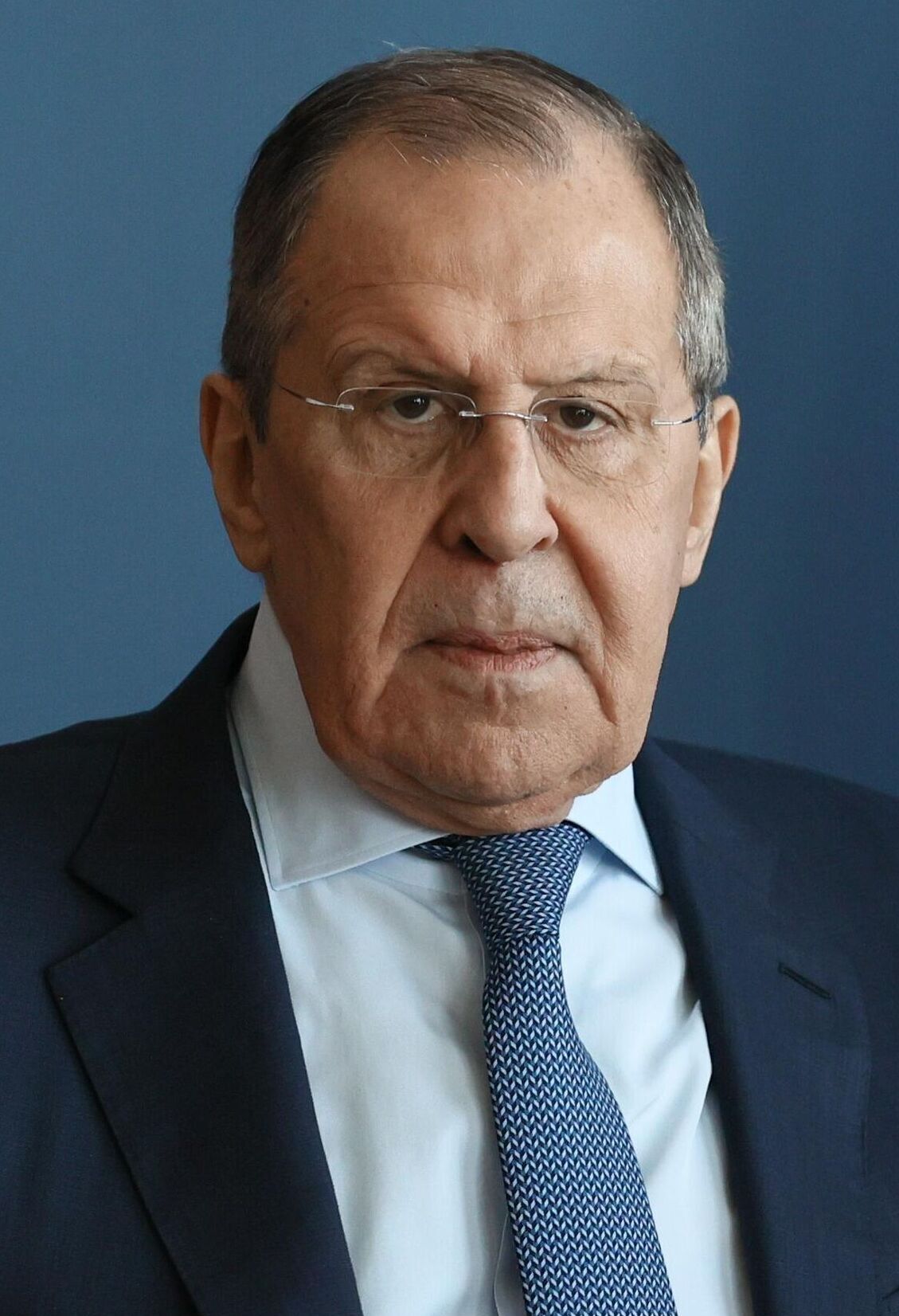
Sergei Lavrov
The conversation discusses diplomatic messaging and disputed accounts of agreements.
Image credit
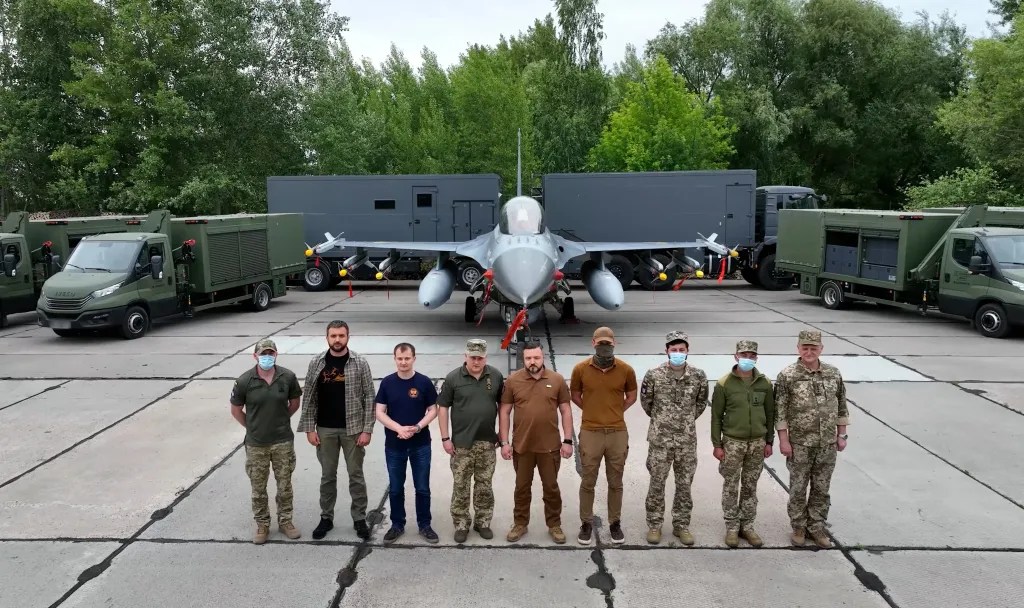
Ukraine Arsenal
Background for the discussion of Ukraine’s technology choices and military resources.
Image credit
These links are an RH reading guide, not guest endorsements or independent confirmation of every statement in the interview. Episode views reflect its publication date; linked records have their own source dates.
The written account
A difficult homecoming report
Glenn returns from a short visit to Ukraine with a mixed picture. Ukrainian forces are finding ways to put pressure on Russia, but the conversation opens with reports of a deadly strike in Bucha. He is careful about the early casualty figures and the unanswered questions surrounding the event. Before discussing strategy, he and Ryan pause over the people who have been killed and the families left behind.
That contrast carries through the episode. Progress on a battlefield map can coexist with exhaustion, anger, and political uncertainty. Glenn describes conversations with Ukrainian contacts worried that a dispute among senior leaders could interrupt recent gains and hand Moscow a new story to exploit. His account is a snapshot of what he was hearing during that visit, with some personnel decisions and reports still developing.
The argument over how Ukraine fights
Ryan asks whether the leadership dispute reflects a deeper split over technology and traditional military thinking. Glenn has seen that tension in person. Some officers emphasize drones, automation, and faster innovation. Others insist that territory still has to be held, troops still need care, and a military cannot solve every shortage with a new system.
He also resists turning individual commanders into caricatures. An officer portrayed as resistant to change may have been the person asking manufacturers for new equipment in the first place. The practical questions are about procurement, recruiting, authority, and getting useful tools into units. Glenn's example of the morale lift provided by early American weapons deliveries brings the argument back to the soldier: knowing help is arriving changes how people feel about the fight.
Changing minds and negotiating with Moscow
Laura Loomer's visit to Ukraine becomes a discussion about what happens when a public figure changes their mind. Glenn welcomes her willingness to acknowledge having accepted Russian narratives. Ryan agrees, while asking what damage those earlier views may have done. Both see value in Ukrainians engaging a visitor who has an audience they might otherwise struggle to reach.
The same concern about narratives runs through Glenn's account of Russian diplomacy. He describes negotiators invoking disputed understandings, repeating their version of history, and trying to make the other side accept Moscow's starting point. Familiarity with that behavior matters because a meeting can produce reassuring language without resolving the underlying disagreement. Glenn wants pressure and a clear record of what was actually agreed to accompany the conversation.
The war extends beyond Ukraine's borders
The second half broadens to Lebanon, Hezbollah, the Houthis, Saudi Arabia, and Iran. Glenn sees opportunities for stronger state institutions and regional cooperation, but he is skeptical that armed groups will simply surrender the power they have accumulated. Maritime threats and uncertainty around Hormuz connect those political problems to energy markets and the wider economy.
Back in the Russia discussion, the hosts examine Ukraine's interest in logistics networks, including commercial infrastructure that may also support the war. They close by weighing ceasefire prospects and the risk of a Taiwan conflict. These are assessments, not promises. The recurring point is that Ukraine needs sustained attention through political setbacks, and that neither Russian weakness nor Ukrainian innovation should be treated as a guarantee of what comes next.
Based on the Restricted Handling conversation published July 25, 2026. Views and forecasts reflect the discussion at that time. Original episode and show notes ↗
Full episodeRead the transcript
This transcript comes from the published episode captions, with spacing adjusted for reading. Names, punctuation, and terminology may contain transcription errors. Refer to the recording for exact wording.
Hello, freedom loving people, and welcome to another episode of the Restricted Handling Podcast with Glenn and myself. Glenn is fresh off a trip from Ukraine. So much has been happening. Cannot wait to get into it. We've got to talk leadership reshuffles with Fedorov out, maybe coming back in, protests in the street, some long range logistical strikes by the Ukrainians, hitting land and sea targets. There's obviously Saudi Arabia if we leave the Russia Ukraine piece. Laura Loomer was in Ukraine. Don't know if you were there with her, Glenn. Can't wait to get started.
But ~ just before we hit record, you mentioned that there was some bad news today as well. So why don't we start there and then let's hear about your trip. Yeah, hi everybody, and hi Ryan. It's great to see you. ~ let's just start by expressing our condolences ~ and the sorrow for the families of the lost. So there was a strike today in Bucha. ~ my understanding is there was a a UAV exhibition that was being conducted by the Ukrainians, and there were at least 60 casualties. According to the information I saw. Now this is going back a couple of hours, so unfortunately it's probably a higher count.
at least six dead and sixty wounded. So those numbers, don't don't quote me, but you know, any one dead or one casualty is ~ tragedy, and of course, this is multiplied. my understanding is the Ukrainian government's opening an investigation into how this happened because it's I'm sure that there'll be a lot of turmoil in the Ukrainian government over this and society. ~ there was an incident about a year ago where the there were one of the military units was doing a a award ceremony. Kinda in the open and the Russians hit and killed a number of ~ Ukrainian troops.
I think they were cadets, if I remember correctly. And so some of my Ukrainian contacts are already referring to that tragedy and saying, like, you know, that was ~ I think the commander of that unit was relieved and maybe put under investigation for negligence. And unfortunately, I think there'll probably be an investigation into negligence to the organizers of this event. But we don't have all the facts. What we do know is the loss of any life is a tragedy. So unfortunately, ~ we'll be praying for some Ukrainian families tonight. So Absolutely. And in the last week there were some American casualties in Iran.
Obviously, we're always thinking about them. ~ several army soldiers and officer, some of them stationed in Germany where you and I were once upon a time, Glenn. So they're also in harm's way and we're thinking about them. Yeah, well said and ~ yes, God bless them. And for again the viewers, I mean, we have US troops around the world on duty tonight, whatever time it is, wherever they are, they're standing watch, ~ keeping us safer. And our former colleagues in the intelligence community, That's right. law enforcement. standing the line. And you were just on the front line, Glenn. What what was it like? ~ so much going on in Ukraine in the past week?
well, I mean, right the big news is politically ~ President Zelensky fired the Minister of Defense, Fyodorov, who was young. he was considered, you know, an innovator technology-wise. He had a strategy, if you remember, he was talking about inflicting up to fifty thousand Russian casualties a month using the drone technology and ~ AI, you know, ~ integrated systems, automated systems. He was removed by President Zelensky the in response. My understanding is there was a conflict between him and ~ General Sirski, the commander of the general staff. They had a disagreement on how to wage the war.
the Minister of Defense was removed, Fyodorov, and then there was ~ protests going back to if you remember when they tried to shut down Nabu, the anti-corruption agency last summer, and then there were Public protests, and then the president kind of had to backtrack. And Sirsky became a victim of all this. Then General Sirsky was removed from his position. he was replaced by a guy by the name of General Drapatyi who has got a very good reputation. and the President Zelensky has offered Fyodorov, kind of as a consolation, a a new position, I think a deputy prime minister position for innovation.
The last I heard is that ~ Fyodorov has said he's not going to take that position. He only will take the Ministry of Defense job. So there's a lot of churn. The individual who was put in charge of ~ the Ministry of Defense is a SBU officer, so that's the internal service. ~ great guy. I've had the fortune to meet him, but there's some Angst, because he's not from the military. Of course, Fyodorov wasn't from the military either. He was kind of a like a tech innovator. ~ and then my understanding is Rustam Omarov, who was the head of the National Security Council and who was leading all the negotiations with the US and Russia.
My understanding, he was removed. He's being replaced by the former chief of the national police. And ~ As all this is going on, the Ukrainian ambassador to the US, who's been here probably less than a year, announced she's leaving for personal reasons. There's some media reporting that she's under investigation by Nabu. And ~ I heard one claim that Umarov is being offered the ambassadorship here in Washington. So there's a lot of churn going on. And I will say that a lot of the Ukrainians I know are a little bit upset, frustrated by this because. Going into this, there they were making some progress on the battlefield.
And Very much so. yeah, and so people feel they're worried that this is shifting the narrative. It's giving the Russians something to kind of hook put their hooks into. Now, as all this is happening, going back to the ~ unfortunate passage of Lindsey Graham, the Republican senator who had was push or promoting the sanctions package. That package now, my understanding, I met with someone today in Washington who said that the they have enough votes now to pass that package, even if the president doesn't support it. Although the president came out and said he does support it.
He wants to add Iran sanctions to that package. given what's happening in the Gulf and the fact that the the MOU that we had with the Iranians turned out to be, you know, as valuable as the Iranian currency. Yeah. So there's a lot going on. ~ the sanctions package is probably gonna this is my assessment and it's gonna be passed in probably the next couple of weeks. And I'm sure the Russians are very concerned about that. Marco Rubio met on the sidelines with ~ Lavrov, who like usual, re tried to read a lecture to ~ his American colleague and talked about this anchorage agreement, which even Putin himself agre said was there was no agreement.
But Lavrov is still harping on that ~ propaganda point. And ~ you know, they also warned that it's unacceptable for the US to be supplying the Ukrainians with certain types of weapon weapons. Now a highlight of the past week was that ~ F-16 flown by Ukrainian pilots shot down was the first air-to-air kill in the war. Shot down. I'm not sure what the nomenclature was of the U the Russian aircraft, but there was an air-to-air com combat and the Ukrainians came out on top. ~ one of my Ukrainian contacts told me that the Russians are f avoiding getting anywhere near to close to the front because they are afraid of the F-16s. And ~ I think that's probably a good sign.
yeah. So what else is going on? all the political turmoil, I think this horrible event in Bucha will just add to that. ~ I'm sure there'll be a lot of calls for resignations, you know, accountability. and the the mood among many Ukrainians is not great. when you're over there, are you meeting with military Glenn? Is it politicians, local? Like what what is that discussion like when all of this is happening? You got protests in the streets? well this trip it was a very short trip. Honestly, we just had meetings with some ~ Ukrainian business people. but some some Ukrainians I know, and then many conversations with a lot of the people that I know as all these things are going on.
Because at the same time that this was happening, Laura Loomer, as you mentioned, ~ is in Ukraine still, I think. She made a trip, Mm-hmm. interviewed President Zelensky, she's had meetings with a number of Ukrainians, she met with the chief rabbi. in Kiev. ~ I think she visited ~ the Lavra, the the ~ probably the oldest Orthodox monastery in Ukraine and and by the way, older than anything in Russia since ~ Eastern Orthodoxy got its start. The the Russian Orthodox Church or the Eastern Orthodox Church got its start in Kiev, in Kievan Rus. and that that trip is getting a lot of attention and a lot there's a lot of, you know Some people criticizing Laura Loomer.
One of the things I I said, I posted this and some people attack me for it, but I said, listen, like it's very refreshing to hear someone admit that they were wrong. Because she's openly saying she was wrong, and she's apologizing to the Ukrainians for misrepresenting or misunderstanding and misrepresenting publicly who was responsible for this conflict, who the aggressor is, and it's Russia. ~ and she's admitted that she bought into the Russian propaganda. So ~ for all the viewers out there, ~ I would just say that, you know, I think it's this is my own assessment, my own opinion, but it's very good that someone with a public profile like that is admitting that they were wrong about something.
Because you don't hear a lot of that these days from people. And people in, you know, p politicians, leaders. And whether you like it or not, Laura Loomer is a leader in in for some people. People listen to what she says, and she posted something about her meeting with Zelensky. And President Trump immediately responded. So the President of the United States, you know, pays attention to what she says. ~ she's an influencer and she's got influence. So it's I think great to see ~ for the Ukrainians, ~ and for those of us that have under argued all along that the Russians are the aggressors here, that she's admitting that she was wrong and she's telling people to be very, very aware of the fact that there there are a lot of Americans and people in the West who have ~ bought into the Russian propaganda.
I I would agree that it's good that she shared that this has had happened. I mean the concern is for the year or two where she was on the other side believing the propaganda, she does have a lot of influence within the MAGA movement. President Trump does respond to some of her her posts. You just hope that didn't unduly influence decisions that put the Ukrainians at a disadvantage over time, but it to own up to it, I have a ton of respect for that. And I love that the Ukrainians jumped on this opportunity. You know, they could have very easily turned their back.
They've leveraged it to their advantage, which they've absolutely should. And that is a good news story, I think, in the end. Yeah, the other thing I would say, Ryan, I mean you you bring up a good point. And I'm sure decisions were made that were based on some things that, you know, she had influence. ~ but I as I tried to explain to people, like we shouldn't assume that everybody has the background that you and I had. We had a big advantage, you know. ~ we we both kind of grew up in the foreign policy world, thanks to our It's true. parents. We both worked overseas, we were able to study foreign languages, we were able to, you know, interact with foreigners, you know, in in ~ different countries. And our job was to follow all these issues.
And there are a lot of people now that are super critical of people like Laura Loomer, who I think forget the fact that they were very privileged to have that opportunity. Now they earned it. In many cases you were I know I know you earned it, you know, in the military and in the agency. ~ but still we need to be a little bit forgiving in my opinion and remember that people are learning all the time. I mean and she's admitting I'm learning. And One of the things I'm seeing, which is a little bit disgusting in the dialogue in the, you know, in the media now is some people accusing her of being an Israeli spy.
She's being funded by Mossad. This is all, you know, yeah, people are making this, you know, sh ~ she's an agent who she was being paid to go to Ukraine by the Ukrainians. to my knowledge, no, that's not the case. I think she funded her own trip and she went there because she wanted to see firsthand, which I also applaud. There are a lot of people that are like what not Monday morning quarterback, but sitting back in ver, you know, studios podcasting ~ very comfortably that have, you know, have not been there. And they're commenting in whether it's LinkedIn or whatever the social media outlets are, who've never got then made the effort.
So she made the effort and good for her, and and good for the people that organized it. And yes, I agree with you, the Ukrainians, they could have easily said no. You know, she criticized President Zelensky and he met with her. And that's good. So ~ excellent. You mentioned anyway. the Anchorage Agreement. That's not actually an agreement. And now I think that Peskov said that they, Russia, will be waiting on the US proposal instead. this just having read Midnight in Moscow by Ambassador Sullivan, it just seems so common, Glenn. I'd love to get your take on this.
The way that the Russians will harp on On small pieces of diplomatic language and use that to their advantage. Ambassador Sullivan brings it up, not just Soviet times, but the Minsk Minsk II Accords that kind of preceded the run-up to this ~ invasion, the special military operation twenty two, and how Russia and Ukraine came to this agreement with the Minsk II dialogue. And eventually Ukraine didn't sequence the events in the way that Russia suggested that they should and therefore Russia didn't feel the need to abide by their part of the agreement and could then say that Ukraine had violated the agreement.
It seems like they're harping on the Anchorage Accord or not accord, the Anchorage discussion that they had in August of last year and using it when when it suits them. It seems to be so frustrating. I can only imagine you've seen this many times from your career. When I we've talked about this on one of the earlier programs. What's frustrating for me is that I think some of the people that are negotiating with the Russians now don't have that background. They don't know the Russians repeat the same things over and over again. ~ they will they have a style of negotiation which, you know, they'll go on the offensive right away, they get aggressive, they attack.
I've been in negotiations with, you know, Ambassador Sullivan at one point in my career. And he he saw it firsthand how they do things. They get aggressive and then they try and be friendly. They, you know, they play kind of good cop, bad cop. They yes, they they go into like such minute detail to try and derail like the the overall discussion to get what they want or to manipulate. ~ and they go back, they harp on history. I tell people this all the time. Like they would argue about things that go back to the 1800s, Yes, yes. right? And if you don't know that history.
I've seen this over and over again with American interlocutors on you know negotiations. They just get lost and they just kind of they give up. It's kind of the way I argue with my wife. I just throw stuff in there and I try and wear her down. Right? So no, I don't do that. ~ no. Okay, maybe. But but you know, they make accusations, they make all kinds of crazy claims. And again, like look at Lavrov. He's, you know, hit his own president said there was no agreement in in Anchorage, Yeah. and yet he's repeating it again. ~ probably what Peskov is referring to is Rubio said, Look, we're ready to try and re-engage to to get the negotiations going again because we want this war to end and we're looking for new solutions.
Gonna have to be a new pro new approach here. Right. And of course the Russians sit back and say, Okay, what's your new approach? And then we're gonna pick it apart. And by the way, we had an agreement in Anchorage, you're not abiding by that agreement. Yeah. Even though a couple weeks ago our president admitted there was no, by the way, we didn't like. Wagner were our guys, it was a private military company, although yes, our president admitted we were funding them and recruiting them. Right? I mean, you can go through example after example, ~ where the Russians say one thing and then eventually it comes out that they were lying.
It's so annoying and predictable. Like that I just even reading the book, it made me so frustrated. Like the ambassador going back and forth with these people, ~ different interlocutors and y you just knew what they were coming with and that they weren't, you know, playing by the same rules. okay. I wanna get your take, Glenn, if Fedorov is is out right now, there's a replacement as defense minister. Sirski is is out. we have a replacement for him as well. What are your thoughts on the ability of the Ukrainian military and their industrial complex to be able to sustain some of the battlefield wins they have right now with this shakeup taking place?
Yeah, I mean, it's not great that this is all happening because people are afraid to make decisions, right? That's just normal when you have shakeups like this. ~ but I will say this this is just my my, you know, thousand-mile view assessment of Ukrainian history and Ukrainian culture and the mentality. Ukrainians are very, very independent minded. They are very much like Americans that this way. You know, they're they're almost like at the local level. The municipalities, the you know, the local commanders have a lot of ~ they're just very independent-minded and they don't necessarily abide by the rule of the central government, or they're they're not inclined to always ask for permission.
There's a very big difference between them and the Russians. The Russians are very centralized, it's top-down. The Ukrainians, a lot of the commanders and a lot of the units are locally funded in many cases. They're, you know, they are. Ukrainian businesses, Ukrainian organizations have been helping them financially, they're helping them buy weapon systems. They're building a lot of their own ~ munitions, right? They're procuring them, they have a lot of authority at the kind of tactical or maybe operational level. And so I don't think that these changes are gonna s like completely undermine what's happening on the battlefield. The Ukrainians are gonna keep doing what they're doing.
I think the bigger risk is that the Russians, and we've said this before, the Russians find countermeasures to some of the things that the Ukrainians are doing. And so the Ukrainians, you know, you one Ukrainian has described something to me ~ on the battlefield, which is like if those of you remember Mad magazine, spy versus spy. Right? and this is what I've seen with the Russians in my career. I wrote article about this like two years ago. Don't underestimate the Russians. They you you come up with something that works against them and then they come up with a countermeasure.
And so the Ukrainians are very well, you know, very aware of that. They're well aware of it. ~ but the reality is that some of the things that the Ukrainians have been doing in the last few months that have been very successful may be countered. I'll give you an example. There are rumors, by the way, I w I was unable to confirm this, but there are rumors that the Russians were hacking Starlink because you know, Mm. Starlink made the wise decision to cut off the illegal, unregistered Starlink terminals that were operating in Russia. but some people are claiming that the Russians have come up with an alternative or that they're hacking Starlink terminals and using them again, which is problematic in the in the ~ drone space.
Right? And like so Definitely. for command and control. So I would I that that's a danger. you know, I'm I'm sure if you're on the front and you see all this turmoil, political turmoil in Kiev, it's not great. But then again, I think No. people people are probably used to it. And the c and the consequences of letting up are so serious that I don't think that they're gonna let up. So I I'm pretty disappointed that we saw this schism happen basically between the the leaders in from the defense ministry and basically the commander-in-chief of the armed forces. I mean, they're they really are having sustained success.
You know, it's not perfect, but it it is quite good. The impasse that they have come to must have been so substantial. And it went not just to like, are we going to push harder for advanced technology, which I think is a simplified way of saying it, but who's going to control contracts? Where do they flow? Are we going to spend more on drones or more traditional military equipment? ~ Searski has come from a far more traditional background, older You know, instrumental in the defense of Kiev, I think, at the outset of the war. Fedorov is 35 years old, as you mentioned, very young. ~ Dropati, to his credit, the person who's now the commander-in-chief of the armed forces, ~ made his name in Mariopol, it looks like, in 2014. Very much a mechanized armor officer, it seems like. Armored column broke through a separatist barricade to ~ secure Ukrainian troops.
He had another event where he was encircled with 30 vehicles and ended up getting out of a Russian attack. And you mentioned earlier, ~ I wonder if this is him. He resigned last year in June after a Russian strike killed 12 soldiers at a Kiev training facility ~ and personally took responsibility, which again I think is a big deal for someone to do. Zelensky, to his credit, kept him in operational roles. He allowed him to resign from that position, but kept him in operational roles. Fast forward a year, he's now leading this effort. So I think he has support of the troops, but I am really disappointed at that high level that there was such an impasse that they couldn't they could not collaborate any further.
I'm sure you've seen it, Glenn, at the highest levels of government that you operated in, but it is pretty sad to see from the outside. Well, I remember when I was in the agency and you were you wouldn't even talk to me. I'd walk by in the cafeteria, right? You like walk right by me. It's like ~ You had such a reputation. I didn't want to be tainted. look, Brian, I mean, there's a lot going on here. There's a lot of competition in any bureaucracy. ~ I think by the way, I have to say this, you know, Sirski, he's painted as being this kind of dinosaur. But I was just talking to someone yesterday who said, Look, he was one of the first guys that came to the manufacturers of some of the the automated systems, the drones systems, and said, I need this is what I need.
This is what we need on the front. So we can because we you know we can save lives if you guys can build this. And this one guy said he was like our inspiration. So he's not it's not like he completely ignored, you know, that's that's one of the narratives that's being pushed out there. There is a divide. I've seen this for the last couple of years, you know, between what they call the the generals or the the officers that were trained, kind of going back to Soviet times, you know, they called the old Soviet style thinking and then the the new, modern, you know, innovative thinking.
I I was at a dinner, this is back in April, where there were people from both sides. And there was a general who I really respect whose combat he's but guy's a hero. I mean, the Russians tried to kill him twice, he was wounded twice. He led the the ~ the clearing of Kharkiv in 2022. ~ he you know he was saying, look, all this technology is great, but you don't win wars only by technology. You know, you have to pay attention to the troops, you have to make sure, and you and by the way, you can't take territory with drones, robots now. Other people are arguing, yeah, you can, right? ~ and we by the way, we don't have much of a choice because we know they still have a problem with ~ conscription. I think that was another one of the issues that that came up between the Minister of Defense and the commander of the general staff.
There's there they've had challenges implementing reforms to improve issues with conscription. You know, one of the issues they've had is ~ troops. And I'll say this because it's important for Americans to understand, troops were leaving the front lines. Because morale in some units would get bad because they felt like they didn't have the support, not of Kiev, but of Washington. And they were worried that they didn't have the, like they didn't have the ammunition, they didn't have the systems that they needed to keep fighting. And as one guy said to me, like, why would I go to the front? If I know when I get there, I'm not going to have ammunition.
And I go always go back to this one conversation I had with the commander of ~ naval ground forces, they were basically Marines in 2023, when he told me how his unit in the beginning of the war, they were outgunned, outnumbered by the Russians, and morale was he said, until the first javelin showed. He said, And when we saw like the Americans were providing us with javelins, morale went, it hit the roof. And my guys felt like there was nothing that could stop us. So that inspiration of knowing that we're behind them is very critical. Now, if we look at what's going on right now, Zelensky had a good meeting with Trump in Ankara.
President Trump came out and said he was going to support Lindsey Graham's sanctions package. I think criticism of Zelensky and the Ukrainians has died down a great deal. And so this is just a bad time to lose that momentum, I think. That's right. 'Cause what I'm concerned is people are gonna say, Well, look, like they're like they keep they don't have their own house in order. That's exactly what they're gonna say, and I'm sure the Russians are gonna amplify that. Sadly. Right. Yeah, now what people need to remember is the Russians' house is in order only because Putin has a gun to everyone's head.
That's a good point. Well said. how about we pivot ~ go ahead. But let's let's pivot. Because who was in the White House last week? You know? Big big news. President Aoun Lebanese president. Did see that. Yeah. He was yeah. He was in he was in Washington. He met with President Trump. that's I think the first time since maybe the the nineties that a Lebanese president has been in the White House. Maybe I could get it wrong. Maybe it's like mid-early 2000s, mid-2000s. But big news, ~ all part of the effort to find a peace agreement. And President Trump said he's ready to meet with Hezbollah if it helps convince Hezbollah to disarm, which is Way I mean no president has ever offered that before.
~ it's way out of the box thinking, but hey, why not? It's interesting thought. So What's the likelihood of them disarming, you think, Glenn? ~ I I their backs are against the wall. I think they were feeling a little emboldened in the last couple of weeks when we had this MOU with the Iranians, because they thought that they had survived and that they were gonna come out on top again. But now that the shooting has started again and we're you know, operations are happening again against the Iranians, I think they're really worried. One of the things President Trump said was we'll let the Syrians, we'll s we'll let Al Shaara deal with Hezbollah.
That is super sensitive for many Lebanese because you know the Assad regime for years occupied and ~ tort tortured the Lebanese. People shouldn't forget that. Assad and his before him his father created all kinds of problems in Lebanon. And there's sensitivity that, you know, the Syrians when when they say like Al-Sham, like the Levant, what's the translation, you know, like the Levant. The the Iranian ~ many Syrians think that includes like Syria, ~ Lebanon is part of Syria. So they have territorial ambitions. Mm. I think what President Trump was probably saying is we're gonna get the Syrians to completely cut off the lines of communication between Tehran and ~ southern Lebanon, where Hezbollah is based.
But That would be great. Yeah. That would be great. And I think the Syrians had been trying to do that. ~ but there were still people saying a couple two about two months ago, somebody was telling me who was in the know that the Iranians were still smuggling stuff through Syria to Hezbollah. ~ and I think we've talked about this before too, but when the shooting started again, the the Iranian or the Hezbollah guys all of a sudden had FPV drones. That were causing the Israelis all kinds of problems. And I think that this my sense is it caught a lot of people off guard.
And that tells me that those rat lines were still were still working. So are you optimistic after the meeting at the White House? I think it's great that the president received President Aoun That's a very strong message to the Lebanese people. By by the way, they also talked about ~ opening direct air flights between the US and Lebanon. That those were ended after a TWA flight, and now I'm dating myself. Was Yeah, that has to be a long time ago. Yeah. So the US in response, I think it was in the eighties. the U.S. ended all air flights between Lebanon and the United States.
Well, there's there's talk now. I think President Trump said we're gonna realow those flights. And many people in the Lebanese community here, and many people in Lebanon love to hear that because there's a connection, right? It will eat ease travel, probably help with commerce to some degree. ~ am I optimistic? There's a lot. I mean, this is a super complicated issue. And the president at one point made some quip that, you know, why can't the Israelis solve this? It's easy should be easy. All due respect to our president. The Lebanon is one of the most complicated issues I ever dealt with in my career.
And it's not simple. There's so much nuance. ~ we have an opportunity. I think the Lebanese people, the Lebanese state has a very unique opportunity that was pretty much given to them by the Israeli operations after 7 October. When ~ Hezbollah stupidly joined the attack against Israel and they paid a huge price. So the Lebanese state has an opportunity to demonstrate its legitimacy, they're gonna need some help. And I think President Trump said we're gonna help them, but what does that mean? Right? Training side by side with the Lebanese armed forces, you know, intelligence support funding.
I think one of the things I was talking to somebody today downtown about this, one of the things that really is needed is the US needs to commit to helping ~ rebuild parts of Lebanon which have been devastated, including in the south, where Hezbollah traditionally has its its stronghold. Because one of the reasons Hezbollah became so strong is the Iranians f ~ pumped money in to build infrastructure, schools, ~ social services that the Lebanese state couldn't provide after the civil war. To the Shia community. And someone's need someone needs to do that. And it shouldn't be Iran, not the current regime.
And it should not be Lebanese Hezbollah. It should be the Lebanese state with the help of the US and maybe some of our allies, my opinion. Because Mm-hmm. I think when people start seeing that their schools are being rebuilt, hospitals are being rebuilt, they'll be appreciative and they will not want to undermine, you know, the social stability, which they desperately need. Right. Well well that's one proxy group there, Hezbollah. The Houthis now. ~ there were some reports that Iran somehow got them, drones, gold, unconfirmed reports, but the Houthis then have taken shots at Saudi tankers.
They've effectively restricted some of the travel through Bab al Nadeb. You've got two choke points in the Middle East, and if you just look at a map, if you can't go through those transit points, you're going all the way around Africa to reach Asia. ~ future prices for crude are you know hit over a hundred in the past two days. So that's heating up again. But Glenn, I really want to get your take on the Saudi nuclear agreement ~ again, another super complicated issue. ~ I I am not against the idea of signing an agreement like that with the Saudis. I mean, I I give this administration credit for paying a lot of attention to the Gulf countries who are very important players now in many regions.
~ money from the Gulf is doing a lot around the world. And ~ you know, I was just out in ~ Abu Dhabi in Dubai a couple of weeks ago. I mean the the People that I dealt with very, very smart, very well educated, ~ v innovative. And so and they're playing a role in a lot of regions. ~ in Africa, North Africa, you know, the Chinese were were hovering around the Saudis and the Emiratis when the relations between Washington and and those countries were strained. ~ I think the previous administration made some mistakes early on when they came to power. ~ they they they allowed themselves to personalize some of the relationships.
Or I mean the former president said some things which were not really well received by the Gulf leaders, and that definitely has an impact. This administration, the first place President Trump went was went was the Gulf. All right. Now there's there's and he I think he sees the value, and probably the administration realizes we can't let the our competitors push us out of those like the region. So going back to this deal, this was something the Saudis have wanted. Okay. I think it's good. Now the president then came out and said, but I'm this is all contingent on the Abraham accord.
You would think that that would have been agreed to before you you make an announcement. Maybe it was, maybe this is all theatrics, I don't know. I mean, I I I don't want to comment because I'm not on the inside. I don't really know. But it's not a great look. if we hadn't hashed all that out and you can't I mean no country likes to make an agreement with you and then have you come out publicly and say, by the way, it's part of the agreement. We want this. But we're gonna expect this, which you hadn't that country hadn't agreed to. That makes sense. And for people who who aren't as familiar with the Abraham Accords, obviously recognizing Israeli statehood, normalizing relations with Israel, but it doesn't preclude a separate path for Palestinian statehood, which you know, Saudi Arabia has come out and said that that is important to them.
So it it's not like it's a blocker for that, but it is n it's probably not easy for Saudi Arabia to publicly come out and recognize Israel in this way. Right. This is gonna be pretty contentious, I would imagine. Yeah, I mean, w we shouldn't forget that the Abrams Accord, which was the first Trump administration, they they c you know pushed this concept. They made a lot of progress. my recollection is the the Biden administration came to office and they kind of didn't pursue this because it was a Trump thing, which was a mistake. I think they very quickly learned or realized, you know, you you probably this was a good thing for everybody, not just, you know, one one presidency and not another.
but by the time they did that, I think the Iranians were in a position ~ with Hamas to try and disrupt all of this. I think that was one of the goals, is my own assessment, of the 7 October attack. And that definitely created all kinds of problems, you know, put the Abram ~ the Accords on the back burner or you know, put them at risk. So I think what the president is trying to do, that like that's been known for a while. He wants those countries to Recognize, you know, Israel, have a better relationship, you know, have some kind of alliance. I think he probably sees people see that the Gulf countries and Israel are bulwarks for the United States in the Middle East.
~ you know, we're we're friends with both. The and we want like them all to get along. Can maybe s very simple terms. And as you point out, the the the concept was not to deny the Palestinians also. a state. I think this is one of the reasons why the Iranians were s so threatened by it. And I think they were trying to undermine it ~ with their allies from the very beginning. Because it would have Are thinking President Trump had to had to add that additional contingency on there to placate Israel in this case? Because I would assume nuclear capability in Saudi Arabia, especially without all the you know the gold standard that people refer to that was in place with the UAE, might be somewhat threatening to Israel.
Yeah, it's possible. It's a good point. And as you as you point out, like what I've heard is that yes, we left out a lot of like the the the controls, the oversight mechanisms that other people wanted. And and to the credit of the Biden administration, what I understand is when they were t dealing with the Saudis on this, they were they included those kind of demands. So I don't I don't know. ~ I I would say this is that it's not a great look. And I'm sure the Saudis are now Perplexed and I hope it doesn't tank the whole idea. So There there was another report today, ~ it sounds like officials in the administration who had been briefed on some US intelligence had shared with reporters that this ~ US Intel assessment believes that Mushtaba ~ is more inclined to build a nuclear weapon now than his father was and than he was in the past, which I don't think is a huge surprise.
~ given what has been done to him and the country. But this is a it's a little more credible now as a as an Intel assessment. all along, you know, my view has been that we needed to take action before it got out like the Iranians got too far. what we need to do next is is going to be very challenging. By the way, Rubio, when he was at the ASEAN conference, pointed out to everybody like the the the the Iranians trying to like control and charge fees for passage to the Strait of Hormuz will set a horrible precedent. ~ and it can't like we and our allies can't let that happen.
Of course, I'm sure he's referring to what might happen in the Asia-Pacific region, when type between Taiwan Straits, what the PRC may try and do. So super, super complicated. Absolutely. And then maybe just rounding out something we reported on last time, these ~ Russian Intel officers who are housed up in Japan. The one who was named that report has subsequently left Japan, no surprise. Probably back in Russia. Do you think they send them to the front lines, Glenn? What happens when you go back to ~ I mean, you've been outed publicly. Probably doesn't look good when you go back home.
Well, I mean, no, like remember what was what was her name? the one the one woman that got arrested here. yeah. She ended up having a T V show and she became a member of Parliament. All right, you're right. You're right on that one. Right? So I don't think they'll probably send him to the front. ~ who knows what they'll do with them. I'm sure he's annoyed because probably living in Tokyo was great. ~ it it beats being in Saratov. I don't think that they'll like, you know, he's they're not gonna punish him for that. As I said to some people, like I what I thought was funny is like all the noise this made. like they're using this cover position for Aeroflot.
I'm like, ~ right. years ago, years ago when I was still a college student, I was visiting somebody in DC and I was walking down the street with ~ another friend in Georgetown, and there were three Aeroflot pilots. And they're in uniform walking down the street. And I said something to one of them in Russian. Then they just like stopped and they said hello. And we started talking in Russian a little bit. And then as they walked away, my friend said, like, they all must be KGB. I mean, come on. Like he's like, What are you talking about? Even even he knew back then.
He's like, What are you what are you talking to those guys for? ~ in fact, it was like, think about that. Was when r there was a summit. It was Gorbachev was in town and Reagan was meeting with Gorbachev. And I remember on the on the ~ old executive building there was a huge Soviet flag and a US flag. So ~ hey one other thing Yeah. we should probably talk about and we really need to do this is India. You know, there's big protests going on in India right now. And I I really don't know all the background, but we I I'm gonna find somebody for us to come on and talk about India.
Another like critical Okay. That's a good call. ~ country for many, many reasons. Trade. defense, you know, geopolitically. I'm I'm gonna transition to wild berries, which admittedly I had never heard of. This is like the Amazon of Russia. ~ embarrassingly did not know what this was until the Ukrainians started targeting it pretty deliberately in the past two weeks, to quite a bit of success targeting some of their warehouses and specifically tying it to dual use items that could be used in drones or other military technology. But again, this is like their Amazon that delivers consumer products.
around the country. Obviously Russia's coming out and saying, well, this is used for just consumer products. It's not military use. It's not dual use. You're targeting civilian in infrastructure. I I have no question that the Ukrainians are targeting dual use stuff with this. The question I wanted to ask you though, Glenn, is the way you know Russia, is there a certain target like wildberries or some other ~ maybe dual use area? If the Ukrainians struck it, that would strike a match in Russia and drive more support for the Russian war and saying like, Hey, this is over the line for us.
Ukraine, you cannot target this. It's it's truly like gonna bring them into the war and in support of Russia more. Great question. Well, just off the top of my head, my assessment is not unless the Ukraine like Ukrainian actually even like not even Ukrainians, because we've had that. We had it in Kursk. But if NATO forces entered Russian territory, that would be a red line, I think, for many Russians. That would black and unified people. ~ I think what the Ukrainians were trying to do is like send a message to the Russian people, like you're not isolated from this.
Like you're gonna be impacted Exactly. by this, right? You're being affected by this. ~ I have no doubt that the Russians use like wildberry to to move dual use technology, even maybe military goods. I mean, they they everything in Russia is at the at the the back and call? of the military and of the security services. They do what they're told to do. They don't have a choice. And the and the The government uses all kinds of mechanisms to advance its by the way, did you know that during the Soviet times, the Soviets used to in when they looked at like numbers of military forces, they used to count the postal service as part of yeah, the US military capability. Right?
Like Hey, rain, sleep, snow, they're gonna make it. They're all weather. Okay, now I have to say this. I have to say this when I was a kid, my brothers will support me on this, including your neighbor there in California. We had the best mailman ever. His name was Wade. He was a Korean War veteran from the Marine Corps. ~ great, great guy. We we loved him. ~ I don't know if anybody in his family's out there, but I don't even know his last name. But he was the best mailman ever. He would come to the house and spend time talking about history and Tell jokes with my hip my he would sit in the kitchen with my parents, tell jokes, ~ have a drink or two, which is probably probably couldn't get away with that anymore.
Lemonade, lemonade. He used to come to the house, Lebanese, yeah. he'd be like, he'd but he'd knock on the door and I'd open the door in the summertime when I was home from school. He'd say, hey, how's it going? I'd say, How are you, sir? Like he'd be like, Well, it's kind of hot out here, kind of parched. I'm like, would you like a glass of water? Have anything more tasty? Like how how about how about ~ some lemonade? that'd be great, but maybe something a little bit different. And you'd g it'd progress up, and then it'd be like, well, it'd say, you know, I think your mother has a bottle of scotch in the cabinet is just for me.
No way. No way. She did. She did, yes. But anyway, ~ going back to the Russians, you know, everything inside of Russia, one of the reasons they mirror image and they thought that everything in the United States was, you know. Part of the US defense industrial complex, because a lot of like in Russia, it was. And so reminds me of the the Yaakov Smirnov joke. He said in in Soviet Union, in the United States, you say your mother wears combat boots in Soviet Union, she probably does. You remember that joke. Jakov Smirnov, he was a That's a good one. classic, but ~ By the way, if there are any mothers out there wearing combat boots, I wasn't saying that in a negative way.
It could be very fashionable. Could be fashionable. It could be fashionable. We wouldn't know. We wouldn't know. ~ but it's it's ~ clear that the r the Russians, by the way, struck back hard right after that. And so it's an and that's you know, that's the mentality, eye for an eye. Now, That's right. you know, they're complaining that the Ukrainians hit a civilian target. Well, hello. I mean, the Russians have been hitting civilian targets since the beginning of this. Churches, schools, yeah. just to wrap it up here, ~ yeah, And by the way, I had never heard of wild berries what you got?
either. I like I never heard of it either. Hm. Yeah, that that was news. I I I literally thought they were talking about a warehouse of fruit when I saw it at first, embarrassingly. I thought it was a like a music group. A while back. No. The at the wild berries factory. Yeah. Anyway. ~ hey, I got a couple of polymarket items wanted to get your take on real quick. So Russia-Ukraine ceasefire agreement by the end of August. What are the odds you think that it could happen? Ooh. Do I have to give like a perc I don't do wild of of a polymarket I have to give a percentage or yes?
Yeah, percent. Percent that you think that could happen. Fifteen to twenty. ~ all right, it's sitting at 11. A little more pessimistic. Then by the end of the year though, Russia-Ukraine ceasefire by the end of this year, sitting at Seventy seventy five percent. 42%. So you think it's more likely, Glenn, that you might see that? Yes. ~ my gosh. Andrew and just again, like we are not financial analysts, we're not suggesting you go and bet on this. Yeah. That is that is an interesting take. Can I just ask, what is driving that for you? I just think that I've been saying this for a while.
That I think that the they're we're getting to that point where the Russians are feeling enough pain that they're gonna have to make some concessions and the Ukrainians have been saying for a while they want to end this thing. There's growing pressure. So And then there are some other factors going into it as well. I hope that does happen. And then ~ China invading Taiwan by the end of September is two percent. So ~ but there's a lot of Yeah, I'm with that. volume on that. A couple of million being bet on that right now, which sounds silly. Yeah, I'm I'm with that. I'd say two percent is fair.
Yeah. What do you think? I mean you live in California, you're close to the issue. What do you think? zero percent on that one. No chance. Zero percent Yeah, I think you're right. Yeah, zero percent. I mean the only way it could happen is in a fluke. Right. Would we miss Glenn anything? ~ I don't know, right? I think I think we covered a lot of stuff. ~ Yeah. Great we got a great one coming up next week too. Great guest. Gonna go deep on Russia. You and you and this guest will know it better than than most. You mean this guest, you and me in this guest. He is he That's right. That's right.
is a great guy. We'll tell you the story of how I know him and what we have in common. ~ Peter, but he is yeah, Same way. we're very fortunate. He's now pro professoring at Columbia, which is awesome. So and I had the opportunity to go speak to his class in the spring, which was a lot of fun. And Excellent. when we'll tell you the backstory of how we know each other and kinda Right. what the connection is. And then yeah, we have some other great stuff coming up. And That's right. don't forget to hit like. ~ Like and subscribe. like them s like and subscribe. And sh if you have comments or questions, please. ~ just don't comment on my hair today because I honestly I was in working out and then I realized I was like I have 10 minutes before the podcast. So I ran, jumped in the shower and then ran through some clothes on.
And yes, I am wearing pants for those of you that may be asking. ~ so Sure everybody's asking. That was on everyone's I don't think most people care honestly. They're probably like please like just we don't want to think about it. Let's just keep it above the waist, We don't want to think about it. all right. All right, you have a good weekend, Glenn. Thank you. All right, Ryan.
Back to the Episode Field Guide ↑Keep listening.
All episodes →
John Herbst / Ukraine and U.S. strategy
John Herbst on Arming Ukraine and Raising the Cost of Russia’s War
Steve Wills / The Arctic and maritime security
Steve Wills on Russia’s Arctic Submarines and the Cables Beneath the Sea
Between episodes
The daily brief is free.
Russia, China, Iran, and North Korea. Straight to your inbox.