The Four Ways Putin Could Leave Power
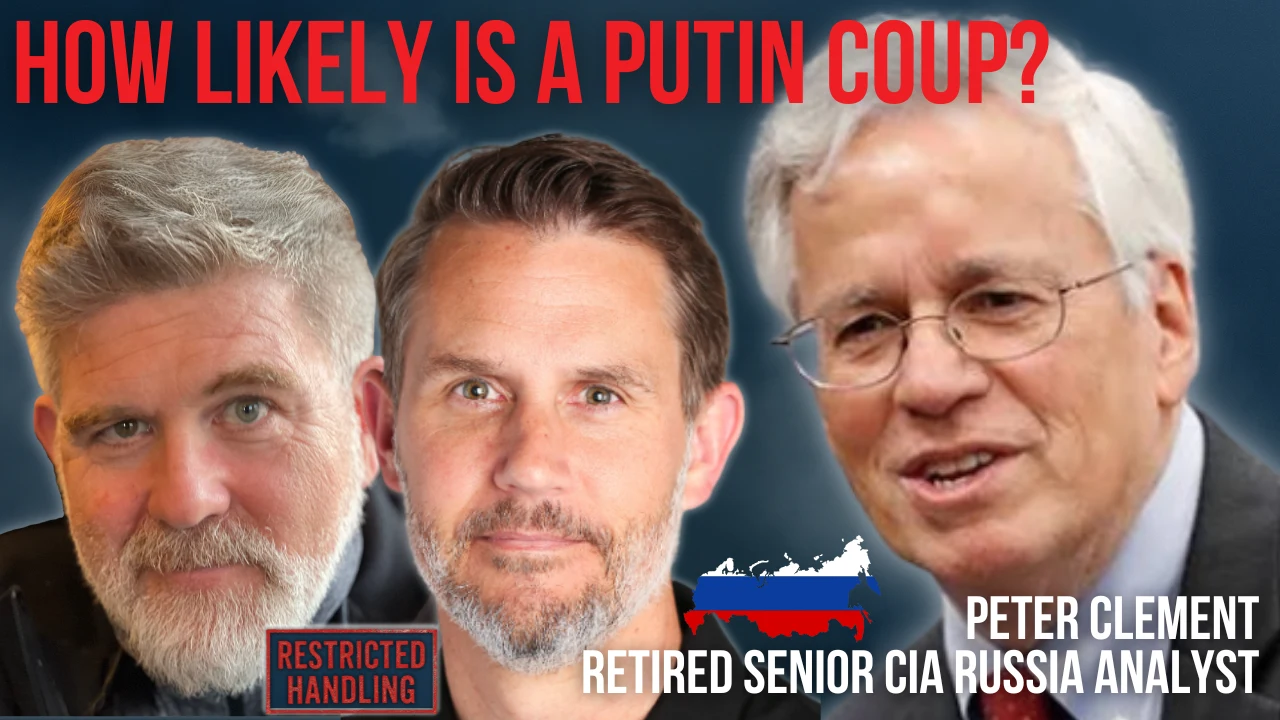
Veteran CIA Russia analyst Peter Clement joins Glenn Corn and Ryan Fugit to examine succession, the people around Putin, and why a new leader would not necessarily mean a new system.
Peter Clement / / 71 minutes
Start here
Three key takeaways
-
How Putin leaves will shape what follows.
Peter lays out four scenarios: a managed handover, death in office, an internal coup, or a popular uprising. He pays particular attention to death and internal removal, while treating voluntary retirement and a mass revolt as less likely.
-
Watch the people who control access and force.
Succession could begin before an illness or leadership crisis becomes public. Security chiefs, military figures, gatekeepers, and competing insiders may shape the outcome well before a formal appointment or election.
-
A successor could change policy without dismantling the regime.
Peter warns against equating Putin's departure with democratization. He favors testing a new leader through engagement. Glenn stresses the risk that a less confrontational successor might simply want time and money to rebuild.
Episode Field Guide
Explore this conversation.
The people, institutions, and equipment connected to this episode. In the conversation marks a direct mention; Related background adds context.
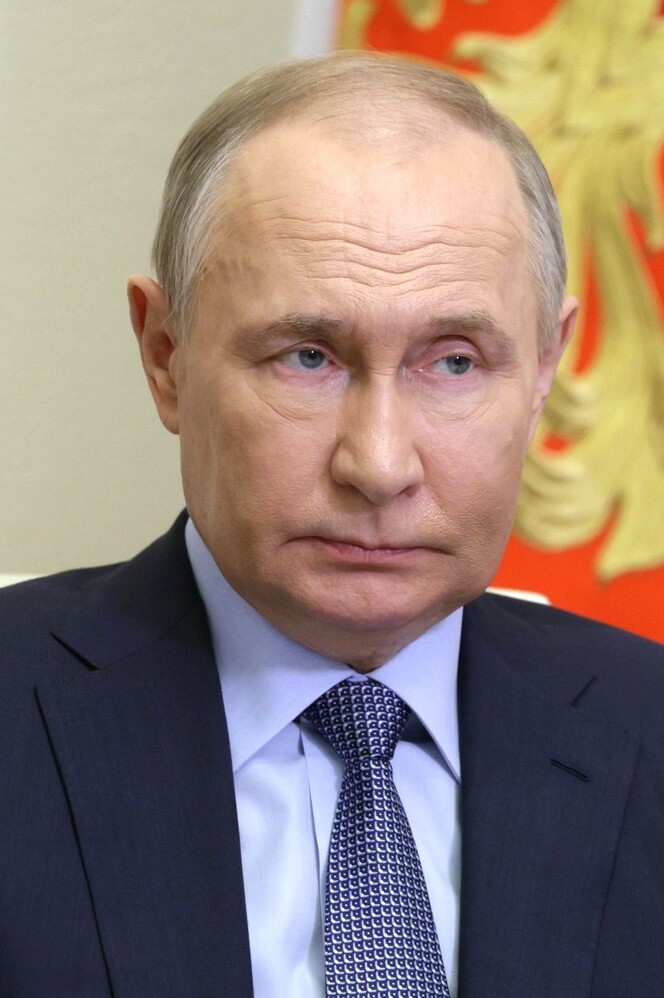
Vladimir Putin
Explore the presidency and its documented connections alongside the succession discussion.
Image credit
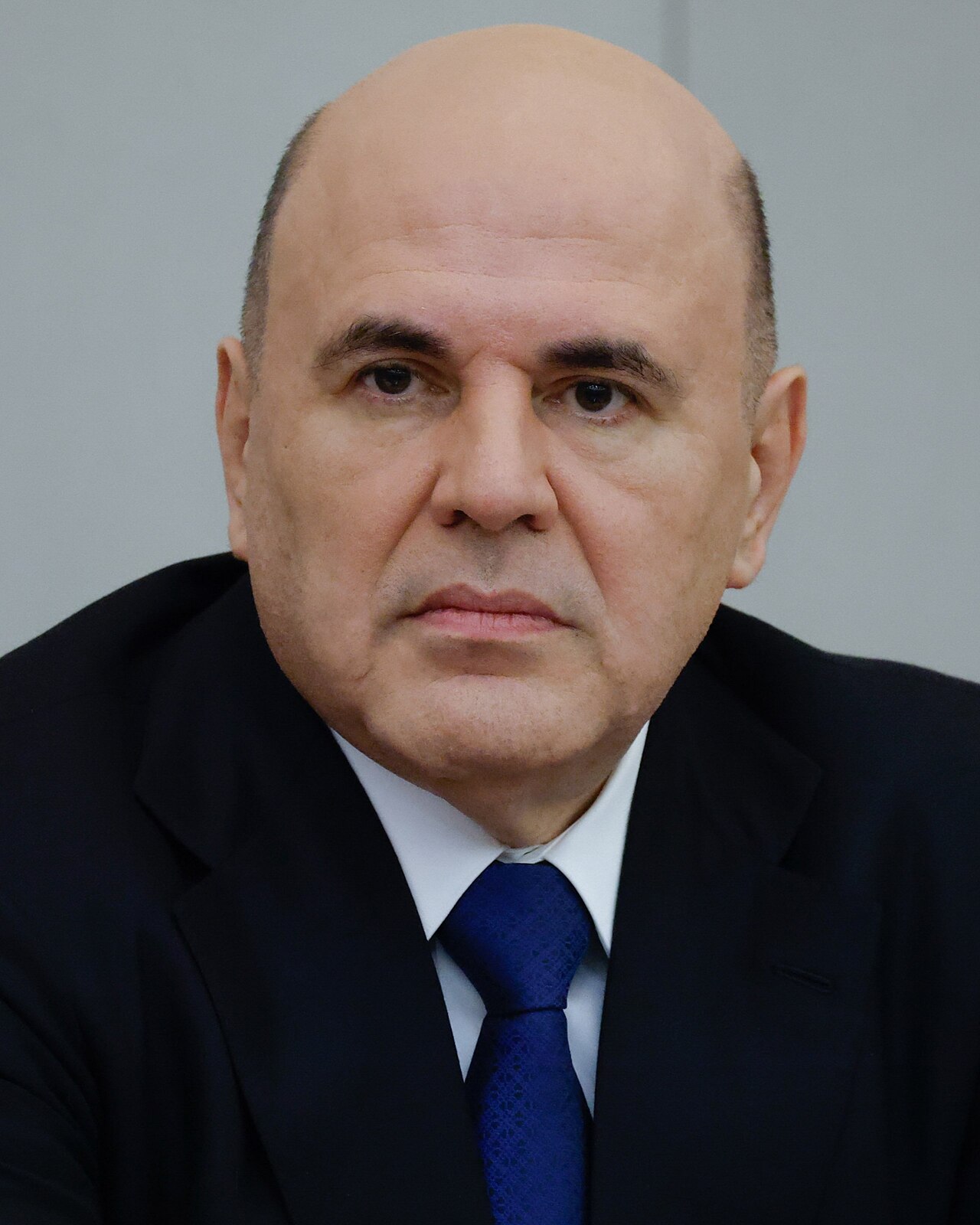
Mikhail Mishustin
Named in a hypothetical succession scenario, not as a prediction or confirmed successor.
Image credit
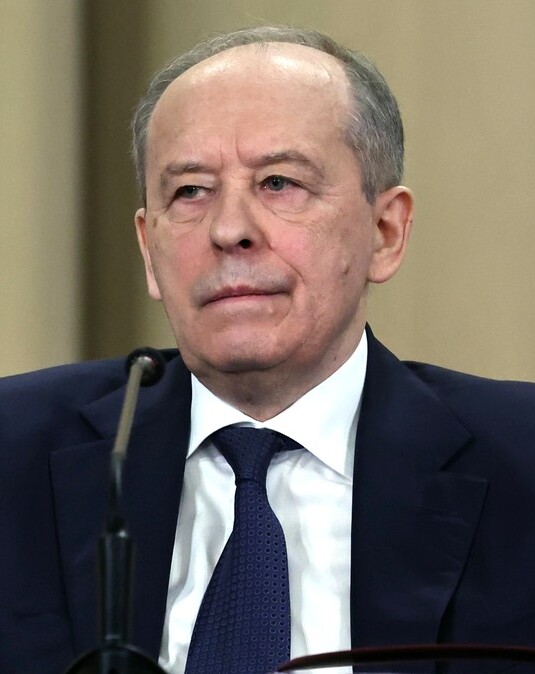
Alexander Bortnikov
Named in a hypothetical about how Washington would engage a new leader, not a forecast.
Image credit
These links are an RH reading guide, not guest endorsements or independent confirmation of every statement in the interview. Episode views reflect its publication date; linked records have their own source dates.
The written account
What the conversation covered
Peter Clement and Glenn Corn discovered years into their CIA careers that they came from the same Long Island town. They had reached the Russia problem from different directions: Peter through analysis, Glenn through operations. This conversation brought those perspectives together around a question Washington cannot afford to leave until the last minute: what happens after Putin?
Peter approached it through scenarios rather than a prediction about the next man in the Kremlin. The way a leader leaves power affects who gets to choose the successor, how much warning outsiders receive, and whether the institutions around that leader survive intact.
Four exits, very different consequences
The first possibility is a managed handover, with Putin selecting the moment and arranging the transition himself. Neither Peter nor Glenn found it especially persuasive. They see a leader who believes he is indispensable, and whose retirement could expose him to people harmed by his rule and the war.
The second is death in office. Peter distinguished a sudden death from a prolonged decline known mainly to insiders. In the latter case, a struggle for influence could already be underway while the outside world sees apparent continuity. The formal succession rules matter, but so does who has positioned themselves to benefit from them.
The third is removal from within. Peter separated a soft coup, in which insiders push Putin aside, from a forceful removal. Either would depend on the people who command the security services and military, or at least on their willingness not to intervene. Glenn pointed to the competing security structures Putin has built to protect himself.
The fourth is a popular uprising large enough to bring down the regime. Peter did not dismiss it, but called it a low-probability, high-impact scenario. Repression, the destruction of organized opposition, and the difficulty of getting past the security apparatus make widespread anger very different from an effective revolt.
What the people around Putin stand to lose
Peter was especially interested in the politics of access. If a leader becomes ill, the people controlling meetings, information, and appointments may gain enormous influence. The comparison to earlier Soviet successions was about how power works behind a public display of unity, not a claim that a particular transition is already underway.
Glenn emphasized what members of the elite have lost through the war: money, status, travel, and opportunities for their families. Both were cautious about reading official popularity figures as a reliable measure of loyalty in a system where expressing dissent can be dangerous.
They also disagreed over how to interpret Prigozhin's mutiny. Peter saw a challenge to the handling of the war and military leadership more than a clear bid to oust Putin. Glenn advanced a more conspiratorial interpretation involving a managed operation. The disagreement remained unresolved. Neither account was presented as established proof of what the Kremlin had planned.
Could the system turn against its own leader?
Peter considered how insiders implicated in the war might explain removing Putin. One possibility is to defend the original decision while blaming the leader for disastrous execution. He called a possible gradual distancing from Putin 'deputinization,' while recognizing the risks for people who had publicly supported him.
He was more interested in death in office or internal removal than in voluntary retirement or revolution. As the war imposes further costs, he saw room for the likelihood of internal action to increase. He resisted assigning neat percentages to Russia's future.
The important limit came later: a dictator's departure often leaves much of the regime in place. A successor might want different policies, or simply a less costly way to pursue familiar ambitions. Glenn worried that an apparent opening could become an opportunity for Russia to rearm.
How to judge the next leader
Peter favored engagement with a successor rather than deciding in advance that every new figure would be identical to Putin. Meet, establish channels, test the positions, and look for evidence of change. He drew on the debates he witnessed around Gorbachev, when analysts had to weigh reform signals against indicators that seemed to point toward continuity.
That led to a revealing discussion of intelligence work. Public statements, human sources, and intercepted communications each have limits. A direct quote is not automatically the truth. Deep expertise helps, but it also needs challenge from people who can see developments outside a specialist's field of view.
Glenn recalled analysts bluntly telling him an operational idea had already failed under previous leaders. Their institutional memory saved the team from repeating it. The same discipline belongs in succession planning: know the history, challenge the assumptions, and keep enough flexibility to recognize a change when it actually arrives.
Based on the Restricted Handling conversation published August 3, 2026. Views and forecasts reflect the discussion at that time. Original episode and show notes ↗
Full episodeRead the transcript
This transcript comes from the published episode captions, with spacing adjusted for reading. Names, punctuation, and terminology may contain transcription errors. Refer to the recording for exact wording.
Hello, Freedom Loving people, and welcome to another episode of the Restricted Handling Podcast. Glenn and I are very fortunate today to be joined by Peter Clement. Spent 40 plus years at the CIA as a Soviet Union and Russian analyst, PDB briefer, deputy assistant director for Europe and Eurasia, which for those in the know is a very senior senior post, recipient of the CIA's Distinguished Career Intelligence Medal, professor at Columbia University now. And has a book being published by the Cypher Brief on CIA analysts, ~ titled forthcoming. But Peter, thank you so much for joining.
I understand you and Glenn know each other. You go way back, can only imagine why. Would love to hear a little bit more about that. And then today, just for people listening, we're gonna dig into post-Putin succession scenarios. Does Putin really face domestic pressure? And what's going on Russia and Ukraine at a at a very high level? But Peter, thank you so much for taking the time to be with us. Well, Ryan and Glenn, thank you so much for having me on. I'm delighted to be here. It's always fun to talk about one of my favorite subjects. And I'm delighted to be here with Glenn in particular and I'm gonna turn it over to Glenn to let him tell you how we know each other.
Well, one of the first of all it's great to see you guys. ~ it one of the things that is very special about Peter, which you didn't mention, Ryan, but I have to mention it, is he is a ~ originally from Belport, New York. Maybe the most important town in all of the US. Definitely the most beautiful beaches in the United States and maybe I've seen a lot of the beaches in the world. ~ and a great little town. And so I also happen to be from Bellport. And let me just say this. When I retired from the agency in 2023, I was going through my stuff trying to downsize, and I went through a box I had of notes that I took when I worked for INSCOM for the Army, and I went through some ~ training with the agency in nineteen eighty-nine. I'm dating myself.
This is during the last Cold War. And there was a there was a a syllabus. And the expert from CIA Sova who came to speak to us about Soviet politics was Peter Clement. And I Wow. and I remember being in this class and like super amazed. By the way, I was a Russian literature and Soviet studies major in college, and I I heard this expert come and speak to us, and it was I was like blown away by his knowledge. And then I realized years later, I can't say where I was, but I was in a station somewhere, and the chief of station called me in his office and he says, Hey, aren't you from Long Island?
I said, Yes. He said, I gotta introduce you to this guy he's visiting. He's our senior Russia expert, senior Russia analyst. And there was Peter Clement. And Peter said, Where are you from? And I said, Beltport. And he goes, No way, I'm from Belport. And we have that we have that bond. Of course, we have the commonality in that we were very fascinated by Russia and our careers. We worked the issue for many years in different capacities. ~ Peter was kind of a a mentor and a and ~ inspiration. And ~ I'm I'm just I'm thrilled to have him on the program because what we're gonna talk about today, ~ you know, Russian internal politics and maybe the future of Russia. Ever this comes up all the time.
It's an issue I think probably people in Washington aren't thinking about enough. It's my own assessment based on what I saw in the early 1990s in Russia. ~ I was just on another podcast and this came up and I said, I think we flubbed it in the early nineties, and I can explain why. But Peter's gonna talk about hi and it this is someone who's been studying this issue for many, many years, and now he's a professor, as you mentioned, at Columbia. ~ and so he's still very active in the foreign policy world and Russian studies world. And it's great to have you on, Peter. And Ryan, thank you for setting this up.
Can't wait. Thank you, Glenn. ~ I I need to return the favor here. I got to know Glenn much later in my career and I was stunned to find out we went to the same high school. I I couldn't even believe it. And ~ as I got to know Glenn and and have had him come speak to my classes at ~ Columbia, I mean I'm in awe of you, Glenn. Y you have served in so many places. Your language skills are amazing. And you're a serious Russia guy. We're not gonna use the word expert because I think we both agree. Yeah, hard to be yeah. an expert around Russia and as you say, I'm not sure the Russians understand themselves, but it's a country of such intrigue and fascination that I I know how we both got into this business.
It it's really hard not not to wanna learn more about Russia. Amen. Peter, why don't we jump in? I mean, you know, people who listen to this program, they they follow what's going on in the headlines for sure, probably go a little bit deeper, but it's it really does look at Iran, China, Russia, North Korea, and other hot spots in the globe. I I love your suggestion. Yeah. Let's talk post post Putin succession planning. What does that look like? How do you think about this? And I should have done a better job in the intro. You are a career analyst, like you have done this your whole career.
analyzing states, leaders, programs, militaries, et cetera. So I'm just very interested to hear what does the future look like from your lens? Thanks so much, Ryan. when I went to graduate school I studied politics of the Soviet Union under Stalin in the nineteen thirties. And I have to tell you, I learned a lot from that because I think there are so many interesting parallels with the Russia that Mr. Putin has created in terms of the massive control of all sources of media, ~ the way he deals with political enemies. we're not at the same level, we don't have a gulag that I know of.
But this is a pretty harsh regime. ~ and it's there I do see a lot of parallels. And also the political maneuvering among some of the people in the elites, some of whom fall out of the club because they made a grievous mistake about getting too interested in politics. Things like that. There's so many interesting parallels. So I have been doing this for a long time and I I still enjoy doing it. The thing I'd like to talk about today is the succession process. Most people probably know Mr. Putin is now seventy three years old. He'll be seventy-four in October. And some people like to say, Boy, they're in their seventies. I don't like to say that a whole lot 'cause it's getting a little too dicey for me. ~ but, Yeah.
you know, people generally start to say, my gosh. ~ I must tell one anecdote. I I can't resist. I was at a briefing with a director at the agency. We had a team of analysts brief The director on a foreign head of state, and this guy was in big trouble politically, there were problems, he was looking unstable, but he had health issues. So the analyst said, ~ well, Mr. Director, you know, ~ he's got these health issues, he's got a lot of political woes, and you know, he's like 70. no. And the director was 74. Well, I could do I told the story to my students. The message is be mindful of your audience.
Know how old they are and choose words appropriately. ~ but and they did Great, great lesson. a great briefing. I said you did a great job, but in the future think a little bit about your audience more. anyway, in in Putin's case, you know, people do look at his age and and we also there were these periodic stories about health issues. I wish I knew a lot more about that subject. I don't maybe Glenn, you've got some thoughts on his health. But at some point, you know, Putin's mortal. He he will live the scene. So ~ Kim Martin, a colleague of mine at at on Barn Art in Columbia, ~ we teamed up to write a a ~ journal article on the succession process, and we focused on scenarios. How exactly would Putin leave the scene and how might a succession process play out?
So we came up basically with four, I think, pretty standard kinds of possible scenarios. So the first is Putin steps back and decides, It's time to do the handoff and he manages a succession process on his own. And Glenn, we c we can debate some of these points after. Let me walk through them, but you can have good debates about all these. So that's one. The second one is Putin dies in office. That's a biggie. The third, Putin is ousted by an internal coup. And there's two variants. There's a soft coup, think Khrushchev in nineteen sixty four. They didn't execute him, they let him go live on a farm and live out his life.
Then there's a hard coup where you you might need the security and military folks to push the guy out of office, not necessarily kill him. ~ think from nineteen ninety one Gorbachev was in fact the victim of a failed abortive ~ hard coup. So there's different kinds of coups. But anyway, somehow internally somebody removes the president. Then the fourth ~ scenario is ~ there's a massive revolt, ~ large protests, an uprising. Not sure I would call that a revolution per se, but you know, enough to bring the regime down and the entire regime falls along with Putin.
Yeah, you know, Peter, one thing I would say is the Russians, if they hear this, and I'm sure somebody will hear this podcast, and they hear former CIA officers talking about a change of regime in Russia, immediately in their paranoid world, they go to there's plotting going on to to remove Putin, right? I mean, this is that that's that was my experience. I I think all four scenarios are there's possibility of all four, and yeah, we could go through each one. ~ there are different Uh-huh. like Different factors that play into each and probably nuance in each, right? ~ Yeah, absolutely.
but yes, you know, Putin, although he this is just my assessment, I think Putin determined has come to the conclusion that he's the only person that can run Russia, and he's Yes. the only person smart enough and capable enough to manage the country. He brought it out of chaos, and he he's bringing it to greatness again, although We could argue that that has not working since two thousand fourteen, but I'm not sure he he believes that and I'm not sure that people around him actually tell him the truth about how bad things are getting. So that's a whole nother issue.
But I I think, you know, I came to this conclusion maybe ten years ago. He just is convinced that he's the only person that can manage and successfully run Russia, and he has to live as long as possible to realize his dream of making Russia great again. I I absolutely agree with you on this point. Absolutely. I so I would rule out scenario number one. I do not think he's going to try to manage a succession process. Moreover, if you you look back on on other regimes or in Russian history, you know, stepping aside is in his case in particular, there are a lot of people who don't necessarily like him a lot.
It's could you be assured of a happy, restful retirement in some nice place with all the perks? Right. Maybe, but there's some other people who might And might not want her to be so happy in retirement. I I you know, I would add to that that especially after this this horrendous war and the consequences that it's had for a lot Yes. of Russians, if I were Putin, I would not think about going to ~ retire in the Crimea or retire, you know, in you know, in Sochi because I'm sure there are lot of people that are gonna be looking for him. Including angry Russians whose children he sent off or who who he who they themselves were sent off to fight this war.
So i i ex for all those reasons and probably more that's a really Probably more. good argument for why I don't think he can have a happy, secure, ~ voluntary retirement. So Right. in in the second scenario, and this is one of the ones I find most intriguing, if Putin dies. And so immediately we discussed with a lot of our colleagues this whole issue, and my my main argument was, well, the scenario totally depends on How he dies. Does he have a heart attack tonight and all of a sudden tomorrow we're in succession? Or does he over time he's got Parkinson's or Alzheimer's or dementia? And only the people really, really close and around him on a regular basis know this big secret.
In the first scenario, he dies, you know, there's a constitution, it does say the prime minister becomes acting. In 90 days, you have an election. Maybe that's how it plays out. Although, even there, I would argue some of the people in the inner circle around Putin may have thoughts about who the right person is who should be Prime Minister. We can discuss that later, but I think there's a little flexibility in that scenario. It doesn't automatically go to Prime Minister Mushustin is dead and he's president. ~ the other one though, in the prolonged illness category, this is the one I find fascinating, because you can just imagine the maneuvering.
Among all the players around him and the inner the Z all-called inner inner circle actors, you've got the head of the services, you've got the FSB chief, the SVR chief, you've got oligarchs, ~ financial and business types like Igor Sjechin. ~ there's people who are ideologically very, very close to him, ~ and here I look Kavalchuk would be one. And ~ I I will avoid going to too many of the minutia of these players, but ~ there are people around him who may have their own agendas and they want to protect their equities and financial interests and so on. So they may have a voice and so those who have direct access to Putin may try to influence him in his dotage here if he's got health issues or mental issues, to convince him to do things they want him to do to get to the kind of succession they want.
So it could revolve around who's the right person to be Prime Minister. Example. Mm-hmm. So ~ I'm very intrigued by this because if that's what happened, first of all, we might not know for a while that this process is underway, because we're not going to advertise he's got these health issues. and then when it when it does happen that it can't be hidden anymore, it'll get very interesting because then the the succession becomes much more public and the maneuvering. Then you get the Kremlinology part, trying to figure out who's who, who's closest, who said what and what it meant.
~ and I'm glad I'm I'm sure you've done a lot of this kind of chronological thinking yourself in the past. yeah, but usually when it's in relation to restricted handling podcasts, trying to figure out what Ryan's thinking about his empire and No, my you know, I mean, do you s in this scenario, Peter, do you see like someone trying to play the role of Stalin with Lenin when he was laid up? You know, he was sick, Stalin was the gatekeeper. ~ yeah. Yeah. Yes. Absolutely. ~ in fact I mentioned that in the article. I mentioned Lenin's famous testament and the fact that it didn't quite get the circulation it needed, and that was stifled because Stalin had enough of his proteges in place by now that he was able to control the damage ~ primarily from Krupskaya, Lenin's wife. But it was a that's a fascinating episode in Russian history.
But yeah, I think that the other one that strikes me, ~ the Stalin succession. So Stalin dies and they knew he was not well, but it was a little bit sudden. Has have you both seen the movie The Death of Stalin? Yes. No, but I will. And we'll put it in the show notes. ~ Ryan, you absolut you must see this. ~ Glen, did you like it? ~ I liked it. It's a comedy. I it's it's Yeah, it's satire. it's satire. honestly, anything to do with Stalin is f I find hard to find humor in just because he was such a heinous individual. Agreed, agreed. But but yeah, I mean going back to the fight that happened, the struggle for power as he was dying, and how people, you know, threw him under the bus.
And I mean, you should watch the movie, Ryan. It is it is kind of funny. Yeah, yeah. There are some very funny scenes. and some great acting. ~ So you've opened up a whole thing here. ~ two quick points. One, for those who don't know, when Stalin died, I mean, most of the people in the Politburo around him, then it was called the Presidium, ~ they were terrified of one person, the head of the secret police, Barilla, La Valenti Beria, and so ~ they found a means to get him arrested relatively quickly afterwards, and within months later, he was executed. The reason being this guy just He knew the info on everybody.
He had files on everybody. So I wonder today, and you know, today in Putin's Russia, ~ the FSB has a lot of information on a lot of people. So I wondered, you know, to what extent that's a plus or a minus for whoever is head of the ~ FSB, like currently ~ Borodnikov, who has his own health issues, by the way. ~ but it that's something to think about too, and if there is in fact this maneuvering ~ in a late ~ Putin stage and then he dies. Peter, what what do let me you make of like the the there have been some younger people like the sons, like Petrusha's son was brought Yes.
in to keep position. Some people are claiming that he's preparing like the next generation to lead the country. Do you think that you put value in that, or do you think that this is just he's rewarding those guys by giving their children, like, you know, it's like the boyars or whatever, the the elite are getting the Yeah, it it it's it's basically patronage, right? It's or sinecures because some of these young people, some are really talented and some less so talented from what I've read. I I guess I'm less persuaded, but I'm open to it. I I I think it's more he's helping his his close buddies take care of their families and so on. I don't know that there's a plan how we're gonna bring the next generation of our guys in.
But maybe I'm a little naive about it's a it's a good question though. so beyond the death scenario we go to scenario number three and this is the one about the internal coup. And this one is also I I spent a lot of time thinking about this because I think a good case could be made. To do this you really have to have somebody from the security services and probably the military supporting you. Or at least not getting in your way if you're an internal plotter. And this is why the FSB thing is so important, because of all the info they do have. ~ and they seem to be pretty hard in line or in their thinking, but if there may be a lot, and Glenn, you said something earlier. There may be people who are really angry.
Maybe they lost a loved one. Maybe they had a relative who died in this war. And so even among these guys, there's a little bit of resentment that, gosh, you know, the boss just pushed this war way too long. We're in year five now. This is longer than the Soviet role in World War Two. And the casualties are mounting. We're up to like whatever, one point five casualties, one point five million. And I hear different estimates on deaths, but anywhere from three hundred, four hundred thousand deaths. now admittedly they're not from the elite classes. I'm I think that's probably correct.
but if there's a new draft call or they have to get more bodies and they decide to go with some Russians Some of these people might start to get affected. ~ Peter, do you think the Pergossian incident would you have considered that a coup at the time? A coup attempt? ~ that's a great question. I didn't see it so much as a coup as a message to Putin, you need to fix the way you're you're running your military and you have the wrong people in charge. And the the triggering event for the Pregoshan coup was when ~ Putin finally sided with Garasimov and the MOD people, Gorachev, ~ that they were gonna formally make the Pragosian people part of the military. They were gonna have to sign up literally.
as a formal element of the military and Pragoshin didn't want that. Nor did probably a lot of his people. And so they were gonna do something about it and they started the march. I I don't think it was to oust Putin, but Glenn, I'd welcome your thoughts on that. That's a big issue. ~ I'd say I'm on record. I wrote an article when that happened and my own view is it was a setup. I think that they used Pragoshin to identify people that were disloyal to Putin, let off some ~ huh. steam, it was a managed operation, and that probably Pragossian ~ mistakenly ~ agr agreed to this because they told him we'll let you do this and then there'll be no consequence.
Like we're not gonna have you shot. or trying to, you know, for for ~ d disobeying the commander in chief, the great leader. And of course, never make that deal in Russia because that that guarantee isn't there. If you remember, I thought it was very odd they said you can go to Belarus. He was gonna go to Belarus in exile. That's like that's like going in exile from the US to, I don't know, California. I mean, like they're gonna get ya, right? Yeah, yeah. Lukashenko and his guys are not independent. And so ~ I I I know maybe some people think I'm a conspiracy theorist on this, but I I did probably look at the Russian stuff for too long.
They love conspiracy theories, but I think that there was some angle here that is deeper than just Pragossian being angry. I'd have to think some more about that. I the thing that stuck out most to me is Putin's televised comments aft at the very beginning. I was just struck that he seemed genuinely shocked and and almost didn't know what to say. He he it was not his most articulate moment. Something in there wasn't right. he probably did not have the backing of the military, like you just said, might be required. So what is what is a soft versus hard coup look like in in your scenario?
the the soft one would be if the inner circle in this say in the health scenario they realize he he's got some time left but he's not all there, they lean on him and say, Hey boss, it's time to retire. ~ and we'll help you pick the incoming prime a new prime minister. And by the way, changing prime ministers is nothing new. In the last three years of Yeltsin's reign from ninety six to ninety nine, there were five successive prime ministers. And I remember this vividly 'cause at the time I was kind of running the well, I was running the Russia office and Every time they named a new prime minister, we went bonkers because my gosh, this could be the next president because he also had a health issue.
What if he dropped dead tomorrow? And he did have a heart attack in the middle of round one and round two in the ninety-sixth election. So naming the prime minister was a huge deal. So I'm thinking in this case, the guys around him they understand that. So as I suggested earlier, I think they're gonna want to have a voice. And maybe they all like Ms. Huston, but maybe they don't. Maybe they have somebody else in mind. So I think it would be very interesting. So in the soft coup, they're not gonna execute him. They'll give him a happy retirement home. And if he's in bad health, I would be less worried about people going after him.
Maybe I'm naive here. ~ but they'd get him out of the way so they could set up the succession that they want. In a hard coup, they'd arrest them, which I don't think is that likely or you know, they'd have to use force. Now, if he resisted the soft coup, then maybe you do have to get a little physical and get the right people. And then I'd wonder about how do you do that, cause Zolotov, the head of the Roskvardiya, the he's a serious, serious hardliner. You'd have to work through something to get to Putin to arrest him or remove him. ~ Glenn, again, this is an area that you may have more insight than I do.
the I I definitely think Peter like ~ Zolotov is ~ not just a hardliner, but I think he's a hardcore loyalist to Putin. He he was you know, he's I don't think he's Yes, yeah, absolutely. a thinker like maybe some of the other people would be. I think he just does Yes. what the boss tells him to do. He's muscle. Right? He's the weak. He's the and and I think that yes, Putin created the Ross Guardia for a reason, because he was worried that some of the other, especially the FSB was probably getting too powerful and he needed a a counterweight. And the FSO can't be counted on.
Just a quick word from our sponsor, Larineco, and we'll get right back to the show. When I was in the army and the agency, I was constantly chewing gum in the cockpit or on a long SDR just to help pass the time. Now, Glenn and I today are always ready to upgrade our routines. And we recently heard about Larineco a chewing gum that actually makes your teeth stronger every time you use it. They sent us some gum and it's as advertised. If I had known I could be chewing something that actually helped my teeth while passing the time. It would have blown my mind back then.
Larineco is better for you chewing gum that uses the same mineral your teeth are made of to support daily enamel health. If you've seen the show, you've probably noticed Glenn sometimes chews some Larineco when we're on air. He's tried several flavors, he's liked each of them, and his wife is also a fan now. It's a totally effortless way to make sure you're taking the best care of your teeth possible. Right now Larineco is offering our listeners up to fifty percent off at buy Larine dot com slash restricted. That's buy L A R I N E dot com slash RESTRICTED for up to fifty percent off.
And now back to the show. Yeah, I I I very much agree there. I and that also tells you just how much Putin must what a what a nest of vipers. You're you're an environment where you have to think like this and worry about that and you've got to create another security entity to ensure your protection. ~ what a system. Peter, when you talk about health, I mean, think about like mentally what that does to someone over time. When you're s when you're completely When you paranoid all the time and you're constantly trying to read everything, you know, we w we have some of that experience because, you know, in our jobs, that you know, you're reading people, you're having to like read situations, Yes.
and you know, you do that for twenty five, thirty years. It's it's intense. But when it's life and death all the time and your vision. of yourself and your empire depends on if you get betrayed or it it must be crippling in many ways. I I agree it must be exhausting. I mean Exhaust. it it just how how do you do this? and then you have to worry. I mean I've read stories, I don't know how accurate they are. I don't know that there's body doubles, but there's a lot of precautions about travel and logistics and which car is he in or not and things like that. which I think is plausible.
in a so in this third scenario, the one about ~ internal coup, I thought a lot about this because if they're in fact if they're able to put together a coalition of people to remove him, most of these people were at that Security Council meeting on February 21st, 2022, which was televised naturally, and by design. Putin wanted that televised, so every single one of those leaders in the Security Council was Yeah. on record as saying, yeah, great, we have to do this. ~ smart politics there. So if any of those guys are involved, and I would think some of them would have to be, they're gonna have to explain this problem away.
So they would then have to focus on, well, you know, it was the right idea, but the prosecution of this war and the management of this war. really was where the problems began and I'm sorry, but the person who's most responsible for that is Mr. Putin. And then interestingly, ~ you can see the parallel I'm going at here is I use the phrase deputinization. It's a little bit like after Stalin. How are we going to explain some of these horrible things that happened? And Khrushchev obviously made political capital out of this, but that was a very bold and risky move.
~ it was a shock to the system for a lot of members of the party. There was an anti-Khrushov, an anti-party group attempted coup against Khrushchev in 57, and ultimately in 64 he was removed. So it's a high-risk game if you get into that. But I I think in this case, in large part because of the impact of the war that you were alluding to earlier, Glenn, this war is so horrific, and the the consequences both in terms of the people, the families, ~ The financial implications, the military implications, the shift in the budget priorities to the defense sector. It's huge. The sanctions, the fact you can't travel, you can't enjoy your newfound middle class stature or wealthy stature to travel abroad. There are a lot of reasons this this war has taken its toll on on many Russians. So I could foresee a a slow, gradual deputinization process, if in fact there was a genuine internal coup.
where they removed him. and then they'll have to figure out how to manage that. That I don't think will be easy. if he dies in office, do we end up seeing statues and streets named after Putin versus a hard coup where you might have de Putinization, as you said? I'll I'll be interested in Glenn's thought on this, but I my ~ my gut instinct is I I don't I don't think there would be this big glorification of Putin at this point, in large part Top. because of the impact of the war. Right. I agree. we've seen I mean we've seen a little bit of that now he's alive. And I have heard, you know, there's there are some statues, things are named after him, not to the degree the Stalin.
Not not even close. But I I don't know that he has the genuine popularity. and and incidentally that's another issue. You read about these public opinion polls that the Russian government has authored or, you know, contracted out, and the last one I saw. They were saying, my goodness, he's dropped five points to sixty-six percent. Well, I'm seeing other things from Russian experts ~ who write in different journals and are saying, Well, you know, what I'm hearing from my sources is the numbers were in the thirties, but no one's ever going to admit it, and this is one of the great problems of doing analysis these days.
I I don't trust a whole lot about anything concerning Russian polls anymore. Not in Yeah. a long time. ~ so the idea that there'd be a massive outpouring and grief There'd be some. I'm su there'll be a big funeral and I'm sure there were people ~ who benefited and they liked the fact that he brought Russia back as a great power and they see all the positive things the way they saw perhaps with Stalin. But I don't know, Glenn, what do you think? no, I'm with you, Peter. I mean, I I I think whatever contract he had with the Russian people in the late nineties, that they gave power to him so he could bring the country off its knees and bring order and prosperity, ~ that ended in two thousand fourteen and it's been going backwards since.
I think very f I I would probably agree that if if I was a Russian and somebody called me to do a poll, I wouldn't I would not say I'm like I don't support Well good. President Putin. Right? I mean, That's right. ~ no. That's not a wise thing to do. So that those polls are not very accurate. And I think a lot of people are probably very frustrated. To you know, earlier you mentioned like some of the people around them maybe have lost people. I think what they've really lost is they've lost money, they've lost prestige, and they've lost access. One of the things I I know based on my conversations with Russians is that including from that circle, they were frustrated.
even before twenty twenty two, that they couldn't travel like they used to, that they were pariahs, that, you know, their allies were North Korea and Iran. Where, you know, in the early two thousands, mid two thousands, they were going to Italy, Spain, they were traveling to Europe, they were coming to the United States. That has gone away for the most part. And access for their children to study or overseas has become harder. And of course the world now sees Russians I just wrote an article about this, but they did the World Cup in 2018. They spent millions of dollars to present Russia as a tourist spot for people, and it's all gone now. And Russians then were telling me this is like this is all about Putin's ego. Number one.
Number two, we we invested all this money, our tax dollars, which is never gonna come back to us, to build stadiums, roads, teach police officers ten phrases in English. But we're gonna do something stupid and it's all gonna go away. And they did in 2022. Who who now is saying, you know what? And and you know, maybe in 2010 people are saying, let's go to Russia on vacation. Let's see what it's like. I wanna see the Hermitage. I wanna see, you know, the the Kremlin armory, the you know, whatever. Now I'm sure people are saying, Yeah, I don't think I'm gonna take a trip to I mean, Ryan, any any plans in the future that you and the family?
Going there. So disappointed. I hope one day I can. Yeah. Yeah. So I've I I think he blew it. Yeah. I yeah, I'll avoid the issue about travel. I I'd love to I still would love the opportunity, but I know it's never gonna happen in my lifetime. Well, listen, I mean, let's go back to the stress on Putin too and like the different threats. We shouldn't forget now too, he must be horrified that the idea that the Ukrainians were killing people on the streets of Moscow in military concerns. You know, the the the fifth column factor. You know, when you obviously when you when you're setting and assassinating up a general in ~ in downtown Moscow, that means you have a network that helped you do that.
That must be horrifying for him too, especially as a former intelligence officer, because he knows how it's done. They've done it to many people. And now their number one opponent is doing it back in spades to them. And that must be scary. Gwen I ~ I totally agree and I I have thought a lot about that. It it's pretty amazing. ~ what's happened in the last I guess six months or so? The onslaught of these Ukrainian missiles and and drones and some of the strikes and the special ops like the one, I guess was it in Siberia, maybe a year and a half ago? Somehow they managed Spider Man.
that op in the and took out an airfield and aircraft, a strategic aircraft. How do you d how do you do that without Spider Web. Yeah. Yeah. Awesome. insiders, as you say? There had to be collaborators. and then you have assassinations in Moscow proper. And and now the kind of the regularity and concern ever since the strikes on the refineries, ~ gas shortfalls, the fact they're narrow lines, which reminded me of the 70s here in the US. But people get upset when you can't get gasoline for your car. Right. But people are really feeling the direct impact of this war that they hadn't felt in the first two or three years.
This is a big deal. ~ and I think that feeds into this debate that we alluded to at the very beginning. Just how much pressure does Putin genuinely feel and is it sufficient to cause him to decide I I need to somehow reach some way to cease the war, call it whatever you want to call it, a ceasefire or a halt. I don't know whether he'd go for a settlement because I don't think he's changed his views on what the settlement has to include. I He'd then admitting that I made a big mistake. But Right. we could debate that point. ~ I think he's pretty still a very hard line on h the must haves he needs to show for this big decision.
Yeah. But they seem to be only his must-haves, right? I mean, 'cause he's said them so many t I mean, I know they're I'm repeated by Lavrov and and others, Mm-hmm. but it's really a line he's drawn. I'm sure he could make it look like a victory to anyone else, maybe except for himself in many ways. Maybe. ~ Interesting point. well if if he has to have the entire Donbass. ~ so I suppose you could say if we froze the line of contact at a certain place and it's twelve percent short of what I hoped, you can say, Well, it's all it is a ceasefire, that's all it is, but we'll stop and say we still we still understand that this must be part of Mother Russia. We're not gonna let people forget that, but for now we're prepared to hope.
think long term, which is the Ukrainian argument. They're just gonna buy time to rebuild and come back. So he would be playing into that narrative. I don't know, is that a smart move, Glenn? Well, I mean, just ask the Chechens, right? I mean, I say this all the time. The the Ukrainians are not naive. The they they know that if there's a Yes. ceasefire, they better have some very strong guarantees, or else they're gonna face another aggression from Moscow as long as guys like Putin are running the country. and the chances are, in their experience, and I think I mean welcome your thoughts on this too, Peter, but historically that's what you get running the country.
There there's no real history of democratic Western or you know, I would say Western leading, but you know, leaders that want to get along with their neighbors and that can accept there's no Ataturk that I've ever seen in in history. A leader that says, we don't need this big empire, we can just focus on building a healthy Russia. Let's get along with the Ukrainians and the Georgians and the Uzbeks. Uh-uh. The desire is always there to rebuild, to reconquer. And there's I think there's motivations for that one. They're scared to death of everyone around them. They want buffer, they want resources, they want access to warm water ports, right? All that stuff. But there's also something psychological.
They can't get over the fact that like they think that they o they own those terri those are their spheres of influence. And they have a right to dictate to the people in those countries how they need to live, which always amazed me. I ~ I'm inclined to agree with you. I I think ~ there's a phrase I used to use ~ in the a long time ago when talking about Russian foreign policy, or actually Soviet foreign policy, but then Russia even under Yeltsin was, you know, their goal with their newly independent state neighbors was they're independent and all that, but they have to understand that their foreign policies must be consonant with Russian security interests, i.e. no NATO.
~ you need to know that w you know, we're the big boy on the block here and there's some things you just can't do. They're red lines. Apart from that, you know, go be independent, that's fine. But they're based on their past history, particularly I Ukraine, as we saw in Georgia, there there's a lot of them who decide, yeah, I'm independent and I don't want to be part of this game that you're playing and I need to be able to protect myself and generally that meant looking toward NATO. Peter, you'd mentioned public opinion of Putin is probably not 62%. It's probably closer to 30% if that.
The fourth scenario was massive revolt, uprising to bring down the regime. This I I'm so excited to hear. Like what would this look like? What would it take? I've asked Glenn about this. Well, I don't totally dismiss it, but I definitely am of the view that I think it's one of those ~ low probability, high impact scenarios. I'd like to believe it. I I I really would. But because of the police state that we're living in, ~ I we've I I mentioned Stalin in the thirties, but I mean this is a country right now where you literally can't say Special Nea Voyanea Operazia this special military operation.
Are you kidding? People have rat each other out for this. And Yeah. now with this recent crackdown where s I mean they're increasingly intolerant of anybody even saying war. Like they're they're outlawing ~ people who are running for office from the Yablaka Party. They've cracked down on on somebody who's an independent minded person who says, I just want peace. You can't even say we want peace. It is genuinely a police state. Now, having said all that, if something really horrible happens supposing the Ukrainians hit Pater with a bunch of missiles and they take out some sacred place. I don't know, the Hermitage. I something near the Kremlin and people are outraged and hate Ukraine, but at the same time they say, This war is killing us. ~ Is there something that could trigger the people to say we we can't stand this regime and we have to do something about the regime?
Then you have to get through the police and security and it's it's hard to launch a revolution, I think. right now. But Glenn, I you've talked about this. Tell me more. This Well, one, I think that what the Ukrainians have been trying to do is increase the level of casualties to the point where Yeah. where Putin's gonna have to go for full mobilization, which they probably assess is gonna co put pressure on him because people are gonna be very, very dissatisfied in in the big cities, especially St. Petersburg and Moscow. And ~ for for you know, Putin and the people around him you know, the level of paranoia is beyond anything I think we can understand.
~ there's there's not, you know, you're gonna talk about like a police state, there's no opposition. I think, you know, this is one thing that they've been very effective at destroying the opposition by either co-opting members of the opposition or putting them into exile. you know, even the members of the opposition in exile are entrusted by many people because they have this long history. Goes back to Zara's times, by the way, of of recruiting and creating fake opposition parties, using them to draw off power from other opposition parties, politicians. So it's n it's very hard to see, you know, that okay, we're we're gonna have, by the way, important Duma elections in September, right? And everyone's watching that.
But as you're saying, when some of the the members of the opposition or different parties that are saying things that are not acceptable to Putin and his inner circle are just being arrested, disband you know, disbarred, taken off the the ballot. ~ so I don't I don't know, there's so much to unpack here, Peter, including so I mean let's let's finish with the scenarios because I there's some other things too. I I know that you wrote a book about, you know, being a CIA analyst and And I would I do want to talk about that a little bit because we don't tend to yeah, I think you may be our first senior analyst that's been on the program.
We've had some former operator case officers, we've had ambassadors, diplomats, ~ some foreign officials, but it it's great to have you here. And I do want to talk about your your experience as an analyst looking at the Soviet Union and Russia and how all this isolation is gonna impact our ability to understand Russia in the future and analysis of Russia. Wow. just a couple of starting points. ~ I'm a huge fan of open source material. I ~ I g I grew up studying, you know, Stalin and other leaders' speeches and and reading, you know, the the leading newspapers and journals to look for those little clues that would give us some sense.
The adnaka clause that maybe there's a little bit of a difference here or there's some debate that we need to understand. I still think that's a valid tool and but problem now is that you're inundated with so much information. You have to sift through a lot. ~ I'm also a big fan of the importance of clandestine you gotta have you mint. ~ And SIGINT, I obviously SIGINT. ~ but I'm also mindful of ~ you know there are limitations in all the ints. ~ in humint, how do you know you're not being you're you're being misled by somebody. the case of Iraq is so much isn't written about that, but even the people on the inside didn't know.
It was so compartmented and then we thought we had good sources and we didn't. And some of them were fabricators. ~ same thing on SIGINT. I always tell the story of what do you believe when you get SIGINT? I I use the anecdote about people with teenage kids. Your daughter tells you, I'm going to the library tonight with my friends. That that's the conversation with the daughter and the mother. The next phone call is the call to her boyfriend, whose house are we going to and who's bringing the beer? Okay, which is it? Which You've got the words, I got the actual words, they're spun gold. But which is it?
So ~ That's good. you know, Signet has its challenges too. But I'm with you, Glenn. I I think in a tightly bound country like this, getting access to to solid information and insight I think is is very, very hard. And then and then I just to add to that, Peter, having the expertise, the the the background to understand, you know, you mentioned Sigat, the Russians are infamous for misleading Sig, using double like you know, what they call radio games, Yes. Yes. famous Operation Monastir, the way they played the Germans, the using complex counterintelligence operations to throw off both the Sigat and the Yumid. They've run mass double agent operations to confuse their enemies.
And so Well, if you don't have strong analysts who understand that history and and and can see like a pattern forming that we saw maybe ten years ago or twenty years ago, this is what worries me all the time about the Russia issue. Because and you and you have to have people that that's what they do and they've they've grown up don't doing it and they have that experience. And I just think it's hard today to do that, especially when there's a country which is so isolated. You know, we don't have a big diplomatic presence anymore. The, you know, bilateral relationship is pretty much ~ very f let's just say fragile. And it's very hard like I'm sure American like, you know, aren't aren't studying in Russia.
But hopefully, you know, Brian, you're not thinking about sending your your sons to, you know, an immersion in St. Petersburg. That was happening for a while and it was probably good. Yeah. Yeah. It's not there anymore. a lot of go ahead. And then the other only information you're getting is from outside sources who have a huge axe to grind with the Russians, which also makes it hard. Because there you have to like there's a bias. We we saw that during the Cold War, you know, there was a strong bias from different communities. And the even the Russian community in the US, like the white immigrant community, they a lot of the stuff they said was tainted by their anger and their emotion.
And you have that. And so like going through us as an analyst today, it must be super challenging. You know, you make an interesting point when there's a former NIO who's deceased. did you George Colt? I never remember but I've heard his name, yes. Well, ~ I I remember this thinking as an analyst. So George had so many contacts in Russia. I mean, he would talk to academics and some politicians. Sometimes he'd call on the phone. And but he was always looking, I wanna get I wanna get word from the people who are in the system. And and again, ~ this is the late Soviet era, the late Gorbachev, things were a lot more open and in the early Yelsen years.
~ and then ~ with the change in regime and the and the hardening of policy toward the US, ~ they decided they weren't gonna let George travel to the USSR anymore or to Russia even anymore. So he was denied a visa. So what did George spend all his time doing? He would go to Georgia, Ukraine, the other independent states. So get what perspective, guess what perspective he was getting from all those people? It's exactly what you said. You people with an axe to grinder, people who have such strong views because of their past history, it's gonna be hard to get in a kind of clear ~ objective info as it were ~ on the target country.
So yeah, it's it's I think it's very hard. in terms of the workforce and the analysts, one of the things I enjoyed as a young analyst was ~ when I got hired, it was like I died and went to heaven. I'm working in an office with literally hundreds of analysts who were all Soviet studies majors about the military, the economy, politics, but it was like going to a big university with all these people with pretty serious backgrounds in in Russian studies. And I thought, holy cow, it it doesn't get better than this. ~ of course that shrank after the collapse of the Soviet Union.
It was a much smaller office obviously later on. But ~ I I think it's very important to have people who understand the history, the culture, the people like you, Glenn, who also have the you have a deep background in the literature, th which provides a lot of insights into the culture and how people think. so I I mean I still value that as an important asset to have if you're gonna come on board as a as an analyst. Now, the flip side of that is you all know the the ~ the story, the metaphor people use a lot is the the hedgehogs and the foxes. Sometimes you get so deep and so expert you get you become the deep expert on one big tree in the forest and the fox is running around and says, my gosh, three miles away there's a huge fire coming and it's gonna destroy the entire forest.
the Soviet Union. So are you so mired in all the minutia and the details that you sometimes don't see the bigger picture? I don't think that's what happened in the case of the Soviet Union. I think we did a pretty good job on that, but that's still debated by some people. But I I do remind myself sometimes the deep, deep experts aren't always the best experts to get perspective on. I didn't get to experience the kind of segregation between the ops and analysis sides of the house. I really and I know you've written on this, Peter, kind of like the embedding of analysts within the mission centers and closer to ops and vice versa, and how powerful that could be.
I think you kind of blend, you bring that deep expertise with some of the other disciplines within the agency and and the field perspective. Seemed very powerful coming in, and that was all I knew. For the agency at the time. That's very interesting, right? You know, that's still a pretty serious debate. I I even within the building. and I and I will have to be honest about I I was an advocate. I thought it was a good idea to do the ~ the big change that John Brennan brought about in twenty fifteen, the integration of the the directorates into these mission centers.
If it's done correctly, and that's I mean, I think like everything, it all matters and how does the implementation work? Do I need to know every secret? Do I need to know a whole lot about all the aspects on the operation side now. But I it's helpful to have good contacts on the DO side who can tell you, well, this actually really is a pretty good source. Or one maybe we're still working on, that maybe you didn't get that kind of insight before. But then there are others who say it it's just a little too risky. ~ or then we get into the cultural issues of of of the various directorates.
And I think the place where there was a challenge in putting together mission centers was personnel. Who's on your promotion panel? Who's your Yeah. real boss? Is it the D on the seventh floor, the director of operations, the director of analysis, or is it the mission center chief and the deputy? and I I mean that was a scarring experience for some people. ~ in some mission centers more than others. And I I think we we got through it okay, but we we definitely had our challenges. And Glenn, you I'm sure you know about this. yeah, it's a very complex topic. I would say like having led teams in CTC, which was kind of at the forefront of doing this, ~ it was I mean amazing. In fact, I just had dinner last night with three of my analysts that worked for me when I worked in CTC. And, you know, we had this great conversation and I was laughing with them because like you talk about a cultural clash.
I came back from being a COS in the field. And when I was working, I had, you know, ninety a hundred people, and probably eighty, yeah, maybe eighty percent were analysts. It's a different culture. It was like they they had so much deep expertise. And I was dropped into a problem set, and I would say, Hey, like we should do this. And one of them was one of my first meetings. There were two of the young analysts in my office with I don't remember, ~ I'm not gonna say his name on the thing. Randy is his first name, great guy. He was He was my deputy and I and I said, We should try this. And one of the guys said, That's the dumbest idea in the world.
And and had like being a COS, I like you could see I started turning red and getting up at the table and Randy's like, sit down. He's like, This is the way we do things. It's a different culture. And I said, Okay, to the I said to the analyst, Okay, why is it so dumb? And he said, Well, like your predecessor and your predecessor before him tried it, it failed, both times fell flat on his face. I was like, Well, maybe you're right. That's a pretty dumb idea. Thank you for like saving us for going through it again. They had the expertise. I didn't have the expertise.
They were willing to say, like, you know, in the DO in those days, you wouldn't tell your COS, you know, that's a dumb idea. and of course, you know, like being in stations, we had analysts out in stations. They were great officers. Most of them that I worked with, it was a it was a huge value add. Yeah, huge. ~ so I th I think The way you what you said, Peter, is like how it was done. There were some problems in the organization of it and the you know, people in the DO were very upset because they felt the authorities were taken away. I would agree with that. The chain of command got very blurred.
I I let in the organization after, and it was very, very difficult ~ to understand who you were reporting to. ~ in a bureaucracy, that's not healthy. Exactly. But The idea, in fact, I remember in the nineties, I think it was AF division that first moved. It was like a big deal because I was a young officer and and I was doing some work in AF at the time and they moved the analysts in with the the DO people. And I remember like the chief of the division at the time who was a great, great officer, said, Look, this is like work together. Like and and it was great. It was a great environment there.
~ so anyway, look, I Very difficult topic. But let's go back to the scenarios that we talked about. Because one of the questions I have for you, Peter, what do you do? What what do you advise the president and the administration if tomorrow Putin passes away or there's a one of these scenarios happens and we have a new leader and we can go through like who it could be. Maybe it's Mishustin, or maybe it's Bortnikov. Mm-hmm. Let's say Bortnikov takes over. Do we engage? Do we continue to treat them like it's Putin? two point what is your advice? What do we how do we deal with that?
Well, that's a that's a big policy question, which I've escaped my entire life. But now now that I'm an independent academic on the outside, ~ that's a great question. And my natural instinct in most cases like this is keep an open mind and engage. Don't don't play the whole it's the same old guys, you're from the FSB, it's gonna be Putin 2.0. No, I think you engage. Let's have a conversation. Let's see what you really think about things and find out the reality or the perceptions right, or maybe this guy actually has a slightly different take in the same areas where maybe we can work or at least try to improve and set up channels of communication.
I'm a big fan of and you know much more about this than I Glen but I you absolutely need to have channels where you can exchange information even when you're not getting along, as we did throughout the Soviet Union we did this. And you had station chiefs who had counterparts, they would talk with their intelligence counterparts, or maybe somebody even more senior, based on a relationship they might have developed. ~ but you gotta engage and you have to have channels where you can have trusted exchange of views and facts. ~ Right. and you're not being, you know, set up with a bunch of baloney.
You've Right. Yeah. you've played that role, so you're in a better place. I mean you know as you know, the Russians they they actually they want to have that channel. ~ one thing about the Russians I saw is they're very realistic. They understand what's at stake if it goes wrong between the US and Russia. Despite all their their bluffing and the the the attempts to deter Washington from doing things with threats of use of tactical weap nuclear weapons or strikes or, you know, my experience was they don't want a war like that. Not even Putin wants it as as As ~ isolated as he is, and they always wanted to have an ability to communicate at some level, and it was often hard to get people in what that what I saw in the US, it was hard to get people to understand like how that has to be managed, in my opinion.
But ~ you know, there they always, as you said, even during the coldest days of the Cold War, they had back channels. They use journalists who are actually GRU officers. You know, most Americans don't know that the president of the United States Yeah. and his brother were meeting with a GRU colonel who was Yeah, yeah, yeah. who was being used by ~ Khrushchev to to message the White House. So ~ Yep. yeah, no, can I ask you another question, Peter? Because I have to take it this opportunity. I've never done this before. I just thought about this. But you were there when Reagan was the president, Yes.
and you were there. Like there was a big debate, you know, Reagan he bucked a lot of the it goes back to your hedgehog and your fox scenario, maybe. My understanding is that Reagan ignored the expertise of people like ~ Kissinger and Nixon who were telling him certain things and then a lot of his, you know, the the experts on on the Soviet Union and he engaged. And he took a risk that kind of paid off. Do you remember those debates? Like were you ~ I sh I sure do. Yes. and we we had a lot of internal debates even after Gorbachev became secretary general or general secretary, after eighty five. ~ and I would well let me back up though on Reagan.
Re Reagan initially was a hardliner, you know, the evil empire and all that. But I admire Reagan for being so much more open minded. Once he met Gorbachev, and this gets to the point, you really need to meet your intermediaries, your counterparts, and began to sense there was something a little different about him, that he was willing to take a few more risks. And he f he freaked the entire policy making apparatus when, you know, the two of them got together and talked about the zero option on nuclear weapons. my God. And so people said, You gotta bring this guy in, are you crazy?
~ but I think that was the real that was the real Reagan. He genuinely wanted to pursue this. And Gorbachev was in a in my view, much weaker position. He knew how bad things were in the Soviet Union. ~ I frequently use the the analogy, I don't have hard evidence for this, but I think after he became ~ the head of the party, I think he suddenly got exposed to a lot more than he knew before. It's like sort of getting you get into the accountant's office and you see the books and you go, Holy crap, Yeah. we are so much worse off than I thought we were and I gotta fix this.
And you have the war in Afghanistan and the economy. And the debate in the office, just one anecdote, ~ and it really depended on what discipline you worked. ~ a lot of the military analysts were still admired in the Soviet military culture analysis. And their one of their key data points was, Okay, Peter, if if Gorbachev's such a reformer and they're making changes, why is the highest year of Soviet fence spending in nineteen eighty seven, nineteen eighty eight of all the years? It just kept going up and up. I don't how do I answer that question? And I'm saying, well he did say they're gonna remove five hundred thousand troops from Eastern Europe in the Warsaw Pact zone.
Or he's actually talking about they're gonna have to leave Afghanistan. I mean that tells me there's serious thinking here that they have to rethink their whole ~ international position and foreign policy goals. And ~ you know, we had we had long debates about this. And then finally when the wall came down and Hanukkah was left holding the bag there ~ you know, it got much easier to have this debate. but then there was a new debate ~ toward the end of the of the Bush administration about Yeltsin versus Gorbachev. 'cause some people some analysts said, you know, Gorbachev's in an increasingly weak position.
In fact, his policies potentially are gonna bring the whole thing down. and others said, Well, yeah, well Yeltsin, you know, he may be a populist and he may be the agent of change here. But he's also got an alcohol problem and he's a little unpredictable. And is this the guy? Can we be talking to a potential successor when we already have a head of state, Gorbachev? So there were debates in the policy community about how to try to manage the Yeltsin issue. A lot's been written on this, of course. But ~ it was a fascinating time to be an analyst, basically, to live through all this.
Wasn't there e a little bit too an effort by Gorbachev to discredit Yeltsin? So there was disinformation being pumped in to di right. ~ yeah. And it's something that then as but my own assessment I saw in the nineties with Zuganoff, they used Zironovsky and Zuganoff to scare people. One of the things I think with Pragoshin that the Kremlin was doing was using him to scare people that if if you Mm. push put too much pressure on Putin, this is what you're gonna get. The cri the organized crime hot dog seller was running around Africa looking like the Pillsbury Doughboy th like.
huh. And so ~ who's crazy. And I do think sometimes that worked. And I remember, I remember in the you know, when I started in the late 80s, ~ this big debate about Yeltsin and and Gorbachev. And remember Yeltsin fell off the bridge in Moscow and he was drunk. Now I know someone that was part of his security detail at the time and he said he was actually thrown off the bridge by the KGB. God, I had not heard that. ~ Yeah. So and that they did it deliberately and they had cameras there 'cause they wanted it to look like, you know, he was a drunk and he was unpredictable and couldn't be trusted by the Russian people and definitely not by the White House or by, you know, ~ you know, anybody in Bonn at the time or so Yeah.
Well, this reminds me a little of the the later Yelsen years in the mid to late nineties when it became increasingly obvious this alcohol problem was so big. You remember the trip to Germany and he literally got off the plane and began to lead the German orchestra? it was it was painful. And that's when we knew we really need to spend a lot more time looking at the inner circle and who's gonna be the next Prime Minister. 'Cause you worried that on any given day he c he could fall really, really ill and die, or You could have the soft crew bearing too, where people say, you know, how can we tolerate this anything?
Right, right, yeah. P Peter, speaking I cannot let you go without getting your take. Which of these scenarios is most plausible to you that you've run through? ~ so okay, I I thought you would ask that. So let me share a couple of data points. Fortunately, there are some terrific political scientists who've done a lot of data on how dictators fall. So let me give you a couple of data points. So this is a study by Erica Franz and Andre Kendall Taylor in a journal article in twenty fourteen, and they said ~ 10% of leaders were ousted by a popular revolt. 10%. They did a study of all the foreign leaders between 1950 and 2012.
And in all the cases when there was a popular revolt or an uprising, only in 10% of the time was the guy ousted. So that's not a high percentage for the people on the revolution side here. But get this number 65% of the dictators were forced out by a soft or hard coup. That's two thirds. So I that was a striking data point for me, ~ in the current circumstances. And then now that already gets you seventy five percent. I I couldn't find in the article the I'm assuming the other twenty five percent is somebody lost in an election, 'cause some of these countries have managed elections and they don't get managed as well. Or they died.
So I I need to find out more on the numbers and how they got the other twenty five percent. But basically the two thirds number jumped out at me. And at this point, I mean I I'm not big on scenario one that he he's not gonna manage a succession, no way. ~ the fourth one, a revolution, I think it's very low probability. It's the second and the third ones that intrigue me the most. and I think if this war continues, I'm very open to this this soft coup thing. that internally and I I I hate to put percentages on all this, but I think with each passing month or another year or so, the odds get higher and higher.
~ I I remember at the beginning of the invasion in twenty twenty two, one of the faculty members at Columbia who's a super expert on ~ military theory and operations and history, he actually said, You know, Peter, th this work could easily go on for four or five years and I was thinking, ~ really? Come on. This isn't gonna last more than a year or two. Huh. And here we are. We're in year like four and a half. ~ I j I d I just couldn't even imagine it. And yet we have a guy who's so hell bent on getting everything he said he has to have that he continues to do this at great cost.
I'll I'll tell you, Peter, just Glenn and I sometimes talk about the poly markets, you know, kind of prediction markets. yeah, huh. So at the end of 2026, at the end of this year, there's 12% odds that Putin will be out one way or another, which Wow. I I feel is too strong of odds. But that's what the money's on right now, and it's it's not a whole lot of volume, maybe a couple million on that line right now. So that's that's low probability, right? Low probability, high impact. It'd be a big deal, if he's out for whatever reason, by the end of the year. I I'd like to think that if that happens, whoever succeeds him, I I I don't know that everybody else shares this vision of greatness and that we have to recreate everything the way Putin does.
I mean, this is clearly an obsession with him. ~ and I I'm sure you I don't know, Glenn, you've read the the infamous long twenty Page treatise on the historical unity of the Russians and Ukrainians. Right. I when I read that, I was just so blown away. I said, there's no way he's not invading. I nobody writes that and says this country literally doesn't exist and they're us and not do something about it. ~ Right. but I don't know that they all share that view. You know, maybe Patrashev does. ~ I but I I I don't know. And again, I don't have enough intro to have good insight on this, but I find it hard to believe that they all share that that view that we have to have all this.
I think there's a good chance that there are those people that don't share that view, but more likely there are people that share that view but don't they they realize they can't do it the way they've been trying to do it. And at a minimum, they're gonna need a pause okay. and they're gonna need an infusion of of investment and money to Money. get the economy going again, to rebuild, to re-arm, and to get Mm-hmm. ready to do it, like try it again. ~ which is again, I think what the Ukrainians are really worried about because there is a desire on many part to many people in the US and and Europe to get in back in there.
I hear this all the time from investors. When is Russia ready? When can we go? What ~ yeah. Right? And ~ you know, that's gonna be something because I I also think too, we we talk sanctions all the time. What is the incentive? How do we reward good behavior? If they withdraw from somewhere like somewhere, if they adhere to a ceasefire, how what do we do to respond? it's gonna be a really tough debate because not only are you gonna have people in Washington that are divided on this, but you're gonna have allies that are pushing us hard, dismember Russia. Like, you know, do everything you can to undermine them because they're a constant threat to us.
And historically there's reason for those allies to feel that way. So and you're gonna have other countries Mm-hmm. that are just waiting to get in and take their peace. Two points. The foreign investment thing, I and I'm I've always been very ~ pessimistic. I I I can't imagine how anybody would want to invest a whole lot of anything in Russia given the absence of rule of law and property rights. I just I mean, I get the big oil companies, somehow they manage to get money out, but but anybody else? It's so risky and it's caught up in the local politics, as we saw with Horikovsky, for example.
You know, Right. the other I I need to share one other data point that I was shocked to find in that article. So ~ again this period nineteen fifty to twenty twelve, they looked at all the people who died in office, and only in one case of a death did this lead to a democratic shift in the regime. All One the other cases, the regime remained intact. I'm thinking, holy cow. So if you do have this ~ soft or internal cooler, even if he dies, the odds are really high that it's still gonna be not necessarily as hard line or oppressive, but it's gonna be this the same regime, same inner core of people who are running the place.
That's a high, high Right. Wow. That's a number. Right, that's a tough statistic. Yeah, I said just before we f finish up, ~ I do wanna again, you so you've written a book. It's gonna be published by the Cipher Brief, and it's basically we don't have a title yet, right? But it's being developed Right. as we speak, honed, but it is about ~ analysis in the CIA and the careers of ~ career analysts, correct? Yeah, I in I interviewed with the permission of the agency in public affairs, I interviewed thirty currently employed analysts, not old timers like me, but real ones who work there now, who were there for five years, ten years, twenty years, and said, Tell me about your career to the extent you can.
Tell me what you did, what accounts you did, did you travel much? Did you do anything overseas? And it's pretty amazing. ~ in fact I was very jealous that how much more they did in five years or ten years than I ever did. when I was young analyst and also the training. ~ I'm a I'm a big fan of the Career Analyst program, the CAP program. It's like you're literally gone for almost four months when you EOD to learn what you wanna know about doing analysis at the agency. ~ so I it was it was a lot of fun to meet all these young people and I was happy to see, you know, they're still young, enthusiastic, eager beaver people.
~ now these interviews were twenty twenty three, twenty twenty four. I I it's been a while for me to get this book out for a number of reasons, ~ in terms of finding a good publisher. And Suzanne was very, very helpful to say, I really would like to put this out. And thank you, Glenn, for connecting me with her. I I owe you a big one. ~ so I'm excited about that. ~ and if I can do a little ~ self promotion. This Please. article on the succession process and someone scenarios, hopefully that's gonna come out by the end of the year in a in a journal. And we're one whole issue of the journal is gonna be rushing after Putin.
Assuming everything gets worked down the others agree and so on. So I I think that's gonna work. And I had done an article a couple of years ago in foreign affairs about Putin's nuclear Putin's war calculus and possible use of nukes and so on. ~ which I still find a a worrisome topic. I don't know we're gonna get into that now, but it's ~ I do worry a little bit about bad scenarios for Russia where they contemplate the possibility, not that they would do it, but they would send out more little warning signals about you better be careful. You know, if as Putin has done in the past, it's a threat that, you know, may or may not be effective.
But ~ I like to think we're not going to hear that word a whole lot for Right. a while. Yeah. Peter, I hope we can actually have you back on sometime. This has been fascinating. I want to throw a complex one at you just before we leave, like a real easy one on our way out. For these four scenarios, how, if at all, has the war in Iran changed your calculus on any of these four? Is it more likely, less likely, no impact with what could happen? That's another great question. ~ and it I mean I haven't thought about this too much, but ~ at least as of right now, watching the Iranians and how hard over they are, it just it's kind of reinforcing my thought that Putin really isn't gonna be ready to concede for a while yet.
He's gonna hang tough. ~ no matter what the cost. Now I I I agree, I think you said it earlier, Glenn. I think a red line is this draft issue. if he actually tries to have another big draft call and it starts to affect a lot of the r other Russians besides all the ones in their in the outer regions, then I think he's taking on a bigger risk, which would tell me he really is a little bit obsessed with having to win it on his terms. ~ I just read something yesterday, they're they're trying to run up thirty thousand North Koreans. Did you see this? Yes. Yes. Yeah.
So they clearly need the manpower and they're and if you look at the data from Institute for the Study of War, they're not making a lot of gain over the past six or nine months. They're not gaining much territory. And with this drone war and they're changing really dramatically the the nature of warfare here, I don't know how they're gonna get the rest of this land. Absent a huge loss in people continuing. You know, I don't want to get this number wrong, but this is according to a Russian analyst that I heard speaking. He's one of these ~ he's living in exile, but he him I think he's in Israel.
But he claimed that by his calculations, for them to take all of Donbas by the end of this year, it would they would need another 90,000 troops. I think it was 90,000, and of that 90,000, the casualty rate would be over 60 percent. She Right? That's just mind boggling. And so Yeah, that mean, w we travel frequently to Ukraine. The Russians, in fact, the Ukrainians are taking territory back. So not huge swaths, but they are regaining some territory. The Russians are regaining some Yeah. more territory, but very incrementally. The the the casualty rate is very high.
The cost is very high. And again, I do think that he is very worried about having to go for full mobilization for a number of reasons. And the Ukrainians are trying to push him in that direction and as Right. a means to force him to end the war. So we'll we'll see. I don't you know. And it's a tragedy. The whole thing is a tragedy. ~ it's it's awful. It it's terrible. It's unnecessary. And you know, You know they he he he didn't have to do this. it's an interesting thing. I wonder to what extent the Ukrainians are now adopting a little bit of the Russian approach to trying to put more pressure to the extent that the average Russian is now starting to feel the pain.
~ and right now it's about ~ wildberries or access to gas. You know, that the day to day living is really being affected. To my knowledge thus far, I don't think the Ukrainians are targeting civilian apartment buildings and so on the way the Russians have. But it is a means by which you're conveying a very powerful message that you need to end this war and when you kill enough civilians. And I'm you know, I'm thinking that's part of the Russian strategy with this sort of ~ multiple target ~ focus of all these missiles on Kiev and other big cities. Are they trying to terrorize the population into putting pressure on Zelensky to say, you know, whatever it costs, you just gotta cut a deal.
~ absolutely. And and it's not what's backfiring. I mean the Ukrainians they're they're not they're not putting pressure on him really to make a deal. I mean, many Ukrainians say we're ready to make a deal, but not because of that. Right? Mm-hmm. They they ~ it seems to backfire on the Russians. They it r amazes me, you know, to about analysis, how badly they understand Ukraine, how how they miscalculated And yeah. in twenty twenty two. ~ So that's a whole nother podcast we could do and talk about like what what went wrong on their side. But ~ I do think like the strikes on wild berries and and you talk about like the gas, it's we have to remember like in the when I was a student in the Soviet Union in the eighties, like there were no cars on the street.
I remember like it was like no traffic. Yeah. Yeah. And then in the nineties when they could they started by going to Germany, bringing cars from Europe, there were all kinds of schemes going on. Everybody had to have a car. And it used to remind me of the US where, you know, if you didn't have a car when you were a young man, it was your identity. Like c we had a car culture. And the Russians picked that up very quickly. So it's interesting these gas lines, especially in places like Moscow or some of the cities, if you don't have a car, if you can't drive, I think it's gonna impact socially, like it's gonna make people angry.
Good you go back to like the seventies and the you know, the the the gas crisis, which I remember as a kid, Okay. you know, peop being people having park on in lines at gas stations, my uncles complaining, you know. So ~ anyway, it's kinda interesting. Yeah, I think overall this has been a strategic failure for Putin. I I I wrote a long book chapter on this very issue that basically where I would have given Stalin high marks, or relatively high marks on foreign policy up until like twenty twenty one, ~ even with all the fallout from twenty fourteen, but that overall he had strengthened their position with most regions of the world.
But after this invasion and these costs, it's gonna turn out to be a str his whole foreign policy is gonna be a strategic defeat. Right. Peter, we could talk with you for hours. I this is such a great conversation. we did ~ No, this has been great. For all of our It's amazing. Definitely have to have you. ~ listeners from Bellport, I'm sure Yes. they're still on Yeah. listening to this. There you go. Glenn's showing his hat for those who can only listen in right now. It's a beautiful No port. yellow hat, Bellport. ~ Peter, you said some very nice things about Glenn and myself before we hit record about the stuff that we did ~ on the op side in the field and whatnot, but forty years in the intelligence community that you did.
Huge thanks to you. I hope we didn't bore you too much and you'll come back with us sometime. This has been fascinating. no no. Thank you for having me. This has been a lot of fun and I I knew I would have fun immediately because I know Rand, but it's a pleasure to meet you, Ryan. This this really has been a real pleasure. So thank you for inviting me. Thanks for listening and being a part of the RH community. Would you like to receive the same daily intel brief that Glenn and I read? You can get it at restrictedhandling.com. We've curated what we consider to be the most relevant and reputable sources on all things international security, geopolitics, military and intel ops, and economics and sanctions focused exclusively on Russia, China, Iran, North Korea, and the Middle East to include accompanying podcasts for Russia, China, economics and spy stories. Just head to restrictedhandling.com, enter your email and you'll get the daily briefs that Glenn and I both read and you can leave comments and questions that we can respond to.
Thanks again for listening. Stay safe.
Back to the Episode Field Guide ↑Keep listening.
All episodes →
John Herbst / Ukraine and U.S. strategy
John Herbst on Arming Ukraine and Raising the Cost of Russia’s War
Steve Wills / The Arctic and maritime security
Steve Wills on Russia’s Arctic Submarines and the Cables Beneath the Sea
Between episodes
The daily brief is free.
Russia, China, Iran, and North Korea. Straight to your inbox.