Igor Smelyansky on Delivering Under Fire in Ukraine
Ukrposhta CEO Igor Smelyansky joins Ryan Fugit and Glenn Corn on keeping medicine, pensions, and parcels moving through war, and what Ukraine's experience means for the West.
Igor Smelyansky / / 49 minutes
Start here
Three key takeaways
-
The postal service is a civilian lifeline
Smelyansky describes a network that delivers medicine, food, parcels, and cash pensions to communities with few alternatives. Keeping a branch open can determine whether residents can get essential supplies without a dangerous journey.
-
Resilience means being able to adapt
Mobile branches, backup power, distributed operations, and digital administration help Ukrposhta continue after attacks. Smelyansky explains why logistics, staff safety, and customer needs must be reassessed constantly.
-
Ukraine's experience reaches beyond Ukraine
Drawing on his work in Ukraine and Russia, Smelyansky discusses filtered information reaching Russian leaders and the risks posed by drones and infrastructure disruption. He argues that Western organizations should learn from Ukraine's practical experience.
Episode Field Guide
Explore this conversation.
The people, institutions, and equipment connected to this episode. In the conversation marks a direct mention; Related background adds context.
Vladimir Putin
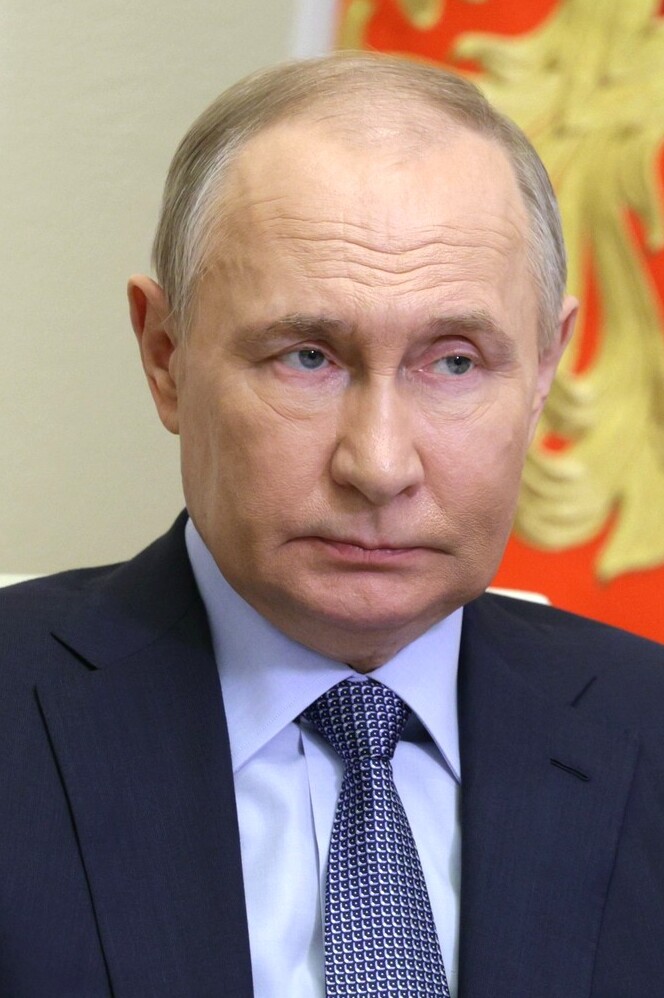
Smelyansky assesses Putin's political message and incentives to end the war. The dossier offers separately sourced background, without treating his interpretation as a confirmed account of private deliberations.
Image credit
Ukraine Arsenal
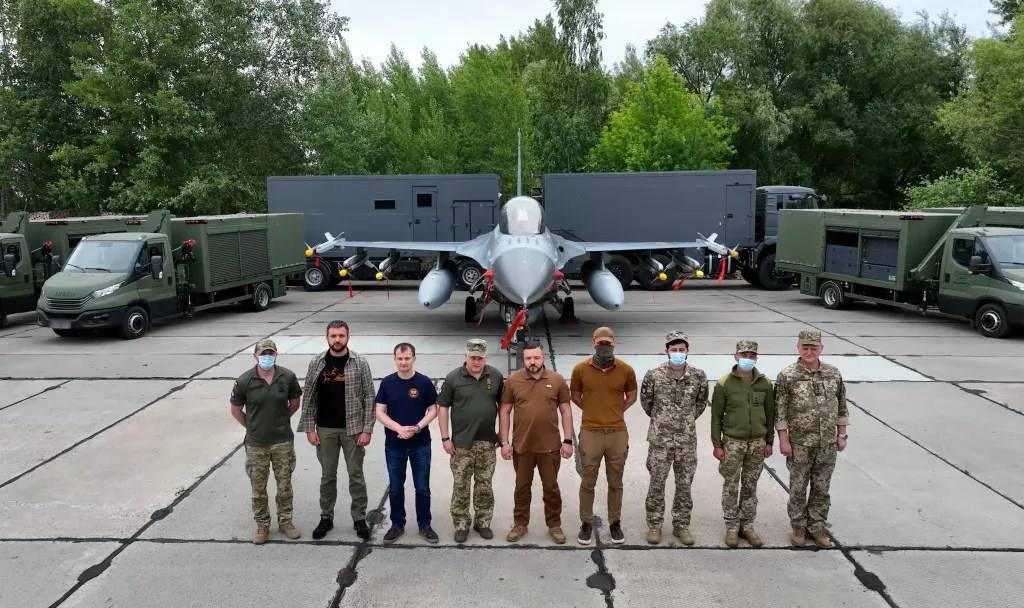
Background on drones and air-defense equipment alongside the discussion of threats to civilian infrastructure. The interview does not establish specific aircraft models, current inventories, or the performance of a particular defense system.
Image credit
These links are an RH reading guide, not guest endorsements or independent confirmation of every statement in the interview. Episode views reflect its publication date; linked records have their own source dates.
The written account
Keeping a country connected under fire
For Igor Smelyansky, running Ukraine's postal service means deciding whether communities can receive medicine, food, pensions, and the parcels that keep small businesses alive. He joins Ryan Fugit and Glenn Corn to describe how Ukrposhta operates through invasion, blackouts, and repeated attacks on its network. Glenn first met him in Kyiv and opens the conversation with the practical question behind that meeting: how does a national delivery system keep working during a war?
Smelyansky describes a country with thousands of small settlements where long distances and sparse populations already make deliveries difficult. War adds destroyed buildings, damaged vehicles, disrupted energy supplies, and threats to staff and customers. His response includes mobile post offices, quickly replaceable branches, backup power, and operations that can shift when a facility becomes unusable. His figures describe the network at the time of the interview, rather than an independently audited current inventory.
Pensions, medicine, and a visible connection to Ukraine
Cash matters when electricity and communications fail. Smelyansky recounts efforts to keep pensions flowing in occupied territory and to maintain circulation of the hryvnia, Ukraine's currency. He describes postal workers as a visible civilian connection to the Ukrainian state, including when services return to liberated communities. Food, medicine, and reliable payments become part of whether residents feel their country is still there for them.
He also explains why ordinary business calculations can change on the ground. In Kherson, he says, a visit persuaded him to retain branches he had considered closing because residents were avoiding journeys across the city. Staff were reassigned closer to where they lived. The conversation repeatedly returns to the importance of seeing conditions firsthand and balancing access to essential services against the danger of continuing a route.
What he learned about Russian decision-making
Glenn and Ryan ask how Smelyansky's earlier work in Russia shapes his assessment of negotiations. He argues that intermediaries often relay messages upward rather than make decisions themselves, and that unwelcome information can be softened as it moves through the hierarchy. That is his interpretation of the system, informed by his experience, rather than a verified account of any particular private Kremlin discussion.
Smelyansky describes Putin's political appeal as centered on an idealized past rather than a compelling future. He connects that assessment to his doubts about Moscow's incentives to end the war and to the hosts' discussion of hostage diplomacy. Their judgments remain attributed to the conversation. The linked Russia dossier provides separately sourced background on the leadership structure without treating interview opinions as established facts.
A delivery network that can change shape
Ukraine's closed civilian airspace has not removed the need to reach overseas customers. Smelyansky explains how Ukrposhta connects road transport to flights outside the country and onward delivery partners. For Ukrainian sellers, delivery reliability affects their income and standing on online marketplaces. The same need to adapt appears in his account of restoring rail parcel transport and launching a marketplace intended to serve customers even when conventional shopping becomes difficult.
Automation supports that flexibility. Digital administration and distributed teams can keep payroll and other functions running when one location is disrupted. Smelyansky also describes experiments with AI-assisted planning, while emphasizing the constant work of adjusting operations. His wider point is that a national network needs alternatives ready before the next interruption, not simply a plan to rebuild the same vulnerable arrangement afterward.
The people behind the network
Asked how he motivates employees to keep going, Smelyansky says he sometimes has to stop them. He recounts workers using boats to reach pensioners after flooding and describes their attachment to the people they serve. That commitment comes with real danger. The hosts discuss the human cost of attacks on civilian infrastructure, while Smelyansky explains the difficult decisions that can leave customers disappointed when a service cannot safely operate.
The closing discussion broadens to winter blackouts, the limits of cashless services when power fails, and how drones can threaten infrastructure beyond Ukraine. Smelyansky argues that Western businesses and security institutions should study these changes now. He also raises the tension between normal procurement rules and wartime urgency, while acknowledging corruption as a real issue. The episode leaves listeners with a practical question: which civilian systems would still function if their usual power, transport, and communications failed together?
Based on the Restricted Handling conversation published October 25, 2026. Views and forecasts reflect the discussion at that time. Original episode and show notes ↗
Full episodeRead the transcript
This transcript comes from the published episode captions, with spacing adjusted for reading. Names, punctuation, and terminology may contain transcription errors. Refer to the recording for exact wording.
Hello, all of our freedom-loving people out there in the restricted handling world. it's great to have another episode on tonight. Ryan Doing great. coming coming at us from the West Coast. I'm here on the East Coast, and today we have another amazing guest, Igor Smilyansky, who is the Postmaster General, I like to say, of Ukraine. He is the CEO of of Ukra Pošta, the the Postal Service, in Ukraine. And I I think we're gonna have a great discussion, fascinating discussion. And as we're speaking, we ask all of the people that follow us to just be patient with us because Igor is in the middle of dealing with some crises within his network, within his company, for his employees, which I'm sure we could talk about a little bit if he's okay with that.
but I I I've known Igor for about two years now. And I'm gonna describe here if it's okay with you how we met, but first I just wanna say hi and let you introduce yourself to our audience. Absolutely. hello everyone. I'm Ukrainian American, so I was born in Ukraine. I lived in the US, I'm a US citizen, I live in New York, Washington DC, I'm a graduate of Georgetown, George Washington Law School, and based university in New York, work in Boston Consulting Group, KPMG, City Group, Like at Martin. lots of different companies and for the last ten years I am heading Ukrainian post service and as Glenn mentioned both through corona crisis and now through the war.
It's amazing. By the way, I I never thought about this, but I have two brothers that graduated from George Washington Law School. So maybe you were classmates, but I'm better looking, so you wouldn't recognize them. ~ you so l let me just a little bit of background for everybody here. How we met. We were at a dinner together a couple of years ago in a great t restaurant in in Kiev, Tartar restaurant. It was a very crowded table. I was together with General Petraeus. And I sat next to Igor at the end of the table and we had I I was fascinated by the conversation when I when I realized that Igor was running the postal service in Ukraine, you know, can imagine like how challenged that is during a war.
and I have to say this and I don't mean to offend anybody, but at that dinner, chef what's this chef who's the favorite ~ from Chef Andreas? appeared, he was at the dinner and who was the actor that showed up? I always forget his name. Sean Penn. Sean What? Penn showed up for the dinner. And I have to say that Eager was definitely the most per interesting person in the room, as far as I'm concerned. And we'll get it till But we also had a great sense of humor and we had a great idea.
Yeah, we had a great dinner. So, and and we just recently saw each other in September in Kiev. And I just wanna I really thank you for taking this time. I know it's late there where you are, and you're probably ha like you said when we when Thank I logged on, you're just beginning your work day. So and for the audience, you know, eager eager is managing how many how many post offices do you have around Ukraine that you're responsible for managing? In in general, so people understand Ukraine is a country of small cities and villages. So there are twenty six thousand cities and villages, but out of those seven thousand villages with population less than a hundred people.
Five ten thousand with population than five hundred. So it's a large country with well, lots of small villages, which obviously makes logistics and business harder because you sometimes have to travel long distance for a really low density. So we have over four thousand as of today, right? Before the war it was different town. So as of today we have forty five hundred stationary branches, we have roughly two thousand movable branches which are covering twenty six thousand cities and villages. So Having movable branches obviously allows us to make everyday decisions where we will or not go. Because Russia actively pursuing our fleet.
From February 20 to 22nd, we lost by today 438 trucks. we lost over a thousand branches. 500 branches we lost and rebuilt, lost and rebuilt. we now design container type branches, which we can install within two, three days after the branch is destroyed, so we can continue operating, and it's a totally independent branch, meaning the container type branch they have air conditioning, heating device, Starlink, so they can operate independently in any area because we are the provider of last resort. I mean I lived in the US, so I know what.
USPS is so on top of that, we also open pharmacy so we can deliver medicine to every single village in Ukraine, which is important because Russia over the last year destroyed about by today about 30% of pharma supply in Ukraine, they're actively destroying pharma warehouses. so again, the goal is to have as dispersed distribution as possible. We're delivering food, we're delivering pensions, pension in cash. it's very important. during the war. Why? Because Russia actively destroyed energy and mobile infrastructure, meaning we have to design the processes which can work with or without you electricity. And now as Russia actively destroying the gas stations, we're also designing our independent fuel supply because you have to fuel we have over 2500 generators and it's a separate mobile app which we design because you have to change oil every 50 hours and do the checkups every 200 hours. You can imagine if we have 2500 generators, you have to manage fueling Them, checking them constantly delivering them.
And now, since we know Russia will go after the heating system, we bought now the diesel heating devices so we can install on the branches and heat our branches because computers only work if you have over five degrees Celsius, etc. So basically, we are building independent infrastructure to make sure that no matter what Russia does, we continue to operate. And if they destroy our warehouses, and they do sorting centers. we find a way. I mean, don't think I'm gonna disclose lots of secrets, but in general, so for example, we work in the Donetsk region, in Slavensk and Kramatorsk. since Russia actively chasing our trucks and destroying our sorting center, so what happens how we work? one truck is collecting parcels from Donetsk from Kramatorsk and Slavensk, and another one bringing the new parcels from Dnipro.
And they meet in Kharkiv region in particular city under the trees, they exchange The parcels and they go other my gosh. ways. every time it's a different tree. So this way we continue to operate because it's important because we help some people to evacuate. So usually the parcels out, it's the parcels from soldiers, from the people evacuating. And on the way back, it's people buying basic goods, whatever they need. I rema I remember the the night when we met you were talking about you had to go down to pay your employees and you were explaining that even in the occupied territories you're you're working to deliver pension checks to Ukrainian citizens that are in occupied parts of Ukraine, what we've done when Russia occupied Herzone, we've designed a scheme which Russia could not understand how Grivna continued to operate. So we've designed a scheme where bakeries and gas stations would give us grivenas and we pay for their bills on Ukrainian territory.
And we use that cash to pay the pensions, so then the retirees come back and again pay in Grivenas. So we'll keep we kept the Griffna circulation going and Russians could not realize how the hell is Grivna still operating in the in In the territory. And I mean now they're getting smarter, obviously. That doesn't work, but in the beginning of the war, and by the way, it was different because there were different Russians. there were Russians-Russians, like in Herson, that they brought to manage the city. And for example, in Zaporizhia, they used ex-Ukrainians to manage it.
and I use different negotiation tactics because with the Russians-Russians, it's you cannot bargain. with the ex-Ukrainians, you can make them fear. I would say, look, if I don't bring pensions, Babushkas will destroy your power in two days. you will have a bunch of problems. So we agreed that they would let us our trucks pass through, deliver pensions and come back. And again, yes, based on Geneva Convention, the occupiers are responsible for the people, but you know, Geneva Convention was not written in the social media age. So If we don't bring pensions, Russia will claim that Ukraine forgotten its citizens.
And ~ Right. so it was important for us to maintain and we were also the first company that would go to the occupied areas because we we are the first civil, usually it's one, two days that we were right behind our armed forces. because people were brainwashed by Russian propaganda. Imagine the way the occupation happens, if Russia occupies it, then about two months of active military conflict, and then the Ukrainian armed forces come. When they come, Russian propaganda was saying, well, if Ukrainians come back, they will kill all of you, they will put you all to jail.
But people were afraid to go to our army guys and and women. So we were the first civil people they saw. And again, we would bring grievance, it was so cool because you would see rubles on like Russia and then we will bring grievance, we will bring food, and like in two or three days it's back to Ukraine. And that's how people understand the Ukraine is back. So you have all those small things and I always go with the team. for example that they distribute UN UN packages to people. But what what I realized that when people are under stress they need chocolate.
And because you know under stress you need suites. And you know, we realized that and we brought suites and people were happy. So you have to know to be on the ground all the time. There is no way you can manage the company like this via telegram or you know being somewhere else. you have to be constantly on the ground to understand how the situation changed. I just came back from Kherson. well it used to be a large city, now it's down to thirty five thousand people, and to be honest we have for example eight branches there.
Which mathematically we don't need. So I was actually going there to close some branches. But when I came, I realized Russia actively attacking public transportation. So people are afraid to take the bus. And what it led to people living in clusters. So they live where where they live, they try to use the pharmacy, the post, the store, so they not to travel. So as opposed to closing it, I kept all the branches open and I even reshuffled the employees so they worked where they leave so they also don't have to take the bus.
and again you have to adjust constantly to make sure that you continue operations, you reduce the risk of Russia hitting people, appliance and just you know keep on going. Wow. you mentioned how many branches and vehicles you've lost. How many employees have been injured or tragically killed, I'm sure, working in these front lines? Again, that that's definitely not a number we are proud of, but we only lost having more than twenty-five thousand people that work on the front lines, we only lost five people on the job. we lost That's remarkable. That's remarkable.
boy. about forty people overall, forty-four to be exact, but that including our employee that went to serve in the army. and that including people killed in the ho in their homes. So Glenn, I'm sure you went through Lviv, right, when you came to Ukraine, which seems to be like Yeah. a relatively safe zone. So for example, we lost an operator there three days before her her wedding. The racket flew into her house in Lviv and killed her at home. So again on the job five and overall for opposite. Three days before her wedding.
Yeah, if if you don't mind, I'm gonna shift a little bit because you also have a very, very unique perspective on the enemy in this war. You spent a lot of time in Russia. You worked in Russia. I I I my understanding is, I hope I can say this, we can edit it out if you want, but you've had a plenty of time around President Putin and the people that ran. well with his with his well top top management of pressure, let's put it this way. Management of Russia? and you just said when you were talking about trying to negotiate with the Ukrainian the Ukrainians that came back to run Zaporizhia or or occupied parts of Zaporizia and then with the Russians, there's no negotiating with the Russians.
What is your perspective? I mean, from your experience, is there any way to convince Putin and the people around him to stop this war, this war of aggression against Ukraine? And by the way, this very unhumanitarian war, in my opinion. look, in terms of negotiation, I think there are two questions. A negotiation. Negotiating with Russians, they don't negotiate, they pass the message. that's the difference with Ukraine. In Ukraine, commanders or myself, I don't have to, I mean, for most of the time, I don't have to, for example, check with president on my decisions.
I can make the decision. Now, when you negotiate with Russians, they don't make decisions, they transfer the message up. so they go like this. Right. So when you negotiate and you have to understand so there's no point of convincing them of anything, since they're not the one you can try to package the message so when they deliver, and hopefully don't forget, they pass the message to correct people. The problem is, and that's why we were winning the war, especially in the beginning, they don't pass the correct message. Because every time the message gets delivered up, It's cleared of the negative of the negative information.
So you have to understand how many layers it passes through. And by the way, it was the same when I was working in Russia. I was working on 10 KBP deal. no one wanted to deliver bad news, because usually the messenger is the guy who gets killed. So Right. you know it gets edited. It just you have to understand it, right? In general, that's how the decision works. In terms of your question, since I work at Boston Consulting Group, you know strategic consulting, I wish I I have better news, but what does Russia have when the war is over?
Nothing. Putin doesn't sell future. He sells the past. If you look at propaganda, there is nothing about the future. So he spends billions on propaganda. He does not say how the Russia will look like. He constantly tells about how the Russia was looking like when it was Soviet Union, right? So which means so tomorrow the war stops. What happens with Russia? Ford suddenly comes back and opens the plant? No. I mean, you know, Tesla factories are not gonna be opening in Russia. And you have a bunch of angry people coming back to Russia.
So as a matter of fact, before 2022, we have this more or less sometimes active sometimes not active war in the next region from twenty fourteen so every time the war would stop or relatively stuff, relatively speaking, right? The crime rate in Rostov region, which is close to the Nets, would go up thirty percent. And by crime rate killing and raping, etc. So because these soldiers will come back and have nothing to do. The salary in Russian army is several times hundred times more than the average salary in Russia. So imagine if today you're a hero, you're fighting for Imperial Russia, and tomorrow you're a security guard in Langerestore.
Right? That's well, because there's no job there's no other job which you can take. So I think they understand it. And I think so in terms of the motivation to stop, I think it's only if the world will pressure them and they run out of money. That's probably the only way, not fully stop, but at least stop for some time. ~ Right. because again, as I said, there's no other great idea. They can you know stop here, you know, occupy Estonia or something. I mean, they have to keep that you have to occupy people with something.
I mean, Russia is number one in the world for not having a central sewage system. Thirty percent of people don't have toilet in their homes. So which which is, I think, was the mistake of Ukraine and the world in general, thinking that you can make these people feel wars. They have nothing. it's really hard to feel wars. when you have nothing, well there's nothing to lose. And this Right. says, well you have nothing but we are great nation. Right? So we can we go after Americans, Ukrainians, we'll I don't know, we'll scare everyone with the bomb, etc. So you're like, well I don't have anything but we have a bomb.
So it's back to USSR. So Right. that that's why I wish I would find because I've thought about this a lot and I was like, why would they? Yeah, I hate even bringing this up, Igor, but it was disappointing to see our US special envoy, Steve Wittkopf, call Putin a humanitarian. Recently, just from having been in the room with top management, as you said, over time, and as an advisor and working businesses in Russia, feels like that wouldn't be a great play on our side. how should our negotiators and envoys be approaching negotiations with the Russians?
what would you advise them to do in these meetings? if Russia is playing a hand that you just described. they just want to hear what they want to hear, right? So from the pure negotiation tactics, I mean, you know, Putin already occupied Kupinsk three times. I don't know if he remembered how many times he occupied it, but he likes to hear what he likes to hear. I mean that is why again, you know I your background, so people who have information they would not go to Ukraine because math wise it would not work.
Right. So you only go when you have distorted information and waiting for people with flowers to greet you. There is no spy information that would give you that report. it has to be so severely reducted that you have to believe in that bullshit that that you read it. Ha Right? Yeah. So I mean Look, I think what endangered the US was in this particular case. That was not the guy who was in Russia and arrested in Russia. That was the guy in IZUM. He was working as a teacher in IZUM.
So if you look at the consequence of events, right? Russia occupies Ukraine, goes to IZUM. Takes over American, puts him in jail, and US negotiates for him to be released. I mean, this is not a this this guy was not a soldier, right? He was not even compared to Gershkovich, right? He was not even living voluntarily in Russia. So this was guy taken in Ukrainian terri, not even Donetsk, right? Putin says Donetsk is part of Russia. This guy was taken in Kharkiv region, which even he doesn't claim to be Russia.
So y basically US is thanking Russia for taking his citizen in turn Mm-hmm. to another another nation. It's like you know Putin would go now to Israel, kidnap the American, put him in jail in Russia, and then the US would negotiate for his release, right? For her release. So that would be more or less the same except for Russia not occupying I guess Israel at least for So basically we're calling a kidnapper humanitarian. Yeah, the guy, and because nothing would stop him from doing it because the model seems to work. Well, what they do, I kidnap American, I put him in jail, and we negotiate for release.
And we get something for it. yeah, I mean beyond words. But I I think Igor I I I I don't know what you think, but I have a little experience in the same area. And what I would say is, you know, there's this word in Russia Loch. And With us. when when when you come across as being too weak or being too what's the word, deferential It seems that you you come across as being what's how would you translate it into English? Like just very naive. Yeah, what is that word? Naive.
It's like naive Okay. or like a like a like a But but stupidly naive. It's like naive to very not smart, basically stupidly naive. Like Ha ha. Like a mark. I you the Vice President Vance said I heard him today saying that he said that because you know, we just wanted to get this guy out of custody. But I agree with Igor. I mean, this is trade bait. The Russians have been detaining Americans and they'll probably, unfortunately, do it again. you know, we shouldn't be negotiating with terrorists. I thought that was US government policy too, which is a whole nother story.
But anyway, let's go back to Ukrapochna. Yeah, big Russia only understands force. That's what President Zelensky to said today. from the beginning of the war, they would say if one rocket hits Russia, we'll bomb nuclear everyone, right? So what happens now? Well, we keep hitting them. Is there response? No. he said, Well, if someone touches our Black Sea fleet, it's gonna be third world war. Well, we destroyed the Black Sea fleet, nothing happens. So they only understand the force. They like, the bad guy in the on the street. If you push back, they will not, I mean they will respect you at least.
if you Right. they will keep you know hitting for money, you know, it's like a bullying in school. You respond, you know you you face the attacker. If you just keep giving the money, that's just incentive incentive to ask for more money every time. I know that because that's what Ryan did to me when we worked together and that's why he lives in California and I've been stuck in Virginia. I'm not on the I don't live near Napa Valley because he kept bullying me, taking my work money. You just decided to spread out to vote for the different senators.
That's it. No, so so going back to Ukrapusta and and this network that you've had to manage, and you've been doing this since two thousand sixteen. So Yeah. all ten years of or the country at war, you've been basically delivering like all the the mail, all the parcels, and as you're saying now, too. It's interesting, like pharmaceutical like medicine to people, delivering salaries. And did you have a background in like when you were younger, did you say I'm gonna I'm in I'm I did you have a background in logistics or did you have a background in transportation?
No. well just driving my car in New York, ~ that Yeah. that qualifies, but you know, under stress conditions. But no, I mean obviously not, but you know, I'm proud to say that our team, for example, last week we got the prize as the best postal service in Europe, and twelfth in the world. and it's it has nothing to do with the war. Universal Postal Union, which combines all the postal services in the world. measures every year by like hundred metrics quality of service for all the postal services in the world so we are number twelve in the world having no airports so for example our time to London is three days our time to New York is eight days again no airport so what we do we pre-sort in Kiev for Miami, Chicago LA and New York And we take it forty-two hours to Frankfurt and forty-six hours Kyiv to London, and DHL or Lufhanza takes off and takes it to the US and USPS delivers two millions of addresses in US.
we support Ukrainian business because one point seven million Ukrainian goods are sold on Etsy and Amazon and eBay, one point seven million. It's one billion dollars of revenue. it's thousands of small businesses. I was in Kharkiv at the beginning of the war, it was so cool, so the bomb just stopped like literally five minutes. And this girl comes with the bucks and she recognized me, takes a selfie, wants to put on Instagram. I said, So what you're shipping? It's like, thank you for flying, because I'm selling handmade glasses in the US for weddings and I support five families. we did Great.
not fly for five days because we had to rebuild having no airports. But from that on, even when Trump administration Introduce the new custom custom duties. All postal services stopped flying, it only us and Royal Mail that continue to fly. We found in the US a startup that helped us to integrate with US custom service and we resume flying in one day. same thing now. we probably one of the top now postal services integrated with SPS and custom with the new changes that just been postponed from. October twenty second to January twentieth.
So we have to constantly adjust because again it's thousands of people that rely on us. algorithms for Amazon and Etsy and eBay, if you don't deliver on time, they drive you down in ratings and your sales goes down. so we we continue flying and said people despite all the bumps and everything, people still want next day delivery. So mm at the beginning of the war when there was a curfew and everything, my Friend, you've met him, Alexander Kamichin, who was the head of Ukrainian railways. the post did not use railway for carrying the parcels for 21 years.
It took us five days to find all postal tracks, cars, and relaunched taking the post by railways across Ukraine in five days. It was probably the fastest startup that we launched, and we carried like 20 million parcels by railway from Lviv to Kharkiv overnight. no matter what happens. Well I've got an important question for you, Igor. I read online that you started, one of your first jobs was you ran a bar nights. I'm sure alcohol was quite important. Are you all delivering alcohol, which along with sweets, I think is probably quite useful in this environment?
~ it's a big challenge. I know I can. by the way, there is no drinking rule in the near front areas. So the alcohol is forbidden, which obviously makes it contraband style business and people find a way to do it. We are debating on it. So we don't deliver to fr near front areas, we deliver it obviously within Ukraine. but we we may think about since the winter is gonna be tough, we may need to expand our assortment of spirits to keep people warm in the winter. wonder Igor, if we could talk about this newly announced Costa deal you're working and why now, why you chose to do this?
Could you tell people what this entails and what a logistical effort this is? well I mean people understand the concept of marketplace, right? Where people can sell the businesses can sell B2C or C2C goods. Ukraine is getting into tough time where by the way there is no black and white rule. So for example, government is trying to find very thin line. What do you do during air attacks? Do you close the business or do you keep it open? Because if you close, you're gonna shut down the economy. We won't have money to pay for defense.
If you don't close, you run a risk of racket hitting your business and killing people. And again, there is not gonna be white, black or white. So in Herson, there is air attack the entire day. So Yeah. if I would close for the air attacks, well then I just won't open. Well, if I don't open, then people don't get the goods. It it's a tough it's it's tough it's a tough question right now because I mean Russia now have this reactive drones which are flying eight hundred kilometers per hour. I mean you don't have time to you know go down and go to bomb shelter, even with the warming, especially if you live so Russia hit our sorting hub in Kharkiv.
Kharkiv is forty kilometers from the border from Russia. by the way, the Patriot won't say because Patriot needs a thing minute and a half to to hit the racket. Well, forty kilometers from the Russian border, that's probably 39 seconds even for a regular racket. right, so e even when we now look at our logistics and everything, we understand that the challenge. So people are now gonna be having a hard time getting to the store. And stores will have a hard time supplying the goods because Russia destroyed the warehouses, central warehouses.
So we thought we need to find a solution where people will be able to order, not having to think about delivery, because obviously, you know, when you have shipping charge, you would think twice about ordering something. So we've from concept to the Thursday, which was yesterday, it was seventy-five days. that we've got two teams together IT team, logistical team, and we've launched the marketplace which has ten million SPUs, and we offer free delivery for everything from first grivena To every city or village in Ukraine. It's a good thing because it's C2C, so there's no one central warehouse.
So Russia cannot hit one central warehouse and cause delivery disruption. Because it's millions of people sell businesses selling it. So again, we need the model where our model is cheaper than their drone. So and that's what we've done. So we've launched this marketplace. And by the way, Ucar Posta, even with a state owned, we don't get any subsidies from the government. As a matter of fact, we pay into the budget. so all the losses we need to cover with our profits, with our work, with our revenues. So we are self funded, we showed even the profit for the first half a year, despite again heavy losses. We just have to be better every day, leaner and keep working.
Well when I joined proposed we had seventy-six thousand people, now we're down to twenty-five. Twenty five thousand. eight hundred and seventy two accounts. Now we're down to thirty five and AI. how have you automated like the system and brought AI into the like are you using AL I a lot in your processes? ~ everything everything we could automate we did. You know why? Because we have to be flexible. You have to have extreme automation. When Russia hits one of your centers, you have to quickly re restructure and reza redesign the deliveries, right? If you're not automated, it doesn't work. People want to get their salaries paid on time.
What do you do? Well, we have half of our payroll in Kyiv, half of the western part of Ukraine. If they keep hitting Kyiv and people cannot get to work, well the Western center will pick it up and the salaries will be paid on time. So we don't have any paper in the company or All employees have mobile app internal and they do vacations, they can ask for vacation, they do inventory, they order goods, etc. So we digitalized company to the maximum level so we can be as adaptable as possible and obviously as efficient as possible.
Mm. Now we're trying to Listen. teach AI to predict when Russia hits. So usually, for example, they active on Sundays, which means so imagine we have 12 hour shift for the sorters, right? So in peaceful times, you understand, like for example, we have equipment that does 8,000 parcels per hour. Well, if half of the shift they're in the bomb shelter. that's half of the efficiency goes out of it. And that means you're breaking, you know, the logistics. If the truck doesn't live on time, it doesn't get on time. If it doesn't get on time, then you don't deliver the next day.
So now we're trying to see maybe we'll restructure the shift. So teach AI to predict where do you have more people. so for example if Russia, which happens to be the correct statistics, hitting the hardest on the night between Sunday and Monday, because they're trying to destroy people start of the week. So we'll have less people on Sunday night, but more people on Monday morning so they can pick it up and quickly so we keep learning as we go along how to do it. And also if we can shift some of the sorting to Lviv, which has less alarms than Kyiv, then we're shifting it to Lviv.
And also having plan B, for the pharmacy. We have to have a plan B if Russia keeps hitting Kyiv and we still need to deliver, we shift it to Lviv and third there and then deliver through Lviv. If they keep hitting our centers again, well then we are looking now at Moldova, Romania and Hungary. Maybe we'll put the sorting center right on the border, sort there and bring it to Ukraine already sorted so we can continue operation. So this This process of adjustment never stops. we just need to go and keep adjusting security procedures.
So for example, these movable branches. That go to the villages near front lines. Well, we need to let people we are coming because otherwise we won't find them because they live in different houses which are not destroyed yet. Now, if we tell them we are coming, there are Russian sympathizers. That's the reality. So they will let them where we are coming. So, what do you do? Well, we tell them where we are coming, but we are not stopping there, we're stopping about 200 meters from that point. So they can still visually see us, but we are not where they are.
So if they hit with the The coordinates we are not there. And we keep changing the allocation, so that's how you keep the people alive and the clients alive. You just have to keep adjusting the the procedures. I want to stress to the people that follow this podcast. can you imagine that the postman, the the the employees have to think about operating like that because you have an enemy which is targeting s it's clearly a civilian organization delivering packages, delivering, paychecks, delivering medicine. It's just unbelievable and barbaric. And and God bless your y the the people that work for you that are out there doing that. I mean, that is that takes incredible courage.
and people usually ask how do you force people to do it? I actually have to force them to stop sometimes. When I make a decision that today we are not go, they feel such a huge attachment to their clients that I need to stop them. So when Russia bombed the Hairsom Dump, right, when they flooded they flooded the areas, our employees rented the boats and they got to their retirees to to keep them, you know, give them food So I'm very proud of our employees. Again, I have I never push them to go.
Never. they know I'm with them. again I'm on the front lines at least once a month, to see how they're doing, to see the situation. definitely there's no way you can again manage the company from the front office. You have to be there. People value that more than the paycheck and you're with them. Right. So you're co you're constantly on the road. moving around to all the different branches, all the the the points of your company, meeting your employees. In a in environment, But but you I for them taking the picture with me and then posting and sharing with the friends.
I I I'm even careful on what they post on Facebook when they come from these trips because sometimes you forget one picture and people feel upset that you know picture put the picture with this and this and not with them. And because you know during this war it's important to keep the morale up. You cannot buy it for money. If they were for money they would g you know, not living in the Nets region, they would go and live in in somewhere else. So the important part is a not to give an idea that you can stop.
It's like you know, I was I was growing up in the doctor's family. The heart, well, even if it's in a bad shape, it's better to keep up than to have reanimation, right? resuscitation. So same is the companies. I don't know one company that stop operating and then resume in Ukraine. There is no way, people will not trust you that you will go And that's the fine line that our government and our people now working, because the intention, the good intention to protect people is to be safer, right? To stop during air attacks.
Well, but then if you have that idea that well, maybe I'll stay at home and not go to work because there's an air attack, Ukraine kept going because it kept going from day one. And again, if you look at again I worked in the US for a long time, if you look at standard corporate governance procedures, if you look at standard risk procedures, it would never happen. And you know, the project I mentioned with Commission that we launched Railway, I mean if we would if I would have a risk officer and commission would have a risk officer, I mean they would written a memos, what are the chances of the bomb being in the parcel and blowing up the truck.
No chance. you know, that thing would never take off. ~ Right. so you know, it's my decision and my decision only. and it's tough decisions, trust me, in the morning when I wake up, I sleep for three or four hours. But when I wake up, you get the message from people in summer regions like cursing me because I decided that today we will not go to the village. And they're saying, Well, we are the last support, we don't have the food now, we don't have the medicine. But I made the decision because we lost two trucks over the past right?
That's not how it works. It's ~ Right. and by the way, since we are you know part of European community, we have US investors, you know, we have IMF and they look at the rules and they have the rule book. It's a challenge to explain them that the rule book in the peace country, it's not the same as the rule book in the war torn country. public rec procurement is a good thing, right? You probably all the time here in the US how Ukraine used to fight corruption. good idea. Now can I buy mobile gas stations in public procurement?
What I'm gonna do, give the Russia all the locations where I'm gonna install the mobile gas stations. And w w what's the price that you pay? Because the price Right. you pay for the generator with two weeks of delivery can be a thousand dollars, price for generator with six months of delivery could be six hundred dollars. Well, I mean if you just omit that small part, looks like someone's stealing the money. So Right. you know, the corruption issue, which again, there is a corruption in Ukraine, there's no question about it. by the way, and but the whole thing is really paid for by Russia to constantly bring trust.
I worked in Russia and you work, so you know the size of corruption in Russia compared to Ukraine. You know, they can buy it three times over. but again, the definition of corruption, because you know, buying a truck today. Somewhere you you're finding track in one kind like today, I'm looking for the bags for the medicine. Well, there is no one producing these bags in Ukraine that will hold the temperature so I can bring the medicine. Well then what's the price of the bag? Well the price of the bag is whenever I find the first bag available, that's the price of the bag I need to pay to have it done today, not in in the year and a half.
So these Right. These issues, I think, don't get talked enough, that you know, constantly the issue of corruption, etc. So, again, not to say there's no corruption, there is. just the definition of corruption. Like I run a procurement for the trucks to replace the lost trucks. Well, the Chinese manufacturer won Chinese manufacturers that have production in Russia. Well, they gave the cheapest price. is there a ban on buying Chinese trucks? No, there is no ban. So if I buy Chinese trucks, I get killed in the media for buying Chinese trucks.
If I don't buy Chinese trucks, I get a criminal case for overpaying because they were the cheap ones and they just got the more expensive ones. Right. Right. ~ sometimes finding different ways of getting out of it, but it's not easy as well. Well listen, now I realize b at the start of this part of the discussion, I realize why you're so brave. You're you're somebody one of your parents or both your parents were doctors. And you became and you became a lawyer. ~ well using That takes courage. Ha ha ha ha.
That takes a lot of courage. But but I think it's important because I I I read obviously all the media about the corruption and the President Trump's always bringing it up. But how much is the drone worth? Well that's when you're producing it, that's how much it's worth. Because the drone today is better than the drone in six months, whatever the price is. So the definition of corruption has to be I cannot say defined, but you know it's not black and white. It's not yeah, let's sign the deal that will be done in two years.
there's also something here which is w very few people seem to talk about it in the West, and there's something called moral corruption. And it's morally corrupt when you kill children, when you s when you attack t civilian targets. We've seen, I mean, Americans can look online, they can see some of the videos of Russians flying FPV drones into stores, blowing up young people, chasing people on marketplaces that are clearly not military targets. There's no military value in what they're doing. It's simply for the purpose of killing people and terrorizing Ukraine.
That when we talk about corruption, to me is complete moral corruption. And it's moral corruption, now you got me on my high horse here, but it's moral corruption to terrorize your own people the way that Putin has been doing and to drag a country down. As you said, there's they don't talk about the future because they they don't have a future. Because of the poor leadership. They ~ talk about a past Which they exaggerate and lie about a lot too, by the way. But it's all focused backwards. Where you why are you looking forward?
Well best you can draw anything you want to, right? ~ Yeah. Putin constantly talks about Zelensky, by the noted it today. Putin constantly talks that Ukraine has always been a part of Russia. There's only one problem with that. Kyiv is two times older than Moscow. So you know there is an issue with the numbers. but the the goal is not to think about it. So Right. that's the the goal and but look at the other side. Look, I was working for the Boston Consulting Group in Moscow. we have people, the partners or the managers, US educated, MIT, Harvard, Berkeley, Stanford.
but they all turn not all but ninety percent of them turn out to be Russian imperialists. now well if you that point, right, you have to find yourself a self-explanation why you are supporting killing people. And then you try to find it as well, that NATO was going to occupy how the hell Ukraine and NATO, even geographically, you don't have enough NATO forces to go to Siberia by the time they get there, you know, they will be hungry or something. So mm but they will find to find it pisses me off.
Some of them actually went to the US and they still support Russia. I was like, Right. I mean Those the ones that Trump needs to get kicked out. if you're living in the US and supporting Russia, maybe you should not be living in the US. Go to Russia and support Russia. Yeah. That would be Anders point. But leaving Russia to make money, especially working for US companies and supporting Russia, living in the US is like that's questionable and but From security perspective, I think US and Europe and everyone needs to think that the story had changed.
Look, you know, before if Putin wanted to kill someone, he would send you know these guys to UK, they would be really bad spies, as it turns out. Now with the new drone technology, with face recognition, you don't even need the spice. You can send the drone with face recognition, and the drone will kill pretty much anybody. if you want to disrupt the airport, that's what Russians do. They rent an apartment near airports in in Europe and they just send the drone into the airport. Very easy to do. Before, if you would need professional espionage, right? We want to get, well, let's try to steal Coca-Cola roots.
Well, there's nothing you need to do, just you know Jump with the drone, the drone will follow a few tracks. in one week you have the full scenario. So I think security industry does not fully understand how it will change during this war or right after this war, and how easy that would be to do something bad. When people ask me, well, it's gonna be like before Amazon drone delivery, I was like, seriously, people will feel safe when something is flying? Well, is it carrying the books or is it carrying the the bomb?
And does it really carry the book or it does the does the reconnaissance? so I I my view is again, you probably know better about the situation. I don't think people appreciate how situation has drastically changed. I think Ukraine knows it, and that should be our sort of positive side to share with the world, to share with our partners in the US, in Europe, China definitely understands it. Russia to some degree understands it, but developing countries don't understand that this war has direct relevance to them. The technology that's today it's not something far ahead you know far away.
That's like can be coming to home like tomorrow. Yeah. Yes, absolutely. I just got to say thank you so much. I'm sure everybody listening is wondering how you have time to talk to these two knuckleheads over here in the U.S. We're greatly appreciative of everything you're doing and the bravery of the folks who are delivering all this mail across the war zones. No, thank you very much. again, I I think it's important again part of my job being Ukrainian American or American Ukrainian, to share this point of view because I probably have more sort of weight to say the situation because probably you know to my friends I can share to them the fact that every month is changing.
You know, today is different from yesterday. No one knows what's gonna happen in the winter. The winter we're probably changed technology to a large degree. you know how the transportation may work. do you build central heating station central heating stations? and by the way, sterling is a great thing, but if you put anti-drone air defense system, it doesn't work. because Starlink is GPS based and the way you dislocate drones, you tell them that's not Ukraine, it's Peru. so then then then GPS doesn't work. And then when Russia hits the power stations at night, let's say three AM, well, how long is the mobile mobile transmitters work?
Well eight hours. So you know when go like to see the impact that well the internet providers are down because internet without electricity only holds to a certain degree. You're not gonna be able to Love me. generators on every point. Well, the ATMs. ATMs don't work without electricity, and you're not gonna be able to put the generator behind every ATM to give people cash. Then what do people do if you don't they cannot just hold cash or the Apple Pay will not work? So you have to constantly see it, because again, bad actors.
Which US have a lot of people tr planning to wreak havoc in New York or Chicago or LA, they now suddenly get so many instruments that they never had before. ~ Yeah, that's true. Yeah. they can literally buy them in the US, don't even have to carry across the border. so I think the think tanks, I truly believe it the think tanks, the because the bad guys unfortunately are more efficient than the good guys. The good guys ~ really take Always. Always. longer time and the good guys have the procurement the procedures the corporate governance the bad guys just have cash and they go directly to execute what they do and I think the procedures will need to be rethought.
I think the defense and security procedures need to be rethought. again you don't need an army to attack today. Putin doesn't even need to invade Baltis. He doesn't even need to cross the border. He can you know he he has enough instrument to wage the war without actually crossing the border. Right. Igor, we this is why we do this podcast is to try and educate people, especially Americans. And so thank you for that message, 'cause we've spoken about this with some other guests before, but some American guests and I've tried to speak about it after my trips to Ukraine.
But to have an American Ukrainian who has been running the the major logistics I say center or or company in the country that's at war for ten years talk about this and talk about the change in technology is is extremely important. So all of our listeners, our viewers, I just ask you to pay very close attention to what our guest just said. This is this is spoken from experience. It's not theoretical. It's not coming from a you know a a a paper written or or read in a university classroom. It's everyday life.
And by the way, I'm a big proponent of privatization and private business. I grew up in the US, but now when you have private businesses, they don't necessarily in the forest major situations will work as the state-owned company. at the beginning of the war we evacuated thousands of companies when private logistical companies shut down and only thought about saving their business. So again, you rethink certain concepts. when you face understand, well, private business is good, but private business will always think about their shareholders and their interests. it's not necessarily they they'll pick up the duties during the force majority.
Again, at the beginning of the war when I gave speeches, I always said, Well, I hope no one ever needs the book. Run the company during the war. well now I have to change that. because I think now people do need the book, how we manage the company during wars major. And again, thank you, Glenn and Ryan, for supporting Ukraine. Thank you all to listeners who support you can. Please do. we are the good guys, no matter what's Yep. C on TV. it's always important who started what, and don't listen to Russian propaganda.
Amen. And maybe we can have you on again during the wintertime, Igor, give us an update. Thank you so much. Thanks for listening and being a part of the RH community. Would you like to receive the same daily intel brief that Glenn and I read? You can get it at restrictedhandling.com. We've curated what we consider to be the most relevant and reputable sources on all things international security, geopolitics, military and intel ops, and economics and sanctions focused exclusively on Russia, China, Iran, North Korea, and the Middle East to include accompanying podcasts for Russia, China, economics and spy stories. Just head to restrictedhandling.com, enter your email and you'll get the daily briefs that Glenn and I both read and you can leave comments and questions that we can respond to.
Thanks again for listening. Stay safe.
Back to the Episode Field Guide ↑Keep listening.
All episodes →
Mark Cancian / U.S. defense, Ukraine, and China
Mark Cancian on America's Missile Shortage and Who Gets the Next Patriot
Glenn Corn and Alex Vatanka / Russia, Ukraine, and Iran
Is Putin Bargaining Iran for Ukraine? Glenn Corn and Alex Vatanka
Between episodes
The daily brief is free.
Russia, China, Iran, and North Korea. Straight to your inbox.