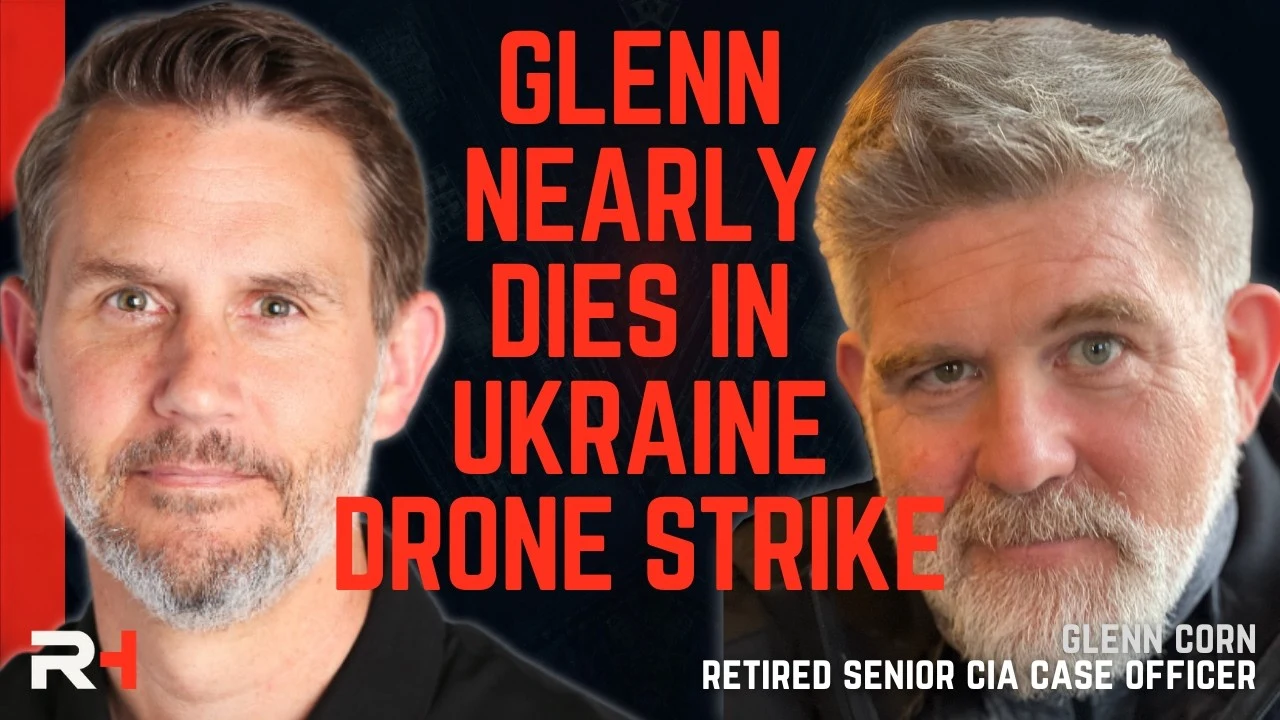
Glenn Corn on the Drone Strike Near His Train and Ukraine’s Lifelines
Back from a delegation led by General David Petraeus, Glenn recounts an evacuation near the Polish border and asks what it takes to keep Ukraine connected, supplied, and protected.
Glenn Corn / / 43 minutes
Start here
Three key takeaways
-
An evacuation became an eyewitness account of attack
Glenn describes leaving the train, hearing anti-aircraft fire and warnings to run, and seeing an explosion near a locomotive. He says no one was hurt in this incident and distinguishes his account from Ryan’s opening characterization of the danger.
-
The railway is a lifeline for civilians and visitors
Delayed departures, missed connections, families in fields, and railway workers returning to danger make the disruption tangible. Glenn’s account connects one journey with the strain of keeping Ukraine linked to the outside world.
-
Glenn’s policy argument centers on supply and protection
He calls for stronger pressure on Russia and additional air defense, then uses a Berlin Airlift analogy to discuss winter support. His interpretation of the strike’s intended message remains an assessment, rather than established attacker intent.
Episode Field Guide
Explore this conversation.
The people, institutions, and equipment connected to this episode. In the conversation marks a direct mention; Related background adds context.
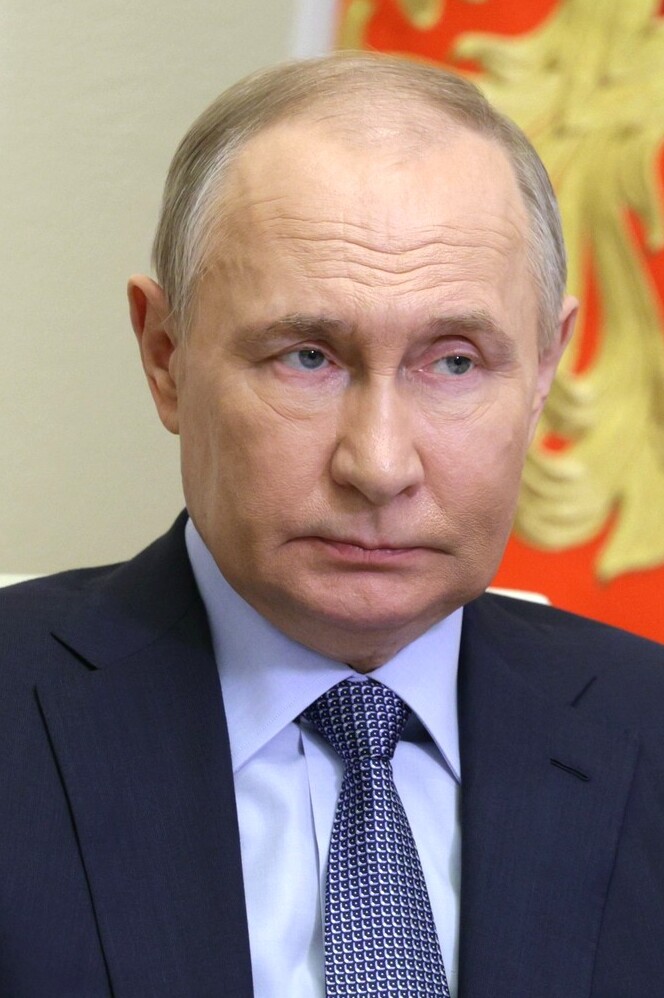
Vladimir Putin
Ryan and Glenn discuss their interpretation of the strike and Russian signaling. This provides leadership context without asserting that the interview proves the attacker’s intent.
Image credit
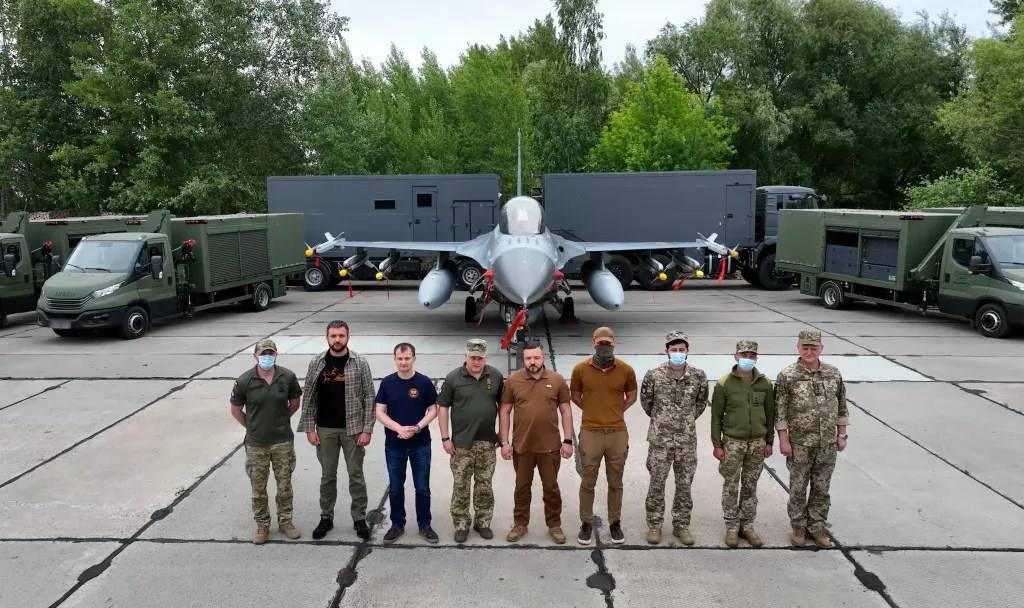
Ukraine Arsenal
Equipment background for Glenn’s discussion of air-defense shortages. It does not establish the current size of the gap or identify the exact drone variant used in the railway incident.
Image credit
These links are an RH reading guide, not guest endorsements or independent confirmation of every statement in the interview. Episode views reflect its publication date; linked records have their own source dates.
The written account
Leaving the train before the explosion
Glenn Corn returns from Ukraine with an account of a frightening journey toward Poland. He had been traveling with a delegation led by General David Petraeus when passengers were repeatedly moved off a train during air alerts. Joining Ryan Fugit, he describes the darkness near the border, railway workers giving urgent instructions, and the sound of anti-aircraft fire overhead.
Glenn recalls warnings to run and a loud explosion in the immediate vicinity of the train. He describes seeing the impact and later learning more about the locomotive that was struck. He says nobody was hurt in the incident. Ryan introduces the conversation as a near-death experience, while Glenn qualifies that characterization. The full recording preserves that difference and his own account of what happened.
The people who keep the connection open
The evacuation brings civilians and delegation members into nearby fields while the railway’s schedule unravels. Glenn notices the fatigue and frustration of people whose onward journeys depend on reaching Poland. Missed flights and changed reservations are more than travel inconveniences in this account: they show how an attack on a transport connection reaches into ordinary plans and family relationships.
He also focuses on railway workers who had to return to the Ukrainian side and continue their work. Foreign visitors could eventually leave, while the people keeping the system functioning faced another day of danger. That contrast gives the conversation its human center. Glenn’s wider observations about life under repeated attacks come from his travels and conversations, rather than a survey of every Ukrainian community.
An interpretation of the message to foreign visitors
Glenn believes the attack was meant to intimidate visitors and threaten Ukraine’s connections to the outside world. He discusses the presence of prominent foreign figures and the effect of making travel more dangerous. That reading should remain clearly attributed to him. His eyewitness account describes what he saw and heard; his assessment of the message behind the strike extends that account into a question about Russia’s strategy.
His reflections on traveling with Petraeus move from the incident to the purpose of visiting Ukraine and listening to its people. Petraeus is part of the trip being discussed, rather than a guest on this episode. Ryan and Glenn use the account to examine how support can be made tangible. Expressions of admiration for resilience, Glenn argues, need practical help behind them.
Supplying and protecting Ukraine through another winter
The discussion turns to sanctions, shortages in air defense, and the demands of keeping Ukraine supplied. Glenn uses the Berlin Airlift as an analogy for a sustained support effort before winter. He questions whether encouraging ceasefire language will be matched by behavior and argues for a firmer response to escalation. He argues that military protection and economic pressure should reinforce the diplomatic effort to bring the fighting to an end.
Ryan raises a hypothesis about Russia’s calculations toward NATO, and the two consider whether allied aircraft could help intercept drones. They explore what those choices would mean for deterrence, protection, and allied willingness to act. Watch the full episode for the eyewitness sequence, the distinction between observation and interpretation, and the debate over what meaningful support for Ukraine should look like.
Based on the Restricted Handling conversation published September 15, 2026. Views and forecasts reflect the discussion at that time. Original episode and show notes ↗
Full episodeRead the transcript
This transcript comes from the original episode production captions, with spacing adjusted for reading. Names, punctuation, and terminology may contain transcription errors. Refer to the recording for exact wording.
Hello everyone and welcome to another episode of the restricted handling podcast, but it's not a normal episode. This is Glenn almost dying. That's how I describe it. So Glenn, 24 Yeah. hours ago, you were on a train somewhere in Ukraine and you had a near miss. Tell me all about it. Well, first I wouldn't say almost dying. I I d I I def Debatable, but okay. it's debatable. Describe what happened and let's let the listeners decide. yeah, where do we begin? So as some people probably know from the news reporting, on the morning of thirteenth September, about two kilometers from the Polish border, the Russians struck a locomotive in a rail yard in Ukraine in one of the train stations.
So I happen to have been in the vicinity of that. drone strike when it happened. I was traveling with a delegation led by General David Petraeus. and so there were a number of us in a train car. We were evacuated. I mean if you might I can through the whole scenario. heck yeah. I don't know if it's interesting or not, but It is. just quick summary. nobody was hurt, thank God. we could talk about what the strategic implication is here. In my assessment of what this strike means, given the proximity to the Polish border, and to two trains that were carrying a number of foreign dignitaries. I'm not including myself as a dignitary, by the way, but General Petraeus definitely. And there was a train that passed just before us with Boris Johnson, the former UK Prime Minister, and a number of other EU officials and former senior European officials who were all coming from the Yes conference.
the Malta economic security conference in Kiev, which happened or took place the two two prior days. So that's a quick summary. Nobody was hurt, thank you again. Let's say you were in the train car, you got evacuated, and then a drone hit. Yeah. So we approach when you when you take the train, which is one of the main ways for the audience, there's no air flights into Ukraine because of the war and the the Russian constant air attacks. So there's been no air travel into Ukraine since February, March 2022. So the the most popular way most people use to enter and exit the country, most foreigners, is by train.
And there's a line that runs, a rail line that runs between Kiev and the Polish town of Chelm. This there's a train station there. And then onwards to Warsaw. That line up until I think the 13th has not been targeted by the Russians. Say I could not find any example of that ever being targeted before this. Yeah. I have to stress other train lines have been targeted aggressively by the Russians. They've blown up, they've killed passengers, railroad workers in the east, in the central part of the country, and recently in the west, they've increased targeting. and they also recently started targeting border posts. So they they attacked a border post on the Ukrainian Moldovan border in the south of Ukraine, probably less than a week ago.
The night before on twelfth of September they attacked another border crossing on the Polish Ukrainian border. They blew up a gas station. that border crossing, from what I understand, is only used for diplomatic traffic Mm. and for some shipping and cargo. So this is a new la new escalation on the part of the Russians, and we can talk. Targeting diplomatic areas. Yeah, I'd say a routes that are used by foreigners and diplomats, dignitaries to enter and exit the country, and of course Ukrainian officials to go back and forth. So the night of the the thirteenth, probably about or sorry, the very early in the morning of the fourteenth, we approach the Polish the Ukrainian side of the border.
So what happens is the train goes to you get your passports checked by the Ukrainian border guards. You wait for a while while they check all the passports, and then you proceed to the to a kind of no man's land, and then you enter the Polish side of the border, and the Polish customs and border security check your passports. And then you you enter Poland and the the town of Chelm, where the main train station is. So on this e on the ear, sorry, on the 13th, early in the morning, we were stopped. waiting. We had our passports taken to be checked by the But it's light out, right, Glenn?
No it's still dark. It's dark, okay. Dark. yeah, I want to stress that it's dark. It's about four in the morning. They they board the train, they take the passports, and then there's a air alarm. And because of concerns about Russians attacking railways, we're aero sorry, the railroads in the last Three months the Ukrainian authorities are making people deboard the trains while they're waiting because they're concerned that they're gonna get hit. So we Good. Yep. were evacuated from the train. We were moved to a collection point near the train station. And Glenn, just to ask on that one, you guys were evacuated because they had a a threat of an incoming something.
Also, what are you drinking? I am drinking a margarita. And it's a In a wine glass. very good very good margarita my wife made me. Nice. Salted rim or no? We'll call it a winerita. No, it's altered, but we'll call it a winerita. This Okay. All right. is a wine glass. Okay, so you guys y you were told to move because they had Give me one second. I gotta take care of a threat. something. Here, hold on. Okay. This light is killing us. It's like I have the North Star over my head. I can't do anything about that. Anyway. You gotta you gotta tilt it down What a little bit more.
are we gonna do here? Like this light is killing us. Ha ha ha. It's like don't go away. it's like interrogation. You will talk here about it. Okay, so That's good. Yeah. so we get pulled off the train. We were moved to a collection point on the edge of this train station. and that's because the Ukrainian air air defense authorities had warning that there was drone or missile activity. by the way, in the last few weeks the Russians have a new Strategy, they're launching attacks on major cities, for example, Kiev every two hours throughout the day, rolling attacks, and that means rolling constant air raids, people going to the shelters or supposed to go to the shelters, and aggressive targeting of infrastructure.
So the day before we left Kiev they hit three gas stations in and around Kiev. And a number of apartment buildings. So there are a number of civilians killed. And the same thing yesterday. Right? So going back to the train, we got off the train, we're waiting, and then we were told we can get back on the train. So we reboarded the train. That means that the air alert has been lifted. We moved a little bit on the train and then we stopped again. the the border guards came back on, gave us our passports. So then we started moving towards the Polish border, then we stopped again and we were sitting waiting for quite a bit of time. I'm not sure why.
I think because there were other trains ahead of us. So there were And you're there with Petraeus and some other dignitaries. on our group, I would say we're all dignitaries, some great Americans, and one great Australian journalist, and of course the general. So most people are in their cabin sleeping, trying to sleep. I had just ordered a cup of coffee, and this really pisses me off because I was enjoying it when we were evacuated again from the train. And it was probably 8 30, 9 o'clock in the morning, so it was already daylight. We got moved onto the platform again.
I got off the train. I was one of the last people off because our train car was at the front of the train. My cabin was at the front of the wagon. I got off the train and was waiting to make sure everybody else had gotten off. Because I was concerned about one of our travelers who had a hard time getting up and down the steps. That's exactly why I thought you would have been the last one off, Glenn, 'cause you were actually trying to help other people off. That's very So I was waiting, and the conductors got very animated. They started yelling at me. They said I had to leave.
And I said, I'm waiting for someone. They We're locking the train and we're leaving because we're responsible for everyone's security and we're scared. And these two Ukrainian women were visibly shaken by what was going on. So I started to walk down the train platform. There were Ukrainian authorities in kind of orange, you know, the dickies that you wear when you run. Right for emergency services sometimes. So they were along the platform, they were encouraging people to keep moving. Some of the Ukrainians were moving slowly. I should stress, there are mothers with children, children in their arms, small children. Everybody's, you know, been disrupted already. No sleep.
So there are some people are moving, some people are hustling, and all of a sudden we heard anti-aircraft fire. So right Wow. above, yeah, right above our head. So, like when you're in Kiev and you're in other Ukrainian cities, when you hear the air alarms, you know, you will often hear air in the distance, you'll hear the anti-aircraft fire, and then you'll hear either an a a drone explode or, you know, an an object explode. In this case, there was aircra the aircraft fire, and then there was the sound of some kind of projectile. And all of a sudden, the Ukrainian railway officials who were behind me on the platform started screaming, run, run.
using a lot of explicatives and then there is a loud expl And you know Ukrainian now because you've studied it. Yes. So you knew. All right. Yes. I'm not gonna say say those words though, because I would never learn the words they were using. But they use they were like the the language my mother would use when we were late for school. Children. But so there's a very loud explosion. You could hear the impact. I turned around for a second, you could see the impact. I there's a video going around on social media, I think CNN has been showing it where you can see the Explosion, which is in the in immediate vicinity of our train.
How far are we thinking, Glenn? I'd say maybe I d I'm I'm really not great with this stuff, but maybe a football field and a half football field. It's hard to say. Football field to have. So about Hundred yards. H maybe a hundred, hundred fifty a hundred yards, three hundred, three hundred yards. meters. Yeah. Okay, that's what I was thinking when I looked at it. All right. And I feel like I am pretty good at this because I used to do a lot of this from the air. I would imagine, right? So so anyway, I s you know, started jogging down the platform. These guys were screaming and getting I j I have to say it's like I'm I'm in that video.
People people can see me and I jogged for about two seconds and I stopped walk started walking because I figured I'd r I'd rather not break my leg trying to run when I'm half dead. I mean, you know, I had no sleep, didn't get to finish my didn't even drink half my coffee, You didn't even get your coffee. didn't even give bastards ruined my Sunday coffee. And and it and the platforms, I have to say, are not even like the pavement. So I started to walk and there were you know, Ukrainians hustling, there were children crying, there were people freaking out. And then they moved us into a field next to the rail platform.
They kept pushing us further and further into some fields. As we were going into the fields, you could hear drones buzzing above, which was a little bit disconcerting because initial thought is okay, there are more Russian drones up there. But then some of the Ukrainian railroad officials said, no, those are our counter drones. So so just had to trust them. There was no choice anyway. So we moved into the field. We waited there for, I don't know, 20 minutes, maybe thirty minutes, it's hard to remember. And then we were told we could reboard the train. And we got back on the train and waited another significant amount of time because what we found out was they had to clear the tracks.
The Russians hit a locomotive which was standing near our train on another rail line. And you can see the pictures. I think I sent them to you. You can see the Well I'll I'll put up when people are watching this. Yeah. Right. You can so that that locomotive was seriously damaged. By the way, the Russians have been striking trail train locomotives on a regular basis, and it's one way to really undermine the logistics and transportation in a country that's very reliant on rail services, right? So yeah, and then we we eventually crossed the border into Poland. we got to Poland, and I just will say this to our Our listeners, our viewers, after we got to Poland and we were getting off the train in Chelm, we thanked the the two conductors that were with us or the the attendants on our train car.
And one of them said to me, you know, thank you for visiting Ukraine, but you know, now we have to go back there. And who knows what the Russians are gonna do to the train. So you could see the f like the kind of not fear, but just anxiety in their eyes. And railway workers have been killed in some of these strikes. The the same d sorry, the day before the Russians hit a rail car in the Kiev train station. So I I don't think there were anybody on there was nobody on the car, but they hit one of the wagons. And of course they've been doing that in the East regularly.
They've been hitting buses, especially in the East. And they've been hitting malls. They've been hitting I keep telling this story. One of my friends works for a company that owns a mall in Zaporizhia. He told me the story the other day of a A FPV drone flown by the Russians that was flown into the mall entrance where there's a little coffee shop and they blew up the coffee shop and killed the one young lady my god. making coffee, like the barista, which is clearly not a military target. So that's a war crime, people. And this is happening regularly. You can see on YouTube videos going around of Russian drone operators killing people working in marketplaces, you know, fruit sellers, vegetable sellers, chasing people.
and almost like playing cat and mouse with them with their drones. So it's pretty heinous pain. I wonder if those drone operators feel like crap after that. You know, I'm just trying to imagine piloting something and killing a a barista. Yeah, I I don't know. I mean, I can't speak for what's going through their heads, but it's pretty barbaric. and I mean I can mention here that there's the Ukrainians released some intercepted communications where there was a Russian soldier talking to his mother, bragging about how he killed some Ukrainian children. And the mother responds by saying, Good, they're all Nazis.
Good job, son. Keep doing what you're doing. Now, that could be propaganda, maybe, I don't know, but But I think there are a lot of people in Russia who are just their their view of the world and human life is different than yours and mine. Yeah. And that's sad, right? And of course, going back to the Ukrainian people, you know, they're just, they're living with this. So I want to ask you, Ryan, why do you think they would hit that rail line after all these years? You said you did some research. What's your assessment? So yeah, so they've never hit that particular one.
And as you said, it's less than 10 kilometers from the border between Ukraine and Poland. Did not realize that they hit those gas stations. That is another exit point or entry point for diplomatic folks. You mentioned Boris Johnson was on another train that had left pretty close to that attack. I think former prime minister of Sweden was on there, other EU officials. Sounds like a pretty strong. signal being sent by the Russians that they don't want these people meddling in Ukraine right now. Is that what we should take away from it? I think you're absolutely right. I think the message is Ukraine is ours.
We don't want you going there. I'm sure they they knew that the S conference was ending, so they were sending a message. They don't want people go attending these kind of events. Of course at the Glenn, do you have a read on the yes conference? Like, did something happen there that people should be aware of that might have provoked this? No no, no. I mean, usually at the S conference there's a lot of strong anti Russian rhetoric and pro Ukraine rhetoric. Most of the people that go to the S conference, you know, are part of Team Ukraine. and there are a lot of senior officials, so a lot of, you know, former ministers, heads of intelligence services, you know Hey, and what's that business conference again, Glenn?
Just for people who are listening. The Alta Economic Security Conference. And of course, there are a lot of Ukrainian government officials that come to speak. There are a lot of panels. And most of the panels, I mean, you don't you're not gonna find anyone that says, you know, Russia's good, Ukraine is bad. That's just not the crowd. Yeah. Honestly, it's a little bit of a echo chamber, which is you know, people have to remember. But I'm sure the Russians don't want these dignitaries going and they want to send a message that we can we can hit you if we want. I don't think they were targeting either of the trains that we like the train that we were on or Boris Johnson's train.
I think they were they picked the target to send a message that if we want, we can hit you. And they want to intimidate people not to travel to Ukraine. And they're also actively trying, you know, they shut down the Black Sea now, the Black Sea ports that the Ukrainians use to ship cargo, especially grain out of. So that th there's almost no activity now in the Ukrainian ports. And I think they're going after warehouses, logistics hubs, very aggressively, gas stations, and now the border points, and I think they're just trying to strangle put a stranglehold on the Ukrainians, cut them off from the rest of the world, deny them, you know, economic oxygen and political support, diplomatic support. and it will now we're gonna have to see how you know the West is gonna respond.
You mentioned when Kushner and Witkoff had visited Kiev, there were also a set of attacks that happened right after they left. And then similarly here, as people are leaving from this conference, they're targeting the area as well. So Yeah. Yeah. no coincidence here. Yeah. No, I mean actually we should say that when Whitkop and Kushner came, the story was, I don't know if this is true, but that Whitkov didn't want to take the train, he wanted to fly in. But the night before the Russians hit the Ukraine the Boris Pol airport, which is like their version of Delas. So the Russians struck the runway.
Ooh. And many people interpreted that as like trying to discourage Whitkov from from traveling. To disrupt any travel or make it more inconvenient. To their credit, Witkoff and Kushner did come. They came in by train and they departed by train, the same line that we were on. And yes, right after they departed, there were because there was a ceasefire that both sides enacted. And by the way, some of the commanders on the front told us that President Zelensky ordered a complete ceasefire from the Ukrainian side across the front. While the Russians continued to launch attacks outside of Kiev.
So I think their version of the ceasefire was just the capital. But as soon as that ceasefire was l ended, the Russians started hammering the Ukrainians with let's say double force. including hitting US companies, which Americans should know about. So my understanding is they hit And we don't think that they wanted to target Boris Johnson. They didn't want to hit Petraeus, right? We don't think that they'd go that far. No, I th I think not lethal, I think psychologically they did. You know, cognitively they did. They and they're targeting all of us that go back and forth. They're trying to to deter us from traveling.
Is that gonna deter you, Glenn? No. No, I want to go back more. No, you got a coffee that's owed to you. Yeah, I gotta call I gotta go finish my coffee. No, say like I you know, I don't wanna make light of this and you know Yeah. the the Ukrainians have to put up with this every day. And they're in a very tough situation because they again we've spoken about this, they have a lack of air defense capabilities right now. There's a there's a a gap between what they have and the Russians have, and the Russians are doubling down, taking advantage of their air superiority, their missile superiority to really try and inflict a lot of pain on the Ukrainians.
And the West, my understanding is the US, Germany, other countries are all trying to find solutions and there are some being worked on which hopefully will help. But, you know, we say better late than never, but it can't happen soon enough. Okay. I think a lot of people at home are wondering this and we're not making light of it, but rarely do we get to talk to people who get to travel with the likes of David Petraeus. Right. What's going on in that car when you guys are traveling for hours? You guys playing cards, you reading books, you talk what are you doing?
No, no, no. We we we tend to just talk a lot. A lot of stories, a lot of war stories. A lot of the general has a lot of great stories. and he likes, you know, to hear our stories. He's really fun to travel with. He you know, he can be very serious and very focused on what he's doing, but he's also got a great sense of humor. And what I really appreciate about is a great sense of adventure. I will say that. entering the country, we we linked up with him in inside of Ukraine, but entering the country he took a twenty hour car ride to get where we were. Who was yeah, When he yeah, okay, okay.
That's cool. That's cool. So he he wasn't driving. He had a team that took him and he had another great American that we travel with that was with him. But no, he I mean and and by the way, he he he traveled for twenty hours n non stop in a car, got to where we were, we I think he probably slept four hours maximum, and then the next morning, seven o'clock, we were up and moving. And he was like like he was fine. Like that. Yeah. So he's got a lot of energy and a lot of determination. And I would imagine, obviously him, you too, Glenn, and the other people I saw in the pictures, like you all have seen your fair share of incoming rockets, attacks. This was not new to you all.
But certainly maybe to a woman with her baby, this is some Well, yes, many of us have been through this before. We've heard loud explosions, we've been near them. we've seen devastating things happen. but I'll tell you, there was when we were waiting in the field after that drone strike, there was a young Ukrainian woman, probably in her late twenties, early thirties, and sh we started chatting with her. And I said to her, like, does this upset you? And she said, God, I'm so used to this, like She's like, I live in Kiev, we're getting bombarded and I said, Well what is that like, how do you feel? And she said, Well, I still sleep with my windows open 'cause I'm just not gonna let it get me down.
and many of the people that were in the field waiting, you know, they were they they weren't panicked, they weren't upset, some they were clearly frustrated and tired. Mainly because I think, well, one, you know, people are worried about their loved ones because they know that other parts of Ukraine are getting hammered. Two, many of them have like onward travel. The only way for them to get out of Ukraine and then go, say, get on a flight to fly to visit people around the world is you gotta go to Poland and You know, get on a flight. Well, you know, the train was delayed significantly. Many of the people in our delegation lo missed their flights, had to change their reservations. and I'm sure many of these Ukrainians, this was to significantly it negatively impacting their travel plans.
So, you know, flight connections, other train connections, whatever. And Going back to your question, Ryan. I mean, the Ukrainians are seeing this all the time. I think I we we did one podcast. I told you, like they one of the days we were there in early September, the Russians hit the SBU headquarters, Yeah. which was right down the street from the hotel where I was staying. And when I went outside, I heard the explosion, I want to go see what was happening. I went outside, there was a a Ukrainian model doing a photo shoot right in front of the police headquarters, as if nothing had happened.
And people were walking around with their kids. drinking coffee, you know, and it was almost like nothing has happened. Wow. And so many people I think have tuned out the pain, but I but I also would not I would have to say two things. One, people seem tired, right? This is definitely impacting the schooling of young Ukrainian children. And one Ukrainian academic I met, she told me, she said, when people say we're resilient, It's a cop out for not doing anything to help us. That's she said, that's my assessment. Yeah. The Westerners say, the Ukrainians are so amazing, they're resilient, they're resilient, but they don't seem to want to do anything to help us end this war.
So Well, I wanna ask you about what the US should do based on this. However, have have we ever talked about danger close shooting, Glenn? No. Have you ever heard so when we were in combat and we took a danger close shot, like depending on the munition we were using, if there was a friendly within X number of meters, you had to get you had to get the ground force commander's initials before you could take the shot. They had to give you approval to take it. Mm-hmm. so like for i I don't I sh I shouldn't You know, it's been so long, but like within 40 meters for a 30 millimeter shot, we'd have to get initials for the guy on the ground before we took the shot. I think for what you were just in, that would have been day that would have been considered like danger close for something. So you may say you didn't nearly die, but you were within 300 meters of a pretty powerful explosion that had smoke going a couple hundred feet into the air. So I'm glad you're back. Right.
Thank you. What should the US do based on this? Well, this is I mean, to me, this is escalation on Putin's part, and we need to respond. I mean, one, we need to do the sanctions package. I I understand it's gonna go to the House tomorrow for a vote. We need to move the sanctions package. That would be a very strong sign of support for the Ukrainians. That's one. Two, we we shouldn't say things like President Trump said. You know, the Ukrainians are responsible for the rise in diesel oil price. No, they're not. The the Russians are. They started this war. So we gotta get the communication right, in my opinion.
And it has to be accurate. if you look at a lot of the media, like the news stories that are reporting this strike, they're claiming a passenger train was hit, there's kind of misleading photos. We we shouldn't be doing that either. This is an aside to like the people in the media. That doesn't help. You need to be, you know, y you you were CAA officer, you know, like we were very strict about like accuracy and reporting. You can't make stuff up or or wing it, because that's also not helpful in understanding the picture. And they did not hit a passenger train, they hit a target near a passenger train, a locomotive.
So that's important, little nuance. I think that we should again double down on getting the Ukrainians the air defenses they they need. So the pack twos, pack threes, You know, we should be helping them. They need to find a solution to counter the the Russian jet propelled drones, the UAVs. That's what we that the strike was probably one of those jet propelled drones, right? Which the Ukrainians are struggling to deal with. Their air defense system is not as effective against them as they are against regular drones. you know, we're just gonna we're just gonna have to send a message that this is not gonna deter us. And I would say that we should make sure that people continue to travel.
And they do not we do not allow the Russians to shut off Ukraine. We should be thinking, by the way, in my opinion, of kind of a Berlin air airlift scenario, because the Russians are trying to starve the Ukrainians now. They're trying to starve Great idea. fuel, of food, of basic necessities. Of course, they're trying to try and freeze them out again this winter, like they did last winter. In my opinion, we should be thinking about a Berlin air airlift type scenario where the The US and our Western partners basically truck in supplies to help the Ukrainians through this this winter that's coming, which is probably gonna be pretty painful for the Ukrainians.
E everything And you've taught me about Russia, Glenn, since we've started working together and talking, is Putin gonna see this as weakness if we don't do something? I mean, I know it was Yeah. a strike inside Ukraine, but the message on the diplomatic dignitaries, the timing of it, is it seen as weakness to him if we don't do something in response? Yes, in my opinion, it it will be seen as weakness and it'll just encourage more brazen behavior, which will then become even more dangerous. This was like within two kilometers of the Polish border. And the night after we had dinner with some Polish friends, and they said if they had killed Poles, that would have probably been a whole different story for Poland.
So, you know, Putin is playing with fire. And we need to show resolve and you know. As I keep saying, we need to set some red lines for Putin and then enforce them. And one of those red lines should be like the the threatening of the lives of US citizens. Any president should be responsible for protecting the lives of American citizens. Good point. So, and I hope President Trump understands Putin is poking him. He's not responding. And by the way, I also think it would be a it's a mistake to invite Putin to the G twenty. Yes. To give him that opportunity right now, I think is wrong. He had does not deserve it.
As long as his troops continue to do what they're doing in Ukraine, I don't think that he is worthy of being with that group. I understand some of the logic maybe try and like that will help with the negotiations. but Until they show real willingness to stop and and and and start some kind of ceasefire, I don't think he should be rewarded with an opportunity to be brought back into the G twenty, which by the way he mo he mocks. This is one of the reasons I Go ahead, Glenn. Right? He's mocking the G twenty, he's mocking the G seven. So why would we let him come to one of these events, which I believe is gonna be in Florida, in Miami? So Would he come?
I think he I think he To to Miami? sure I think he would. I think he would. I think he would love to show the world that he's back on the main stage, that he's a player. And of course he'll use that to try and drive a wedge between the US and a lot of our allies, saying Trump invited him. He's got a special relationship with President Trump and he doesn't need, you know, Europe. And then by the way, he'll send secret messages to the Europeans. I d he doesn't really like Trump or trust them. He wants a special relationship with them again. That's the way he does it.
How does he send those? Is that through SVR or channels? Or is it public? they have different channels. They use business people they know, they'll use like, you know, what's called useful idiots, people that are still listening to Russia's propaganda and then repeating it. they'll use all different types of forms. They may use their ambassadors in a country. By the way, a couple of things to note. My understanding is the Germans just expelled, they declared persona non grata a large number of Russian diplomats out of Germany in response to the drone. attack in Leipzig, Exist. which is unbelievable. I also read in the paper today the Germans just arrested a woman for espionage who That's right. was involved in German politics.
So the Germans are really doing taking some action right now, which is very good. Directly supporting a local Russian intel officer, getting them into different events, reporting on German activities. Right. Yep. Yeah. So basically an access agent. Well, you know, that's that's pretty significant for the Germans because in the past we used to joke that, you know, the Germans were very light on these kind of activities. so that's good development. And now there's talk. President Trump posted today, I believe, on X that he has arranged for a ceasefire on energy infrastructure by the Russians and the Ukrainians.
Do we like that, Glenn? if both sides would abide by it and if it's a equal deal, well I guess one, it's not for me to decide, it's for the Ukrainians and the Russians to decide. But if you know, from my perspective, if the Russians abide by it and and they they don't put any special caveats for themselves, which they often try to do, then I think it would be good because the Ukrainians need to rebuild their energy infrastructure and they they're gonna need us help in the next couple of months, in my opinion. But there's a lot of skepticism. I've already spoken to some of my Ukrainian friends and they're very skeptical that this is gonna happen or that the Russians will really abide by any agreement and they're just gonna use it to try and advance their own interests and continue to undermine the Ukrainians.
Yeah. What do you think? Next What do you think? I mean, what do you think we should do? I I was I was just gonna say the next time we talk, I want to throw out a spicy topic. I I think as as we look at all the gray area tactics and hybrid activity that Russia's doing, as close as this specific attack we're talking about was to Poland, I think that there's a part of Putin that would love NATO to engage and come against Russia so he could rally people against NATO. I think he knows NATO would not actually deploy ground troops, and I don't think he's wrong. I think they would take the same approach we're taking, pretty hands-off from boots on the ground.
And I think it would give him an opportunity to bring people along within Russia. And so I wanted to pick your brain on that a little bit. Next time we meet, Glenn, just I think it sounds suicidal to bring NATO in, but I think that there's a lot of NATO that would not commit ground troops. The same way we won won't commit ground troops in Iran. I think there's a very real chance NATO wouldn't commit them either. And I think Putin is guessing that. And he has a chance to bring the Russian people together against this evil sitting on their doorstep. And I think that's why he keeps prodding it.
Right. I I also want yeah, go ahead. I guess no, no, we we could talk about during another ser like another episode, sure. Love to. And then the last thing I wanted to ask was, and I guess we'll tee that up for people. The other thing was when does the winter start? You know, we keep talking about we're getting ready for a long winter. When like we don't, you know, we don't live in Minneapolis, all of us or in Canada. Winter hits around December or January. Does it hit earlier there? Well, first of all, for our audience, I have to say Ryan was obviously a great case officer, a great officer because he just did a great deflection. I asked him a question and he turned it around on me. It's like a that's like intellectual judo. That's bravo, sir. Yeah, sure. Okay.
no. So when does the winter start? I think probably it'll late October, November is when you start really seeing the bad, like cold, cold weather coming in. and then obviously December. January, February, March are really hard. so when we were there in February last year for a couple of weeks, it was under like minus thirty for most of that time. Yeah. Yeah, but we're six weeks out from that starting. So this is not that far, like late October. Right. Right. Yes. Okay, what would Ryan do? I I think this is where Yeah, right. we use the opportunity to send air defense capabilities. Like you specifically targeted with artillery or long-range capabilities these non-Ukrainian entities.
We should then funnel more. To them from an air defense standpoint. I think it gave us every opportunity we needed to do that right now. Yes, they're scarce, but if we believe what's being said by the Pentagon, they're not that scarce. And we're not that entrenched in Iran that I think we can't share some of those right now. I feel like this is a great opportunity to do it. Here's just a interest a thought to like noodle over, and you're the expert, you're the aviator, but the Ukrainians are using their air force to shoot down a lot of these drones. It's like their only option.
So would it be possible to for NATO countries to fly up to the border and engage UAVs and missiles, so these are not manned aircraft, and destroy them to help the Ukrainians? In the protected border region. Is that Feel like you couldn't do it with fast movers. So helicopters, I don't think you could. Fast movers, Okay. I mean you got you're talking probably tens, dozens, if not hundreds of miles across a border. Right? I mean, I'm Yeah. sure they could range that, but the the challenge would be significant. And you gotta stay within your airspace. Right. Think that could be pretty tough.
I kinda w maybe I'll I'll text Dave Burke, who some people heard, who was a former top gun instructor, F thirty five pilot in the Marines, ask him what he thinks about that and we'll get that on air for just at least his response for people to hear. Yeah, please. Because many people have been proposing like a no fly zone or like, you know, the that's different. If you can patrol the skies, yes. But what I heard you say was like you go up to the Yeah, but yeah, this is a good version border. because you know, people may claim if you start flying into Ukrainian airspace that's a escalation. Like I mean, personally I'm all Yes. for it. I think that we should be flying over Ukrainian airspace if the government of Ukraine gives us that approval.
And who gives a shit what the R sorry, who gives a damn what the Russians say? It's not their country. That's a good point, But people Glenn, because that would shut down I don't think the Russians would fire into that. They'd be pretty crazy to do that. We they threaten to and they'd probably try and test it. They'd poke. They'd They would test it. they would test as you know, like they do very aggressive things for our pilots to try and provoke them, to try and intimidate them. but I'm pretty sure that our aviators are also pretty good at that stuff. Agree, agree. Right. And I'm also pretty I like that idea. I like that idea.
pretty confident that Putin knows that if the US Air Force and the US Navy go to to war in the skies with his Air Force, it will not be a good day for Russia. No, not even close. Right? No. So, anyway, but you know, I I we it's to your point, we just need to think about ways we can help them with air defense and to protect their infrastructure, to keep the borders open, to keep people being able to travel to see loved ones. You know, many of the Ukrainians have family living, many of the the soldiers, the commanders, the troops have moved their families to Europe.
So they gotta have a lifeline. Smart They have to have a lifeline. All right, Yeah. we're gonna let you go. I did I did say over text, you gotta watch this movie Mayday. Okay. For people who listen to this, you should also watch this. It's on Apple TV. It's a Cold War fictional account, but Glenn, we gotta get your take on it. It's like Okay, made it. mid-80s, Americana versus Russia, interesting twists. There's espionage stuff, there is military stuff. But it's a lot about the people of Russia and the people of America. And I want to get your take on it. Okay, I'm on it. Sounds like something to do. And it's got Ryan Reynolds.
It's good. It's good. Sounds like a good thing to do trying to recover from major jet lag, so I'll do it. That's what I'm talking about. What's your what's Maybe I'll try and your trick? What are you gonna do, Glenn? Like how do you get back on schedule? Coffee. Caffeine. Okay. Caffeine, Ryan. I don't know. Like are you gonna wake up at eight tomorrow? What are you doing? I'd probably wake up at like seven because it's my body clock. Really? Alright. So yeah. I really I can't sleep late, unfortunately. So maybe I'll take no, I I'm fortunate enough to have a house sauna in my house.
So maybe I'll take a nice sauna, do a coal plunge, and then Do you have a cold plunge in your house? no, I make my own. I have my own using the bathtub and ice. Really? You just pour ice in there? By the way, it's my birthday coming up, so I that's one of the things I want as a cold plunge. For all the fans All right. out there, send a message to comments telling my wife that it's a good investment. Wait, how often are you hitting the coal plunge, Glenn? well when I'm here and I have the the sauna I do it pretty much maybe three times a week. Yeah. Wow. Alright. Yeah.
Yeah, That's tough. but it's good for you and it feels good. People say it's good for you. I don't I'm glad you know, maybe it's another fad, like kale. I mean, what was that all about? People no, they've said saunas for sure are good for you. Cold plunges, the the jury's still out. I love but yeah. I have to tell you when I was in Ukraine, they took me to a very unique they call it the banya, like it's a sauna the bath. Is that where they beat you? They beat you. Then this one they the grapefruit, they put grapefruit all over your body, they put fruit juice all over your body.
Wait, wait, what what do you mean they put Yeah. grapefruit on you? Like the masseuse comes and he scrubs grapefruit all over you. Yeah, it's it was kind of an experience. They have like nine you go into the sauna nine times, and then you go out, you go into a f like a cold plunge, and then you lie on this bed of hay in a room filled with leaves. It's super Wow. relaxing. Yeah. And then you're like and you go through this process over of there's one yes, where they take the birch branches and they just beat you, which is really good for you for your circulation.
And I'm a big fan of the Banya. I've I've always loved it since I was a kid and I always wanted to have my own like bathhouse banya in my backyard. That's a someday. I I just gotta ask, you grew up in what what's it called again? Long Island. Yeah. You went to a banya as a kid? No no no, I like sauna, like I just thought all right. they remember being young, like working out in a sauna in a sweat in the plastic suit trying to drop weight or lose weight. Try to drop it. That's how we do saunas. Yeah. all right. I'm really All right. glad you made it back in one piece, Glenn.
Thank you for this. All right. Great to see you. Thanks for doing this. And by the way, for everybody, we have a lot of great guests coming up in the next couple of weeks. So just a couple more former That's right. ambassadors. And by the way, General Petraeus has agreed he will come on our show, so we just have to organize that. Love it. So you can ask you can ask him about the the evacuation of the train and you know, his thoughts on what this all means, but you you can also ask him how I performed on the flight from Warsaw to Pop London. Wait, what does that mean? What did you If what do you have to ask me on the podcast if perform? All right, all right, all right, all right. I if if I serve served dutifully Noted.
We'll make note. and executed my mission? All Okay. Okay. right. All right, Glenn. Have a good one. Thanks for listening and being a part of the RH community. Would you like to receive the same daily intel brief that Glenn and I read? You can get it at restrictedhandling.com. We've curated what we consider to be the most relevant and reputable sources on all things international security, geopolitics, military and intel ops, and economics and sanctions focused exclusively on Russia, China, Iran, North Korea, and the Middle East to include accompanying podcasts for Russia, China, economics and spy stories.
Just head to restrictedhandling.com, enter your email and you'll get the daily briefs that Glenn and I both read and you can leave comments and questions that we can respond to. Thanks again for listening. Stay safe.
Back to the Episode Field Guide ↑Keep listening.
All episodes →
John Herbst / Ukraine and U.S. strategy
John Herbst on Arming Ukraine and Raising the Cost of Russia’s War
Steve Wills / The Arctic and maritime security
Steve Wills on Russia’s Arctic Submarines and the Cables Beneath the Sea
Between episodes
The daily brief is free.
Russia, China, Iran, and North Korea. Straight to your inbox.