Ukraine Has Leverage, but Its Cities Still Need Protection
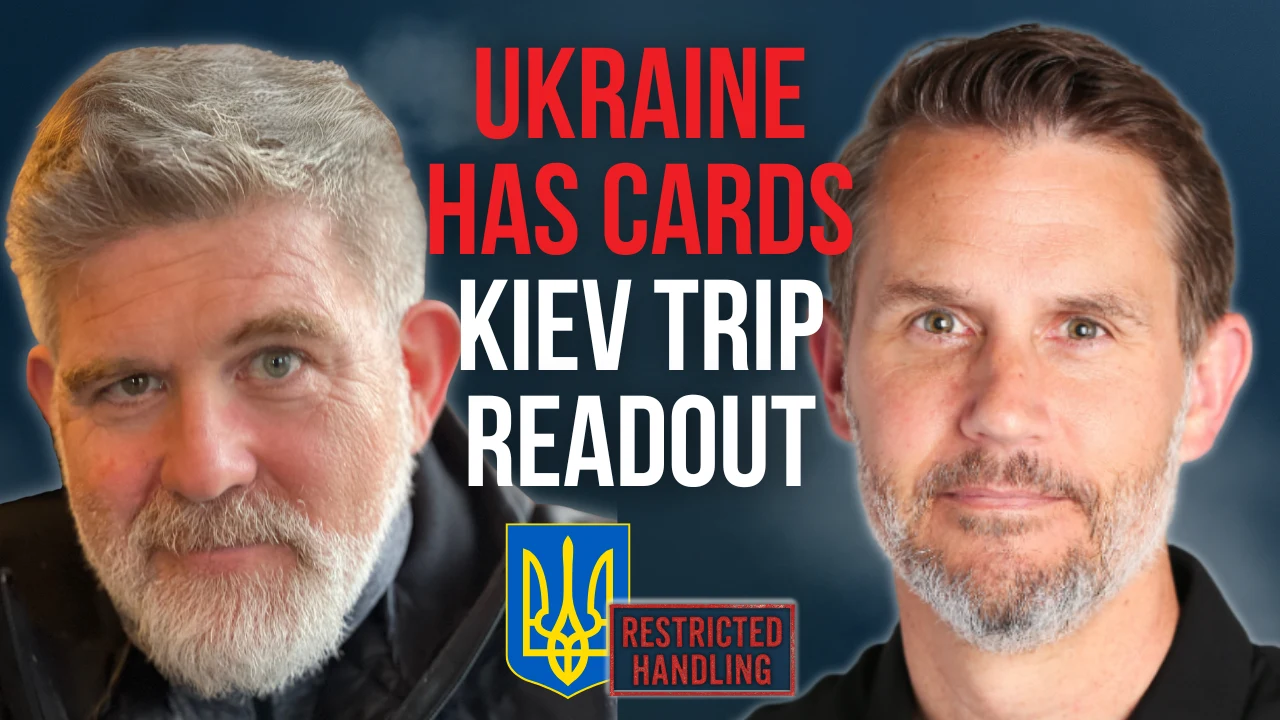
Speaking from Warsaw after a week in Ukraine, Glenn Corn weighs the pressure on Russia, the shortage of air defense, and what Americans should be learning from the war.
Glenn Corn / / 20 minutes
Start here
Three key takeaways
-
Damage takes time to reach the front
Glenn sees promise in Ukraine's campaign against Russian logistics, but his contacts have not yet seen the full effect in their sectors. Sustained pressure matters, and Russia's ability to adapt should remain part of the assessment.
-
Innovation cannot erase today's shortages
Ukraine is developing new ways to defend itself, while its cities still need interceptors and protection. Glenn's confidence in Ukrainian ingenuity sits alongside concern about the civilians being killed before those solutions can arrive.
-
The lessons will travel beyond Ukraine
The spread of drone warfare makes Ukraine's experience relevant to American and allied forces. Glenn argues for a lasting partnership that takes Ukrainian expertise seriously, rather than treating the relationship entirely as outside assistance.
Episode Field Guide
Explore this conversation.
The people, institutions, and equipment connected to this episode. In the conversation marks a direct mention; Related background adds context.
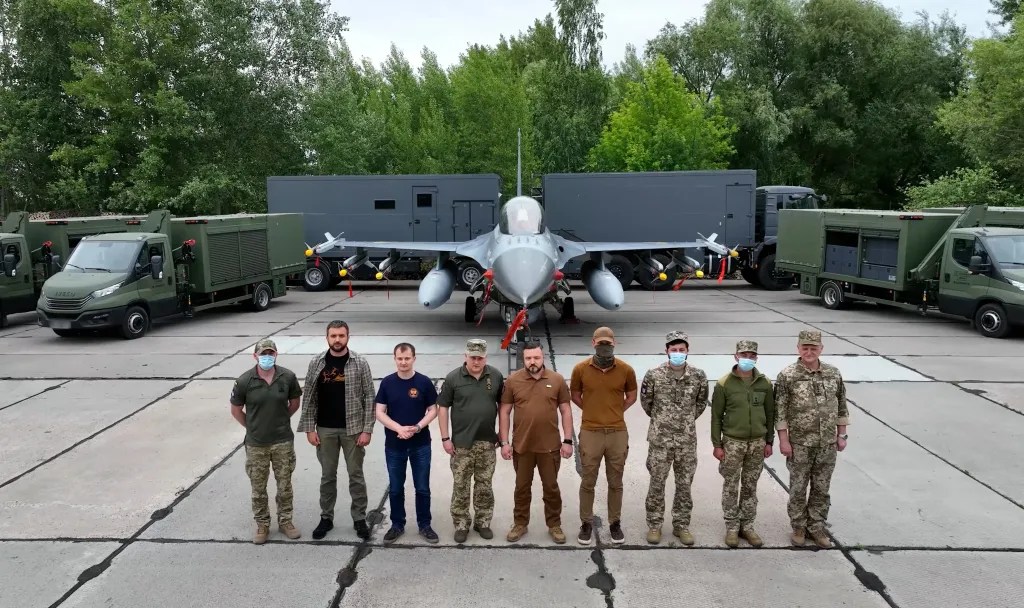
Ukraine Arsenal
A broader equipment guide to accompany the discussion. It is not a catalog of the unnamed FPV drones in this passage.
Image credit
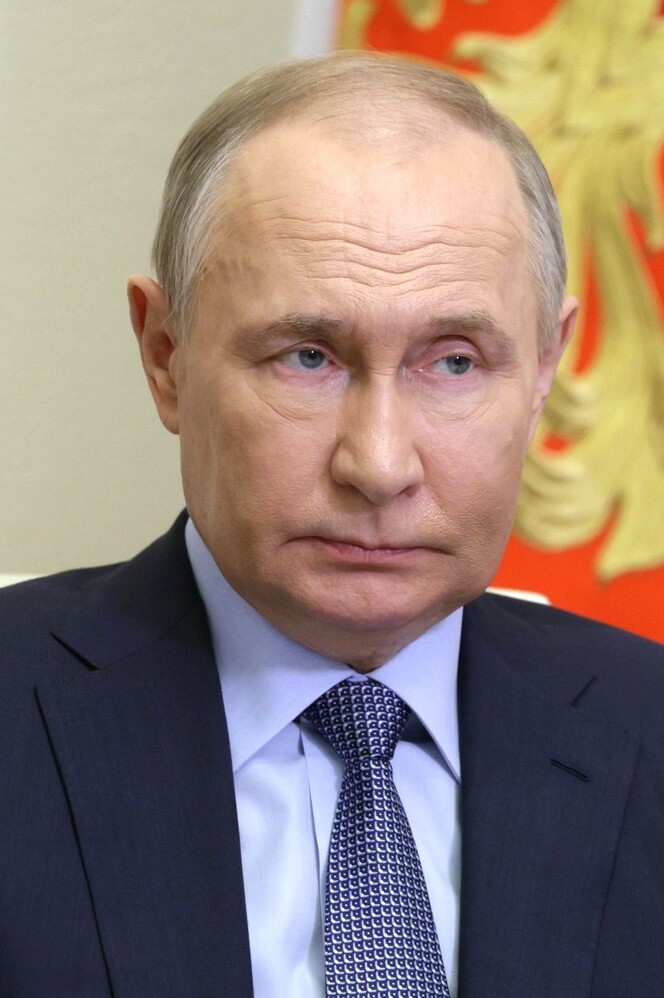
Vladimir Putin
The conversation considers pressure on the Russian leadership.
Image credit
These links are an RH reading guide, not guest endorsements or independent confirmation of every statement in the interview. Episode views reflect its publication date; linked records have their own source dates.
The written account
A report between flights
Glenn is in Warsaw, getting ready to fly home after a week of meetings in Odesa and Kyiv. He has attended the Black Sea Security Conference and a conference organized by Ukraine's presidential office. Sleep has been in short supply. So has any separation between the policy conversations and the war taking place around them.
His account contains grounds for confidence without much room for complacency. Ukrainian forces are finding ways to strike Russian logistics at greater depth. Glenn believes that campaign can create serious problems for Moscow if it continues. He also draws a clear limit around what he knows: the people he has spoken with have not yet seen all of those supply problems reach the front. Russia has time to respond, and its forces have adapted before.
The gap between an idea and an interceptor
Russian attacks on Ukrainian cities bring the conversation back to immediate needs. Glenn describes the killing of children and the exhaustion of people living with repeated strikes. Success against Russian infrastructure provides little comfort to a family whose neighborhood remains exposed. Ukraine's shortage of air defense interceptors is therefore central to his assessment, even as other parts of the military picture improve.
He is impressed by Ukrainian efforts to develop their own answers, including new approaches to air defense. His expectation is that more of those solutions will become available over time. He does not suggest they have already replaced the systems and ammunition Ukraine needs now. Ryan and Glenn discuss what NATO can learn from that work, particularly the speed with which people facing a real threat identify a problem and try something new.
Pressure, negotiations, and American credibility
Glenn argues that Ukraine has more leverage than some public accounts suggest. He wants Washington to increase pressure on Russia and support a settlement that takes Ukrainian interests seriously. A compromise may be necessary, but he objects to starting from the assumption that Moscow holds every useful card. Reports of trouble around Putin also deserve scrutiny; Glenn warns that stories about instability can themselves be used to influence Western decisions.
At the conferences, he hears doubts about whether the United States will remain a reliable partner. Some come from scholars, analysts, and former officials rather than people speaking for governments. Glenn pushes back on sweeping claims that America is abandoning Europe. He also recognizes why the concern exists. Reassurance has to be supported by sustained engagement, and the public debate over American policy is being followed closely by people whose security depends on it.
The distance from Ukraine is shrinking
The discussion moves to the Middle East, where Glenn sees drone warfare spreading and forces confronting problems Ukrainians have lived with for years. Geography offers less insulation when relatively inexpensive systems can impose serious costs. For him, that is another reason American military leaders should be studying Ukrainian experience and building relationships with the people doing the work.
Iran's war also affects Ukraine through energy prices, competition for attention, and the resources available to Russia. Glenn leaves the trip encouraged by Ukrainian determination, but the connections between these conflicts make him wary of treating any one theater in isolation. His closing concern is practical: the attention generated by a visit or a conference needs to survive the flight home.
Based on the Restricted Handling conversation published June 4, 2026. Views and forecasts reflect the discussion at that time. Original episode and show notes ↗
Full episodeRead the transcript
This transcript comes from the original episode production captions, with spacing adjusted for reading. Names, punctuation, and terminology may contain transcription errors. Refer to the recording for exact wording.
Welcome everyone to another episode of the Restricted Handling Podcast. Today we have Glenn calling in from somewhere in Eastern Europe that he's going to fill us in on. He's outside on his phone. Glenn, where are you at and what's going on? Yeah, so I'm sitting in uh Warsaw getting ready to jump on a flight. just left Ukraine this morning, was there for about a a week, another great trip. Multiple locations Visiting some friends, some new friends and attending the Black Sea Security Conference and then speaking at a security conference organized by the Presidential Office of Ukraine in Kiev.
So Black Sea Security Conference was in Odessa, beautiful city on the Black Sea. But while we were there, of course, multiple continued Russian strikes, including in Kiev, which was you know, I think eleven people died, including some children. One story of a two year old that was killed. He was born during the war and he died during the war. Yeah. He was killed when his parents were trying to take him to a a fallout shelter. So God rest his soul. yeah, so it was a good trip. A little intense. I haven't slept in like two days, so if I fall asleep, not narcalepsy, it's just what are the feelings right now in Ukraine?
I mean, there's a lot of reporting that on the battlefield Russia is not doing well. They just had the Saint Petersburg International Economic Forum that did not look great. They're having to buy up a lot of reserves. Things are not looking good for Russia, they're looking a little better for Ukraine. What's the feeling on the ground? Yeah, well the Ukrainians have uh are having some impact at the mid strike level with their FPV drones along the front. They're hitting the lines of communication of the Russians, logistics hubs. Uh there's no real impact yet on the Russians, you know on their supply lines.
Um so the Ukrainians that we spoke with predict that if the if it continues like this, maybe by the end of the summer they're gonna start seeing the impact on the Russians inability to get fuel and other equipment to their troops on the front. obviously the Ukrainians expect the Russians to find countermeasures or look for countermeasures. So the r you know Ukrainians always tell us don't underestimate the Russians and their ability to strike back or, you know, spy versus spy world, come up with another a solution to the problem. the Russians continue to strike Kiev and other cities with drones.
Uh two nights ago there was a mass drone attack. The Ukrainians Managed to take out 95% of the Russian drones that were launched, which is a pretty high number. It's very im impressive. And that's with Ukrainian made systems, integrated air defense systems. But unfortunately, the R Ukrainians are very low on um intercept missile interceptors. And so the Russians are also striking with cruise missiles. they're you know, they're using the Sarmot, which is actually designed to carry a nuclear warhead. And it seems to me that the Russians don't have the technology for precise targeting and so they're they're hitting civilian targets, killing innocent people, as I said, ten people killed or eleven people killed in the in the strike two days ago.
that's tough on the Ukrainians. Uh but they keep pushing through, they keep pushing on and they're looking you know, I I talked to one of the Ukrainians, you know Secretary Heggsith came out and said that the US would do everything it could to find ways to supply the Ukrainians with uh the interceptors they need in response to President Zelensky's plea for help to the president, President Trump. Uh The Ukrainians are saying, look, we know we have to find solutions for ourselves. So they're building their own systems, they're designing their own systems. And I would predict that by the end of the year they'll have their own interceptors that will be capable of taking on some of the Russian attacks, Russian systems.
the two big advantages the Russians have were three personnel like manpower, Long range missiles, you know, uh cruise missiles, other larger missiles. And then these uh in English it's called glide a glided cruise bomb, like a KAB in Russian. KAB They're basically they're dropped f far from the front and they're they are guided into the targets. but the Ukrainians have designed their own now and the Ukrainians have also signed a deal with Sweden to procure some gripping from the fighters, which I've heard from some of the smarter military folks I know that that is a very good system and that may help the Ukrainians defend their front lines and their uh frontline cities which are vulnerable to these cob attacks uh better.
So we'll see. I would note that the Ukrainians hit St. Petersburg during the SPIEF conference. Um and then the other war that bro has been breaking out what people should be following is there's a war going on now between influencers Laura Loomer, Candace Owens, Tucker Carlson. Uh Candace Owens was in Moscow I ran into Laura Loomer's media team when I was in Ukraine. I know some of And uh she just put out something on X yesterday warning Americans that they've been manipulated by Russian disinformation and propaganda, which I find very interesting to see. and I would I would tell Americans, pay attention to her on this one.
I don't agree with everything she says, but on this one and it s sounds like she realizes that she herself was manipulated for a while. So that's yeah, in the information space. Um I think that's significant. And we'll see how that how that uh combat develops. War of words. One one of the other things I wanted to highlight on that that's been reported recently, and I don't know if you know uh any of these people like the the names, Glenn, but Oleg Saryov, Alexei Chadden, Vasily Kashin, uh Igor Girkin, a lot of hardliners, Hawks elites that are now pushing back in whatever way they can against Putin.
uh about the war. They're not full on saying they should stop, but they are trying to rein in a little bit of of the fighting. They see maybe the the detrimental effects on Russia, its future with Ukraine, like the idea that they could one day um lead Ukraine somehow with the puppet government is less and less likely given all the fighting and hardship they're putting Ukraine under. The fact that these people are coming out right now, I think is pretty surprising. Uh it seems, and maybe that's part of this information war that you just referenced. Yeah, there's there's quite a bit of pressure on Putin from what we can see, although you gotta be a little bit careful.
You know, some some people were warned that this is just a disinformation operation being conducted by Putin to make things people think in the West that he's in trouble and that they need to take pressure off of him if they wanna make a peace deal. They've done that before. So but I do think he's h listen, I mean the economy's in i in very bad condition. The Ukrainians continue to extend the range of their deep strikes. Russians are not making progress on the front. And I think this, you know, economic forum was kind of a bust for the Russians. Not only did they not get a re turnout, uh, but all and I doubt it will result in any real investment in the Russian economy, uh but you know, the Ukrainians struck a target I think ten kilometers from where the where the the event was, which should be humiliating to Putin and his air defence forces.
Hey, just fresh out of coming out off of the front, I mean not the front lines, but coming out of Kiev, Odessa, Ukraine, what would you be telling the administration right now with what you've seen and and what to do over the next couple of weeks? Well, I mean, look, I I've been saying this already, just it's time to double down on on the Russians. You know, the Ukrainians have unlike you know, in in December of last year we were telling that their the front's gonna collapse on them. They should make a deal, even though it's a bad deal. Uh they've been able to hold the line and take back some territory.
So, you know, they're they have some let's just say, you know, some of the cards that we know, we heard the famous phrase, you don't have the cards, they do have some cards. Um again I heard from the Ukrainians on the on this trip they're ready to make a deal, but it has to be a fair and just deal. They're not asking for everything they want, but they're willing you know, they're willing to make some compromises. So I do think the administration and the president needs to put pressure on Putin now. I mean it's time to ratchet up the pressure from the United States and set an example for everybody.
One thing I will say is it was a little bit disappointing at these two conferences to hear a lot of people, especially our European partners. Uh basically assessing that the US is done with Europe and Europe US can't be relied on. US is not a reliable partner. Now some of that I think is hyperbole. Some of it I think are some of our European counterparts wanting to step in and you know take the lead. uh you know, different people. This is not government officials. These are academics, these are people from think tanks, former government officials. But what I would say is actually, you know, I think I wouldn't rush to make that conclusion.
In fact, I read today that the administration is holding discussions with the Europeans on placing more nuclear weapons in Europe. So increasing our nuclear presence as part of our um you know nuclear umbrella to reassure the Europeans that we're not leaving them. I don't know if that's correct, but that's what's being reported in the media. So that's a good news story. Uh but Americans should know that there is a sense that we are not reliable partners. And we hear that from the Ukrainians. I started hearing that last late last year, say December when I was there, and we continue to hear it.
It's not resentment. As a matter of fact, you'll see on the podcast with Artist you know, he said, Nobody owes us anything. Right I I was really surpr right to hear him say that. You know, it's this is our we're this is up to us. but as an American I don't like to hear anybody say that that once the view is as an ally that they can't count on. That's that's sadly. And then there was news that Hungary has kind of reopened the idea of EU accession for for Ukraine, even though a 10 to 15 year time horizon. It's still, I think, a big win that the European bloc is coming around to help.
And then there was reporting from I think two weeks ago in Armenia, Rubio goes in and signs a strategic partnership, putting a little more pressure on Putin. And obviously Armenia has this election coming up and there's a lot of influence operations going on targeting that. So there there's there's a lot going on in the periphery as well with Europe and uh Central Asia, as we talked about Yes. There was also reporting that the Russians are resupplying their bases in Syria, which is concerning. Uh that's a little frustrating to see that that that's happening and that we're allowing it to happen, in my opinion.
We should be putting pressure on uh Al Sharaa to stop that, the Syrian president and his government. and yes, Armenia, we definitely need to watch Armenia. We've had you know a guest on to talk about that issue. Uh And we'll have some more guests on and talk about you know the South Caucasus and how important it is. But the Armenians are facing definite pressure from the Russians. They've been basically threatened by the Russians that they have to decide between the West, Europe and and US and Russia. and then the other country to watch is b Belarus. A lot of rhetoric coming out of uh Minsk, threats from the Belarusian president, the Ukrainians are watching the the northern border very closely.
Uh and we'll have to find a good guest to come on and talk about that too, 'cause, you know, it doesn't get enough attention in the US. What's going on with Iran in talks over there, Glenn? Like what are you hearing in these security summits when it comes to Iran? well matter of fact the Shah's son was in uh Odessa. he was he was a guest speaker, yeah. He was a guest attendee. what are we hearing? The Ukrainians remain concerned that the price of oil is up and that's you know it's one it's hurting them economically, it's hurting a lot of people economically, uh and you know, it's t distracting attention from their cause.
But I heard again and again from the Ukrainians they understand why we're doing what we're doing. There there's You know, they continue to offer assistance. Ukrainian specialists are still going to the Middle East, you know, counter drone experts uh and offering assistance to the US. Um, I think most of what I heard is that, you know, the US has learned in this conflict that we're behind the curb and we need to learn quicker from some of the examples that uh they're learning and they're w willing to share that knowledge. Uh and that the Europeans are are, you know, behind the curb.
We saw Romania was hit by a drone, which you know was probably launched at Odessa and my assessment is it was probably uh disabled or or um whatever we want to say using electronic warfare systems the Ukrainians protected themselves but it flew into Romanian airspace and the Romanians didn't deal with it well. They were not prepared. It tells me there's a lack of integration air defenses f between Ukraine and NATO. And so you know there do you the Romanian government's facing a lot of criticism over that. And we saw that in the Baltics recently. We've seen it in Poland before, remember last September when there were I think fifteen or seventeen stray drones that flew in the Baltic airspace.
So a lot of learning to do. drones that that I saw. One as I was preparing the video with Artiste, I dug up some drone footage. One of them was even for for me, who, like as an attack pilot in my past, having you know taken shots at at humans, it was pretty sobering to see like a UAV from above looking down at another very small UAV circling a tank that just got close to a human and detonated. I mean, it is a when you see something like that, it is. really frightening what those things can do on the battlefield. And this guy could do nothing. He was running around a tank until this thing got close enough and just destroyed him.
And then separately, there's talk about Hezbollah was just using FPV drones with thermal imaging at night over the past two days. obviously in in its fight with Israel. That's another thing that I don't know if I've heard a lot about in Russia being used, but I know Hezbollah and and Iran have some pretty advanced UAV capabilities. The thermal side with FPV is also pretty s uh scary to hear. Yeah, I mean listen, Hezbollah is a terrorist organization, right? It's a non state actor, although it has s state support from Iran. Um not surprised that they have that.
I think the Israelis have been caught off guard. The Israelis like us made the mistake of not having the counter drone defenses in place. They're quickly scrambling to you know, do a a better job to protect their troops that are in Lebanon now defending their northern border. yes, some of my Lebanese friends are very concerned about what Hezbollah has been doing. Of course, where are they getting the the equipment from? Iran and Russia. So as I've said before, there's like these axis of these alliances and there's the axis of evil I'll call it. Sounds so stupid.
Sounds like a cartoon thing, but you know, Russia, Iran, Hezbollah, and then the US, Israel, Ukraine, our European allies. Um so definitely, Ryan, and you know I keep telling people I I just gotta keep beating this drum, y our critical infrastructure in the US is no longer safe. There's no setback. Like we used to have. The Atlantic and the Pacific are not the the the barriers uh that they were, you know, in the Second World War or even the Vietnam War. Non state actors, state actors can can strike targets in the US and we need to be better prepared to deal with that, in my opinion.
it seems like Iran is using Lebanon very effectively as a uh as a bargaining chip now. So we've got the nuclear talks, we've got Hormuz getting reopened, there's sanctions relief, but Lebanon as a sticking point with Hezbollah in particular. Any surprises there to you? no, I mean, you know, I I think the Leban there's a l the negotiations are ongoing, so it looks like they're moving towards you know, the government of Lebanon and Israel are going moving towards a peace treaty, which is what the administration wants. That's good. But the question remains of whether we're gonna allow Hezbollah to maintain its arms.
I think the official position of the US government, Marco Rubio and the president is that Hezbollah will not be allowed to keep their arms and we need to help the Lebanese legitimate government of Lebanon dearm Hezbollah. Uh because if if they don't, then the Israelis will continue to wage war against Hezbollah because Hezbollah is attacking Israel. Right? It's an immediate threat to the state of Israel. It has been for many years. So I think uh the the the the the tricky part here all along has been getting the Lebanese government to do what they need to do and enable them to do what they need to do.
And there's a lot of nuance here. Very we we talked with the ambassador Hale. It's there's I'd say some progress happening, but I think there's a lot of concern that Hezbollah's gonna be allowed to survive, which is the mistake we made in nineteen ninety one when we allowed them to keep their arms. So I'm my personal view is I hope we don't let that to h happen and I hope we you know we don't let the Iranians look, I mean w I think what it's coming down to a lot of people are putting pressure on the president, which I think is a mistake. You know, they're attacking the president on his policy of Iraq towards Iran.
For political reasons, not thinking about the long term consequences. We as a country need to stand together on this. Iran the Islamic regime has been our enemy, and we need to defeat that enemy. And their proxy is Lebanese Hezbollah, Hamas, uh the Houthis, we need to defeat them. We can't let them maintain their arms and and then reemerge. I mean, look what Hezbollah was hit badly by the Israelis in the last couple of years, and they're still they still manage to get their hands on these FPV drones you're talking about. and strike targets that just tells you they're they're resilient so we need to be more resilient.
I know you gotta catch a flight, Glenn. Any anything else that um you think people need to hear from your trip? I mean it's listen, uh always inspiring to go to Ukraine, but also, you know, we can't take our eye off that issue. And uh, you know by the way I before I was in Ukraine I was in Dubai. I mean it was empty. I was there for a couple of days, you know. Yeah, the airport was empty, so you know the economies in the Gulf are are struggling. Not struggling, but they're having a harder time than usual. So we gotta keep an eye on that as well. Sounds good. Yeah.
And Cuba. Uh I think people just need to keep an eye on that. They're going twenty, twenty hour day blackouts. Uh lots, lots of heartache there right now. Who knows what's gonna happen. Wow. Yeah. All right. Okay.
Back to the Episode Field Guide ↑Keep listening.
All episodes →
John Herbst / Ukraine and U.S. strategy
John Herbst on Arming Ukraine and Raising the Cost of Russia’s War
Steve Wills / The Arctic and maritime security
Steve Wills on Russia’s Arctic Submarines and the Cables Beneath the Sea
Between episodes
The daily brief is free.
Russia, China, Iran, and North Korea. Straight to your inbox.